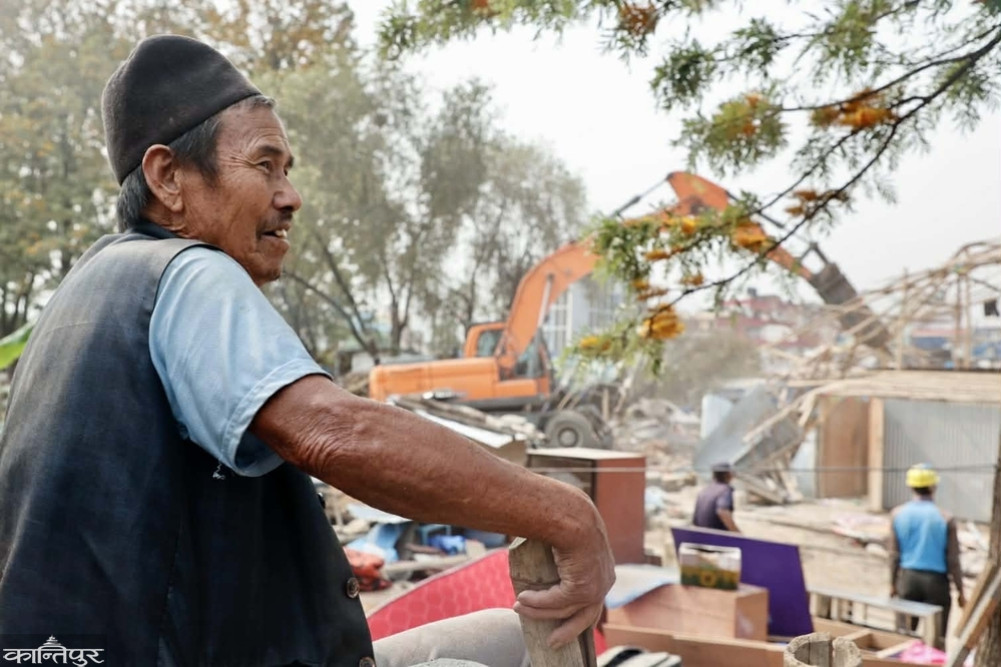
Lack of attention to the proper management of those evicted from the settlements has further worsened the plight of those in need of extra care, including infants, children, pregnant women, people with disabilities, and others. Two squatters have even been found dead.
We use Google Cloud Translation Services. Google requires we provide the following disclaimer relating to use of this service:
This service may contain translations powered by Google. Google disclaims all warranties related to the translations, expressed or implied, including any warranties of accuracy, reliability, and any implied warranties of merchantability, fitness for a particular purpose, and noninfringement.
At this time, the squatter settlements are facing a state-created disaster. The sudden priority given to miking and dozer operations, instead of the legal path of identifying and managing the squatters, has made the most vulnerable group even more helpless. People remember their homes in the most difficult times, but their homes have been taken away from the squatters. The state, while showing its haste to protect the land, has treated the people like enemies of war. As a result, the citizens of the squatter settlements, who were already immersed in a whirlwind of misery, have been trapped in a more difficult, confused and fearful situation.
The lack of attention to the proper management of those evicted from the settlements has further destabilized the groups that need extra care, including infants, children, pregnant women, people with disabilities, and the like. Two squatters have even been found dead. Since last Saturday, those living in the deserted squatter settlements and the ‘holding center’ have expressed complaints about the government’s management style. Therefore, the government should listen to and consider the cries coming from the squatter settlements.
It is not possible for the squatters, who have been living in risky places, to stay there for a long time. Therefore, their relocation is inevitable someday. The normal process before that is - data collection, verification and management with options for resettlement. This work will be completed at the local level. But Prime Minister Balendra Shah, on the same day he assumed the responsibility of the Ministry of Home Affairs, i.e. on April 9, had met with the heads of the security agencies and directed them to evacuate the squatter settlements on April 12 and 13.
The involvement of the Kathmandu Metropolitan City is also seen in the implementation of the Prime Minister's instructions. It is not possible to leave the place where they have been living for years within three days. On the other hand, it is not such an urgent task that the state would have to suffer irreparable losses if it was not done immediately. It could have been done by completing the procedure, communicating, and collaborating with organizations working in this area. At that time, detailed details of real squatters could have been collected and kept in an organized manner. Fake squatters could have been brought under the ambit of action.
After forcing people to move from the settlement, a detailed and phased plan should have been made for their management, government supporters should have been found everywhere, and coordination should have been done . But even the health and housing of pregnant women, mothers and children in the squatter settlements has not been systematically managed . Even if the government showed a rush to remove the squatters, some preparations should have been made. Mainly, easy access to the holding center, security of each person and family's belongings, proper food and shelter arrangements, and a clear system for identifying them as squatters should have been prepared. Mainly, while being removed from the settlement, the squatter families should have felt that - now it will be better for us, the difficult days they have been spending on the riverbank will end. But the government did not instill confidence in itself, it created fear. The settlement was entered with a heavy presence of security personnel and the harsh sound of dozers.
After forcing people to move from the settlement, a detailed and phased plan should have been made for their management, government supporters should have been found everywhere, and coordination should have been done . But even the health and housing of pregnant women, mothers and children in the squatter settlements has not been systematically managed . The complaints that there is not enough hot water to cook food and make milk for the child are a clear sign of the government's preparedness . Even the mothers and patients were not able to drink hot water in the beginning . When a plan has been implemented by the government itself, such neglect is a serious insensitivity . There is no sense of humanity in the government.
The group that is in trouble right now is also children. The academic session has already begun. Many children in the country have a clear address, a clear school to attend, and have even bought textbooks. But due to the disaster created by the state in the squatter settlements, there is confusion about what will happen to the children's education. They have lost their place of residence, lost their friends, lost their textbooks, and lost their toys.
How will their education continue? Should they face discrimination in the new school they are going to? How can the mental trauma they feel be minimized? The state should answer this. It will be unforgivable if small children are deprived of education due to the current displacement. Therefore, the state should be sensitive about the continuation of the settlement and education of those who have been picked up from the squatter settlements.
There are some reasons for the emergence of the institution called the state, but the first point is mentioned – security. The most vulnerable people should feel such security. The poorest, squatters, landless, unemployed, helpless should feel it. They should get the special support and hand of the state. But at this time, the boots and dozers of security personnel have not created security in the squatter settlements, but rather terror. Because they are squatters and poor, the division and self-respect of their own citizens have been violated. The belief that those who have nothing and no one have a government has been shattered.
The state does not have the right to bow the head of just one citizen, impose disaster, terrorize and make them cry. Here, the settlement has been removed on the basis of short notice. On Friday, even more deception happened. The Ministry of Federal Affairs and General Administration had written a letter to all municipalities across the country on Thursday, first directing them to identify, manage and remove encroachments of squatters. But in Kathmandu, dozers were deployed from Friday morning. As the rain continued to fall, citizens had to endure hardship upon hardship.
It is clear that the squatter settlements cannot remain like this for a long time. If the work had been done at a fast pace with a systematic plan following the method, this work could have been completed within a few months. But the campaign launched by the government without strong preparation has created a situation of 'outcry' in Kathmandu. Concerns are being expressed about what will happen in other parts of the country if such a situation arises in Kathmandu.
Because, based on the number of applications submitted to the Land Commission for land acquisition, the number of squatters and unorganized settlers across the country is 1.2 million more. Of that, the number of actual squatters is 280,000 more. The rest are unorganized settlements. In conclusion, the government should now immediately ensure organized settlements for the squatters of the evicted settlements.
Second, the remaining settlements to be evicted should be managed with data collection, verification, and options for resettlement. The law should be followed. Not panic and confusion, but guardianship, humanity, and compassion should be shown.