It has also been said that devices should be installed to record driver behavior, fatigue, and even inattentive activities. This provision in the draft, if finalized in the guidelines, will also help reduce the accident rate.
We use Google Cloud Translation Services. Google requires we provide the following disclaimer relating to use of this service:
This service may contain translations powered by Google. Google disclaims all warranties related to the translations, expressed or implied, including any warranties of accuracy, reliability, and any implied warranties of merchantability, fitness for a particular purpose, and noninfringement.
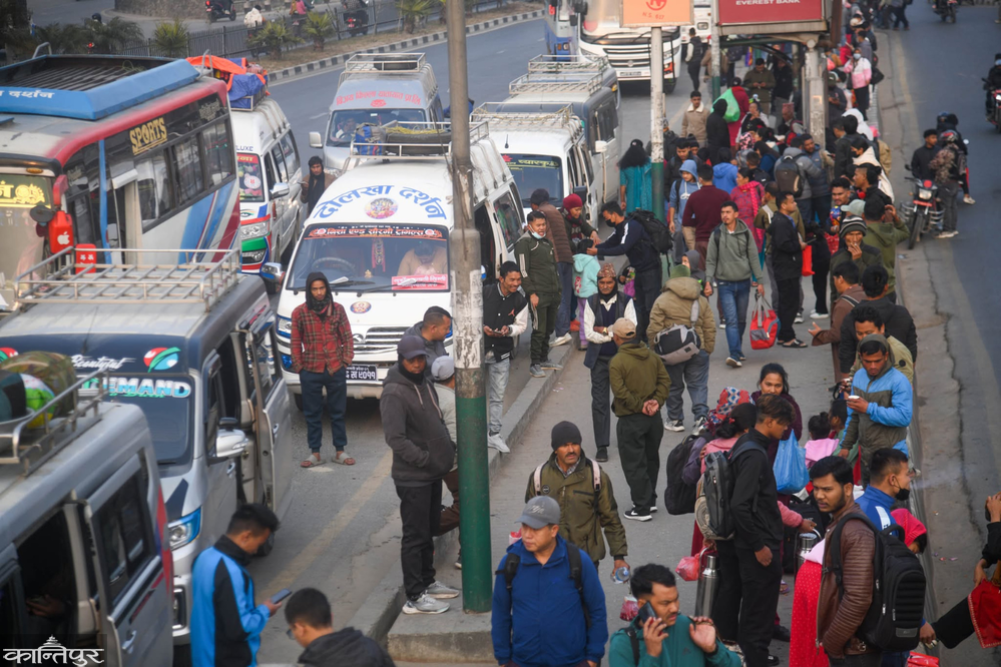
Traveling in public transport is a very difficult task. Almost all passengers have to face problems like overcrowding, rude behavior of the vehicle staff, rude behavior of other passengers (especially towards women), theft, misunderstanding of fares, dirty seats. However, millions of people are forced to travel by public transport every day. Even after being cheated, cheated, cheated and abused, people have to complete their jobs and personal and family work by making short or long journeys.
Not much work has been done or interest has been shown in improving public transport, which is a matter of concern for millions of people every day. Due to which the distortion has continued. However, the Department of Transport Management has recently prepared a draft of the 'Directive on Making Public Vehicles Technology-Enabled, Healthy, Safe, Dignified and Passenger-Friendly, 2082'. The draft of the directive has been sent to the Ministry of Physical Infrastructure and Transport. It is expected that many irregularities will end with the implementation of the directive.
Many incidents of abuse and violence against women in public vehicles have come to light. However, such incidents rarely come to light and rarely are actions taken against the guilty. But the draft directive states that two or more CCTVs should be installed in all public vehicles. In addition, it is said that they should be installed in a way that records all activities inside the vehicle and such information should be posted in a way that all passengers can see.
Many incidents of abuse and violence against women in public vehicles have been made public. However, such incidents rarely come to light and rarely are actions taken against the guilty. But the draft directive states that two or more CCTVs should be installed in all public vehicles. In particular, such devices should be based on AI technology that can count the number of passengers inside the vehicle and recognize the faces of passengers. It is stated that the vehicle manager, its owner and driver will also be responsible for preserving the CCTV data for at least three months. It is believed that such an arrangement will reduce indecent activities inside the vehicle, especially abuse against women. For safety, it has also been made mandatory to install fire extinguishers, first aid kits, and an 'SOS' button in vehicles to send warning information along with location to the department's central system in case of danger.
Even the dignity of passengers is not respected in public transport. Passengers often have unpleasant experiences with drivers and co-drivers. They behave in an indecent manner. They try to charge more, do not refund, speak rudely, show urgency and ask to get off a vehicle that is not parked properly, and do not stop at the required place when competing with another vehicle. They do not try to accommodate the elderly and disabled as much as possible. No matter how uncomfortable the passengers inside the vehicle are, they add more passengers. When they raise issues that make them uncomfortable, they are often given a verbal response that ‘they should travel in a private vehicle’ or ‘they should travel in a taxi’. Although the driver and co-driver may have been mistreated by some passengers, most of the victims are the passengers.
Along with safe travel, respect for dignity is also an indispensable issue. The directive covers many of the aforementioned aspects. Now there are provisions such as ticketing, a women-friendly environment in vehicles, and drivers and co-drivers must communicate in polite language. This contributes to making public vehicles passenger-friendly.
Although there is a provision to have two drivers mandatory in long-distance vehicles, it is not implemented. However, such a practice is considered useful in reducing the chances of accidents. The directive states that at least two drivers must be provided for public passenger vehicles operating on routes longer than 250 kilometers. Similarly, it is also said that devices should be installed to record the behavior, fatigue and careless activities of the driver. This provision in the draft, if finalized in the directive, will also help reduce the accident rate.
The issue of public transport reform, which is a matter of concern to millions of people and requires extensive reform, has always been neglected. The government has tried to improve it by preparing a draft of the directive. However, only the draft has been prepared now and it can be believed that it will be further enriched when it is finalized. Overall, this initiative will minimize the bad experience faced by passengers. This will have a positive impact on millions of passengers across the country.
In order to get a good feeling of this in practice, not only the installation of equipment, but also the installation of quality equipment and its proper use must be mandatory. Monitoring should be strong. The guideline does not only mention the issues of equipment and technology. There are also issues of improvement in the behavior of drivers, co-drivers and passengers. All parties should continue to improve themselves. Rather than finding loopholes in the guideline, we should consider the essence it carries. And, we should strive for positive achievements. Only then will we be able to say and feel with confidence – public transport travel in Nepal is safe.