For the elite, beauty is defined by the confines of their powerfully protected residences. For the common people, beauty is what is necessary, useful, and desirable. The middle class's desire for beauty promotes authoritarian thinking.
We use Google Cloud Translation Services. Google requires we provide the following disclaimer relating to use of this service:
This service may contain translations powered by Google. Google disclaims all warranties related to the translations, expressed or implied, including any warranties of accuracy, reliability, and any implied warranties of merchantability, fitness for a particular purpose, and noninfringement.
In the past, there was a saying in Nepali society that ‘Gods do not speak, kings do not listen’. Now, the people’s Janardan, who has been elected by one-third of the voters with a two-thirds majority in the House of Representatives, has power. He is an elected executive, so he makes people write their words on (un)social media rather than speaking and listening.
Since the general public is under constant surveillance by security forces, there is a time when they should weigh their writing and speaking, and it is believed that they should be more careful with ‘speaking less’. Earlier, requests were made by saying ‘Long live the government’, but nowadays, one has to say ‘Sorry for the anger’.
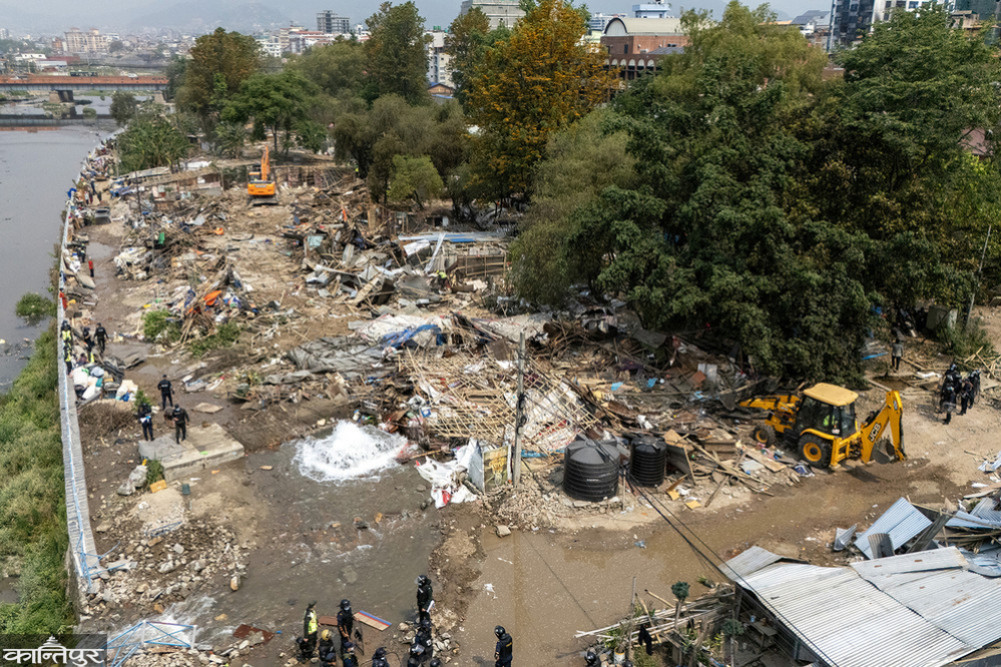
A belated birthday greeting to Balendra Shah, who succeeded in becoming the legitimate ruler of Nepal after the September 2025 Green Belt rebellion. On behalf of a fearless columnist, I would like to congratulate you on completing your most important task as the Prime Minister, which was incomplete when you were the 'Grand Mayor' of Kathmandu, on the eve of your own birthday. I wish you success in your rehabilitation as soon as possible, in keeping with your written commitment to those who lost their homes and livelihoods due to the devastation of the area.
For the elite, the definition of beauty is contained within the residential complex protected by their power. For the common people, what is necessary, useful and within the scope of aspiration is beautiful. The middle class's desire for beauty, however, promotes authoritarian thinking. For now, it seems that he has relieved the residents of the riverbanks, which are subject to flooding every year, from their suffering, but such a bold move should not be considered as a common medical adage - 'The surgery was successful, the patient could not be saved'. Having said all this, it is perhaps not inappropriate to express some doubts that come to mind while wishing the Shah government well.
When the then King Gyanendra, through his maternal uncle and in-laws, forced the incumbent Prime Minister Sher Bahadur Deuba, who was related to him through his mother-in-law and in-laws, to dissolve the House of Representatives, and began a gradual royal-military seizure of power (creeping coup) from October 2002, Shah, who is currently the Prime Minister, was probably a brilliant but bloated schoolboy. He must have memorized the lyrics of the song 'Garibko Chameli, Boli Dine Kohi Chhin', composed by Ramesh and Ryan of the Ralphali group.
The poignancy of the words must have touched him, but the ability to grasp emotions is usually not developed in the 'pre-teen' age between childhood and adolescence. He came from a wealthy family, so for him, the poor at that time may have included house helpers, drivers, or children playing barefoot in the neighborhood. He must have recognized the image of a helpless and helpless character like a thornless, soft and fragrant jasmine flower that the song's composer imagined only later.
However, he must have heard time and again that the urban middle class of Kathmandu gave the king and the army the benefit of the doubt. By 2003, the narrative that the king would do what the parties could not do and the army would finish off the Maoists was firmly established in Kathmandu.
Deuba's close associates used to threaten him with the idea that the royal relatives would eliminate the 'old Congress' supporters by holding elections with the help of the army with a two-thirds vote. In his eyes, all those who were adamant on the demand for the restoration of parliament were 'urban Maoists' - like the enlightened group that extremists of Hindutva politics in India today call 'urban Naxals'. Prime Minister Shah's distrust of all the state apparatuses, including the old parties except the Nepali Army, did not arise after he became the mayor of Kathmandu.
He had already become an influential player in Nepali politics before he had the opportunity to study political sociology in depth to free himself from the ideas formed since before he entered adolescence. He did not have to be beaten, did not have to go to jail, did not have to suffer exile, did not have to face hunger and contempt, and he became the 'mayor' of the capital while 'rapping'. The limitations of his studies and experience are obvious.
By the time King Gyanendra seized full power in 2005 and assumed the presidency of the cabinet, he may have begun to look a little rebellious like other teenagers who want to step out of the shadow of their parents and make their own decisions. Although this claim may sound a bit simplistic, some researchers believe that the prefrontal cortex, which is responsible for making rational decisions, controlling impulses, and planning, is not yet fully developed during adolescence.
At that age, the influence of peers may be more visible and sometimes there may be a tendency to listen less to advice from others. Some of the effects of such experiences are considered long-term. It can be speculated that the teenage Balendra assimilated the concerns of the urban middle class, such as the king not being allowed to work, the Maoists taking over the country, the national army being disrespected, and the court canceling the royal commission to prevent corruption.
By the time he moved from adolescence to youth, the country had become a republic. His subsequent studies focused on engineering, where the ‘gray’ technical uncertainty between ‘white’ and ‘black’ is taught to reduce as much as possible with the help of creative imagination and competent calculations and reach clear solutions. But since social and political issues often remain so ‘dark’, the decisive thinking of engineering can become a problem rather than a solution.
It is said that concepts about life and the world formed until about 25 years of age do not change easily. But those concepts can be changed by strong factors such as detailed study, deep experience, sometimes trauma or effective guidance. Indeed, change in the thinking of a conscious being is a lifelong process.
The much-quoted ‘Sabse Khatran’ poem by Avtar Singh Sandhu ‘Pash’, which depicts community passivity, apathy and inertia, says – ‘Sabse Khatran’ hota hai/Murda Shanti se bhar jaana/na hona tadap ka/sab sahan kar jaana’. Prime Minister Shah’s priorities, beliefs, working style and thinking are not only his personal but also representative of a ‘dude and bro’ age group and social category among the urban middle class, who feel that ‘Nepal, like a piece of gold’ has been destroyed by multi-party politics and no improvement is possible without ‘strong governance’. A large group of cultural, economic, social and political liberals also seem to agree with such a conclusion.
Authoritarian aesthetics that demolish unauthorized structures without compensation, forcefully evict the helpless in the name of removing encroachments, prohibit informal businesses or trade, prioritize beautification over convenience and inclusion, or do not want to listen to the voices of those who speak for the ‘Jasmine of the Poor’ often tend towards totalitarianism, and therefore citizen surveillance becomes important. The irony of contemporary politics is that citizen surveillance is being weakened by the threat of surveillance by the security apparatus on citizens.
Who doesn't like clean looking streets, no shops on the sidewalks, Newa-style bus stops, a city nestled in a beautiful garden on the riverbank with colorful flower plants and green bushes? But in the second poorest country in South Asia, where the livelihood of the poor is being taken away and the security mechanism is being widely used to suppress the voice of the weak, the prevailing social silence is starting to look terrifying.
The much-quoted 'Sabse Khatarana' poem by Avtar Singh Sandhu 'Pash', which depicts community inactivity, apathy and inertia, says - 'Sabse Khatarana Hota Hai/Murdah Shanti Se Bhar Jana/Na Hona Tadap Ka/Sab Sahan Kar Jana'. The 'unauthorized' settlements on the riverbanks have been abandoned peacefully, oh! Intellectuals, journalists, government employees and even some politicians must have said that.
Structural humiliation
Even when the city police, Nepal police and armed police were mobilized and the Nepali army was put under 'unofficial' surveillance, the weakest section of society like the common people tried to hide their sighs and save their lives. On the one hand, it is not easy to examine the realities of economic and political affairs, and on the other hand, life becomes difficult if the commentaries made by the government are not believed.
On the one hand, it is not easy to examine the realities of economic politics without truth, and on the other hand, life becomes difficult if the commentaries made by the government are not believed. Perhaps after contemplating that, after the royal-military 'coup' of 2005, the English daily 'The Kathmandu Post', a co-publisher of this newspaper, set aside everything and started writing an editorial on the 'importance of socks'. There is a popular saying in English – ‘History does not repeat itself, but rhythm can be adjusted.’ It would be a bit hasty to call the expressions prevalent in the public sphere self-censorship, but the practice of self-discipline can be easily felt.
A Madhesi minister is dismissed on the flimsy basis of the right to recall. After the formation of the present-day Nepal state, the respect of the residents of the border region is taken by strictly enforcing the rule that even daily necessities worth more than one hundred rupees cannot be brought across the Nepal-India border, which was not stopped even during the autocratic Rana and Shah regimes.
The common belief that student politics is a laboratory of democratic civics is being rejected and an attempt is being made to completely ban it under the pretext of preventing distortions – instead of seeking a cure for the disease, the act of killing the patient may not be a hasty act but a planned tool to control the school. The universal right of workers to organize has been achieved through great struggle.
In a democratic system, civil servants, except for those in essential services, emergencies, security mechanisms or managerial responsibilities, cannot generally be deprived of that right. In a democratic system, civil service employees, except for those in essential services, emergencies, security mechanisms or managerial responsibilities, cannot generally be deprived of that right. It may be that the Shah government does not want to allow any deficiency to make the wonderful rhythm of the country of ‘Kashi, Kashmir, Strange Nepal’ even more amazing. Are all such incidents just coincidences? Although some of the steps of the Shah government may seem chaotic or impulsive from the outside, they are guided by a method in madness and it is not an exaggeration to argue that there may be a specific purpose, strategy or plan hidden in them.
No government can survive in the vacuum of popular support. In India, the Internal Emergency (1975–1977) was imposed as a means of remaining in power by Indira Gandhi, but she tried to demonstrate the importance of such an authoritarian experiment by addressing the middle class's attachment to status, discipline and certainty. To address the desires of that community, the then 'democratic crown prince' Sanjay Gandhi had the 'unorganized slums' near Jama Masjid 'cleared' with bulldozers.
According to the report of the Shah Commission formed after 1977, about 150,000 structures were demolished in the capital Delhi alone during the Emergency, affecting more than 700,000 people. Perhaps following his example, Uttar Pradesh Chief Minister Adityanath has started to be criticized for making the Dodger a symbol of 'state terror'.
In 1976, in the name of beautification, Imelda R. Marcos, the wife of President Ferdinand E. Marcos, forcibly evicted more than 400 families from the Tondo slum area of the capital Manila and its surrounding areas.
For the elite, the definition of beauty is contained within the residential complex protected by their power. For the common man, what is necessary, useful and within the scope of aspiration is beautiful. The desire for beauty of the middle class, on the other hand, promotes authoritarian thinking.
The sentiment that 'Shiva is true and beautiful' recognizes the supremacy of power. मध्यमवर्ग आफूभन्दा माथिल्लो सम्भ्रान्तलाई आफ्नै तहमा ओराल्न चाहन्छ तर सामान्यजनलाई भने आफूसरहको स्तरसम्म उक्लिनबाट रोक्न विभिन्न उपाय अवलम्बन गर्न उत्तिकै कटिबद्ध हुन्छ ।
सार्वजनिक स्थानमाथिको नियन्त्रण, फराकिला सडक, सिधा रेखामा उभिएका भवन र खाली पारिएका गल्लीहरू अनुशासन कायम राख्ने सहरी योजनाका उपकरणहरू हुन् । सुन्धारा नजिकको सेतो स्तम्भ, दरबारमार्गको फुटपाथमा ओछ्याइएको ग्रेनाइट वा पोखराको भव्य तर खाली विमानस्थललाई शक्ति प्रदर्शनको सौन्दर्यशास्त्रका रूपमा पनि बुझ्न सकिन्छ ।
अनुशासनको अभ्यास गराउने गरी सफाइ अभियान, हरियाली कार्यक्रम र पोसाक एवं व्यवहारमा एकरूपता अंगीकार गर्न लगाएर सभ्यता दर्शाउने निर्देशनमार्फत अधिशासकहरू सौन्दर्यलाई नैतिकताको मानकमा रूपान्तरित गरेर अप्रत्यक्ष नियन्त्रण कसिलो बनाउँछन्– गराउन चाहेको काम नागरिकले स्वस्फूर्त गर्न चाहनुजत्तिको सफल कार्यनीति अरू केही हुन सक्दैन ।
निर्धाहरूको विस्थापन जस्तो कठोर कर्मलाई शृंगारिक भाषा दिएर सुधार, आधुनिकीकरण, व्यवस्थितीकरण एवं सौन्दर्यीकरण जस्ता नरम शब्दहरूले व्याख्या गर्नु मानक बदलेर व्यवहार बदल्ने रणनीतिभित्र नै पर्छ । सौन्दर्यीकरणले तत्काल उपलब्धि पनि देखाउँछ । दिगो संरचना निर्माण, सामाजिक न्यायको सुनिश्चितता, आर्थिक सुधार तथा संस्थागत परिवर्तन जस्ता काम गर्न समय लाग्छ ।
मध्यमवर्गले सामाजिक स्विकार्यता स्थापित गरेको सत्तालाई फगत मतद्वारा हल्लाउन कठिन हुने देखेर नै हरितपीत विद्रोहका योजनाकारहरूले ‘विध्वंसको सौन्दर्यशास्त्र’ निर्माण गरेका पनि हुन सक्छन् । तर रङ पोतिएका पर्खाल, नयाँ पार्क, चौडा सडक, उज्याला सडक बत्ती एवं चिल्ला फुटपाथ देखेर मध्यमवर्ग मक्ख पर्छ र भन्छ– ‘हेर, सहर कति बदलियो, बालेन जिन्दावाद ∕’ मध्यमवर्गको विस्मित प्रतिक्रिया अधिशासकका लागि वैधताको स्रोत बन्ने कुरा भारतमा प्रधानमन्त्री नरेन्द्र मोदीको शासनकालले देखाइसकेको छ ।
सन् १९६० को दशकपछि भारत आन्तरिक र बाह्य तवरले अहिले जत्तिको कमजोर कहिल्यै थिएन तर सत्ता भने लोकप्रिय ठहरिएको छ । त्यो किनभने मन्दिर बनेको छ, सडक चौडा भएका छन् र भत्काउने डोजर जताततै क्रियाशील छन् । मध्यमवर्गले सामाजिक स्विकार्यता स्थापित गरेको सत्तालाई फगत मतद्वारा हल्लाउन कठिन हुने देखेर नै हरितपीत विद्रोहका योजनाकारहरूले ‘विध्वंसको सौन्दर्यशास्त्र’ निर्माण गरेका पनि हुन सक्छन् ।
असहमतहरूको मानमर्दनबेगर अधिशासकको औचित्य सिद्ध नहुने कुरा राजा महेन्द्रले अभ्यासले नै देखाएका थिए– उनलाई दुईतिहाइ मताधार भएको प्रधानमन्त्रीलाई न्यायिक प्रक्रियाबेगर जेलमा हाल्नुले नपुगेर राजनीतिमा सबैभन्दा ठूलो कलंक मानिने ‘अराष्ट्रिय तत्त्व’ को निराधार आक्षेप पनि लगाउनुपरेको थियो । विचार र संरचना जर्ज ओरवेलको प्रसिद्ध उपन्यास ‘१९८४’ बाट लिइएको हो, संक्षेपीकरण भने पंक्तिकारको हो । उपन्यासमा एक पात्र ओ’ब्रायनले विन्स्टनको सोधपुछका क्रममा पार्टीको शक्ति र पीडाको दर्शन स्पष्ट रूपमा प्रस्तुत गर्छन् ।
उनको वक्तव्यलाई भाषान्तर गर्दा शक्ति–राजनीतिको स्वरूप यस प्रकार उजागर हुन्छ– ‘पार्टीले पूर्ण रूपमा आफ्नै स्वार्थका लागि सत्ता खोज्छ । हामी केवल शक्तिमा मात्र रुचि राख्छौं– धन, विलासिता, दीर्घायु वा सुखमा होइन । केवल शक्ति, शुद्ध शक्ति । शक्तिको प्रदर्शन कसरी हुन्छ ? अरूलाई पीडा दिएर ∕ आज्ञाकारिता मात्र पर्याप्त हुँदैन । जबसम्म लक्षित पात्र पीडामा हुँदैन, ऊ तपाईंको इच्छाअनुसार चलिरहेको हो कि आफ्नै इच्छाअनुसार भन्ने कसरी निश्चित गर्न सकिन्छ ? शक्ति भनेको त सास्ती र अपमान थोपर्नु हो ।’ र, त्यति भइरहँदा पनि नबोल्ने निरपेक्ष जनता आ–आफ्नो पालो कुरेर बसिरहेका हुन्छन् । ‘सबका नम्बर आएगा’ मृत्युदर्शन मात्र नभएर जीवितहरूका लागि चेतावनी पनि हो ।
सौन्दर्यको सत्ता
सौन्दर्यलाई परिभाषित गर्न सहज छैन । सामान्यतः जुन वस्तु, व्यक्ति वा प्रक्रियाले मनमा सुखद अनुभूति उत्पन्न गराउँछ, त्यसलाई सुन्दर भनिन्छ । वस्तुपरक सौन्दर्य पनि नहुने होइन तर मूलतः सौन्दर्य आत्मपरक हुने भएकाले सौन्दर्यको सत्ता वस्तुगत नभएर भावनात्मक हुने रहेछ । अधिशासकहरूले त्यो कुरा बुझेका हुन्छन्, त्यसैले ती तथ्य र तर्कभन्दा भावनात्मक उत्तेजनामा खेल्छन् ।
सामान्यजनलाई एकरूपतामा सौन्दर्यबोध (एस्थेटिक सेन्स) भएको सिकाइन्छ । अनिश्चितताले अराजकता निम्त्याउन सक्ने भएकाले सौन्दर्यानुभूति (एस्थेटिक एक्सपिरियन्स) सुनिश्चित गर्न अपेक्षित दृश्यता र पूर्वाग्रह पुष्टि गर्ने यथार्थ उत्पादन गरेर भए पनि बारम्बार देखाइराख्नुपर्ने हुन्छ । त्यसपछि जे सुन्दर छ– जस्तो कि कालो बादलभित्र चाँदीको घेरा– त्यो भ्रम पनि हुन सक्छ भन्ने शंका समाप्त हुन्छ ।
सर्वसत्तावादी चरित्रलाई मिहिन ढंगले अध्ययन गरेकी हन्ना आरेन्ट लेख्छिन्– ‘सर्वसत्तावादी शासनका लागि आदर्श पात्र भनेका समर्पित नाजी वा कम्युनिस्टहरू होइनन्, बरु ती मानिसहरू हुन् जसका लागि तथ्य र कल्पनाबीचको भिन्नता नै समाप्त भइसकेको हुन्छ ।’
अधिशासकको मुख्य ध्येय सामान्यजनलाई कुनै विचारमा विश्वस्त तुल्याउनु नभई, उनीहरूको सही र गलत छुट्याउन सक्ने निर्णय–क्षमता नै ध्वस्त पारिदिनु हो । जब निरन्तरको मिथ्या भाष्यमार्फत जनमानसको यथार्थबोध गर्ने शक्ति क्षीण हुन्छ, तब समाजमा एउटा यस्तो उदासीन भीड तयार हुन्छ जसलाई सत्ताले आफ्नो इच्छाअनुसार सहजै सञ्चालन गर्न सक्छ । त्यसपछि सत्तावाद (अथोरिटेरियनिज्म) कसैले थाहै नपाई सुस्तरी सर्वसत्तावाद (टोटलिटेरियनिज्म) तिर उन्मुख हुन पुग्छ ।
सत्तालाई उत्तरदायी बनाउन नागरिक अग्रसरताका संगठनहरूको महत्त्व त हुन्छ नै, सँगसँगै स्वतन्त्र व्यक्तिहरूले पनि सुन्दरताको शाश्वत परिभाषा– अन्त्योदयसहित सर्वजन हिताय, सर्वजन सुखाय–जीवित राख्न योगदान गर्न सक्छन् । प्रचारतन्त्रद्वारा निर्मित सत्याभास (इलुजन अफ ट्रुथ) चिर्न प्रबोधन युगका जर्मन दार्शनिक इमानुएल कान्टको प्रसिद्ध ल्याटिन उक्ति ‘सापेरे औडे’ अर्थात् ‘आफ्नै बुझाइ प्रयोग गर्ने आँट गर’, उपयोगी ठहरिन सक्छ ।