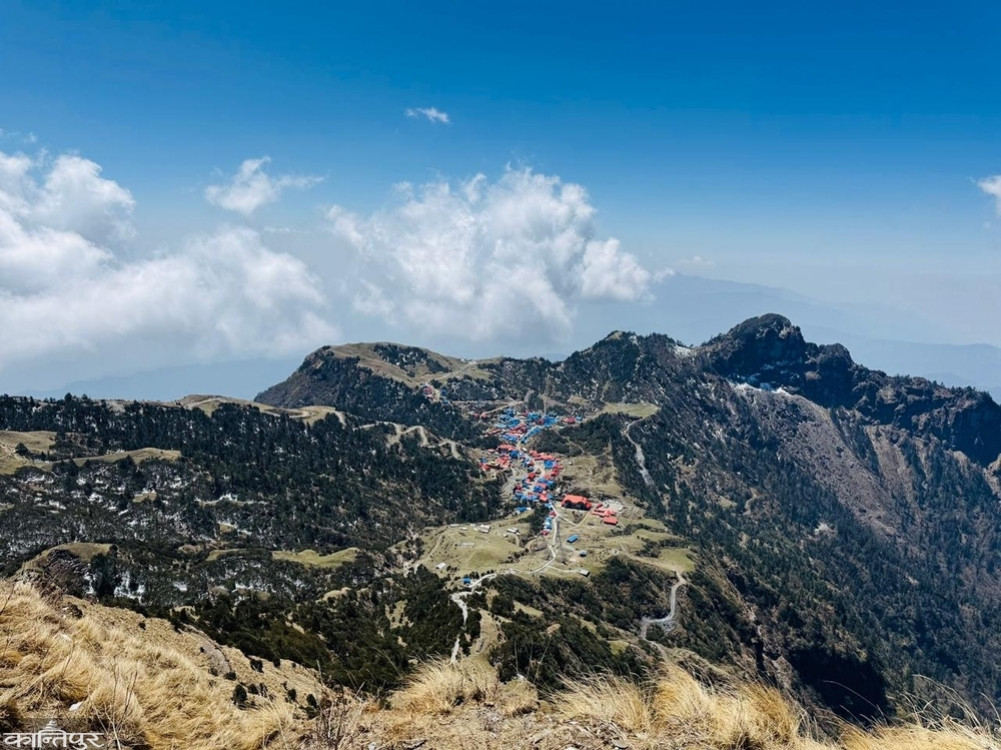
It was said long ago that the hills are a region that exports population. That time is no more. The hills have emptied, sending water and youth to the Terai. Young people have migrated from the hills to abroad and from abroad to the Terai or urban areas. The remittances brought by young people who have gone for foreign employment from the hills have been invested in Madhesh. While the economy of the Terai is on the rise, the economy of the hills is on the decline.
We use Google Cloud Translation Services. Google requires we provide the following disclaimer relating to use of this service:
This service may contain translations powered by Google. Google disclaims all warranties related to the translations, expressed or implied, including any warranties of accuracy, reliability, and any implied warranties of merchantability, fitness for a particular purpose, and noninfringement.
The migration of people from the mountains and hilly areas to cities and the Terai in search of facilities like employment, education, and health is no longer new. Since around 2007 BS, during the phase of malaria eradication in Nepal, people from the mountains and hills have started migrating to the Terai in large numbers in search of food.
In some cases, it seems that the government itself has inspired people to migrate. Around 2007 BS, the government had resettled people from the Gandaki hills by implementing a resettlement program in Rapti Dun of Chitwan.
This was the beginning of state-controlled resettlement. Later, resettlement programs were also carried out in districts like Kailali, Kanchanpur, Bardiya, Nawalparasi, Dhanusha, Morang, and Jhapa. Under this, about 400,000 people were resettled from the hills to the Terai. At that time, the main place of residence was the hills. The Terai was a malaria-ridden and densely forested area.
Even though a malaria control program was launched along with rehabilitation, people were not very willing to descend to the Terai. That is why by 2028, 62.6 percent of the total population lived in the mountains and hills. Barely 37.6 percent of the people lived in the Terai.
This is how the mountains were emptied
During the peak of the Maoist armed war, the mountains were affected. Young people were forced to either join the Maoist army or go abroad. And, a large number of young people went abroad. Their parents, wives, and children started descending to the Terai and the cities. The downward trend in Madhesh, which had reached its peak at that time, is now gradually shortening. In 2058, the share of the hill population decreased to 44.3 percent, while that of the Terai increased rapidly to 48.4 percent.
In 1979, American researcher Frederick H. Gage, seeing the dense migration from the hills to the Terai, said, ‘The hills are a region that exports population.’ Now, as Gage said, the time is no longer there. The hills have emptied. The hills sent water and youth to the Terai. Young people migrated from the hills to abroad and from abroad to the Terai or urban areas.
Children born in the hills have already reached somewhere else by the time they grow up – whether for education, health or employment. The remittances brought by the youth who went for foreign employment from the hills have been invested in Madhesh. That is why while the economy of the Terai is rising, the economy of the hills is falling. The hilly regions also include cities with dense populations and resources such as the Kathmandu Valley, Pokhara, and Birendranagar in Surkhet. These cities have also attracted a large portion of the hilly population, so the villages have become empty.
Therefore, the time that Gage studied is no longer there. The hills, which exported population at that time, can no longer export population. The birth rate in the hills has decreased. Children born in the hills have already reached somewhere else by the time they grow up – whether for education, health or employment.
Therefore, now the hills are not exporting population, but waiting for the time to import. How the hills became empty is that the population growth rate of 27 districts was negative in the 2068 census. At that time, the share of the hill population had decreased to 43 percent, while that of the Terai had increased to 50.3 percent. In the next decade, i.e. in 2078, the population of seven more hill and Himalayan districts decreased, and the population growth rate of 34 districts became negative.
This census showed the share of the hill population at 40.3 percent, while that of the Terai is 53.6 percent. The Himalayan population is limited to 6.1 percent. Therefore, the hills have now lost the opportunity to export population. Instead, this geography is waiting to welcome a large population. In Nepal, which has about 6.7 million houses, about 500,000 habitable houses are empty. Most of them are in the hills.
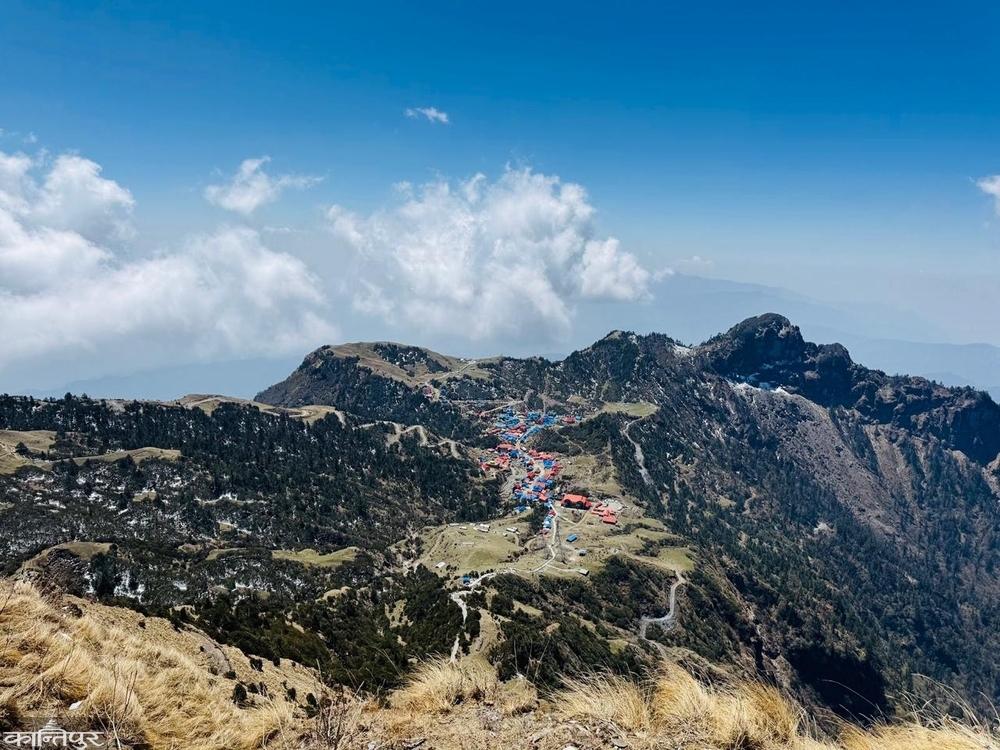
The hills are waiting for the time when those houses will be filled. Not only houses in the hills, but also the homesteads and fields are empty. There is no manpower to do farming. Therefore, those lush fields are also waiting for the arrival of the old man. The fields in the hills will be barren, while the fields in the Terai will be full of houses! In this situation, Nepal is buying food from India and third countries and importing it is increasing every year.
Is reverse migration possible?
In 2074, out of the 460 rural municipalities with ‘local government’ from the local bodies, the population growth rate of 260 was negative. Out of the 293 municipalities, the growth rate of 69 was negative. This figure has worried all three levels of government, development experts, and population experts. After the 2068 census, the debate about returning people to their original places, i.e., ‘reverse migration’, began. That was the time of waiting for the new constitution with federalism to be made by the Constituent Assembly in Nepal. The common people felt that after the constitution with federalism was made, the basic issues they needed like education, health, employment, and development would reach their places.
The constitution was also made. Federalism also came. Singha Durbars also reached every village. However, those intangible achievements did not address the people’s desires. They neither increased employment in the villages, nor did they provide education as promised, nor did they reduce the obligation to come to Kathmandu for administrative work as expected. And, the patience of the people who had been waiting for some time, wondering ‘will something happen in the villages?’ broke. They started migrating in larger numbers. The process of emptying the villages became ‘doubled day and quadrupled night’.
In 2074, out of the 460 rural municipalities with ‘local government’ from the local body, 260 had a negative population growth rate. Out of the 293 municipalities, 69 had a negative growth rate. This figure has the governments of all three levels, development experts and population experts worried.
However, this problem does not seem to be solved if the government does not make this type of migration a main issue. The federal and provincial governments have not shown the same interest in reverse migration. However, the local governments are worried about the emptying of their villages and the increase in monkey terror. They have made many efforts for reverse migration from their own level.
Someone came up with a plan to build a dairy cow and a house for those who migrate to the village. Makawanpur's Raksirang Rural Municipality came up with the program 'Sundar Samaj Hamro Sar, Basain Sari Aane Ghar Uphaar'. Parbat's Mahashila Gapa started giving 1 lakh rupees in cash and enough food for 6 months to those who migrate.
Chhathar Rural Municipality in Tehrathum, which has been affected by migration, has come up with a program to provide business grants of up to 5 lakh rupees, calling for reverse migration. Some of the reverse migrants have raised goats, some have grown vegetables, and some have run hotels and shops.
Reverse migration: Foreign practice
To address this, Japan has implemented a reverse migration policy with an attractive package since the 1980s. It introduced programs such as tax exemptions, housing discounts, and investment in startups for participants in reverse migration, which proved to be very effective. In Nepal, which is in the stage of demographic transition, the declining fertility rate and increasing external migration have created a sudden imbalance in the population distribution. Decreasing or increasing population does not mean just adding or subtracting one person. It has a wide impact on the sociology and economics of any place.
In Nepal, couples are barely having two children. The annual population growth rate is limited to less than one, i.e. 0.93 percent. Nepal's large habitable geography is empty. A large population is concentrated in a small area. The rich countries of the world faced this problem decades ago – villages emptied and cities filled up. And there was a huge decline in agricultural production.
To address this, Japan implemented a reverse migration policy with attractive packages since the 1980s. It introduced programs such as tax breaks, housing discounts, and investment in startups for those participating in reverse migration, which proved very effective.
Japan adopted two models in reverse migration – ‘U-turn’ and ‘I-turn’. In the first model, people who have moved from villages to cities for higher education or other skills are returned to their villages after completing their studies or learning skills. The second model is to bring people from new places to the villages and settle them. Both of these methods are still being practiced by Japan, which has provided relief to the villages when they are empty.
South Korea also launched the ‘Return to Farm/Return to Village’ program in the 1990s as people began to concentrate in the capital Seoul – providing land, agricultural and other vocational training and subsidies to those returning to the village. Internet facilities, roads and markets were ensured. Thousands of people have been participating in reverse migration in the two decades since the program was implemented.
In China, too, after seeing a huge gap in the income levels of villages and cities, it launched a reverse migration campaign in 2017. After receiving infrastructure, internet, subsidies and market facilities in the villages under the ‘Rural Revitalization Strategy’ (RRS), many migrants who had entered the cities returned to their villages.
What should be done in Nepal?
Monkey terror is also a 'byproduct' of migration. When settlements are empty and farmlands are barren, monkeys enter villages in search of food. When people reach empty houses, monkeys return to their original habitats. For reverse migration, population and migration should first be the main issue of politics. When the government or political party realizes that the number of taxpayers, workers, and voters has decreased due to external migration, they become serious about this problem.
The issue of monkey terror is discussed from time to time in the parliament and the government. Monkey terror is also a 'byproduct' of migration. When settlements are empty and farmlands are barren, monkeys enter villages in search of food. When people reach empty houses, monkeys return to their original habitats.
Reverse migration is a topic that is intertwined with emotions. People have an emotional connection with their ancestral birthplace. Therefore, a 'U-turn' reverse migration, as practiced by Japan, is easy. But as practiced by Korea, Japan or China, housing allowances, tax exemptions, employment, agricultural subsidies, and market management must be ensured. The efforts being made by the local government should be supported by the provincial and federal governments. The National Population Policy, 2082, also aims to manage the excessive migration from villages. That policy stated that unbalanced internal migration has created declining economic activity in rural areas, unplanned urbanization, and increasing urban poverty. The Population Policy suggests increasing employment, services, and economic activities in rural areas to end this situation. The conditions for people in rural areas regarding reverse migration are physical infrastructure, employment, access to the internet, mobile hospitals with skilled health workers, vehicle rental discounts for those going to villages, merging small schools to provide facilities, and building residential schools, etc. If the public service delivery in the village is made fully digital, people will gradually be attracted towards reverse migration. This will greatly help the balanced development of the country.