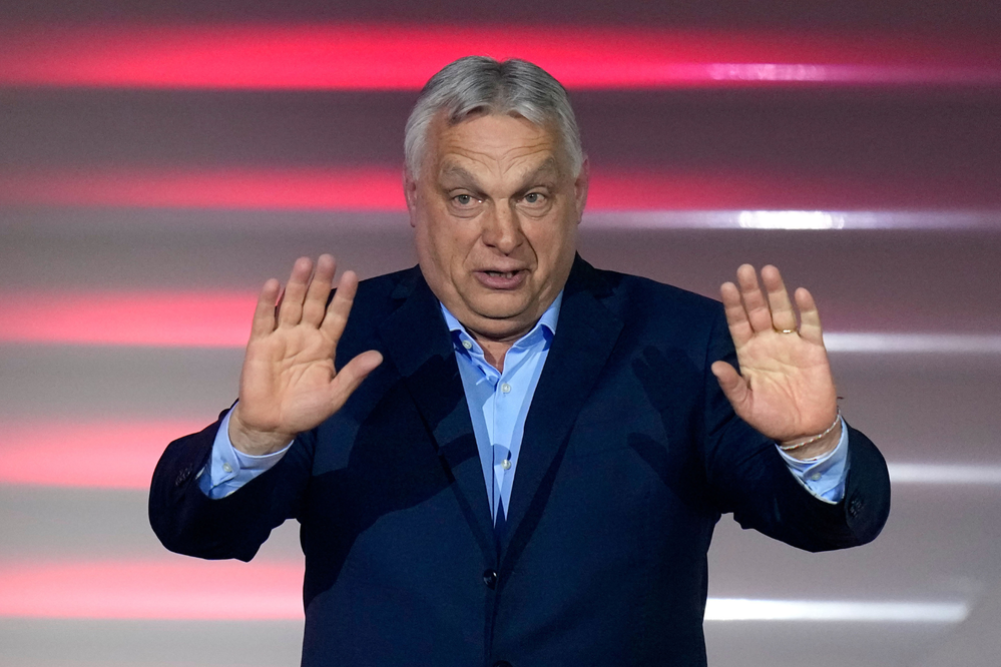
An objective analysis of Orban's rise and fall has reaffirmed the reality that the wave and lifespan of 'populism' is short-lived and that Magyar's victory is no alternative to democracy and liberalism.
We use Google Cloud Translation Services. Google requires we provide the following disclaimer relating to use of this service:
This service may contain translations powered by Google. Google disclaims all warranties related to the translations, expressed or implied, including any warranties of accuracy, reliability, and any implied warranties of merchantability, fitness for a particular purpose, and noninfringement.
After Viktor Orbán, who became the Prime Minister of Hungary after winning a two-thirds majority in 2010, was shamefully defeated in the elections held on April 12, a new debate has begun about the future of ‘populism’ and ultranationalism. Despite the global wave of democracy and liberalism that began in 1990, the sudden rise and unexpected victory of the ‘populist’ Orbán, who proudly declared himself a supporter of liberal democracy, sent a meaningful message. In post-communist Hungary, which ended the communist regime established in 1949 based on the intervention of the Soviet Union and established democracy in 1989, a wave of ‘populism’, ultranationalism and ultranationalism began with Orbán’s victory. Therefore, liberal, pluralist and democratic systems and parties have been victims of ‘populism’, liberalism and ultranationalism since Orbán’s victory.
Not only did Orbán lose the election, which saw the highest voter turnout in Hungarian history, with nearly 80 percent, but the liberal, centrist, and pluralist Tisza Party achieved a historic victory. Tisza Party won more than two-thirds of the 199-member parliament, 141 seats, and about 56 percent of the popular vote. But Orbán's Fidesz party was limited to only 52 seats. What is the political message of the defeat of the 'populist', liberal, and ultranationalist Orbán and the victory of the centrist, liberal, and pluralist party leader Peter Magyar? Did Orbán's defeat mean the defeat of the 'populist', liberal, and ultranationalist movement, and Magyar's victory mean the victory of the centrist, liberal, and pluralist movement? A heated debate is currently underway worldwide.
The message of Orban's defeat
Orban, who was elected using the democratic system, had been running an unaccountable, totalitarian and authoritarian regime for the past 16 years, challenging democratic values and systems. Orban, who was against immigrants and pluralistic societies and cultures, was not only an elected dictator, but also becoming a fascist. As in Nepal, he had either weakened democratic and constitutional institutions against democratic values or had partyized Fidesz. He had completely centralized state power and suppressed dissenting opinions and opposition parties, leaders and activists. He had violated human rights by controlling the natural rights of democracy, freedom of expression and press freedom. The international media had called it almost impossible to defeat Orban, who had even adapted the electoral system to his liking under the guise of power. This conclusion was not unnatural in the scenario of obtaining two-thirds of the popular vote with 54 percent in 2022. But because the people were in favor of change, Orbán's fortress, which was considered impregnable, was defeated and Magyar won.
In the opinion of the columnist, Orbán's defeat is the defeat of liberalism, ultranationalism and 'populism'. That is, the beginning of decline. Similarly, Magyar's victory is the victory of liberal and pluralist democracy. Misrule, corruption and the seizure of state resources were additional reasons for the defeat. According to the Transparency International 2025 report, Hungary was listed as the most corrupt country among the countries of the European Union. Hungary, which became a member of NATO in 1999 and the European Union in 2004, was moving away from Europe and closer to the United States, Russia and China. Therefore, Orbán's defeat has brought joy to Hungary and the whole of Europe. It is likely that as soon as a new government is formed, the European Union will restore close relations and economic cooperation with Hungary, which were in crisis during Orbán's tenure.
In the opinion of the columnist, Orbán's defeat is the defeat of liberalism, ultranationalism and 'populism'. That is, the beginning of decline. Similarly, Magyar's victory is the victory of liberal and pluralist democracy. Western political scientists and media outlets such as the New York Times, Washington Post, CNN, BBC, The Economist have also drawn the same conclusion. Therefore, an objective analysis of Orbán's rise and fall has confirmed the reality that the wave and life of 'populism' are short-lived and Magyar's victory has reaffirmed the reality that there is no alternative to democracy and liberalism. But it is inevitable for liberals, pluralists and centrists to learn from the series of rise and fall of 'populism'.
With Orbán's victory, the wave of 'populism', liberal and anti-immigration politics, parties and leaders spread globally. Similarly, centrist, liberal and pluralist parties also became ‘populist’, liberal and anti-immigration. Leaders such as Giorgia Meloni of Italy, Recep Tayyip Erdogan of Turkey, Javier Millei of Argentina, Robert Fico of Slovakia and others succeeded in coming to power on the basis of the same ‘populist’ agenda. ‘Populist’ parties such as Reform of Britain, Alternative for Germany of Germany, National Rally of France, Freedom of the Netherlands and others have emerged strongly. The rise of President Donald Trump in the United States also took place during this period. Europe and America, considered the birthplace of democracy, liberalism, pluralism and diversity, have become fertile ground for populism, ultranationalism and liberalism.
Harvard University professors Steven Levitsky and Daniel Ziblatt predicted that there are now crises of democracy, in their book ‘How Democracies Die’ published in 1918. Levitsky and Ziblatt conclude that ‘Communism, fascism, military rule and one-party dictatorships of the Cold War era are not the challenges of today. ‘Populism’, ultranationalism, liberalism, anarchism, elected dictatorship are the main challenges.’ They have also predicted that if such complex challenges are not resolved in time, further crises will arise. What Levitsky and Ziblatt predicted, is now the fate of democracy.
Series of waves and counter-waves of democracy
The waves and counter-waves of democracy and ‘populism’ have been going on not only now, but since the 19th century. American political scientist Samuel Huntington has expressed the view that such waves and counter-waves are like regular contingencies. He drew this conclusion in his book 'The Third Wave of Democracy' published in 1991 after studying the rise and fall of democracy from 1828 to 1990. According to Huntington, there have been three waves of democracy and three counter-waves so far.
The first was the first wave from 1828 to 1922. Democracy was established in 33 countries over a period of about a century. But the first counter-wave occurred for the first time in twenty years from 1922 to 1942. The first counter-wave began in 2022 after Benito Mussolini overthrew the corrupt and unpopular government of Italy. The counter-wave reached its peak after Adolf Hitler seized power in Germany in 1933, ending democracy. Countries that had established democracies before or after the First World War were victims of such counter-waves.
Second, with the end of World War II, the second wave of democracy came again from 1943 to 1962. During this period, the Rana regime also ended in Nepal and democracy was established in 1951. Democracy was established in countries such as Germany, Italy, Austria, Japan, Korea, Turkey, Greece, Brazil, Costa Rica, Peru, Colombia, Argentina, and others during this period. Despite democratic and periodic elections on paper and in the constitution, the newly established democracies were moving towards authoritarian and totalitarian directions. In 1962, another counter-wave of democracy began with the military intervention in Peru. There was a short period of the second counter-wave of 12 years from 1962 to 1974. During this period, democracy ended in countries such as Greece, Turkey, Brazil, Bolivia, Argentina, Ecuador, Chile, Uruguay, Pakistan, and South Korea. In 1962, there were 13 countries in the world under military rule, while in 1974, it had reached 38.
Third, the period from 1974 to 1990 is considered the third wave. The third wave was launched at midnight on April 25, 1974, when the song 'Grenada Vila Morena' was broadcast on the radio in Lisbon, the capital of Portugal. During this period, democracy was established in about 30 countries. The communist regimes in countries such as the Soviet Union, East Germany, Hungary, Czechoslovakia, Romania, Poland, Bulgaria, Mongolia, and Nicaragua fell and democracy was established. During this period, democracy was also re-established in Nepal in 1990. In 1922, only 29 countries had democracy, but in 1990, this number increased to 130. Huntington has also projected a third counter-wave. However, the book does not mention the third counter-wave because the research was done up to 1990 and it had not come by then.
Short-lived wave of 'populism'
As Huntington projected, the third counter-wave is believed to have started in 2010. But unlike in the past, communist, military and authoritarian regimes have not been established by overthrowing democracy, but rather the parties, presidents and prime ministers who came to power through elections in a democratic system have been weakening democracy. The ‘populist’ and ultra-nationalist Hitler and Mussolini succeeded in seizing power by exploiting the maximum psychological impact of the frustration and dissatisfaction created by the economic crisis that began in America and Europe in 1929. Western political scientists believe that the third wave has occurred since 2010 due to another economic recession that began in 2008. Just as Hitler and Mussolini rose on the basis of ultra-nationalism, ‘populism’ and ‘propaganda’, similarly Orban in Hungary, Milley in Argentina, Erdogan in Turkey, Meloni in Italy, and Nigel Farage in Britain have risen.
Such ‘populist’, ultranationalist and liberal parties, trends and characters have been challenging democracy in the name of democracy by using the democratic system and electoral process. They have been attacking democracy, democratic institutions and liberal values. Since the moment they came to power, Orban, Milley, and Erdogan have been attacking and weakening democratic, pluralist and liberal values, systems and institutions. But the wave of ‘populism’ is temporary, short-lived and reactive. In 2022, Brazil’s ‘populist’ former President Jair Bolsonaro was defeated. Now Orban has been defeated. Not only Bolsonaro and Orban, but ‘populist’, ultranationalist and liberal parties and characters have been gradually becoming weak and unpopular. Therefore, after 2026, it seems that the wave of democracy and liberalism and the counter-wave of ‘populism’ have begun.
Since coming to power, Orban, Milley, and Erdogan have been attacking and weakening democratic, pluralistic, and liberal values, systems, and institutions. But the wave of 'populism' is temporary, short-lived and reactive. The explosion of social media
National and international organizations conducting research on this issue have concluded that social media and digital platforms have played a special role in the creation of a global wave of 'populism', ultranationalism, and illiberalism. They have called social media a propaganda machine for 'populism', illiberalism, and extremism, and have concluded that it is a tool for spreading misinformation, disinformation, hatred, and intolerance. In the name of creating an alternative narrative, such media do not debate and discuss theories, ideas, and policies based on facts and figures, but make exaggerated and unhealthy accusations based on falsehoods. It seems that the misleading standard and narrative that those who loudly denounce and condemn are revolutionary is being established.
Currently, the trend of being 'popular' and 'heroic' by attacking mainstream, middle-of-the-road and liberal values seems to be dominating, cheap, 'populist' and 'stuntist'. The 'ghosts' of Hitler's propaganda minister Joseph Goebbels, the pioneer of the 'propaganda' theory that even a lie is established as truth if told a thousand times, have emerged as the brainchild of 'populism'. 'Populists' and ultra-nationalists have emerged by attacking liberalism, democracy, mainstream, media and intellectual community. But such so-called new parties, characters and trends are 'populist', ultra-nationalist, and liberal. Apart from protest, anger and abuse, they have no political vision, ideas and policies. Therefore, 'populism' is not a solution, it is a problem.
अहिले सत्ताका सौदागर र निराशाका व्यापारीहरू राजनीतिक सट्टाबजारमा आश्चर्यजनक रूपमा हावी हुँदै गइरहेका छन् । अतिरञ्जित, असहिष्णु र विषाक्त प्रोपोगान्डालाई लोकप्रिय भाष्यका रूपमा परिभाषित र आत्मसात् गर्ने दुर्भाग्यपूर्ण प्रवृत्ति बढ्दै गइरहेको छ । शीघ्र सूचना, प्रत्यक्ष संवाद र जीवन्त बहसका दृष्टिले फेसबुक, एक्स, युट्युब, इन्स्टाग्राम, टिकटक जस्ता सामाजिक सञ्जाल अत्यन्त लोकप्रिय र प्रभावशाली माध्यम भएका छन् । राजनीतिक पार्टी, नेता र कार्यकर्ताहरू पनि सामाजिक सञ्जाल र डिजिटल प्लाटफर्ममा आधारित र केन्द्रित हुँदै गएको देखिन्छ । लन्डनबाट प्रकाशित हुने दी इकोनोमिस्टले पनि उदार लोकतन्त्र ‘पपुलिस्ट’, उग्रराष्ट्रवादी, अनुदारवादीहरूको अतिरञ्जित ‘प्रोपोगान्डा’को सिकार भएको निष्कर्ष निकालेको छ । त्यसैले सामाजिक सञ्जालमार्फत सिर्जना भएको ‘पपुलिजम’, अतिवाद, अनुदारवादको घातक लहर आजको सबैभन्दा जटिल चुनौती हो ।
नेपालमा परेको राजनीतिक प्रभाव
अन्तर्राष्ट्रिय राजनीतिक लहर–प्रतिलहरको प्रत्यक्ष वा परोक्ष प्रभाव नेपालमा पर्दै आएको छ । रास्वपा, वालेन्द्र शाह, रवि लामिछानेहरूको चामत्कारिक उदय र २१ फागुनको निर्वाचन परिणाम पनि पुराना पार्टीको विपक्षमा तथा नयाँ र ‘पपुलिस्ट’ पार्टीको पक्षमा चलिरहेको लहरको प्रत्यक्ष प्रतिबिम्ब हो । विश्वका अन्य देशमा जस्तै नेपालमा पनि जनआकांक्षाअनुसार लोकतान्त्रिक प्रणालीले डेलिभरी गर्न नसकेका कारणले जनतामा सिर्जना भएको असन्तुष्टि, आक्रोश र वितृष्णाको व्यापार गरी ‘पपुलिस्ट’हरूको उदय भएको देखिन्छ । लोकतन्त्रका अन्तर्निहित शासकीय कमीकमजोरीबारे प्रायोजित र विषाक्त भाष्य निर्माण गरी अधिकतम राजनीतिक लाभ लिन सफल भएको देखिन्छ । नेपाल ‘पपुलिजम’को राजनीतिका लागि उर्वरभूमि र बिनालगानीको नाफामूलक व्यवसाय भएको छ । त्यसैले नेपालमा पनि उदारवादी, लोकतन्त्रवादी, मध्यमार्गी पार्टी तथा विचार प्रतिरक्षात्मक र अलोकप्रिय भएका छन् भने ‘पपुलिस्ट’ र अनुदारवादी पार्टी, प्रवृत्ति र पात्रहरू आक्रामक र सफल ।
राजनीतिक विचारधाराका दृष्टिले कांग्रेस र कम्युनिस्ट जस्तो रास्वपा स्पष्ट छैन । हालसम्म प्रकाशित राजनीतिक दस्तावेजका आधारमा वर्गीकरण गर्दा रास्वपा गैरकम्युनिस्ट र लोकतन्त्रवादी पार्टी हो । तर गैरकम्युनिस्ट र लोकतन्त्रवादी भए पनि यसको सैद्धान्तिक रुझान ‘पपुलिस्ट’, मध्य–दक्षिणपन्थी र अनुदारवादी देखिन्छ । विश्वका अन्य ‘पपुलिस्ट’ पार्टी र नेताहरूको उदय जसरी भयो, त्यसरी नै सामाजिक सञ्जालमार्फत मूलधारका पार्टीलाई आक्रमण गरी सुशासनको मसिहाका रूपमा रास्वपा, वालेन्द्र शाह, रवि लामिछानेहरूले आफूलाई स्थापित गर्ने रणनीति अख्तियार गरेको देखिन्छ । यो रणनीति तत्कालका लागि सफल भएको देखिन्छ । तर करिब दुईतिहाइसहित शक्तिशाली सरकार बनेपछि अब प्रधानमन्त्री शाह र रास्वपाको अग्निपरीक्षा सुरु भएको छ ।
लोकतान्त्रिक प्रणालीले अपेक्षाकृत डेलिभरी गर्न सकेन । यो कटु सत्य हो । यही कारणले पूर्ववर्ती सरकार, पार्टी र नेतृत्व अलोकप्रिय र कमजोर भई सत्ताबाट समेत विस्थापित भए । सरकार र पार्टीहरूको असफलताको मूल्य केही हदसम्म लोकतन्त्र र संविधानले समेत चुकाउनुपर्यो । तर नोबेल पुरस्कार विजेता बेलायतका पूर्वप्रधानमन्त्री विन्स्टन चर्चिलले भनेजस्तै पूर्ण नभए पनि हालसम्म अभ्यास गरिएकामध्ये सबैभन्दा उत्तम प्रणाली लोकतन्त्र नै हो । तत्कालीन र प्रतिक्रियात्मक रूपमा निर्वाचनमा सफलता हासिल गरे पनि ‘पपुलिजम’, उग्रराष्ट्रवाद र अनुदारवादको भविष्य छैन र उदारवादी तथा बहुलवादी लोकतन्त्रको विकल्प छैन । लोकतन्त्रको विकल्प ‘पपुलिजम’, उग्रराष्ट्रवाद र अनुदारवाद हिजो पनि थिएन, आज पनि छैन र भोलि पनि हुनेछैन । @GejaWagle