There can be no disagreement that the university environment should be educational and academic. For that, the government and university leadership can also adopt strategic measures.
We use Google Cloud Translation Services. Google requires we provide the following disclaimer relating to use of this service:
This service may contain translations powered by Google. Google disclaims all warranties related to the translations, expressed or implied, including any warranties of accuracy, reliability, and any implied warranties of merchantability, fitness for a particular purpose, and noninfringement.
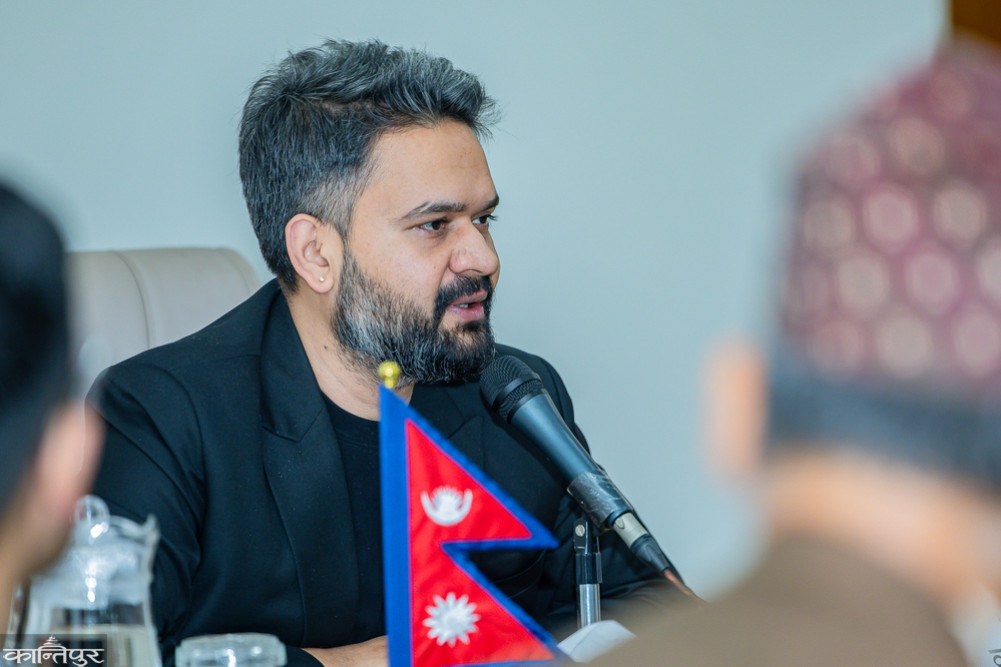
Tensions have arisen between the government and student organizations after the government put forward an agenda to remove the structure of party student organizations from schools/universities. The government has moved to implement its decision, while student organizations have come out in protest against the government. There are two views on student organizations in Nepali society.
First, there are those who believe that student organizations, which have a decades-long history and have been refined by protesting the undemocratic steps of the government, are still relevant. Second, since student organizations have established themselves as fear-mongers within universities, there are those who advocate the abolition of such organizations to keep the educational and academic environment there alive. There are sufficient challenges and risks in implementing a decision taken unilaterally by the government without even discussing it with the student organizations themselves. The government should reach a conclusion through a comprehensive dialogue rather than rushing into it.
Student movements in Nepal are basically portrayed as synonymous with political struggles. Students have fought for democracy, citizen voice and openness for Nepali society, which has been forced to suffer from autocracy time and again.
The Jayatu Sanskritam movement against the Rana regime, the 2035/36 movement that forced a referendum in 2037, and the student movement against the autocracy of the then King Gyanendra have brought great benefits to Nepali society. The student movement is also responsible for providing concessions in public transport. Therefore, student organizations are also grateful for the political system currently practiced in Nepal.
Article 17 of the Constitution has given every citizen the freedom and right to freedom of thought, expression, peaceful assembly without weapons, to form political parties and to form organizations. Therefore, the government cannot take away the right to organize based on any faith. It is impractical to stop political activities in places where high-level educational and academic activities take place, especially in universities.
Because, political activity is not a criminal act . It is a necessary aspect of society . But trying to remove the structure of a party student organization from a university based on faith in a political party and adopting the measure of arranging a temporary/permanent security unit on the university premises for that is questionable . First, the government should not send the message that being politically aware and active is a crime . Second, it should not even threaten to use security forces to suppress those who exercise the constitutionally granted right to organize .
There is no doubt that there is a glorious history of student movements . But today, the reason for the support garnered when the government tries to remove the structure of a party student organization from a university is clear, the image of the student organization . Nepal's student organizations are known for their political movements in history, but they are rarely known for their educational reasons .
In recent decades, student organizations have become chaotic . They have become proficient in blackmailing teachers, beating them, setting fire to the campus, vandalizing, locking them, collecting donations, and sharing appointments. They are weak in academic, educational, and student issues. It seems that they prefer the use of sticks to pens and books.
Even those who beat teachers are not held accountable due to the protection of the Maurya organization. It has become a tradition that even if an organization locks down a university for months and halts academic/administrative activities, it does not have to be held accountable. It seems that the government wants to get rid of student organizations by showing this aspect.
There can be no disagreement on the fact that the university environment should be educational and academic. For that, the government and the university leadership can also adopt strategic measures. However, the tendency of ‘setting fire to the house when bats cause trouble’ is not appropriate. If the government were to bring students involved in criminal activities under the purview of action, there could be a lot of improvement. In the past, the action process did not proceed when students who were in government and involved in criminal activities belonged to the same party.
The current government has no problem in proceeding with the action process. The government could have communicated with political parties and student organizations and expressed a commitment to improve the university environment. At that time, the government could have reached a consensus in the council or voice of student mechanism as it wished. But the government has tried to establish the supremacy of its own decision over dialogue by unilaterally deciding to abolish the structure of the student organization in a way that sends a message of prejudice towards certain parties. Such a trend is not appropriate in a democracy.
Politically active student organizations are the jewels of the university. They should be discussing current educational issues, interacting with domestic and foreign experts on national and international contemporary issues, and spreading new ideas by studying and researching new issues in society - this is the theoretical expectation placed on student organizations.
But student organizations that are alienated from this and carry burdens cannot function as they do now. Society cannot support and belong to such organizations. Whether in the organization as a whole or in the student committees operating within the university, they must make strenuous efforts for their own improvement. Now the agenda and form of activities they carry must change.
Educational reform and quality education should be their basic agenda. The university's educational and academic activities should be able to adapt to the pace of the world. Whether there will be student organizations in the university in the future or not, reform within it is inevitable.
The government may have made positive efforts to ensure that the academic and academic environment of the university is not disrupted. However, this is not a random act. Taking action against students involved in criminal activities should be the first priority.
The organizational structure cannot be held responsible for the reckless activities of any member or group of the student organization. The main thing is to initiate reform where problems are found, not to abolish them. Therefore, the government should not ignore the option of further dialogue and reaching a common consensus.