The government's seemingly illogical decisions may not stem from a lack of experience, but rather from the need to show off in the face of a possible premature exit.
We use Google Cloud Translation Services. Google requires we provide the following disclaimer relating to use of this service:
This service may contain translations powered by Google. Google disclaims all warranties related to the translations, expressed or implied, including any warranties of accuracy, reliability, and any implied warranties of merchantability, fitness for a particular purpose, and noninfringement.
Although all the contents of the newspaper are according to the national calendar, this column usually uses the international date . But nowadays, the situation is not normal even abroad. That is why the past year has to be remembered according to the Vikram Samvat in the Hindu calendar . Although the Chinese celebrate their festivals according to the traditional New Year, they have started following the ‘CE’ i.e. ‘Common Era’ or common calendar in most administrative and commercial work . The CE is also used in India, the country with the largest Hindu population in the world . Although they use their own calendars for determining religious, cultural and festivals, the CE calendar has been recognized for legal, commercial and administrative purposes in South Asian countries such as Muslim-majority Bangladesh and Pakistan and Buddhist-dominated Sri Lanka.
The country that was once called ‘Kashi, Kashmir, Strange Nepal’ is still different today – in order to show its difference from neighboring India, the elites of Kathmandu have made the act of moving the clock forward by 15 minutes and implementing a calendar that is disappearing from the pages of history a standard of national identity. It is true that the predecessor of CE – the Gregorian calendar – used to be the Christian calendar. If the Chinese had ruled the world or the empire of the Turkish Caliphate had covered the world, their calendar would have been called CE. Hindus have thirty-three crore gods, four castes, thirty-six castes and ten types of calendars, so they enjoy ruling over their own ‘Sudra, Mahashudra and Mlechcha’. Their system of governance was unlikely to become the common standard of the world. The West expanded its empire and colonies, developed science and technology, and increased trade, so the English world language and the Gregorian calendar have become the 'Common Era'. Sooner or later, even if the nationalists called 'Gen-G' do not understand that, the international generation called 'Gen-Alpha' will probably realize it. But now is the time of the Vikram Samvat, which is said to have been started by an emperor called Vikramaditya of Ujjain, so it makes no difference if contemporary discussions are conducted accordingly.
Vikram Samvat 2082 needs to be recorded in public memory as a year in the history of Nepal when the state's extreme failure and the spark of civil anger took the form of a fire. Just as the 2007 BS revival of the Shah dynasty, the 2017 royal-military coup, the 2046 BS proclamation of sovereignty in the people through the people's movement, and the foundation of the republic from 2063-65, history will remember the year 2082 as the starting point for the fall of the ruling power and socio-structural disruption through the Green Belt Rebellion. It is said that public memory is surprisingly short-lived. Therefore, it needs to be jolted awake from time to time. Even as the details of the circumstances and events become blurred, some topics may need to be repeated over and over again to keep their harsh lessons alive in the consciousness of the people.
The country that was once called ‘Kashi, Kashmir, Strange Nepal’ is still different today – in order to show its difference from neighboring India, the elites of Kathmandu have made the act of moving the clock forward by 15 minutes and starting the practice of a calendar that is disappearing from the pages of history a standard of national identity. Last year proved to be such a mirror, where Nepalis, forced to closely observe the ugliness of their own destiny along with their own faces, tried to break the mirror by hitting it with a cube. But the mirror was a reflection in the water, it shook and returned to its previous position. The incidents of 76 innocent Nepalis losing their lives in just two days, brutal attacks on security personnel and looting of police weapons are about to be forgotten in a short time. Government structures, private homes and business centers across the country were systematically set on fire and vandalized. Historical heritages that were reconstructed with billions of investment, along with structures built with trillions of rupees, were destroyed and irreplaceable national assets were reduced to ashes. The four pillars of the state - the legislature, the executive, the judiciary and the media - were set on fire. While the city was burning, the fire engines of the Kathmandu Metropolitan City, which were not seen on the streets, only entered the work area to clean up the ashes.
Ironically, when the residence of the head of state was also set on fire, the Nepali Army, which is said to be the oldest and most glorious in South Asia, could not protect the residence of its own sovereign. The situation shows how weak the self-confidence of the security mechanisms of the state, which are considered strong, is when prisons were broken for two days, police weapons were looted and dangerous prisoners walked freely. When a group of rioters set fire to a media house, the person who called for security received the answer from a responsible police officer: ‘Protect yourself. Our posts have instructions: If an attacker comes, save your weapons if possible, otherwise leave for your life.’
Last year, the general public had the opportunity to understand the harsh reality that state institutions are nothing more than straw huts that can collapse even in a normal wind. Even if we accept that these incidents were born out of a deep sense of despair and collective anger, it is not difficult to understand the panic hidden in the citizens’ sighs that ‘the year of disaster has passed.’ But the question remains unanswered: Is the crisis over? Or is this just a rehearsal for more terrible times? Although the answer lies in the future, the current signs are not encouraging. There is a popular saying in the Awadhi language associated with the text of Tulsidas's Ramcharitmanas - 'Biti tahi bisari dehu, aage ki sudhi lehu'. But it is not easy for anyone to think about the future by forgetting the past. According to Eastern philosophy, time does not only move in a straight line but also has a cyclical character - what happened has created the present and what is happening will determine the future.
Although the current government was formed through a general election, its foundation was laid by the Nepali Army. After the widespread destruction, the call for talks with the so-called protesters through a handheld loudspeaker in the square in front of the Bhadrakali headquarters, the approval of the name of the former Chief Justice by the then mayor of Kathmandu, and the formation of an unconstitutional government by the Supreme Commander of the Nepali Army to dissolve the House of Representatives among the suggestions received for the post of Prime Minister, it seems logical that the direction of subsequent political developments has been determined.
There is no need to doubt the intentions, capabilities or performance of the High-Level Judicial Inquiry Commission formed under the leadership of former Special Court President Gauri Bahadur Karki. Each and every one of the members of the Commission was qualified. The Commission must have acted as expected by the unconstitutional government that appointed it. After the general election results came as predicted, the caretaker government may not have seen the need to formally make the Commission's report public.
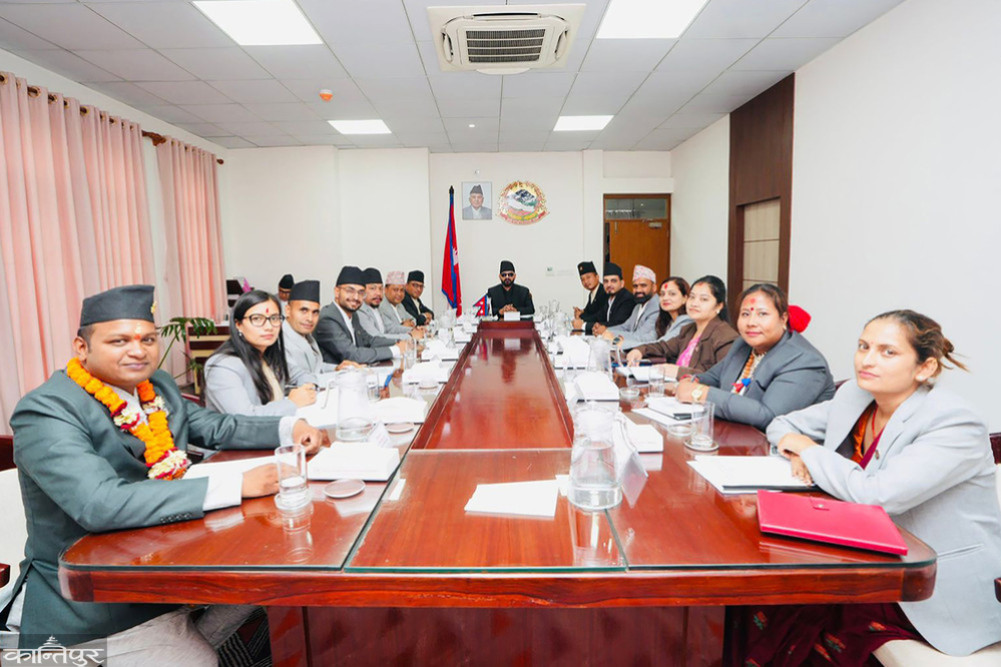
It is not unusual for the newly elected government to rush to take action based on the report that was informally made public, because its mandate was not based on any economic and political ideology but only on declared and undeclared government commitments. After every change of power, any 'new government' justifies itself by demonizing its predecessor. If we look at the events after Prime Minister Balendra Shah's accession to power in the light of the 'Darun Year-2082', it may seem that the government's seemingly illogical decisions arose not from a lack of experience but from the need to show something before a possible premature exit. Otherwise, the government, which had received a mandate to rule for five years with a nearly two-thirds majority in the House of Representatives, would not have had to rush to establish its momentum, even if it had to run in circles.
Planned activities
By the year 2082 BS, Khadga Prasad Sharma Oli, the ethnic chief of the Khas-Arya community, who had become self-absorbed due to his arrogance and the false praise of his servants, had become alienated from the ground realities of the country's economic and political situation and the strategic situation in his neighborhood. Although the work of political synchronization of the Congress with the UML had been going on for a decade, accepting a supporting role in the Sharma Oli-led government was probably an unforgivable mistake of the leadership of that 'Grand Old Party'. The veteran political scientists of the Congress could not understand the simple fact that if the two largest parties unite in a parliamentary system, a situation of no alternative will be created and politics will reach the streets from the parliament. Sher Bahadur Deuba, who was addicted to the power of the state, did not have the ability to warn his senior partners. Pushpa Kamal Dahal, who sees no future for himself except for the politics of division, has not yet developed the culture of playing the role of a responsible opposition. There may have been many visible and invisible reasons behind the failure to meet the expected opposition when the parliament building was attacked or the House of Representatives was dissolved in an apolitical manner, but the most important reason was probably that there was no party or leadership left in the political landscape that could stand as an alternative to the government that had lost its credibility. Preparations for a possible alternative were being made outside the parliament.
While the three tycoons in power – Sharma Oli, Deuba and Dahal – were practicing the game of ‘musical chairs’ between Baluwatar and Singha Durbar, the then ‘Grand Mayor’ of Kathmandu, Balendra Shah, was crafting a patronage model of governance. The most popular emotional frenzy in Nepal is nationalism. After India put up a map of ‘Akhand Bharat’ in its new parliament building, the Grand Mayor, as a symbolic response, hoisted the flag of ‘Greater Nepal’ in his office, encompassing Nepali territory up to Teesta in the east and Kangra in the west. After the Patan High Court overturned the decision to not allow any Hindi film to be screened in the metropolis unless the dialogue about Janakandini Sita's birthplace in India was removed, the mayor roared on social media (un) – ‘Where the issue of the country's sovereignty and independence is concerned, I will not obey any law or court.’ In a country where the mayor of the metropolis is a greater protector of the ‘country's sovereignty and independence’ than the law and the court, it is no wonder that no one spoke up when the Supreme Court was opened after some time. It seems that politicians who are free from class consciousness, who are impartial towards questions of identity and respect of excluded communities, and who are hostile to the parliamentary process, are very fond of the result-oriented governance style. The mayor had made the bulldozer used to demolish unauthorized structures an emblem of action during his tenure. The bulldozers of the metropolis were not just machines for demolishing physical structures, they were a visible attack on the decades-long inaction of the state system. For the urban middle class, tired of procedural hassles and pressure and transactional decision-making, that ad hoc act had become a symbolic sign of ‘something will happen now’. The Samakhusi River with its lid opened, the temporary huts on the banks of the Bagmati demolished in some sections, the small businessmen who bought empty bottles and old papers from house to house being reprimanded, the small traders who were chased off the sidewalks and the granite strewn on Durbar Marg reflect the aesthetic consciousness of the impatient urban middle class.
While the three tycoons in power – Sharma Oli, Deuba and Dahal – were practicing the game of ‘musical chairs’ between Baluwatar and Singha Durbar, the then ‘Grand Mayor’ of Kathmandu, Balendra Shah, was creating a patronage model of governance. यसरी सुस्तरी विकसित भइरहेको सम्पूर्ण अर्थराजनीतिक र सामाजिक मनोविज्ञानको परिदृश्यलाई सूक्ष्म रूपले अवलोकन गरिरहेका महामेयरका सञ्चालक एवं सल्लाहकारहरूले ‘र्याप गायक बालेन’ को सार्वजनिक छविलाई ‘विद्रोही वालेन्द्र’ बनाउन परम्परागत मिडियालाई तिरस्कार गर्दै (अ)सामाजिक सञ्जालको व्यापक प्रयोग गरेका थिए । त्यसैले प्रधानमन्त्री शाहले हालसालै सार्वजनिक गरेझैं उनको व्यक्तिगत कमाइ र बचतको मुख्य स्रोत (अ)सामाजिक सञ्जाल हो भन्ने दाबी सत्य पनि हुन सक्छ ।
नेपालको सहरिया मध्यमवर्गसँग अलिअलि आर्थिक स्थायित्व छ । हातमा महँगो ग्यालेक्सी वा आइफोन नभए पनि बजारमा पाइने उत्तिकै उपयोगी चिनियाँ स्मार्टफोन छ र रिल एवं टिकटकमा छोटा भिडियोहरू एकोहोरिएर हेर्दाहेर्दै धैर्यको स्तर अत्यन्त न्यून विन्दुमा झरेको छ । यस प्रवर्गलाई प्रजातन्त्रको जटिल र सुस्त प्रक्रिया (ड्यु प्रोसेस) बोझिलो लाग्छ । तिनलाई तत्काल निकास दिने ‘डेलिभरी’ चाहिएको छ । सरकारले कुनै कम्पनीको कार्यकारी प्रमुख (सीईओ) ले फटाफट नतिजा देखाउन सुरु गरोस् भन्ने लाग्छ । त्यसैले ‘काम गर्ने वालेन्द्र’ को सार्वजनिक छवि सहरिया मध्यमवर्गको सामूहिक अधैर्यलाई सम्बोधन गर्ने गरी निर्माण गरिएको थियो ।
गलत वा सही तरिकाले नाम र दाम कमाए पनि तत्कालीन सत्तासीन तीन तिकडमबाजको आफन्तवाद र कृपावादका कारण ओझेलमा परेका, आफूभन्दा ठूलो घर र मोटर भएका राजनीतिकर्मीसँग ईर्ष्यालु बनेका एवं आफ्ना सन्तानलाई विदेश पठाएर देशप्रतिको कर्तव्यमा अपराधबोध (गिल्ट) महसुस गरिरहेका सम्भ्रान्त एवं नव–सम्भ्रान्तका लागि बालेनको भिडियोमा एउटा ‘लाइक’ वा ‘सेयर’ गर्नु नै क्रान्तिमा सहभागी हुनु बराबर भइसकेको थियो । प्रधानमन्त्री शाह एवं उनको सहरिया मध्यमवर्ग बाहुल्यको ‘सुनौलो मन्त्रिमण्डल’ सफल तर असन्तुष्ट सम्भ्रान्तका लागि एक प्रकारको सांख्यिक परिशोधन (डिजिटल रिडेम्प्सन) हो भन्दा पनि हुन्छ ।
सहरिया मध्यमवर्गको अर्को चाहना भनेको नियम र अनुशासनको पालना अर्थात् सन्तुलित ‘अर्डर’ हो– सफा सडक, व्यवस्थित सहर र दृश्यात्मक सुन्दरता– जहाँ सबै पात्र आफ्ना निर्दिष्ट भूमिका निर्वाह गर्छन् । त्यस सौन्दर्यशास्त्रको पर्दा पछाडि लुकेको वर्गीय, नृजातीय, धार्मिक, सांस्कृतिक वा लैंगिक असमानता सुविधाभोगी वर्ग र समुदायको चासोका विषय होइनन् । जब फुटपाथबाट गरिबको रोजीरोटी खोसिन्छ, त्यसबखत त्यो प्रवर्गले सरसफाइ र सौन्दर्यबोध (एस्थेटिक्स) मात्र देख्छ, सामाजिक न्यायको अवरोध देख्दैन ।
कलाविहीन प्रदर्शन
प्रधानमन्त्री शाह सहरिया मध्यमवर्ग र सामाजिक एवं अर्थराजनीतिक रूपले सुविधाभोगी प्रवर्गका लागि राजनीतिक पथप्रदर्शक नभई पछ्याउन योग्य कालो पहिरन र कालो चस्मामा सजिएका ‘पप आइकन’ हुन्– उनका आँखाहरूले सबैलाई देख्छन् तर उनको आँखाको भाव अरू कसैले देख्न सक्दैन । समग्र नेपाली समाज अहिले एउटा खतरनाक संक्रमणकालीन मनोविज्ञानमा छ– नागरिकहरू आफ्ना प्रियपात्रको प्रस्तुतिका फगत ‘दर्शक’ मा रूपान्तरित भएका छन् । नागरिकले प्रश्न सोध्छ, जवाफदेहिता खोज्छ र प्रक्रियामा सक्रिय सहभागिता जनाउँछ । दर्शक भने सिटी फुक्छ, ताली बजाउँछ वा नाकको कसिंगर निकाल्दै ‘क्लाइमेक्स’ कुरेर बस्छ । यो ‘डेमोक्रेसी’ नभएर ‘थिएटरोक्रेसी’ हो । त्यसैले प्रदर्शन सकिएपछि प्रस्तोतासँगै दर्शकले पनि जीवनका कठोर यथार्थको सामना गर्नुपर्ने निश्चित छ । प्रदर्शन चलिरहेसम्म सबै कलाबाज पनि आ–आफ्ना करतब देखाउन प्रतिबद्ध देखिन्छन् ।
प्रधानमन्त्री शाह मौनतामार्फत आफ्नो तागत देखाउने नायक (हिरो) जस्ता देखिन्छन् । प्रशंसकलाई लाग्छ– तिनका लागि शान्त भएर लडिरहेको पात्र अन्ततः विजयी होस् । नाटकघरमा जस्तै प्रदर्शनमुखी राजनीति (पर्फर्मेटिभ पोलिटिक्स) पनि कहिलेकाहीँ विषयवस्तुको सारभन्दा प्रमुख पात्रहरूको शैलीमा निर्भर हुन पुग्ने रहेछ । प्रधानमन्त्री शाह मौनतामार्फत आफ्नो तागत देखाउने नायक (हिरो) जस्ता देखिन्छन् । प्रशंसकलाई लाग्छ– तिनका लागि शान्त भएर लडिरहेको पात्र अन्ततः विजयी होस् । रवि लामिछाने मूल पात्र (प्रोटागोनिस्ट) छन्, जो दगुर्छ, खस्छ र धूलो टकटकाएर फेरि हिँड्दै गर्दा धेरै कुरा सिक्दै जान्छ । देउवालाई खलपात्र र शर्मा ओलीलाई खलनायक बनाएर उभ्याइएको छ । गृहमन्त्री भने नियम, कानुन र परम्परा केही नमान्ने प्रतिशोधी फरिस्ता (अभेन्जिङ एन्जेल) को भूमिकामा पुराना राजनीतिकर्मी एवं तिनका समर्थक व्यवसायीहरूबीच हडकम्प मच्चाइरहेका छन् भने प्रहरी र प्रशासनलाई थुमथुम्याएर ताली बटुलिरहेका छन् । लाग्छ, राष्ट्रिय राजनीतिको मञ्चमा कुनै दार्शनिक नाटकको साटो ‘सी–ग्रेड’ दक्षिण भारतीय सिनेमाको पटकथाअनुसारको नौटंकी मञ्चन भइरहेको छ । मनोरञ्जनको लत बसेको दर्शकलाई अहिले नयाँ वर्षको शुभकामनाबाहेक अरू केही भन्न हतारो हुनेछ ।
पात्रहरूमध्ये सुनको जलहरी चढाइएका पशुपतिनाथ र ठोरीमा जन्मेका रामले शर्मा ओलीको कल्याण गरून् । उज्जैनका महाकालले दाहालको रक्षा गरिरहेकै छन् । गोर्खाली राजाबाट न्याय पाएका देउवाको भलो पनि गुरु गोरखनाथले पक्कै पनि गर्नेछन् । प्रधानमन्त्री शाहले भद्रकाली मन्दिर र मुख्यालयको आशीर्वाद पाइरहून् । सबै आस्थावान्लाई अब्राहमिक परिवारका भए परमेश्वर र ओङ्कार परिवारका भए आ–आफ्ना कुलदेवी वा आराध्यदेवको संरक्षण प्राप्त भइरहोस् । अनिश्वरवादी एवं धर्मनिरपेक्ष व्यक्तिहरूमा ग्राम्सीले लोकप्रिय बनाएका ‘बुद्धिको निराशावाद र इच्छाशक्तिको आशावाद’ मान्यताअनुसार कर्मक्षेत्रमा डटिरहने प्रतिबद्धता कायम रहोस्– विसं २०८३ को शुभकामना ।