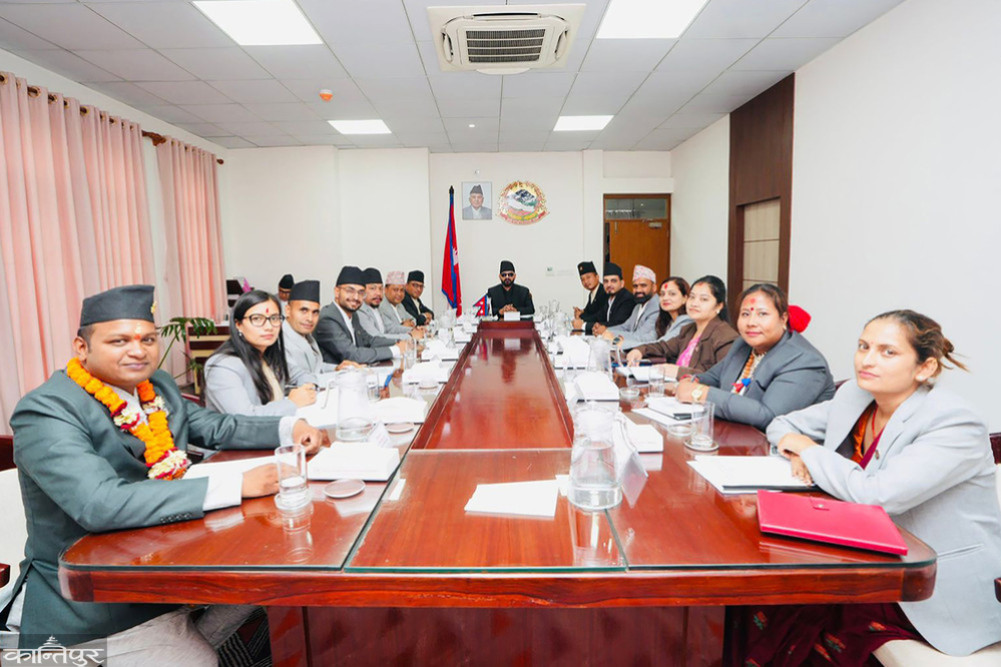
With the current government led by Balendra Shah deciding to apologize to the Dalit community, a debate has begun - will Dalits forgive the state or not? If they do, how will they forgive? Along with the apology, what will be the justice and compensation package provided by the state, and what will be the role of the state?
We use Google Cloud Translation Services. Google requires we provide the following disclaimer relating to use of this service:
This service may contain translations powered by Google. Google disclaims all warranties related to the translations, expressed or implied, including any warranties of accuracy, reliability, and any implied warranties of merchantability, fitness for a particular purpose, and noninfringement.
When speaking at any program of the Dalit community, he would apologize for the discrimination committed by his ancestors against that community - leftist leader and progressive writer Modnath Prasrit. This would guide the Dalit movement in building a new theoretical and ideological framework of discrimination and liberation. A few years ago, rights activists Tulanarayan Sah, Dipendra Jha, and Prashant Jha met Dalit community members at the citizen level in the districts of Madhesh and apologized. This had a generally positive impact.
This campaign, which started at the citizen level, has now reached the state level. With the decision of the current government led by Balendra Shah to apologize to the Dalit community, a debate has started about its various dimensions - will Dalits now forgive the state or not? How will they forgive if they do? What will be the justice and compensation package that the state will provide along with the apology, and what will be the role of the state?
During the drafting of the constitution, the issue of apology and compensation, which was raised as a main issue by the Dalit movement, could not be included in the constitution. Although the Preamble of the Constitution includes two fundamental rights related to Dalits, including the acceptance of discrimination against Dalits and the spirit of ending all forms of discrimination and building a just and equitable society. However, from the perspective of Dalit liberation, the issue of atonement and compensation for the mistakes committed by the state in the past was inevitable. The real essence and spirit of an apology is - an admission of past mistakes, a commitment not to repeat such mistakes in the future, a resolution to correct old inhuman mistakes, and compensation and justice for the damage, i.e. providing compensation and justice.
The apology on behalf of the state, atonement for the discrimination forcibly imposed by the state itself in the past, is a positive step. After this step of apology, the door to a new chapter will open where the Dalit community will compensate for the damage it has suffered since history, and the Dalits, who have bowed down due to a sense of inferiority without any fault, will stand tall with pride. However, will the state really win the hearts of the Dalit community and obtain forgiveness from the Dalits? Will it provide compensation with a commitment to do things that are worthy of forgiveness?
Historical series of discrimination and oppression and damage
How did the state and non-Dalit communities oppress Dalits? Let us recall that once. In the 11th mantra of the Purusha Sukta of the tenth mandala of the Rigveda (1500 to 1000 BCE), it is mentioned that Brahmins originated from the mouth of Virat Purush, Kshatriyas from Brahmins, Vaishvas from thighs, and Shudras from feet. The caste system that began in this way was revealed as a caste system based on birth and lineage in the Upanishads, Puranas, and Smriti Kala. In the context of Nepal, through Manusmriti, the Lichchhavi kings, Jayasthiti Malla, Ram Shah, Prithvi Narayan Shah, and Jung Bahadur Rana worked to spread it in the name of social reform. In 1910 BS, Jung Bahadur Rana made the National Act and institutionalized the discriminatory caste system on behalf of the state, making Nepalis high and low, touchable and untouchable, pure and impure in the name of wealth and wealth. He established divisive categories and considered one caste smaller than the other.
While the debate on apology is going on, the damage caused by past discrimination on the Dalit community, the state and the non-Dalit community itself should also be felt. The caste system that was institutionalized in this way continued to advance in the name of religion, culture, values, etc., and the Dalit community, who were born as human beings, was forced to live a hellish life like animals. From the time they were in their mother's womb to the time of their funeral after death, and for 365 days, Dalits were forced to endure extreme discrimination, humiliation, contempt and boycott. From the practice of being 'pure' by pouring gold water on those who touch them, society has now reached the level of killing and abusing Dalits like animals, evicting them from their villages, setting their houses on fire and demolishing them. Since the enactment of the Untouchability Act in 2068, about 84 Dalits have been killed in the name of caste, while the stories of discrimination, humiliation and contempt can become a story like the Mahabharata.
The Dalit community is currently experiencing the serious and multifaceted effects of inhuman caste discrimination and untouchability. The Dalit community has lost its self-respect. It has become an extreme victim of inferiority complex. Identity has become discriminatory. Life itself has become hellish and animal-like. In a way, the series of being born in discrimination, growing up in discrimination and dying in discrimination has continued. Many generations of the Dalit community have been trapped in this vicious cycle. The Dalit community is at the bottom of the state, oppressed by state-protected discrimination, deprivation and inferiority complex.
Dalit women among women, Madhesi Dalits among Madhesis, Dalit children among children, Dalits in remote areas, and Dalits among the disabled are the most backward. According to the latest national census data, the Dalit community is the most backward in various areas including economic status, educational status, political status, and employment.
In essence, this discrimination has psychologically seriously damaged the human dignity and self-respect of the Dalit community, while physically, they have been forced to live as second-class citizens in the state. This loss and pain suffered by the Dalit community has hindered the journey of development and prosperity, including national unity, social harmony, sustainable peace, and building an egalitarian society. While the debate on apology is ongoing, the damage caused by past discrimination to the Dalit community, the state, and the non-Dalit community itself should also be realized.
Justification of apology
This topic is common for those who do not understand the caste system, the historical aspect, philosophical aspect, and theoretical aspect of discrimination. However, for a community that has suffered discrimination and humiliation for thousands of years, the state apologizing for past mistakes is the opening of a new destination. Even now, people find discrimination against Dalits normal. And, they say, ‘Where is the discrimination? It has disappeared.’ Another group is concerned, ‘Will they also give quotas? Will they not even be allowed to discriminate?’ Some people think –
They should keep their kitchens, temples, and ancestral deities away from Dalits.
Even when the country has reached a federal democratic republic, and has entered the AI era with the highest development of information technology, discrimination persists and its eradication has serious implications in an environment where it has been neglected.
In fact, the issue of apologizing has also been practiced internationally. Around the world, various programs have been implemented to acknowledge, realize, and repent for the oppression and deprivation that was knowingly or unknowingly committed against its citizens in the past, and to make their living standards similar to other citizens. The background has been discussed in detail – the state is the initiator of the caste system and now the era of state-protected discrimination is underway. Since discrimination was started by the state, the state itself must also make efforts to end it. Yesterday, the life of the Dalit community was devastated by making and implementing laws using the power of the state. Now, just spending two words of apology is not enough. The state must provide compensation to pay for this punishment. The state must use its full power to end discrimination. Only then will discrimination actually end and justice can be established in society.
In fact, the issue of apologizing is also practiced in the international arena. Around the world, various programs have been implemented to acknowledge, realize and repent for the oppression and deprivation committed against its citizens, knowingly or unknowingly, and to make their living standards similar to other citizens. Nepal can also learn from the example of the state apologizing and providing compensation to communities oppressed on the basis of color, caste, and gender in countries like America, Canada, New Zealand, Germany, Australia, South Africa, Korea, and Japan.
Such an initiative from the state level can force the entire society to think in a new way. All citizens can be brought together under the leadership of the state. As discussed above, this can be taken as an opportunity to erase the impact of discrimination on society, the impact on the state, the internationally tarnished image of the country, and the stigma on human civilization.
Will Dalits forgive or not?
Even if the state's apology is positive, will the Dalit community accept it or not? Will they forgive or not? The question is serious. If the state honestly realizes the mistakes of the past and seeks the liberation of Dalits as a result, Dalits must forgive. However, if it is for show, there is no justification for it.
The implementation status of the announcement made by the Nepali Congress's Sher Bahadur Deuba-led government for Dalit rights in 2058 BS, the declaration of an untouchability-free nation by the restored House of Representatives in 2063 BS, and the declaration of the National Day for the Eradication of Untouchability by the CPN-UML's Jhalanath Khanal-led government is well known. The implementation status of the provisions related to the abolition of untouchability and Dalit rights in the new 2020 BS National Act, the 2047 BS Constitution, the 2063 BS Interim Constitution, and the new 2072 BS Constitution is also well known. These announcements by the government and the provisions in the constitution and laws are not even minimally implemented. The Dalit community has critical support for the government's apology when the provisions in the constitution and law have not been implemented. Now the government must be able to answer - how will this be different from past announcements? Only then will the Dalit community believe it.
During the drafting of the constitution, the Dalit movement in Nepal had raised the issue of atonement for the oppression of Dalits in the past, apologizing and providing compensation in the preamble to the constitution. However, the political parties and the state power, which became the protectors of the Vedic reservation system, did not listen to this demand. However, the draft prepared by the first Constituent Assembly included the issue of compensation. However, it was removed at the time of promulgation of the constitution. Even though it is late now, the government's decision to apologize is positive. If it can be made all-party and all-sided, if the provincial and local governments can create an environment for its adoption, and if the entire non-Dalit community, religious community and society can assimilate it, it can be result-oriented.
In Nepal, reservation, quota or proportional seats should be for the classes that are discriminated against, oppressed and exploited by the state, but instead, arrangements were made to give them to everyone, including the classes that forcibly discriminate, the ruling class, and the elite class, and that was also done constitutionally. This has created further inequality and injustice in the society. If the current government is serious about apologizing for the discrimination against Dalits, then it should have the courage to correct this mistake. If quotas or facilities are distributed only on the basis of past oppression and deprivation, then it can be believed.
Several questions have also been raised with the government's decision. Will an extremely racist and prejudiced society that believes that Dalits should be discriminated against after being given quotas, that is angry when Dalits get quotas, and that considers discrimination a right, accept this decision of the government? What is the legal basis for it? How will a religious community that carries discriminatory values, beliefs, and customs based on the Hindu caste and caste system and a society that is stuck in religion and caste accept this decision? Will the cries of injustice and atrocities against Dalits be heard? Will Dalits be considered first-class citizens like others as human beings? Will constitutional rights be implemented and the caste system be abolished? Like the past practice of putting Dalits on the hook and misleading them with the mentality of 'whatever you do to them, they will get what they want', is there a solid basis for this government's decision this time to be not populist and a stunt? What is the guarantee that the state will not make mistakes and will not discriminate in the coming days? How is the implementation of government announcements, constitutions and laws implemented in a country where they were not implemented in the past? How will the Dalit community feel the change?
Dalits should forgive the state only if the government enters into an agreement with the Dalit community to provide justice and compensation along with the answers to the above questions.
The compensation work to be done along with the apology
It is now necessary to think from the perspective of not only expressing sympathy for the damage caused by state oppression, but also of raising their living standards by providing rights and justice and ensuring that there is no discrimination in the future. Since apology and compensation are two sides of the same coin, the real damage suffered by the Dalit community for thousands of years due to historical discrimination and deprivation should be recognized.
Even in a general analysis, the Dalit community is about 200 years behind in the fields of education, health, economy and politics. Apart from the historical period including Manusmriti, even if we consider only the time since the 1910 National Law, it is clear that Dalits are about 170 years behind. Despite some efforts to improve after 2063, the damage of discrimination is clear when looking at the Human Development Index, human rights statistics and all other statistics. Therefore, the government should prioritize the work of announcing a special package to identify the psychological and physical damage caused to the Dalit community by the historical discrimination, oppression and deprivation of the caste and caste system and compensate for that damage.
A lot can be achieved by creating an integrated Dalit Development Act to implement the pro-Dalit provisions in the Preamble of the Constitution, Fundamental Rights and Directive Principles of Policy, making arrangements for the Dalit Development Authority, and effectively implementing the announcements made by previous governments. This decision of the federal government should be recognized by all three levels of government, and a program should be prepared to provide compensation with an apology and with the consent of the non-Dalit community, religious community and other stakeholders, and a nationwide campaign for socio-cultural transformation and awareness should be launched.
The most important issue for this program that the government is going to do is - determining the budget. Proportional budget is the right of the Dalit community. To compensate for historical discrimination and deprivation, 20 percent of the total income budget for a certain period should be allocated for the development, prosperity and self-respect of the Dalit community.
In the past, a mistake was made to create a caste system. Now, another mistake has been made to distribute proportional seats and reservations to everyone. In particular, quotas have been distributed to all the elite and ruling classes, which should have been based on discrimination and deprivation in the past, making the discourse on proportional seats and quotas negative. Therefore, the system of everyone getting quotas should be changed and a quota should be provided only on the basis of historical discrimination and deprivation, and an arrangement should be made to provide additional quotas or facilities in all state structures in addition to proportional ones for the historical losses suffered by the Dalit community. For that, a policy of mass entry should be adopted in the civil service, security agencies and other public services in the same proportion as the quotas that the Dalit community has lost in the past, as in South Africa.
We should adhere to international commitments on human rights, study the status and challenges of the Dalit community's access to justice and formulate an action plan, ensure the impartiality of law enforcement agencies, and restructure the public service and judiciary to make them Dalit-friendly. A national pride project related to the traditional professions of the Dalit community should be prepared by implementing the constitutional rights related to land, housing, and employment. According to the constitution, a provincial office of the National Dalit Commission should be established. The commission should be empowered by arranging a budget with resources and means, and the recommendations of the commission should be implemented literally.
Although this decision of the government is positive for general reforms, the abolition of the caste and caste system that was forcibly imposed in the past is essential for the real liberation of the Dalit community. The government, parties, and the Dalit community should also be aware that no matter how big the announcements made by keeping the caste and caste system alive or reform programs introduced, the real liberation of the Dalit community will not be possible.
For now, a plan should be made for the government and the non-Dalit community to apologize openly in a way that the common people can know and to celebrate 'Forgiveness Day' every year to commemorate this. Keeping the issue of justice with compensation based on the actual losses of the Dalit community as the first priority, Dalit-friendly policy programs and budgets should be determined along with policy and structural arrangements for its effective implementation. And, the state structure should be made accountable for that implementation.
Along with apology, compensation and justice, the entire country should move forward on the journey of building an egalitarian society with peace and harmony.