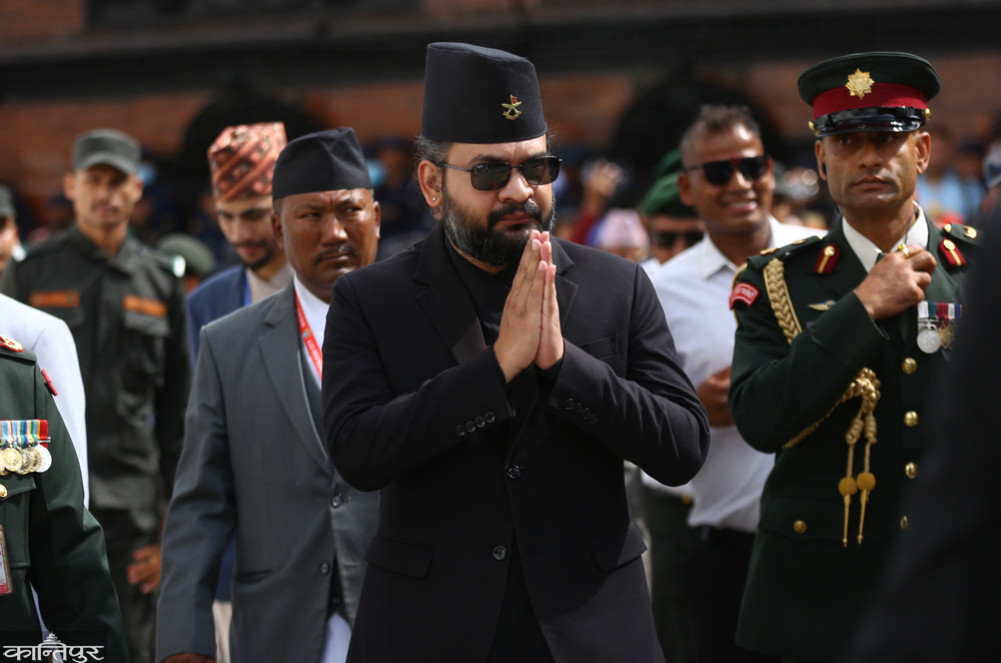
The issues clearly specified in the Constitution are not the exclusive agenda of any one government. They are essential pillars of the implementation of federalism.
We use Google Cloud Translation Services. Google requires we provide the following disclaimer relating to use of this service:
This service may contain translations powered by Google. Google disclaims all warranties related to the translations, expressed or implied, including any warranties of accuracy, reliability, and any implied warranties of merchantability, fitness for a particular purpose, and noninfringement.
The meeting of the Council of Ministers of the Government of Nepal on 13 Chaitra 2082 has approved the agenda related to governance reform. The agenda includes 100 lists including common commitment, coordination and public trust, administrative reform, restructuring and austerity, public service delivery and grievance management, good governance, transparency and corruption control, public procurement and project management, investment, industry, private sector promotion and tourism, energy and water resources, revenue reform, health, education and human development, agriculture, land, infrastructure and basic services.
The agenda also includes the issue of synthesizing the implementable issues mentioned in the election manifestos/commitments of other political parties to strengthen the core essence of the Constitution of Nepal and the democratic system, preparing a national commitment and linking it to the government's annual policy and program, budget and reform agenda. It is certainly good to say that we will take ownership by implementing the good issues mentioned in the manifestos of other political parties. The agenda includes reducing the number of ministries to 17, abolishing or restructuring unproductive boards, committees, projects and institutional structures, and ensuring good governance by making public service delivery clean, transparent and corruption-free. Some issues, including reducing the number of ministries, are also on the recommendation of the Special Committee on Federalism Implementation of the National Assembly. The issue of reducing the number of ministries and enhancing good governance must be appreciated. However, the agenda is silent on issues related to strengthening federalism, such as strengthening federalism, implementing the powers of the provincial and local levels, inter-level interrelationships, and financial transfer based on workload. This article focuses on the priorities of the Balen government in strengthening federalism.
Revision of the Work Detailing
is the Work Detailing Report on the Foundation of Federalism in Nepal, 2073. The Special Committee on Federalism Implementation of the National Assembly, 2079, recommended revising the work detailing of the list of single and common powers of the federal, provincial and local levels. As per the committee's recommendation, the federal government had taken forward the revision work with the participation of the provincial government and local associations/federations. A draft report was also prepared. However, it was not made public. That report should be studied thoroughly and made public with the consent of the stakeholders. The foundation of all the laws and policies that have been made, including the Division of Work Regulations of the Government of Nepal and the Provincial Government, the Local Government Operation Act, is the expansion of work. Since this report is the cornerstone of the formulation and revision of laws, it is necessary to first pay attention to the reforms recommended by the Balen government in this report.
Determination of project boundaries
According to the constitution, the federal government is to connect national pride, strategic importance and inter-provincial, the provinces are to implement projects of provincial strategic importance and inter-municipal level, and the municipalities are to implement local nature projects. However, most of the ministries of the federal government have not worked according to the spirit of the constitution. The same problem exists in the provinces. The Federalism Implementation Committee of the National Assembly had recommended determining the boundaries of project implementation for all three levels of government. For example, the federal government will not implement road projects smaller than 150 million and the provincial government will not implement 20 million. But the Nepal government set limits of 30 million and 50 million. Let alone the recommendation of the parliament, it did not even implement its own decision. This is the biggest problem in the implementation of the plan. It is also necessary to have an environment where local citizens take ownership and ownership of the projects that the federal government operates at the local level. In Switzerland, the constitution itself states that the federal government should understand the feelings of the provinces and citizens before operating any new project.
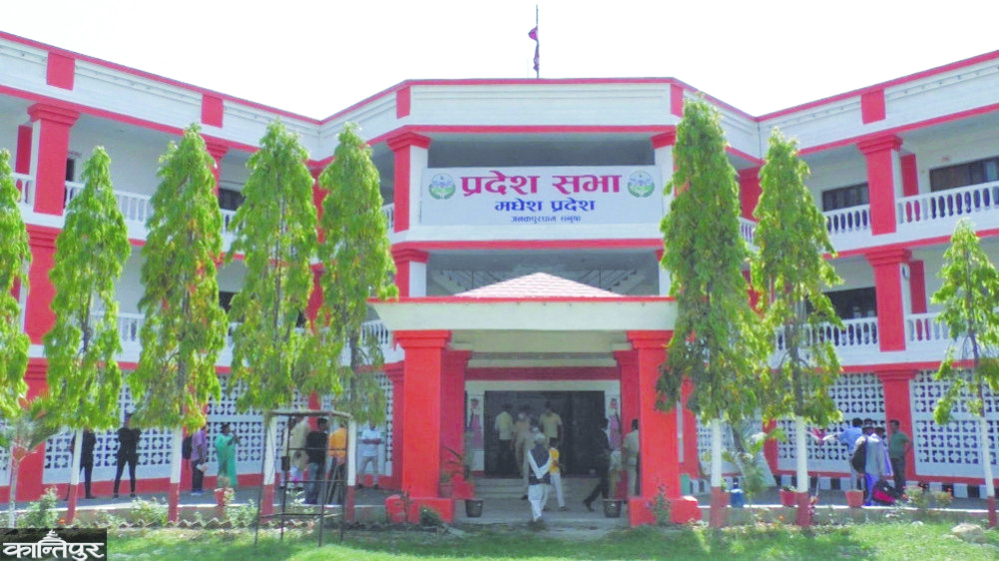 Federalism-friendly civil law
The issuance of this bill was/is being delayed due to the belief that administrative and other powers should not be given to the provinces and local levels. This bill was about to be issued by the previous parliament, narrowing the powers of the provinces and local levels. The focus of the bill was more on the 'cooling period' of high-ranking employees. The bill came to naught due to the dissolution of the House of Representatives. This bill has not been issued yet due to the manipulation of high-ranking employees. In difficult circumstances, the parties that issued the constitution in 7 years have not been able to issue this bill even after 10 years. The provinces and local levels should have their own employees, only then can they feel the government. This is also the spirit of the constitution. The agenda of the newly formed government on governance reform mentions the issue of issuing a federal civil service bill within 45 days. The concerns of the provinces and local levels must be addressed in the bill.
The recruitment of the Chief Administrative Officer
The Singha Durbar still makes the mayors and chairmen of municipalities from the Far East to the Far West work for the Chief Administrative Officer. The Singha Durbar sends people of its choice. Sometimes it also arranges for extortion. It is not without news that it charges a good price to send them to the chosen/searched place. If the Chief Administrative Officer is not good, the local level cannot work as expected. Administrative and development work is hampered. The knowledge in this regard is in the hands of Prime Minister Balen. The Prime Minister should look into this issue seriously.
There is also a great fear of the incumbent at the local level. The Federalism Committee of the National Assembly had also recommended that the appointment of Chief Administrative Officers be abolished within a week and that all municipalities be assigned a Chief Administrative Officer. Not only this, but the recommendation was that the Chief Administrative Officers required at the provincial level should be sent to the provinces in one go, and the provinces should handle the work. But the then government did not listen. The constitution has given the power to manage the employees of the municipalities to the provinces. The federal government should not get involved in this. Until the federal civil service law is issued, the municipalities should be given as many Chief Administrative Officers as they need. The work should be done in a manner that the provinces are given the responsibility of the Chief Administrative Officers. The name is the Ministry of Federal Affairs and General Administration, but 99 percent of the work is spent on the work of the employees. The Balen government did fill the vacancies of the Chief Administrative Officers in all municipalities. But this is not a permanent solution. The permanent solution is to hand over the administrative authority of the provinces to him through the civil service law. Let us hope that this problem will be resolved within 45 days.
Activation of the level-based coordinating structure
The meeting of the Inter-Provincial Council chaired by the Prime Minister has not been held since Baisakh 2076. After repeated efforts, the National Coordination Council met in Ashar 2080 and made 6 important decisions. The meeting decided to remove ambiguity and duplication between federal units, remove and abolish similar structures, and eliminate duplication and tripartiteness of development projects. These decisions were also not implemented. No meeting was held after that. There are level-level coordination structures such as thematic committees chaired by ministers of the Government of Nepal, and the Provincial Coordination Council chaired by the Chief Minister in the provinces. The more active these structures are, the more they will help in strengthening federalism. The Balen government should first hold a meeting of the Inter-Provincial Council to discuss issues related to the implementation of federalism. Similarly, attention should also be paid to the functioning of the National Coordination Council and other structures.
Reforms in Land Acquisition Law
The National Coordination Council meeting decided to amend the law so that the process related to the acquisition of land required for the construction of infrastructure by the provincial and local governments can be completed smoothly. This work has not been done yet. Due to obstacles such as the Forest Act and the Land Acquisition Act, public land has not been utilized. Despite investors being willing to do business in the province, the provincial government has not been able to provide land. This needs improvement. The laws that hinder the development of the provincial and local levels should be amended. Similarly, it is equally important to enact laws on the subjects in the list of common rights of all three levels.
The activity of the Finance Commission
The method of planning and budget implementation has been criticized due to the whims of ministers, leaders, employees and those with access to the plan selection. The state treasury is being allocated as it should be. In a situation where the Constitution has given authority to the Finance Commission and the law, the National Planning Commission should be made accountable for plan selection and the Finance Commission for financial transfer. Otherwise, there is no point in having these institutions. The restructuring of the National Planning Commission is necessary in accordance with the spirit of federalism. Reforms in the laws that narrow the authority of the Finance Commission are equally necessary.
Reforms in financial transfer
There is a general principle that work should be followed by values and structures. After more than 60 percent of the work of the previous Singha Durbar was done at the provincial and local levels, financial transfer should be done accordingly. For this, the equalization grant should be increased in proportion to the budget. However, the proportion of equalization grant received by the provinces and local levels is decreasing every year. In the fiscal year 2075/76, this ratio was 10.27 percent, and in 2082/83, it is 7.62 percent. Again, for a few years, scissors have been used to cut the distribution of equalization grants during the third and fourth installments under various pretexts. Legal assurance is needed that it will not be reduced along with the increase in equalization grants.
Participation of provinces and local levels in law formulation
Nepal's federalism is based on the principle of cooperation and coordination. Even though the list of rights has been expanded, there is a situation where one level conflicts with the other level when making laws. There is a situation where the laws of the federal government conflict with the powers of the provinces and local levels, and the laws of the provinces conflict with the local levels. For this, there should be an understanding between the levels of government. Discussions should be held for that. A legislative act has been made to resolve this, among other things. It originated in the National Assembly. This law has ensured the participation of provinces and local levels in the formulation of bills. If this law is implemented honestly, there will be no problem in formulating laws. Just as the Legislative Act was issued with the intention of reaching an understanding between the levels of government while formulating bills, a similar law is also needed for the implementation of plans and programs.
Use of natural resources
There is a lack of coordination between the three levels in the use of stones, gravel, sand and forest products and the distribution of royalties. There is a big problem in its use and distribution between municipalities, municipalities-provinces, provinces-provinces and the union-province-municipalities. Middlemen dominate the exploitation of this resource. Due to collusion, indiscriminate exploitation is taking place in many places at the local level, and there is also a big leak in revenue collection. The Federalism Implementation Committee of the National Assembly had also recommended the formulation of a unified law to address this. A unified law related to this should be formulated in coordination with the levels of government.
Police adjustment
Provincial police administration and peace and security are constitutionally the sole rights of the provinces. Let alone the Congress and UML, even when the Maoist-led government was in power, the police were not integrated into the provinces on various pretexts. I had raised this issue many times when I was a member of the National Assembly. I had assumed that the provinces would be deprived of exercising this right as long as the old parties were in power. However, now there is some glimmer of hope. However, due to the siege of the same old state power, the possibility of influencing the Balen government and depriving it of exercising this right cannot be ruled out.
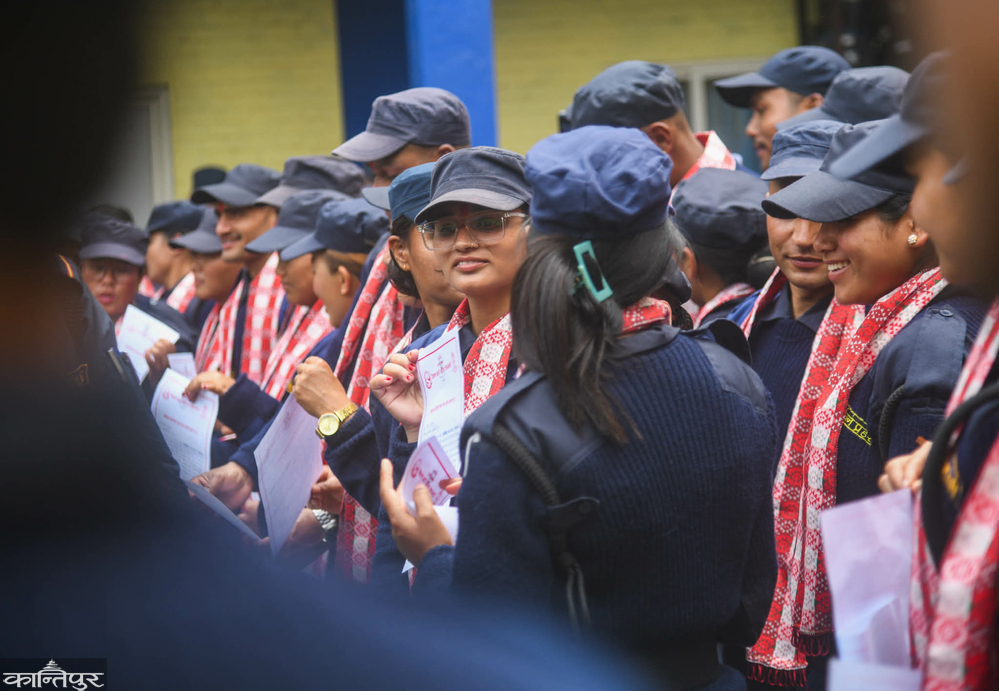 The Nepal government integrates as many police officers as it can into the provinces. They also take with them the services and facilities they have been enjoying. This is not an additional burden on the provinces. It is only a matter of coordination and cooperation. The constitution has given the federal government the right to dissolve the provincial government and provincial assembly if any province deviates from the overall interests of the country such as nationality and sovereignty. In this situation too, the federal government does not have to fear the provincial government. In federal countries around the world, provinces are using this right easily. अरू देशको अनुभव, निजामती कर्मचारीहरूको समायोजनलगायतका अनुभवहरूलाई समेत आधार मानेर प्रदेशमा प्रहरी समायोजन गर्नमा विलम्ब गरिनु हुँदैन ।
अन्त्यमा, संविधानले स्पष्ट रूपमा निर्दिष्ट गरेका विषयहरू कुनै एक सरकारको मात्र एजेन्डा होइनन् । संघीयता कार्यान्वयनका अनिवार्य आधारस्तम्भ हुन् । राष्ट्रिय सभाको संघीयता कार्यान्वयन विशेष समितिका सिफारिसहरू, प्रदेश र स्थानीय तहका अनुभव तथा विगत आठ वर्षको अभ्यासबाट पुष्टि हुन्छ कि अधिकार, स्रोत र संस्थागत संरचनाबीचको असन्तुलन कायम रहेसम्म संघीयता कार्यान्वयन प्रभावकारी हुन सक्दैन । त्यसैले अब ढिलाइ नगरी कार्यविस्तृतीकरणको परिमार्जन, प्रहरी समायोजन, संघीयता अनुकूल निजामती कानुन, वित्तीय हस्तान्तरणमा सुधार र तहगत समन्वय संयन्त्रहरूको क्रियाशीलता सुनिश्चित गर्नु जरुरी छ । बालेन सरकारले यी सुधारहरूलाई उच्च प्राथमिकतामा राखेर कार्यान्वयन गर्न सकेमा मात्र संघीयताको मर्मअनुसार प्रदेश र स्थानीय तह थप क्रियाशील हुन्छन् । नागरिकले प्रभावकारी सेवा प्राप्त गर्न सक्छन् । निर्वाचनको दौरानमा जनकपुरलगायतका स्थानमा प्रधानमन्त्री बालेनले नागरिकसामु गरेका प्रतिबद्धताहरूसमेत पूरा हुन्छन् ।