The opposition's strength will not be based on the number of seats it holds, but on the debates and arguments it presents in Parliament. If quality debates based on issues can be held in Parliament, the identity of the opposition will be more credible.
We use Google Cloud Translation Services. Google requires we provide the following disclaimer relating to use of this service:
This service may contain translations powered by Google. Google disclaims all warranties related to the translations, expressed or implied, including any warranties of accuracy, reliability, and any implied warranties of merchantability, fitness for a particular purpose, and noninfringement.
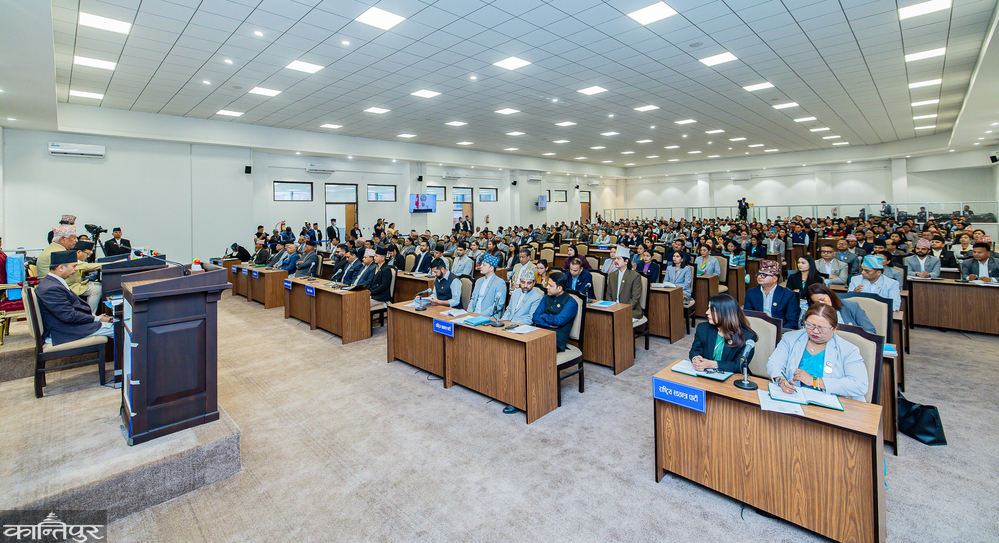
A new phase of parliamentary practice has begun in Nepali politics. The elected members of parliament (MPs) from the House of Representatives (Parliament) elections held on Falgun 21 have taken oath. RSVP Deputy Chairman and Kathmandu-9 MP Dol Prasad Aryal (DP) has been elected unopposed as the Speaker. The election of the Deputy Speaker will also be held soon. The new parliament will be complete after the formation of parliamentary committees in the near future. The general public has been watching these initial parliamentary practices from the first meeting to the election of the Speaker with interest.
There are basically two concerns at the citizen level. First, will there be any innovation in the style and parliamentary culture of the new parliament? Second, will the parliament, which has been trapped in the vicious circle of power politics and has become ineffective, now play a role in respecting the mandate or will there be a repetition of the old trend?
Past parliamentary practices were overshadowed by power struggles. Parliament became a playground for the positional interests of a few leaders. To illustrate this, leaders also called parliament the 'temple of democracy'. However, in practice, it was turned into a playground for power-mathematics and its dignity was taken away.
Now politics has started from a new beginning. Less than four years after its establishment, the National Independent Party (NIP) has emerged as not only the largest party in the parliament, but also a powerful party with almost a two-thirds majority. The Congress-Communists, who were considered strong and big in the parliament in the past, have shrunk and become weak. With the changing balance of power in the parliament, questions have started to arise about its role.
Will the 'blunders' of the past be repeated in parliamentary practice now? In the past, when the struggle for power became a central issue, many unparliamentary acts took place, which polluted the entire politics. Will the unparliamentary acts of yesterday become the destiny of the new parliament again? Or will it be able to learn from those examples and adopt the latest culture? Who should play what role in the new parliament: the government, the opposition party, the Speaker, and the MPs? This time, this column will focus on these questions.
Let's start with a brief review of the new parliament
There are some basic features of the new parliament. First, the RSVP has sole dominance in this parliament. It does not have to depend on cooperation or alliance with other parties to form a government like in the past. It has already formed a single-minded government under the prime ministership of senior leader Balendra Shah. That is, in the new
parliament, there will be no obstacles to the government in making laws. It can quickly move forward with the policy reforms and structural reforms it wants.
Second, most of the MPs in this parliament are new faces. That is, the energy and enthusiasm are new. A dynamic glimpse of political generational change can be seen in the parliament. New parties, new faces also mean new thinking. There is an opportunity to adopt new thinking and style for all kinds of political, economic, and administrative reforms in the country.
Third, among those new ones, the number of MPs under the age of forty is significant. There is a majority of ministers under the age of forty in the government as well. This is a historic leap forward in generational change in Nepali politics.
Fourth, women's participation in this parliament has reached almost 35 percent. Although the constitution ensures 33 percent, this time this number has increased even more. Although, after the institutional arrangement of inclusive representation in the Nepali parliament, women, Dalits, indigenous peoples, Madhesis and other groups have been represented here. However, this time, women's representation has been established as an example in a stronger way than in the past.
As much as this parliament has these and other positive features, the risks are not small. Due to the one-party dominance of the Rashtriya Swayamsevak Sangh (RSS), other opposition parties are numerically weak. In this situation, how much pressure can the parliament play to hold the government accountable? It is doubtful. There is also a risk that the tendency to easily approve bills favorable to the government on the strength of numbers will prevail in the parliament rather than constructive and healthy critical debate on policy reforms. In other words, the effectiveness of the new parliament will basically be determined by the role of the Rashtriya Swayamsevak Sangh (RSS) government.
 Accountable government
What role will the RSVP government play in this parliament? There is both hope and apprehension.
Let's talk about hope first. Hope has been raised by Speaker Ravi Lamichhane. If he can demonstrate behavior consistent with his address in the first meeting of parliament, it can be assumed that the coming days of the new parliament will be positive and encouraging. If the government puts the things he said into practice, they can also become new standards in parliamentary practice. For example, he said that the parliament will be a place of debate, not revenge. More significantly, he talked about not allowing the opposition voice to be weakened. When doubts were being expressed that the democratic system could be at risk when the opposition is weak, Lamichhane went a step further and urged the opposition parties, saying, "Please monitor us 24/7 and correct us if we go astray. In a democracy, the ruling party and the opposition are not only competitors, but also complement each other. One works, the other monitors. One plans, the other analyzes." We do not ignore the voice of the opposition. If the voice of the opposition is ignored, democracy will be weak.'
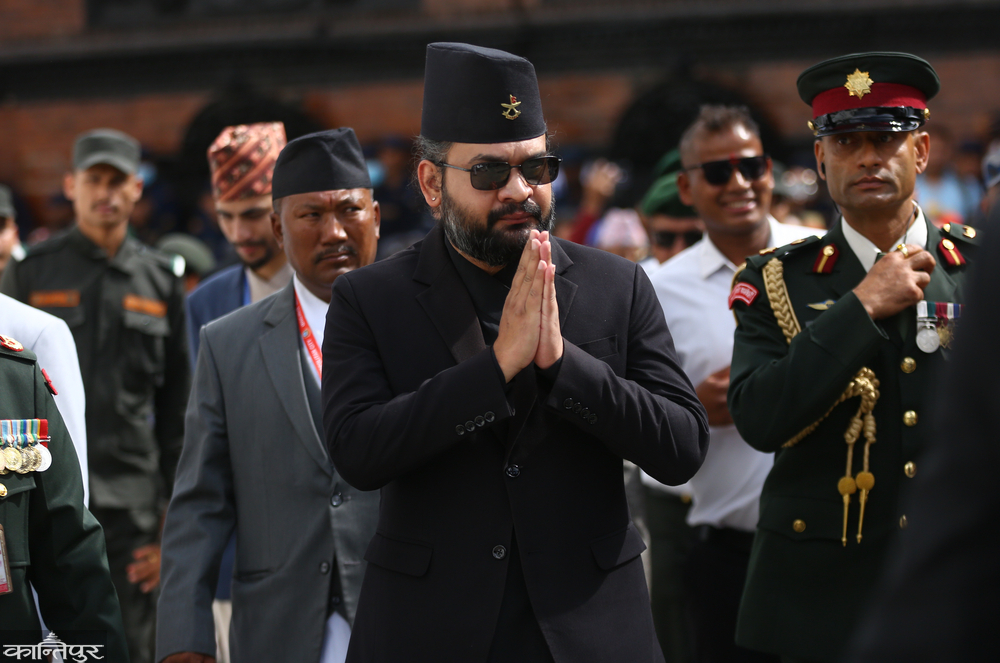 These statements by the ruling party chairman are responsible. However, time will have to wait to see how much difference there will be between words and deeds. While Ravi's address has raised hopes, the silence of parliamentary party leader and Prime Minister Balendra Shah has raised doubts. It is the government's job to make the parliament dynamic by giving it 'business' to increase its effectiveness. Moreover, the active and accountable presence of the Prime Minister makes the parliament more dynamic. The Prime Minister is responsible for providing policy information/clarification through regular presence in the parliament and answering questions from MPs. However, he is silent. His silence is also interpreted as 'strategic'. Even if it is covered up as a strategic silence that speaks through actions, parliament is a place from which the prime minister cannot escape without speaking.
The risk of the executive dominating increases if the prime minister is not accountable to the parliament. On the contrary, the prime minister is responsible for the executive's role in the parliament. There may also be accusations that the parliament is being turned into a 'rubber stamp'. Therefore, the effectiveness of the new parliament will also be measured by how responsible and accountable it can make the Prime Minister.
Sovereign MP
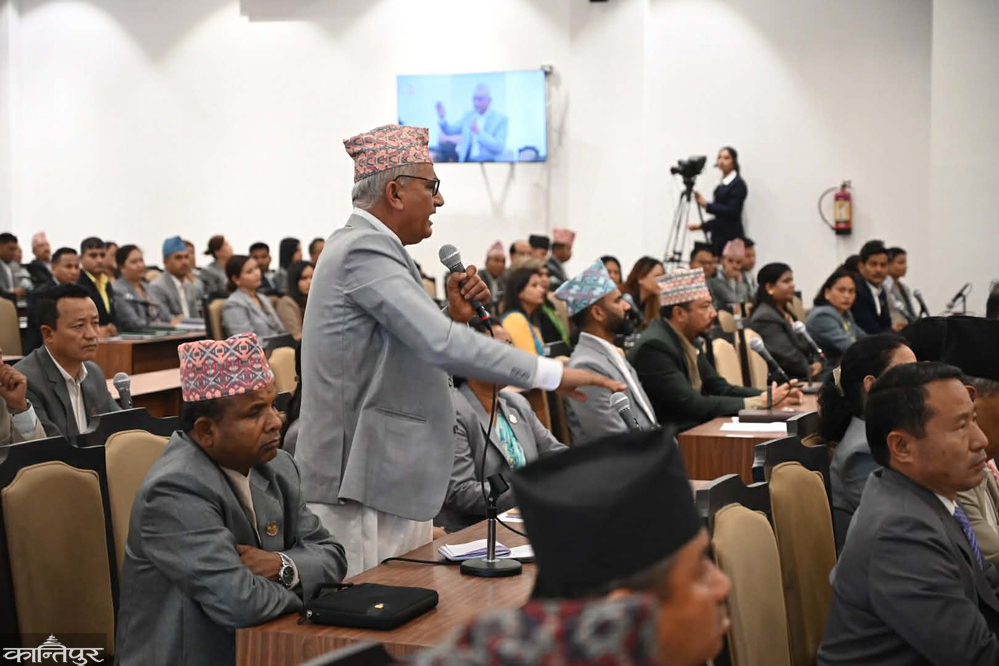
MPs will also have an equal role in making the government accountable to the parliament. Of course, the main basis of the strong government of the RSVP is the large number of MPs present in the parliament. It moves forward by getting its policies and programs approved by these MPs. But, are MPs just a means to approve whatever the government wants? Sovereign MPs are also representatives of the people. Their main role is to make the government accountable. In the past, the role of MPs was only a weapon to fulfill the wishes of the government. As political scientists say, 'MPs are not just decision-making machines, they are also people's representatives who use their discretion.' This statement should also be understood by the ruling MPs. When necessary, can the RSVP MPs question the government to make it transparent and accountable? How much can they monitor the Prime Minister/Ministers? The role and effectiveness of the new parliament will also be tested by the question of whether they can play a role in preventing abuse of the powerful majority. The question of what the role of the opposition parties and MPs will be in the new parliament will also be important in the coming days. The main role of the opposition parties and MPs is to hold the government accountable. That is why the parliament is called the opposition. Currently, the Congress is in the position of the main opposition, while the CPN-UML, the Nepali Communist Party, the Labor Culture Party, and the Rastriya Prajatantra Party are in the opposition.
In the address on the first day of the parliament, all the other parties except the UML presented themselves in a decent manner. The UML was seen to be a little more impulsive and reactive. After being criticized from all sides, the parliamentary party leader Ram Bahadur Thapa Badal 'corrected' the issues raised by him in a secretariat meeting. In the context of accepting the election results and all parties moving forward, the UML was criticized for insulting the mandate by including the army, claiming that it could not confirm it. The Congress presented itself in a mature and decent manner. The Nepali Communist Party also appeared to be benign.
Hark Sampang, the leader of the Labor Culture Party, which emerged with seven seats in the parliament, became more vocal as the opposition leader. He made his presence felt in the parliament from the very first address. Hark Sampang has some stylistic problems, although he has indicated that he can become a strong opposition voice if he can refine himself in this parliament. The RPP was seen in its old style, shifting its traditional issues.
It will be hasty to form an opinion about the opposition parties in the new parliament based on the first meeting. However, these parties do not need to be short-sighted considering them weak in terms of numbers. That is because the opposition's strength is not the number of seats, but the debates and arguments it makes in the parliament. If quality debates based on issues can be held in the parliament, the identity of the opposition will be more credible. People are looking to the opposition to carry their issues. If they can fulfill that expectation, the public's credibility towards the opposition parties will increase and they can justify their presence in the parliament.
The opposition party has some responsibilities. For example, first, it is the job of the opposition to initiate critical debates on the bills, policies and programs proposed by the government. It is not to obstruct the parliament unnecessarily by protesting for the sake of protest. It is the responsibility of pointing out the government's shortcomings. Second, it is the job of preventing the government from being arbitrary and warning it. The opposition should monitor the government's working style and determine how people-oriented it is. Third, it is the responsibility of the opposition to continuously raise issues of public concern in the parliament, advocate for the voices and rights of the marginalized, and make the parliament a place for lively debate. The opposition parties and MPs of the new parliament should not forget these responsibilities.
 Referee Speaker
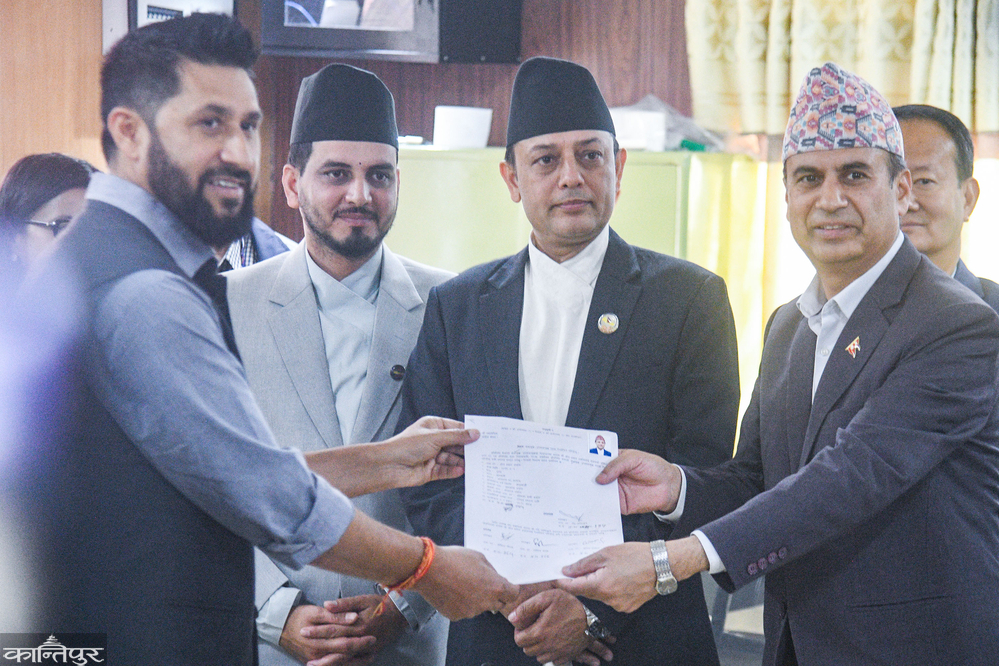
The responsibility of making the role of the new parliament strong and balanced has fallen on the shoulders of the newly appointed Speaker DP Aryal. Now the main key to the parliament is in his hands. While discussing what the role of the new parliament will be, the role of the Speaker is an indispensable aspect. That is because parliamentary values and dignity survive under the impartial guardianship of the Speaker. That is the reason why party affiliation is broken after becoming Speaker. There are examples of past Speakers being criticized for not being able to break their party affiliation in some contexts. The test of how strongly the new Speaker DP Aryal will present himself in this challenge has also begun.
Aryal, considered a confidant of RSP President Lamichhane, wanted to be the Home Minister. However, after not being chosen by Prime Minister Balendra Shah, Aryal became Speaker in the course of position management. The consequences of a person trusted by the party president becoming the Speaker have been largely reflected in the performance style of Devraj Ghimire, a confidant of UML Chairman KP Oli. In this sense, DP Aryal is also under suspicion. After becoming Speaker, he will break his formal affiliation with the party, but how well he can balance his partisanship will be seen in the role he plays.
The balanced role of the Speaker is essential in a parliament with a weak opposition. When he loses his impartiality, the credibility of the entire parliament is questioned. After all, the parliament is one of the three main organs of state governance. While it makes laws, the executive, i.e. the government, implements them, and the judiciary is responsible for interpreting the law. The Constitution of Nepal has prescribed the responsibilities of these bodies for state governance based on the principle of separation of powers. Democracy will be strong if all three organs are effective. However, in addition to making laws, the responsibility of the parliament is also to make the government accountable to the people. Parliament is the place where the institutional development of the democratic system takes place.
However, there are past examples of the weakening of the practice of democracy due to the non-parliamentary and apolitical tendencies in the parliament. Will the fate of those authoritarian non-parliamentary practices be repeated now? The success of the parliament will be determined not by the number of members, but by the creative role of the stakeholders within it. In essence, the effectiveness and significance of the new parliament will be determined by the impartiality of the Speaker, along with the question of how accountable the government is and how strong the opposition is.
 (Gautam, who has been the editor of ‘Saptahik’ and ‘Nari’ monthly under the Kantipur Media Group, is a columnist for Kantipur)

