The latest conflict is being seen as the biggest conflict since World War II in terms of economic, strategic, and direct and indirect participation in the war. When and to what end will the war end? No one knows. However, it can be said that even if there is an immediate ceasefire today, the wounds inflicted by this conflict will continue to hurt for a long time in the strategic, security, political, and economic spheres.
We use Google Cloud Translation Services. Google requires we provide the following disclaimer relating to use of this service:
This service may contain translations powered by Google. Google disclaims all warranties related to the translations, expressed or implied, including any warranties of accuracy, reliability, and any implied warranties of merchantability, fitness for a particular purpose, and noninfringement.
There is no news coming from West Asia. The ugly dance of missiles and drones is taking place in the skies and seas of West Asia, the vibrations of which have reached from Washington, Beijing, Moscow, Tokyo, Islamabad and Delhi to the corners of Nepal. The latest conflict is being seen as the greatest tension since World War II in terms of economic, strategic and direct and indirect participation in war.
Economic politicians have also started warning that the world economy is rapidly heading towards the Great Depression after the 1930s.
The latest war, which began with a joint attack on Iran by the US and Israel, has been going on for over a month. The declared and undeclared American aspiration to overthrow the regime through air strikes and take control of Iran's vast energy infrastructure and establish a government of its own does not seem to be so easy to achieve.
Aside from the exception of Venezuela a few months ago, the US does not have a happy history of capturing a country and overthrowing it through airstrikes. (The capture of the Venezuelan president at a cost of billions of dollars and its far-reaching effects are a separate topic of discussion.) By sending nearly 10,000 troops to the Persian Gulf, US President Donald Trump has left open the option of launching a ground attack on Iran. If that happens, the ongoing war is certain to drag on. Meanwhile, Trump has been continuously warning on his private social media ‘Truth Social’ to completely destroy Iran’s security and strategic infrastructure. Meanwhile, Iran, shaken by the joint airstrikes by Israel and the US, has announced that its war strategy has entered the offensive phase from a defensive one.
On March 21, US President Donald Trump gave an ultimatum to destroy Iran's energy sector within 48 hours if it did not open the Strait of Hormuz (through which about one-third of the world's petroleum consumption passes). Less than a day later, he announced a five-day suspension of the attack, saying that talks with Iran were going well. Immediately after Trump's announcement, Iran made it clear that there was no direct or indirect talks or dialogue with the US. As the ultimatum he had given was about to expire, on March 27, Trump suspended attacks on Iran's energy infrastructure and sensitive security infrastructure for another ten days. Iran, for its part, has appealed to citizens of Gulf countries to stay away from areas where American security or investment is located. Last week, after the nearly 100-year-old University of Science and Technology in Tehran was attacked, Iran responded by warning that American universities in the Gulf region could be attacked and urged them to stay away from such areas.
When and to what end will the war end? No one knows. However, it can be said that even if there is an immediate ceasefire today, the wounds caused by this conflict will continue to hurt for a long time in the strategic, security, political and economic spheres. Now we will have to reflect on the current conflict, its declared and undeclared causes, the effects of this conflict and the suffering that a country like Nepal has to endure, and explore suitable future paths for us.
The historical scars of the conflict and today's war
The current war is not the creation of today. History had to go through many sad and unjust twists and turns to reach the current direct war. There are also some fundamental historical foundations of West Asia that have left behind many old wounds and created new ones. To understand today's conflict, we need to look back a little and reflect.
In late 1915, as the world was engulfed in World War I, the Ottoman Empire, which had ruled the present-day Arab countries for 400 years, was collapsing. At that time, 36-year-old British politician Mark Sykes and French diplomat George Picot were busy discussing how to divide the post-Ottoman Arab lands between them at 10 Downing Street in London. According to historians, they drew lines and colors on a map on the table, creating red, blue, and gray areas. They divided the present-day Iraq, Jordan, Israel, and Palestine as British colonies and Syria and Lebanon as French colonies. This division is known as the Sykes-Picot Line or agreement.
The map, which ignored language, culture, and the people living there, sowed the seeds for some of the conflicts that continue to this day. On the one hand, while dividing the Arabian geography among themselves, Britain promised Arab independence to Arab countries. In particular, Britain is accused of breaking the agreements on Arab independence with the then Sharif of Mecca, which is currently in Saudi Arabia. At the same time, in 1917, the British made a separate country for the Jews in the ‘Balfour Declaration’ without the Arabs knowing. Various communities in the Gulf and West Asia have experienced being cheated to this day due to the contradictory promises and agreements of the three sides.
When the columnist lived in the Kurdistan Autonomous Region of Iraq, Kurdish journalists and civil society representatives he met used to tell him the sorrow that the Kurds had been cheated in all the agreements made to date and that the Kurds had to be divided into four countries: Syria, Iraq, Iran and Turkey. The drone attack that took place a few days ago on the presidential residence of the same Kurdistan Autonomous Region confirms the complexity of the issue.
West Asia has its own geographical and religious complexities. Azerbaijan, Iran, Iraq, and Bahrain are predominantly Shia Muslims, while other Gulf states are predominantly Sunni Arabs. These countries are constantly in conflict over resources, waterways, and ports. From 2015 to 2017, Saudi Arabia, Bahrain, Egypt, and the United Arab Emirates imposed an economic blockade on Qatar. During the blockade, Iran provided Qatar with all its support. Although they are not officially at war, the Gulf states are directly involved in conflicts from West Asia to the Persian Gulf to North Africa. For example, Saudi Arabia supports the government side in Yemen, while Iran supports the Houthis and the United Arab Emirates provide arms and financial support to the other rebel side. The United Arab Emirates, especially the Abu Dhabi royal family, is directly involved in the ongoing conflicts from Somalia to Libya to Sudan. The Gulf countries, which have more than 15 US security bases and 50,000 troops, have considered themselves safe under the umbrella of US security guarantees. As Iran has intensified its attacks on US security bases, some Gulf countries have been freed from the illusion of that security guarantee. They have started thinking about security alternatives.
30-year-old war plan, 47-year-old blockade
Today's US, Israel and Iran war looks like a plan that is at least 35 years old. After the events of September 11, 2001, retired US general and former NATO commander Wisley Clark has been claiming that the then US political and military leadership planned to attack Iraq, Iran, Lebanon, Somalia, Sudan and Syria. Similarly, Jeffrey Sachs, a professor at Columbia University and a UN advisor, discusses a document called ‘Clean Break’ prepared after Benjamin Netanyahu came to power in Israel in 1996, which was an Israeli long-term plan to attack all the above-mentioned countries, including Iran and Yemen, and to overthrow the regimes of those countries. Of the countries included in the coup plan, only Iran has been spared from attack to date. The latest regional tensions, which have increased since Hamas’s attack on Israel in October 2023, have brought Iran, the US, and Israel face to face on the battlefield.
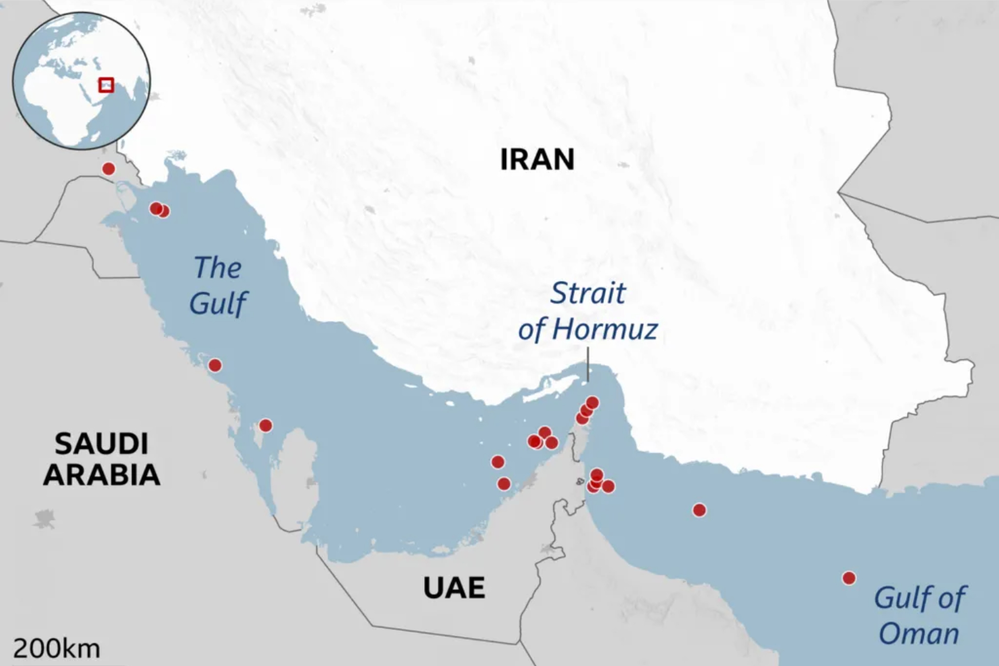 Although a direct physical war between Iran, Israel, and the US is expected to occur in June 2025, the then US President Jimmy Carter had initiated an economic embargo on Iran after the 1979 Islamic Revolution led by Ayatollah Khamenei. Iran has been under economic sanctions for 47 years, except for three years before Donald Trump unilaterally withdrew from the deal in 2018. Due to the US campaign to create an economic crisis in Iran last December, the value of one US dollar has now reached about 1.3 million Iranian rials. During the economic crisis, there were also government and anti-government movements in Iran, which the Iranian regime quickly suppressed.
Iran's own complexities: the center of Persian civilization
Iran's political history is also a long series of internal conflicts and external interests. In 1908, petroleum deposits were discovered in Iran at the initiative of the British government. In the 1920s and 1930s, oil and gas were also discovered in other countries in the Gulf region. Which created an economic miracle in the Gulf and West Asian countries. The endless availability of petroleum products and energy has made the region economically prosperous but politically and security-wise still vulnerable, as the ongoing war has confirmed.
In 1951, Iranian Prime Minister Mossadegh decided to nationalize Iranian oil. Previously, the British had a monopoly on Iranian oil. While his move increased his popularity within the country, it also angered powers outside the country. Regarding oil exploration and British control in Iran, the then Prime Minister Winston Churchill once said, ‘Fate has given us a prize beyond our dreams, which was the oil of Iran.’
After Prime Minister Mossadegh was overthrown by foreign powers, Ayatollah Khomeini emerged from the unstable politics. In the 1980s, Iran faced an Iraqi invasion. With the indirect support of the Americans and Europeans, the then Iraqi leader Saddam Hussein used chemical weapons to wreak havoc on Iran. After that war, Iran tried to keep the war away from its borders for a long time, for which it began to provide financial and security assistance to resistance groups in other countries. Iran's role is considered important in building the military structure of Hamas in Gaza and Hezbollah in Lebanon. Later, after the overthrow of the Houthis in Yemen and Saddam Hussein, Iran succeeded in expanding its influence over Iran-backed Shiite militia groups in Iraq.
Religious, especially the Iranian government that runs on the Islamic Shiite tradition, wants Israel to weaken Iran's dominance in West Asia due to the same support that it is providing directly and indirectly, for which the Israelis have been inciting the US government to attack Iran for the past 30 years. Having largely weakened Hamas in the Gaza Strip and Hezbollah in Lebanon, Israel attacked the Houthis in Yemen with American support. However, in its eyes, it was also necessary to defeat Iran, which trains and arms all these groups. For that, Israel needed the direct involvement of the United States. The 30-year-old Israeli prime minister's plan to attack Iran and overthrow the current government seems to have come true.
Benjamin Netanyahu, who is ruling amid pending corruption cases, knows that the day he steps down from the prime minister's chair, the corruption and irregularities cases hanging over him could lead to prison. Israeli media and intellectuals have been commenting that Netanyahu wants war to hold together the fragile ruling coalition and to get away from corruption cases for a while.
Iran itself is not a country of one race, language, and religion. Being a multilingual and multi-ethnic society, it has been working hard to include all sides. Although it is about 60 percent Persian, there is also a large presence of Kurds, Baloch, Arabs, Azerbaijanis and Turks. The Baloch on the Pakistani border and the Kurds on the Iraqi border have occasionally raised voices for their own separate autonomous region.
Signs of another global recession
Iran has kept the ongoing conflict under control to some extent by keeping the Strait of Hormuz, through which more than 30 percent of the world's seaborne trade flows, partly open and largely closed. Having lost the political and security leadership of the first wave, an angry Iran is also targeting other infrastructure in West Asia.
However, the sparks of this war are not only in Iran - they have reached West Asia, the Gulf, Europe and the US. Strategic, economic and security experts are beginning to say that the world is on the path to the greatest Great Depression since 1929. The increase in the price of crude oil in the world market and its impact on the value chain has made every household face inflation. In Nepal alone, the price of petrol has increased by 20 percent in the last 3 weeks. However, it is important to understand that Arabia does not only export oil and gas. This region produces 12 percent of the world's aluminum, 20 percent more chemical fertilizers, and 30 percent of helium, which are very important goods, which are distributed throughout the world through the Strait of Hormuz. The lack of chemical fertilizers is certain to have a direct impact on the food sector, while the lack of sensitive materials such as helium is also likely to cause a crisis in the production of electronic equipment including computers. Our neighboring country, India, imports 50 percent of chemical fertilizers from this region.
 A war where all sides lose
Generally, when a foreign country attacks another country, it attacks to achieve its main strategic and tactical goals. Independent American security analysts have claimed that it is not clear what the strategic and tactical goals of the United States are, other than supporting Israel's security interests. Concerns are growing that the United States, which has failed to achieve the expected results in Afghanistan, Syria, Libya and Iraq, is suffering the fate of a second Vietnam. The unfortunate thing this time is that although this war appears to be a US-Israel versus Iran war, most of the countries of West Asia, including Russia and China, are directly and indirectly involved in it. Not only that, but last week, after Saudi Arabia and Qatar signed an agreement to exchange security cooperation with Ukraine, Ukraine has also joined this war. The world market is worried about Iran's control of the Strait of Hormuz and the fear of a possible attack by the Red Border Houthis.
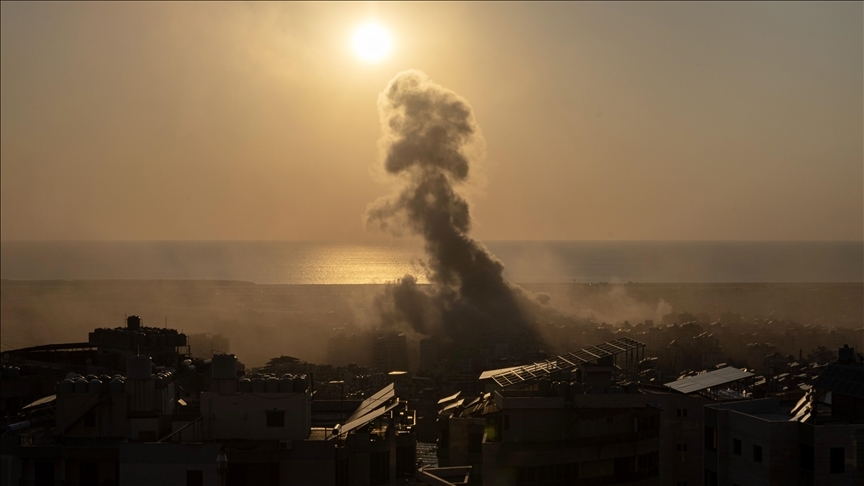
It does not seem that anyone will win the ongoing war. Israel may have been somewhat overwhelmed by the extensive damage to its radar system. Israel has continued military operations not only in Iran but also in Lebanon and Gaza. On the other hand, Donald Trump wants to avoid losing the midterm elections in a few months. The longer this war drags on, the more losses Trump, who is facing widespread criticism in his own country, will surely suffer. The destruction of his top leadership, security structure, and other infrastructure has also exhausted Iran.
In the mathematics of war, the greatest price must be paid by those who had no hand or role in starting the war. The Gulf countries, which have only witnessed the war taking place in their own backyard, have suffered the most. The Gulf countries, which have seemed secure under the American security umbrella, are now in a dilemma as to whose security umbrella they will hide after suffering billions in material losses even without their direct involvement.
The end of the old world order and the expectation of a new one
The US hegemony that has been leading the world order since the end of the Cold War has been constantly questioned. Especially the unilateral violation of established international laws, the announcement of its own withdrawal from the agreements it has made, China's aggressive global strategy, and the BRICS countries that have been making themselves powerful in the last decade have been challenging US hegemony one after another. Many countries had become annoyed with the current US leadership due to the unilateral tariffs imposed on their own countries, including India.
In the context of the US-Iran war in June last year, the attack on Iran during the sixth round of talks after the fifth round of talks had raised suspicions about Iran. While the talks being held in Geneva, Switzerland in February this year under the mediation of Oman were moving in a positive direction, the US is seen as an unreliable power in the eyes of Iran due to the war launched by the US and Israel on Iran. Oman, which is mediating between Iran and the US, also accused the US of unilaterally running away from the dialogue that was moving in a positive direction.
In addition, the US-Israeli attack on the US-Iranian negotiators, who are considered 'moderate' and reformist, and the attack on their supreme leader during the holy month of Ramadan, have made the Iranians reluctant to talk to the US. There have been reports in recent days that the Iranian section, which has been protesting against the current Iranian regime since the attack on a girls' school on the first day of the US attack, has also gathered under the national flag.
In recent days, the South Asian country of Pakistan has been taking diplomatic initiatives by holding separate and collective dialogues with Turkey, Egypt, Saudi Arabia, the US and Iran. Europe, which is somewhat distant from direct conflict, especially China, Japan, Russia, India and other countries, are assessing the impending crisis and the risks it may bring. The Russian Foreign Minister's comment that the 'Third World War' has begun' shows the complexity of the crisis. All these developments show that the old world order and power structure are changing, not a new one. Perhaps, after the ongoing war has taken a break, the picture of the future world order will gradually become clear.
 Nepal's path to the end
Even if a country becomes small, its sovereignty never becomes small. We have our own kind of patriotism towards our country. However, the reality today is that we are not in a position to sell our own words in the ongoing war. It can be hoped that the damage suffered by our country, which is small in the global economy and strategic perspective, will be relatively small.
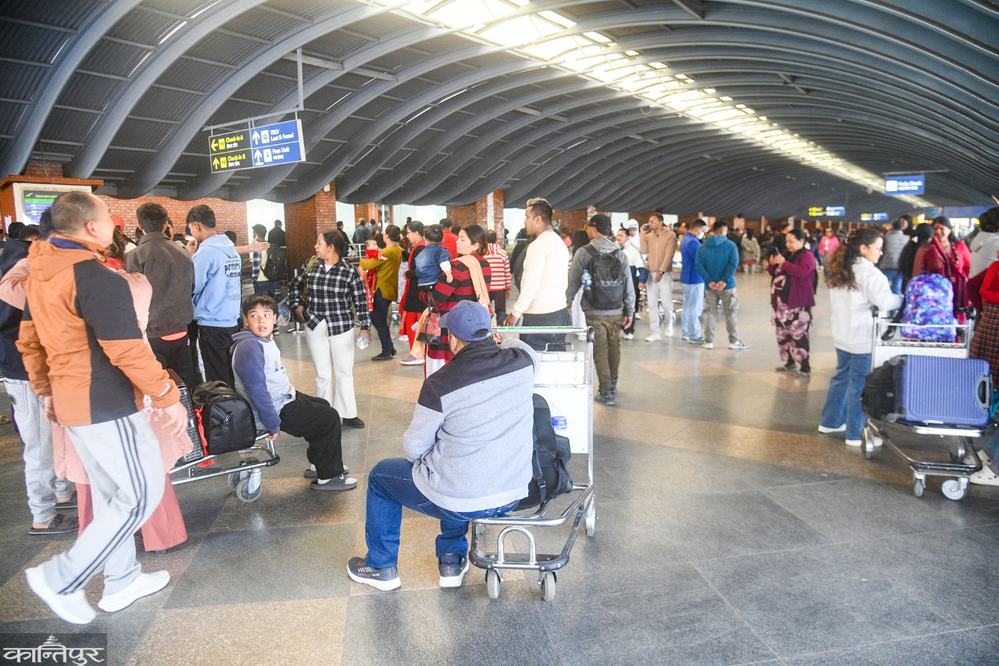
‘When elephants play, the grass is trampled,’ Singaporean leader Lee Kuan Yew added, ‘When elephants love, the grass is trampled.’ Whether they are attacking or being close, powerful nations put their own interests at the center. Our focus should be on how to protect ourselves in the upcoming economic and strategic crises. The damage in West Asia, where there are about two million Nepalis, will directly affect two million kitchens in Nepal. Price increases and inflation will burn down all houses. The economy, which is supported by remittances, will look for another base. In a situation where the war is prolonged, the arrangements for returning home and the means of earning a living after returning to the country are certainly not easy.
In the book ‘History of the Peloponnesian War’, historian Thucydides writes, ‘The strong do what they can, but the weak must suffer in silence.’ But, that should not be our destiny. Of course, the solutions to these new crises are not in the old books. New thinking, perspectives and commitment are needed to overcome the new crisis. As the saying goes, ‘Every crisis also opens a new door of opportunity’, is there any possibility for us in the far corners of the ongoing tension? Investors who have piled up in Dubai, Doha and Riyadh due to security assurance will look for other safe and peaceful areas. Fulfilling the millions of skilled workers required for post-conflict reconstruction may be a challenge for the Gulf countries. For Nepal, which currently sends only 30 percent of skilled workers, sending skilled workers will be a matter of immediate benefit. Iran used to export agricultural products and other goods worth about eight billion dollars to Arab countries every year. At a time when the supply chain is disrupted, there may be a way for us to export high-value agricultural products.
Nepal, which is moving through the electrification phase, will not have to worry about petrol and gas crises if it emphasizes public transport and domestic energy production and consumption.
The new government has made a promising start. It has announced the formation of a committee to study the ongoing war and find a way forward. Along with the preparations we make within Nepal, it is also necessary to intensify diplomatic dialogue and coordination with influential stakeholders in West Asia.

