The primary assumption of the accountability principle is that the weak get the benefit of the doubt, but every advantage of a powerful person in office must be viewed with suspicion.
We use Google Cloud Translation Services. Google requires we provide the following disclaimer relating to use of this service:
This service may contain translations powered by Google. Google disclaims all warranties related to the translations, expressed or implied, including any warranties of accuracy, reliability, and any implied warranties of merchantability, fitness for a particular purpose, and noninfringement.
Nepal has no history of normal governance. Although the two sons of Prithvi Narayan Shah, the conqueror of the Gorkhas and the founder of the Nepalese state, Pratap Singh Shah and Bahadur Shah, were not rivals, their relationship was tense, and constant power struggles had become an inherent feature of the royal court.
After the audacious and ambitious General Jung Bahadur Kunwar led a massacre inside the Kot in the Hanuman Dhoka Palace complex in September 1846, there was a kind of stability during his reign. But the Kot Parva was not just a sudden violence, it was an explosion of power struggles between the main characters in the palace.
Jung Bahadur skillfully used that opportunity to eliminate his rivals and establish himself at the center of state power. Due to the series of court intrigues that began when his brothers could not reconcile, the stability of the ruling process (governance stability) could not be established during the 104-year Rana Shahi, although the stability of the regime (regime stability) was maintained.
Apart from the 18-month parliamentary experiment between 1959-1960, the direct rule of the Shah kings (1951-1990) was also an attempt to strengthen the ruling system. Due to the deep roots of the royal-military culture in the power structure and the lack of parliamentary culture among the majority of politicians, the practice of constitutional monarchy under the multi-party democracy restored in 1990 could not survive. The impact of the rapid deviation of governance after the Narayanhiti massacre in 2001 made it inevitable to declare the formalization of the state system as a republic in the first meeting of the Constituent Assembly in 2008.
The deep-rooted imperial-military culture in the power structure and the lack of parliamentary culture among the majority of politicians have prevented the constitutional monarchy under the multi-party democracy restored in 1990 from surviving. Geography determines the economic and political destiny of any country, while its history guides the course of events in the state and society, creating an unwavering path-dependence. The Shah and Rana families had established a centralized power and exercised authoritarian rule. The Gorkha elite of the Tharghar, who entered the Nepal Valley following the path made by the hooves of King Prithvi Narayan's horse, had established the practice of court intrigues. Although the republic transformed that trend, it has not been able to displace it.
Indeed, Khadga Prasad Sharma Oli, Pushpa Kamal Dahal and Sher Bahadur Deuba, who can be called the ‘three tycoons’ of Nepali politics, have been playing tricks on the state power of Nepal since 2015, and have been tormenting the common people. The senior politicians of the so-called ‘second generation’ faction of their three major parties also seemed to be enjoying the kakistocracy run by middlemen.
But the decadent experiment of the 2024 parliamentary system, in which the two largest parties in the then parliament, the Congress and the UML, worked together to establish a monopoly on the government, ultimately proved to be suicidal. Now, the top politicians of those old parties have not only been hit through the elections, but their public lives are also facing an existential threat.
The self-proclaimed democracy lovers close to the Congress, who encouraged politicians to envision a parliament without opposition, failed to assess the crisis that the situation of no alternative could cause in the search for immediate stability. Although the urban youth had started a non-violent protest against the ban on (un)social media, some other group was probably behind that harmless demonstration with long preparations and was eager to seize the opportunity and wreak havoc.
The protest march, which began slowly with the slogan of ‘not even breaking a flower plant’, soon turned into an uncontrolled anger of the angry crowd and turned into a chaotic riot. After breaking the police security cordon and vandalizing and setting fire to the parliament building premises, the Green Belt Rebellion of 8-9 September 2025, which took place amidst two days of unimaginable violence, counter-violence and nationwide destruction, has reaffirmed the path-dependence of Nepali history – without deceit and manipulation, let alone power, even a change of government is not possible in Nepal.
Even though the various strands of the complex conspiracy have not been traced, the role of various external, internal and military forces, as well as other forces that may be active behind any coup, cannot be ignored. The events that followed were so chaotic that they seem to have disappeared from public memory by now.
The listener may think, ‘It’s like a movie plot, what could have happened like that?’ But it is a fact that just 7 months ago, Nepal witnessed a sudden coup d’état after 36 hours of chaos. Young protesters were killed when the Parliament building was attacked. The President’s residence, Parliament building, Singha Durbar, Supreme Court, Prime Minister’s residence, along with almost all the Chief Minister’s offices, provincial assembly structures, hundreds of local level offices and many police stations across the country were set on fire simultaneously.
The country’s most prominent media group, a chain of the largest shopping malls and the residences of almost all senior politicians were attacked in a planned and coordinated attack. Narayanhiti, Nirmal Niwas, Bhadrakali Headquarters and the Kathmandu Metropolitan City Office were carefully protected from destruction. The events that followed may seem even more dramatic.
In a manner reminiscent of the kidnapping of Venezuelan President Maduro by the Americans, Prime Minister Khadga Prasad Sharma Oli resigned and was put in a helicopter and taken to an unknown safe location. The House of Representatives was dissolved on the recommendation of the interim Prime Minister Sushila Karki, who was nominated by an invisible force, supported by the then ‘Grand Mayor’ Balendra Shah, elected from the Discord discussion forum on the Internet, facilitated by the Nepali Army and unconstitutionally appointed by the Supreme President Ram Chandra Poudel.
In 2013, the incumbent Chief Justice Khilraj Regmi was appointed as the short-term chairman of the interim electoral council of ministers based on the consensus of political parties in the vacuum created by the dissolution of the legislature. The appointment of former Chief Justice Karki as Prime Minister did not create a constitutional vacuum, but it did create an anomaly. The only way to correct such a constitutional aberration could have been to hold snap elections to the House of Representatives as soon as possible.
It is true that the 2026 elections were also held under the supervision of the Nepali Army, but the previous Regmi Council's partisanship was not clear, while the last Karki cabinet was an 'Ama Sarkar' formed by a group that openly sought to overthrow the government. It is true that the 2026 elections were also held under the supervision of the Nepali Army, but the previous Regmi Council's partisanship was not clear, while the last Karki cabinet was an 'Ama Sarkar' formed by a group that openly sought to overthrow the government. Now, the government 'formed by the Nepali Army with the support of Walendra' has handed over power to the government 'formed under the leadership of Walendra' and has left, handing over the responsibility of implementing the agenda of the coup.
Along with that, the elected government has also been given the responsibility of implementing the recommendations of the investigation commission formed by the 'Ama Sarkar' without making it public. Against this background, the party has taken over the political platform of former Deputy Prime Minister Ravi Lamichhane and given it a national form, and within a short time, it is impossible to determine the implications of the story of the miraculous rise of Prime Minister Balendra Shah, who succeeded in becoming the leader of the House of Representatives with almost a two-thirds majority - yes, the leader of the largest political party in the parliamentary system is also called the leader of the parliament after assuming the post of executive chief.
The procession of the ascension
About 5 years ago, a video of Biplab Kumar, the Chief Minister of the Indian state of Tripura, went viral on social media. In that video, he mentioned an incident related to former president of the Bharatiya Janata Party, Amit Shah. According to his claim, Shah, while explaining the BJP's organizational expansion plan, had said that his goal was to form a BJP government in Nepal and Sri Lanka as well. The then BJP president Shah had revealed such a strategic plan during a special meeting with workers at the State Guest House.
With the formation of Prime Minister Shah's government in Nepal, the wish of BJP's 'strategic Chanakya' Shah has been partially fulfilled - the BJP government cannot be formed in Nepal, but the neo-conservative politics of a similar nature have brought the wave of the global right to the lap of the Himalayas. The Indian version of neo-conservatism is known for its cultural nationalism, pragmatic foreign policy, pro-rich and pro-poor mixed economic policy, social programs that humiliate minorities, regular shock therapy politics and demonstration-oriented leadership.
Through the Roman poet Juvenal's governance strategy of reducing political involvement and minimizing the possibility of rebellion - bread and circuses - the BJP has succeeded in establishing its indispensability by captivating the common man, despite failures on every front of economic politics. It is not surprising that Prime Minister Shah's handlers and campaigners are trying to implement the same model in Nepal.
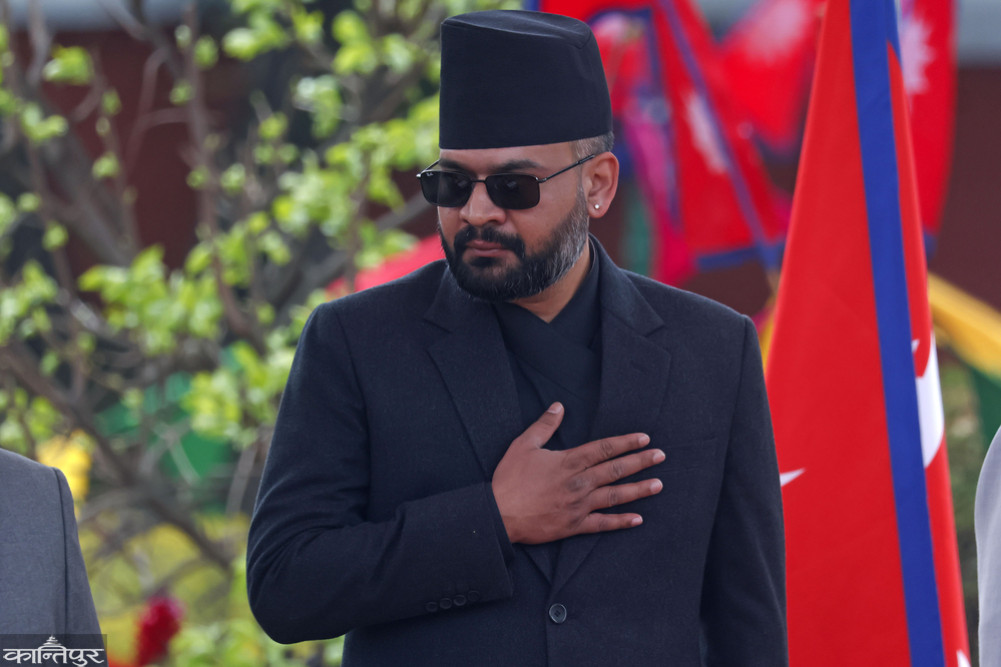
The oath-taking was scheduled to take place at 12:34 pm local time. That time may have been synchronized with the special puja performed at the Ram temple in Ayodhya. Prime Minister Shah was installed on the throne of the chief executive with an agenda rather than an ideology, so he is obliged to show a timely and magnificent spectacle of performance to remain in his position. Since he does not have much political history, it may have been necessary to give his swearing-in ceremony the grandeur of the coronation and assumption of office.
The date of Ram Navami was chosen for the oath-taking. Since the accession to power is not just a governmental exercise but also a cultural performativity, it may have been made a ritual dependent on an auspicious time. The oath-taking was scheduled to take place at 12:34 pm local time. At that time, it was probably synchronized with the special worship performed at the Ram temple in Ayodhya.
The increasing reliance on planets and constellations rather than decisions in politics is a sign of weakening confidence. The time decided by looking at the Panchang, the astrological approval of the democratic process, the blowing of the conch shell by 7 Brahmins, the production of auspicious sounds through the recitation of Swasti by 108 Hindu Batuks, and the recitation of Mangal Path by 107 Buddhist Lama Gurus wishing for peace and prosperity - perhaps more than this was considered unnecessary to determine the footprint of Hindutva politics, so the 'elected king' was not taken on an elephant procession from Sheetal Niwas to Singha Durbar.
Due to his old social ties with the Shah family of Ekdara village, former Deputy Prime Minister of Nepal and former Vice President of the Nepali Congress Bimalendra Nidhi has enthusiastically showered blessings in Maithili saying, ‘Yug Yug Jiya Ho Madheshi Chhna, Akhir Deshke Pradhan Baiye Gela’, but ‘Madheshi Chhna’ is nowhere to be seen in Prime Minister Shah’s speech, dress and behavior. He does not want to leave any stone unturned to become an ‘ideal Nepali’ according to the Gorkhali standard.
The traditional style of the Kathmandu Valley’s labeda-suruwal, the symbol of the faith of the Limbus that adorn the western coat of King Mahendra Chhna, the Silam Sakma and Bhadgaun headdresses that symbolize the symbolic locality of eastern Nepal, may have the message ‘This mind is my Gorkhali’ in the mind, but there is no basis to say whether the Dhukdhuki of Madhesh and Karnali are also included in it.
The primary assumption of the accountability principle is that the weak get the benefit of the doubt, but every advantage of the powerful person in office should be viewed with suspicion. In the era of newspapers, a new government could celebrate a 100-day honeymoon, and the intention and decision of the energetic cabinet, which takes action based on instant information flow and leaked recommendation reports, has been determined by the mandate itself, which has forced the intention and decision of the cabinet to be constantly monitored by the citizens, because the opposition in parliament is almost certain to remain ugly and voiceless. In addition, a situation has been created where the legitimacy of the state is now measured by the frequency of chanting, the appropriateness of dress and the purity of rituals.
The need for production
The newly elected government faces a multitude of challenges. The West Asian crisis that began with Israel's massacre in Gaza is deepening after the US's brutal attack on Iran. The voice of weak countries like Nepal on geopolitical issues is bound to be ineffective, but it cannot be exempt from its side effects. Almost all of Nepal's export earnings are spent on importing petroleum products. It is good to rejoice in the expansion of the use of electric cars and e-rickshaws, but public transport and transportation services are completely dependent on imported fuel.
Almost all of Nepal's export earnings are spent on importing petroleum products. It is good to rejoice in the expansion of the use of electric cars and e-rickshaws, but public transport and transportation services are completely dependent on imported fuel. Every year, there is a shortage of chemical fertilizers during the rice and wheat cultivation period, and its availability and price are also a matter of concern. Autumn tourism was hit by the Green Revolution, spring is being slowed down by the protracted war in West Asia, and if you ask Pokhara's tourism entrepreneurs, you will know how difficult it is to regain a lost market. Even if the immediate impact on remittances is not negative, it is not possible to remain free from the turmoil of the largest market for labor exports for a long time.
नवनिर्वाचित महाकाल पुज्ने वीर गोर्खाली जनप्रतिनिधिहरू भने पटुका कस्नुको साटो र्यापको धुनमा हावामा काठको खुकुरी नचाउँदै रमाइरहेका छन् । सरकारका पाँच थरी प्राथमिकता– जरुरी र महत्त्वपूर्ण, जरुरी, महत्त्वपूर्ण, आवश्यकता र चाहनामध्ये के पहिला गर्ने भन्ने विषय छलफलबेगर सोझै ‘एक्सन’ मा जाने प्रवृत्ति संसारभरि नै सत्येतर राजनीतिको (पोस्ट–ट्रुथ पोलिटिक्स) परिचायक चरित्र बन्न पुगेको छ ।
सत्येतर राजनीतिमा सत्ताले सत्याभास (इल्युजन अफ ट्रुथ) उत्पादन गर्छन् । राष्ट्रपति डोनाल्ड ट्रम्पको दाबीअनुसार आप्रवासीहरू अमेरिकी अर्थतन्त्रका लागि हानिकारक हुन्, यद्यपि तिनको श्रम र सोचको योगदानबेगर संयुक्त राज्य अमेरिकालाई विश्वको सबभन्दा प्रभावशाली आर्थिक शक्ति बन्न र रहिरहन सायद सम्भव हुन्थेन ।
भारतीय प्रधानमन्त्री ‘सबका साथ, सबका विकास’ सपना देखाएर पदासीन भएका थिए तर सत्ताका सबै संयन्त्र प्रयोग गरेर प्रतिपक्षलाई समाप्त गर्दै हिन्दुत्वको विचारधारा लागू गर्ने अहिले उनको एक मात्र लक्ष्य बन्न पुगेको छ । नवनिर्वाचित नवयुवाहरूको सरकारले शासन प्रक्रियाको स्थायित्वका लागि ‘पुरानो सत्ता’ लाई विस्थापित गर्ने मात्र नभई नामेट नै गर्ने जनादेश पाएको सत्याभास सिर्जना गर्न लागेको देखिँदै छ । त्यस्तो उद्देश्यका विधिहरू भने नवअनुदारवादी प्रचारको वैश्विक अस्त्र–भण्डारमा उपलब्ध छ ।
उत्पादित आवश्यकता स्थापित गर्न प्रचार संयन्त्रको भूमिका सबभन्दा महत्त्वपूर्ण हुने नै भयो । परम्परागत राजनीतिमा सञ्चारमाध्यमहरू द्वारपालद्वारा संयमित तुल्याइएका हुन्थे । सम्पादक समूहले राजनीतिकर्मीका दाबीको तथ्य र तर्क परीक्षण गरेर मात्र सामान्यजनसम्म पुग्न दिन्थे ।
तर, फेसबुक, टिकटक र ट्विटरको उदयले त्यो संस्थागत निगरानीको पर्खाल भत्काइदिएको छ । अहिलेका निर्वाचित–राजा, तिनका दरबारियाहरू र मिडिया निर्मित पात्रको जमातले एउटा अदृश्य प्रदर्शन मञ्च खडा गरेका छन् । यो मञ्चले उनीहरूलाई पत्रकारका तिखा प्रश्नबाट त जोगाउँछ नै, साथै आफ्ना प्रशंसकहरूसँग सिधै जोडिएर ‘एकलौटी भाष्य’ निर्माण गर्ने सुविधा पनि दिन्छ । राजनीतिक विमर्शलाई उत्पादित कथ्यहरूको जात्राले विस्थापित गरेको छ । अब तर्कको सट्टा उत्तेजना र तथ्यको सट्टा भावनाको व्यापार मज्जाले चलिरहनेछ ।
सार्वजनिक व्यक्तित्व अब व्याख्याता होइन, एउटा कुशल अभिनेताका रूपमा प्रकट हुन्छन् । झूटो कथालाई हजारौं पटक अल्गोरिदमको सहायताले दोहोर्याउँदै हजारौं ‘लाइक’ र ‘सेयर’ मार्फत त्यसलाई सामाजिक अनुमोदन प्राप्त हुन्छ भने कालान्तरमा त्यो लक्षित समुदायका लागि परम सत्य बन्न पुग्दछ । सहभागिता नै प्रमाणीकरणको आधार बनेपछि यदि धेरैले सेयर गरे भने त्यो सत्य हो, नत्र त्यो अस्तित्वमै छैन । त्यसैले आफ्ना राजनीतिकर्मीको पक्षमा मिम बनाउनु, विपक्षीलाई ट्रोल गर्नु र अफवाह फैलाउनुलाई समर्थक जमातका लागि नागरिक कर्तव्य बन्न पुगेको छ ।
कवि र नाटककार अभि सुवेदीको तिखो तर परिपक्व भाषामा भन्ने हो भने नवअनुदारवादले ‘डेमोक्रेसी’ लाई ‘थिएट्रोक्रेसी’ बनाउँदै लगिरहेको छ, जहाँ नागरिक होइन, केवल मुग्ध दर्शकहरूको ताली बजाउने भीड मात्र बाँकी रहनेछ । हुन त नाटकको अवधारणा नृजातीय मुख्तियार शर्मा ओलीको थियो तर पटकथा लेखन र निर्देशन उनको हातबाट फुत्किएर अन्तै पुगिसकेको उनले चालै पाएनन् ।
स्वतन्त्र मिडिया यस नाटकका समीक्षक बन्न सक्थ्यो तर हरितपीत विद्रोहपछि उनीहरूलाई संकोचित मौनतामा धकेलिएको छ । कतिपय प्रतिष्ठित मिडियालाई त आफ्नो साइनबोर्डसमेत हटाउनुपर्ने बाध्यता आइलागेको छ । एक थरीको कोकोहोलो र अर्का थरीको मौनताका बीच सम्भ्रान्तहरूको नाटकमा निर्वाचित राजाले आफ्नो भूमिका कसरी निर्वाह गर्छन्, त्यो हेर्नैपर्ने बाध्यताबाट अधिशासित समूह मुक्त हुने सम्भावना भने अहिले कतै देखिँदैन ।