It seems that this is an era, albeit short-lived, in which the ability to negotiate with powerful nations at all times becomes more important, rather than formal alliances or complacency like in the 20th century.
We use Google Cloud Translation Services. Google requires we provide the following disclaimer relating to use of this service:
This service may contain translations powered by Google. Google disclaims all warranties related to the translations, expressed or implied, including any warranties of accuracy, reliability, and any implied warranties of merchantability, fitness for a particular purpose, and noninfringement.
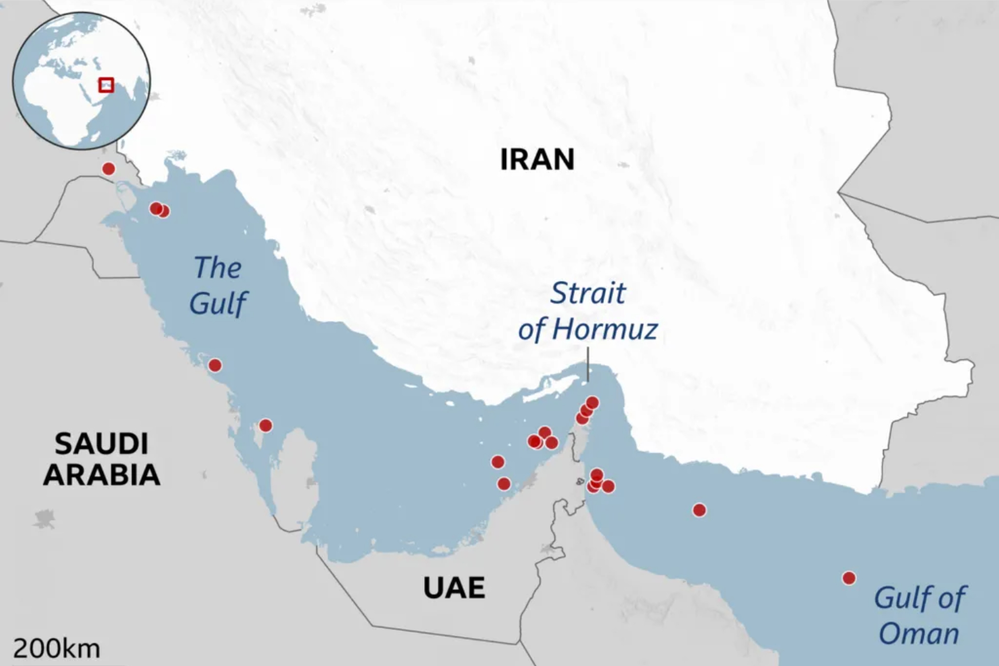
What are the Persian Gulf, where more than three thousand huge ships are floating, stuck in the Strait of Hormuz, telling us about the world order of yesterday, today and tomorrow? What are we understanding? Our confusion remains at the beginning of an effective discussion on these profound questions that the whole world is intensively discussing. Ending the repetition of the culture of immediately reviewing, reflecting and learning about world events is also a major area of work for the new government's foreign affairs.
When important political, economic and other events occur in the world, review meetings with the heads of state are held every morning in all the right countries of the world. How events developed throughout the day and night and what path our country should take immediately are decided. The initial stages of such meetings are also made public through the media. Another major national objective of holding meetings in this way is to reassure citizens. During times of crisis, it is a major responsibility of the state to not only be vigilant in meticulous study of world events and minimize their impact, but also to assure that all levels and strata of the state are ready. In other words, the state must also have the ability to stage democratic drama to win the trust of citizens in politics. For a long time, our politics had failed in this process. The new government should utilize this opportunity for 'course correction'.
I would like to present the conclusion at the forefront of the article for a more intensive dialogue with the readers. Although there are many different perspectives on viewing, understanding, and interpreting the world order, the continuity or change of the world order can be understood only by observing how the will of a nation is formed and the differences in understanding on the issue of representation. From the perspective of will, it is seen that clear ideological differences are developing between major powers and middle power nations, while from the perspective of representation, there are signs of a radical change in the world politics of alliances.
For the time being, the liberal world order that has been in practice since the 1950s is being advocated by middle powers, while major powers are giving priority to trade over ideas. A profound rethinking of the new Cold War-centric world order narrative that has been prevalent in Nepal for nearly a decade is inevitable. There is a gap between the polarization that we commonly discuss and the polarization depicted in the Persian Gulf. In addition, many questions have also been raised about the continuity of the era of formal bilateral alliances that were prevalent in world politics in the 20th century. Even if only for the time being, ‘negotiation’ capacity and ‘minilateralism’ have become important for achieving national interests in a world order that is in transition.
Diversity in the understanding of world order
World order is a compound word made up of two different words. There are three main and different perspectives on depicting the world in its discussion. First, since states are the main actors in international relations, they should be focused on understanding the world. Since non-state actors have a limited role in times of crisis, their role is not decisive in international politics. Second, there is a view that non-state actors can also play a decisive role. Since the priorities of the state are ultimately the result of power struggles among actors within the country, it is difficult to fully understand the state without analyzing how such priorities are determined. Third, the world is viewed as a comprehensive system formed by the expansion of the capitalist production system.
Another word for world order is system. The shared principles and rules among stakeholders determine the form of any system. But we need to be clear here that the foundations for understanding the world determine the shared principles and rules. The definition of what the world is also paints a picture of how the world works. Therefore, the understanding of the world is the decisive basis for determining the principles and rules of the system.
The competition to explain the form of the world order based on various theories of international relations has been widespread since the 1970s. In this regard, many perspectives have developed. First, the balance of power among major powers determines the world order. Here, military power seems to be given high priority. When the balance between them is disrupted, conflicts increase and there is a possibility of war. This approach to understanding the world order is very popular in our country.
 Second, the international society creates common goals and that is what is operating the world order. That is, states determine the rules, norms, and processes and that is what determines the world order. Third, the combination of power and political legitimacy determines the path of the world order. Fourth, interdependence, international institutions, and rules collectively determine the form of the world order. Fifth, the inequality created by the capitalist world economy plays a decisive role in the world order.
When we are discussing the continuity, change, or emergence of the world order, we must be clear and alert – which world order are we talking about? What are the main foundations of the world order that I understand and believe in, and what are the dimensions of the transformation and change that have occurred in such foundations? The main topic of this dialogue should be the aspect of When I argue that the world order is changing, a genuine debate is possible only when we always take to heart the possibility that someone else may argue that there is no substantial difference in its essence.
Philosophy of world order
When analyzing this long dialogue on world order theoretically, it seems necessary to look at its two main dimensions. What determines the ‘will’ of the state? Some seem to give high priority to the physical structure, while others to the competition of power within the state. Some seem to give priority to the economic dependence between states, while others to the world market system. But the aim of all is to explain the decisive reasons for the will of the state. Second, it seems to seek the impact of the form of representation on the system. In particular, the question of whether all countries are the same or different, or what regional differences in capabilities determine their roles, seems to be given high priority. What are the ongoing multilateral wars in the Middle East and the ‘Strait of Hormuz’ and the Persian Gulf, where its vivid effects are clearly visible, depicting to us?
Global ‘populism’ and the advocacy of a liberal world order
In 2015, a sensational article was published in the Journal of Democracy. The title of the article by Larry Diamond, a famous professor at Stanford University, was – ‘Democratic Recession’, i.e. democratic recession. According to him, ‘populism’ prevalent in large and developed countries was a major dimension of the global democratic recession. Even though it has been more than a decade since the article was published, there has been no concrete improvement in it. Such practices have also shaken the foundation of the liberal world order that has been in place since 1950.
In such a case, the question of whether the world order after 1950 was completely liberal in itself also requires a thorough discussion. The UN-centered world order maintains power inequality among countries and on the basis of this, it has arranged for certain countries to have special rights. The UN Permanent Committee is a vivid example of this. In addition, the fact that the discussion on its reform, which has been in the news for almost half a century, has focused only on increasing the number of members rather than reducing the special rights of the committee members clearly shows the fascination of powerful countries with the principle of imbalance of power.
However, many powerful countries that had been legitimizing their activities by showing their commitment to democracy, respect for human rights, promotion of free trade, and increasing the coordinating role of international institutions during the Second World War and the post-Cold War period have lost the ground on which to advocate for it. From the Corona period to the Middle East war, ‘populism’ took root in many powerful democratic countries of the world. Citing internal economic reasons, it became the routine of the leaders of powerful countries to abandon policies, rules, and principles. Even among the new emerging countries, many did not have the environment to advocate all the principles of the liberal world order together. Although the world order was called liberal, the powerful countries were losing the legitimacy to lead and coordinate it.
This situation seems to have created particular fear and panic among middle-power countries. They seem to be very sensitive to the negative impact of undemocratic competition between powerful countries not only on their own economies but also on world peace. This is clearly illustrated in the recent speeches of Singaporean Prime Minister Lawrence Wong. The concerns expressed by Canadian Prime Minister Mark Carney at the Davos Forum, explaining the increasing trend in the global economy to use trade as pressure, tariffs as a means of exerting influence, and finance and supply chains as weapons, seem to be raised by almost all the heads of middle powers.
When Iran blocked the passage of oil tankers in the Strait of Hormuz, the inclusion of 22 middle powers in the condemnation statement launched by Britain, France, Germany, Italy, the Netherlands, and Japan in protest cannot be considered a mere coincidence or coincidence. Only a deeper look at the G-20 summits, which have been held 20 times since 2008, and the ideas expressed therein, reveals the current picture.
In essence, there are clear signs that, at least for a while, the major powers will prioritize trade over principles or ideas, and the middle powers will support the liberal world order that has taken root since the 1950s. Current events are showing signs that the new Cold War narrative that is prevalent among us is temporarily irrelevant. It is necessary to reflect on the fact that rays of polarization have appeared in the world that are slightly different from what we thought and discussed.
A new classification of who is for/against the current world order, who is for/against change, seems inevitable. Before we decide which line we will take, who is standing before us and what are the characters, trends and principles that we are trying to see ahead? Let us reflect for a moment. Also, are we fully confident that the path we have chosen will serve our national interests?
 Crisis of formal alliances, ‘negotiations’ and ‘minilateralism’
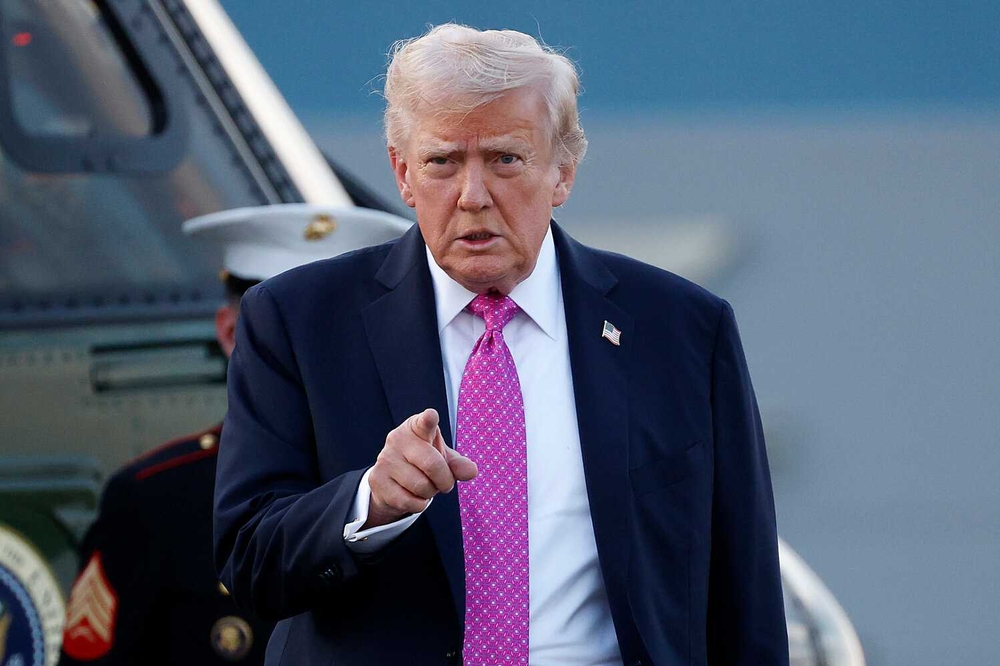
Two weeks after the attack on Iran, on March 14, US President Donald Trump expressed his hope that countries such as Britain, China, France, Japan and South Korea, which import a lot of fuel through the ‘Strait of Hormuz’, would send their troops to the region to ensure the unhindered movement of ships. But all the countries he mentioned refused on one pretext or another. He immediately canceled his visit to China.
He not only accused Western countries of not helping him, but also publicly criticized them as cowards. Three days later, on March 18, he backed down, saying that the US did not need anyone’s help in the ‘Strait of Hormuz’.
A closer look at these developments suggests that the formal alliance-centered world politics that has been practiced since World War II will take a new form. There is no world politics in the 21st century that can be satisfied by looking only at formal alliances, as in the 20th century. शक्तिराष्ट्रहरूले एकतर्फी रूपमा गठबन्धनको स्वरूपमा परिवर्तन गर्न ‘प्रेसर’ दिनु विश्व राजनीतिको नियमित घटना भएको थियो । तर ‘स्ट्रेट अफ हर्मुज’मा थप एक चित्र पनि देखिएको छ । गठबन्धनमा रहेका शक्तिराष्ट्रले आह्वान गर्दैमा गठबन्धनका सदस्यहरू सहजै युद्धमा सहभागी हुनेवाला छैनन् । यस्ता घटनाक्रमहरूले औपचारिक गठबन्धनको विश्व राजनीतिको युगको अन्त्यलाई चित्रित गरिरहेका छन् ।
साथै, उदीयमान राष्ट्रहरू पनि २०औं शताब्दीको अमेरिका वा सोभियत युनियन जस्तो निश्चित देशहरूसँगको विशेष औपचारिक गठबन्धन घोषणामा लालायित नदेखिनुले पनि द्विपक्षीय औपचारिक गठबन्धन केन्द्रित विश्व राजनीतिको भविष्यमाथि प्रश्न उठेको छ । नेपालजस्तो मध्यमस्तरको देशले आगामी दिनमा कुनै प्रमुख शक्तिराष्ट्रसँग नितान्त नयाँ दर्जाको द्विपक्षीय औपचारिक सम्बन्ध घोषणा गर्ने अवसर प्राप्त गर्ने सम्भावना कम हुँदै जाने देखिन्छ । पुराना असल राष्ट्रहरूसँगको सम्बन्धलाई नै पूर्ण कार्यान्वयन गर्न अलमलमा रहेको अवस्थामा नयाँ र घनिभूत सम्बन्धहरूको घोषणाको मात्रामा पनि स्वाभाविक रूपमा कमी आउने नै भयो ।
२०औं शताब्दीको जस्तो औपचारिक गठबन्धन गर्ने होइन, ढुक्क बस्ने पनि होइन, हरेक समय शक्तिराष्ट्रहरूसँग संवाद गर्न सक्ने ‘नोगोसिएसन’को क्षमता थप महत्त्वपूर्ण हुने युग अल्पकालीन भए पनि सशक्त हुने देखिन्छ । नयाँ संसद्, सरकार र सिंगो देशले प्राथमिकता दिनुपर्ने विषय पनि यही हो । यस्तो अवस्थामा यो संक्रमणकालीन वा रूपान्तरणको अवधिभरलाई मात्रै भए पनि मध्यम शक्तिराष्ट्रहरूबीच एक–अर्काका साझा मुद्दामा प्रशासनिक कर्मचारीहरूले सघन सहकार्य गर्ने ‘मिनिलेटरलिज्म’, द्विपक्षीय वा बहुपक्षीय औपचारिक सम्बन्धभन्दा थप प्रचलित र प्रभावकारी हुने देखिन्छ । यस्तो सन्दर्भमा परराष्ट्र मामिलामा ‘नोगोसिएसन’ क्षमता वृद्धि गर्नु र विविधताको मार्ग तय गर्नु बुद्धिमत्तापूर्ण हुन सक्छ ।