The rise of the Rashtriya Swayamsevak Sangh (RSS) is not just a change of power, but also a sign of a change in political culture. However, to maintain the trust of the people and establish itself in the long term, the RSS will have to deliver clear results in good governance, service delivery reform, and inclusive development.
We use Google Cloud Translation Services. Google requires we provide the following disclaimer relating to use of this service:
This service may contain translations powered by Google. Google disclaims all warranties related to the translations, expressed or implied, including any warranties of accuracy, reliability, and any implied warranties of merchantability, fitness for a particular purpose, and noninfringement.
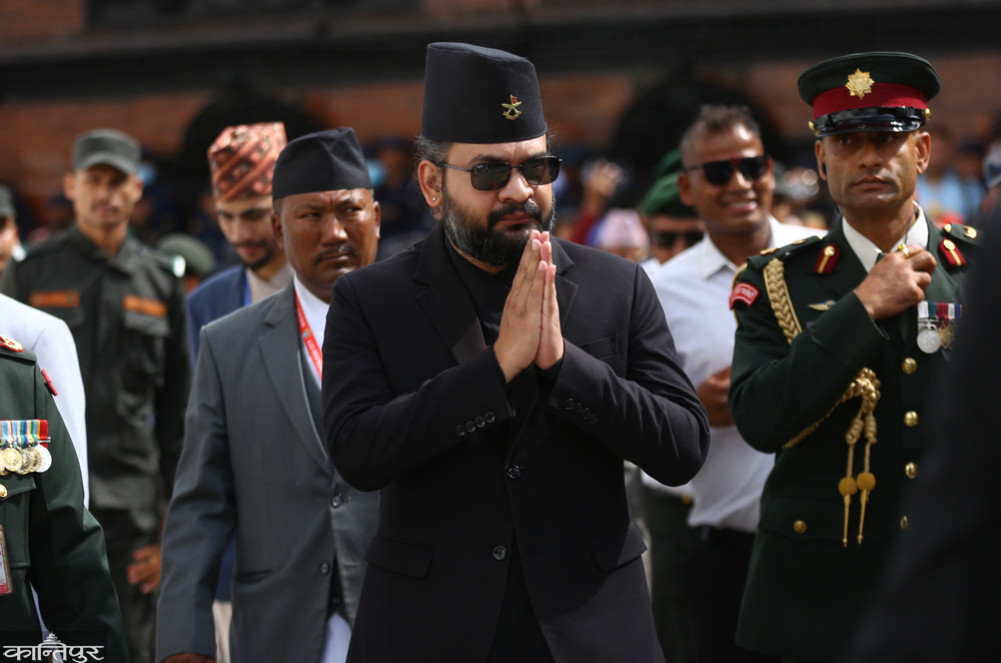
Senior leader of the National Independent Party (NIP) Balendra Shah is preparing to take the oath of office as Prime Minister. The unprecedented success achieved by the NIP in the House of Representatives elections held on Falgun 21, 2082 has now become a major topic of political analysis. Attempts are being made to interpret the election results from various angles, but from the voters' perspective, its meaning is not that complicated. This article discusses the current political environment in Nepal, the expected role of the NIP, the challenges it faces, and the future political direction.
In the last two decades, instability, a hung parliament, division politics, and a weak governance system in Nepal had been gradually weakening state institutions. There was no significant progress in administrative reform, policy continuity, and development. Governance remained centered on a few limited political groups, who presented themselves as 'without alternatives'. Although there was competition for power, there was an implicit agreement among them to not allow a new leadership to emerge. Although the Ravi Lamichhane-led NIP presented an alternative force in the 2079 elections, the established parties adopted a strategy of weakening it rather than assimilating it.
Gen-G rebellion and a new political paradigm
The 2072 constitution had brought an end to a long political transition and raised new hopes for stability, development, and prosperity. However, in practice, that expectation could not be fulfilled. The state machinery, which should have focused on structural reforms, good governance, and economic transformation, remained entangled in power-sharing, party-based division, and short-term political interests. Slowness in public service delivery, widespread corruption, and impunity at the highest levels created deep frustration among the common citizen.
The rise of the Rashtriya Swayamsevak Sangh (RSS) is not just a change of power, but also a sign of a change in political culture. However, to maintain the trust of the people and establish itself in the long term, the RSS will have to deliver clear results in good governance, service delivery reform, and inclusive development. Against this backdrop, social media had become a major means of expressing dissatisfaction. However, the ban on social media made the situation even more explosive. The movement known as the ‘Gen-G rebellion’ brought the pent-up dissatisfaction of the youth to the streets. The death of 19 youth during the protest on Bhadra 23 was a sign of a serious crisis in state-citizen relations. The next day – on Bhadra 24, when leaderless and uncontrolled mobs turned violent in various parts of the country, widespread loss of life and property occurred. Ultimately, the situation was brought under control only by mobilizing the army.
This series of events deeply damaged public trust in the state and raised questions about the legitimacy of established political forces. The civilian government formed in the wake of this wave of dissatisfaction dissolved the House of Representatives and announced new elections, which paved the way for the current political change. Meanwhile, the potential collaboration between Ravi Lamichhane and Balendra Shah gave voters a sense of a credible alternative. Ravi Lamichhane's organizational ability and Balendra's popular charisma among the youth gave the RSS wide public support.
Big victory, big responsibility, primary challenges
The RSS has raised hopes for a stable government by securing almost a two-thirds majority. However, with such a victory comes great responsibility. Breaking the political ‘syndicate’ is a significant achievement, but when power is highly concentrated, so is the risk of wrong decisions. People’s expectations are high, but patience is limited. Hope can quickly turn into disappointment if the government fails to deliver quick and effective results.
Therefore, it seems necessary to focus on long-term structural reforms rather than short-term popular programs. The rise of the Rashtriya Swayamsevak Sangh (RSS) is not just a change of power, but also a sign of a change in political culture. However, to maintain the trust of the people and establish itself in the long term, the RSS will have to deliver clear results in good governance, service delivery reform, and inclusive development. If the RSS succeeds in this, it will not only be a success of the government, but will also be a new chapter in Nepal’s democratic journey. The challenges facing the RSS government are multifaceted. They are not only policy-related but also structural and political in nature.
1. Administrative reform and service delivery
Nepal’s administrative machinery is often referred to as a ‘permanent government’, but this machinery is plagued by complex processes, unclear rules, corruption, and weak accountability. Even simple tasks for the common citizen have become cumbersome and time-consuming. Administrative incompetence and insensitivity have weakened the citizen-state relationship. If the new government can make the administrative structure simple, transparent, digital and service-oriented, it can bring about a qualitative change in the governance system.
2. Dynamics in economy and development
This election has not only measured the aspirations for change, but also provided a signal to build the foundation for alternative political practices. Voters have expressed dissatisfaction with the established power structure and have made their inclination towards results-oriented, accountable and transparent governance clear. The new government will have to come up with a concrete policy to encourage the private sector, create an investment-friendly environment, complete large infrastructure projects on time, and stop the population exodus from rural and hilly areas. Ensuring inclusive economic development and ensuring equal distribution of opportunities will be the main indicator of the government's success. Nepal's economy has been in a sluggish state for a long time. A large number of young labor force has emigrated, which has created a shortage of productive manpower within the country. Although remittances are supporting the economy, they have not been able to generate long-term output growth or employment. Economic activity has become relatively weak due to a consumption-based economy, declining domestic demand and a sluggish private sector.
3. Constitutional Amendment and Political Consensus
It is commonly believed that constitutional amendment becomes easier after a two-thirds majority is obtained. However, the constitution is not just a legal document. It is a basic socio-political agreement between the state and the citizens. Although a numerical majority is necessary for constitutional amendment, it is not sufficient. For this, broad political consensus and social acceptability are indispensable.
The issues of amendment can be broadly divided into two parts. First, the procedural ambiguities and institutional weaknesses seen in practice over the past decade, such as the structure of the Constitutional Council, the confusion seen in the role of the President/Vice President, or the need for a constitutional court. Consensus on such issues may be relatively easy.
Second, there are fundamental issues such as the form of federalism, the system of governance, or the electoral system. These issues are extremely sensitive. Rushing to make decisions on these issues can increase political polarization and instability.
Therefore, it seems reasonable for the new government to prioritize good governance, service delivery reforms, and strengthening public trust rather than focusing on contentious constitutional debates in the initial stages.
Conclusion: Signs of Change and the Way Forward
This election may appear to be a continuation of past elections on the surface, but its underlying meaning is of much deeper and far-reaching significance. Beyond the superficial debate of ‘old versus new’, it has sent a clear message about the kind of political culture, leadership, and governance that Nepali voters want.
This election has not only measured the desire for change, but has also signaled the foundation for alternative political practices. Voters have expressed their dissatisfaction with the established power structure and have made their inclination towards results-oriented, accountable, and transparent governance clear.
The election results also reveal some important messages. For example, the argument that the constitution or electoral system is the main cause of political instability seems to be gradually weakening. This shows that the problem is more about implementation, leadership style and political will than structure.
Similarly, the people have re-approved progressive political achievements, rejecting forces with regressive agendas. Overall, there are signs that politics in Nepal is gradually transforming from a ritualistic ideology to a practical, results-oriented (‘delivery’-focused) agenda, as seen in neighboring India.
However, the stronger the mandate received by the Rashtriya Swayamsevak Sangh (RSS) party, the higher the expectations attached to it. Implementing the promises made in the election manifesto is not an easy task. Even after coming to power with an overwhelming majority, the main challenge for the RSS party will now be to grapple with the complex realities of governance.
First, it will be necessary to balance the personal aspirations of the leaders and institutional discipline while maintaining the balance of power within the party. Second, relations with opposition parties, both inside and outside the parliament, will have to be managed in a cooperative manner, not just competitively. Third, keeping in mind Nepal's geopolitical sensitivity, it will be extremely important to maintain balanced, Nepal-centric relations with both neighboring countries and expand a credible partnership with the international community.
Only if the RSVP can show balanced and mature leadership in all these dimensions can it establish itself as a long-term political force rather than being the result of a momentary public wave.
Role of the Opposition: Another Pillar of Democracy
Although limited to a small size in parliament, the role of the opposition becomes more responsible and meaningful. Without a strong opposition, the balance of democracy cannot be maintained. In particular, if the Nepali Congress can learn from its past weaknesses and play the role of a creative, policy-oriented and effective opposition, the democratic system will be further strengthened. Not only criticism of the government, but also the ability to present alternatives will determine the credibility of the opposition.
Looking at the changing trends of voters, there are signs that the appeal of traditional leftist ideology is gradually decreasing. There is a strong possibility that the RSVP and the Nepali Congress will emerge as the two major political forces of the democratic stream in the coming days. However, to be established in the long term, these parties will need to make their organizations more inclusive and gain the trust of marginalized communities, minority groups, and regional voices. If they can do so, these parties can establish themselves as alternatives to not only national but also identity-based and regional parties.