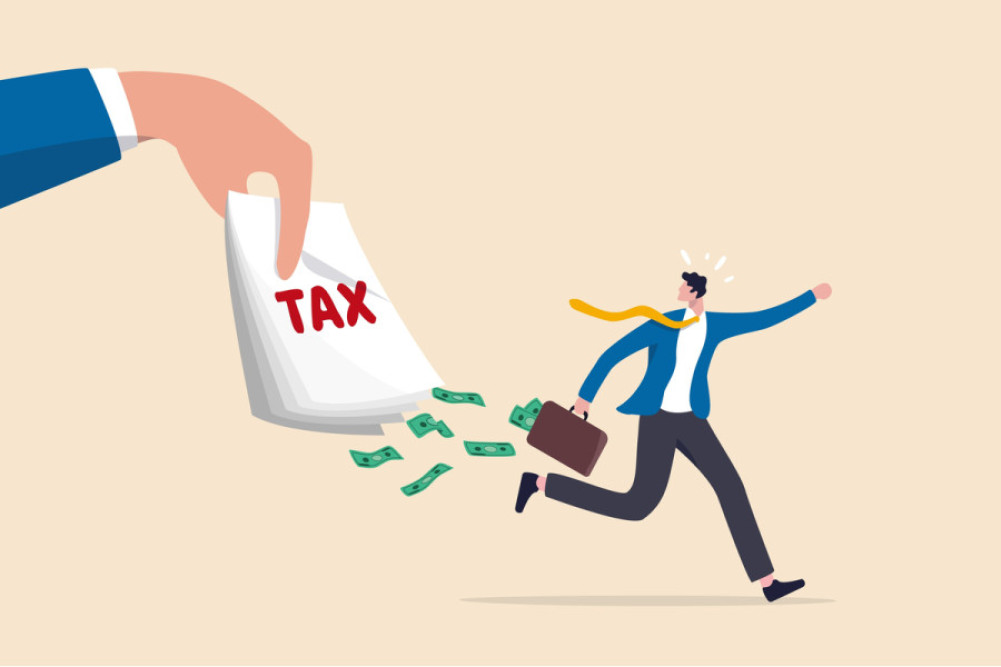
Nepal now needs to implement a second phase of a comprehensive tax reform program. Such reforms should aim to promote sustainable and rapid economic growth. Nepal should establish a low- to moderate-rate, broad-based, simple, stable, and predictable tax system.
We use Google Cloud Translation Services. Google requires we provide the following disclaimer relating to use of this service:
This service may contain translations powered by Google. Google disclaims all warranties related to the translations, expressed or implied, including any warranties of accuracy, reliability, and any implied warranties of merchantability, fitness for a particular purpose, and noninfringement.
The National Independence Party has won a nearly two-thirds majority in the recently concluded parliamentary elections. Respecting this strong mandate, the government formed by this party must immediately implement economic reforms to revive the sluggish economy, a key component of which should be a comprehensive tax reform. While formulating such a program, it is necessary to take into account the experiences of major tax reforms implemented in various countries around the world and Nepal’s own experience in tax reforms in the past.
Major International Tax Reforms
Many countries around the world have implemented comprehensive tax reform programs at different times to achieve specific objectives. For example, in 2049–50, Japan implemented comprehensive tax reforms to ensure stable revenues for the reconstruction of its economy destroyed in World War II, establish a modern tax system, and develop an efficient tax administration.
Similarly, in 1986, the United States implemented comprehensive tax reforms with the aim of broadening the tax base by eliminating tax exemptions and special benefits, increasing tax equality by ensuring that taxpayers with equal incomes pay the same tax, significantly reducing personal and corporate income tax rates, and making the tax system efficient and neutral.
During the same period, New Zealand implemented a Goods and Services Tax (VAT) with a broad base, a single registration threshold and a single rate to reduce distortions in the economy from the tax system, make the tax system efficient and neutral, close tax loopholes, reduce income tax rates and broaden the tax base.
Similarly, in the early 1990s, Singapore implemented a broad base, a single registration threshold and a single rate Goods and Services Tax (GST), shifting its reliance from direct taxes to consumption taxes. The aim of this reform was to reduce personal and corporate income tax rates, encourage investment and trade growth, increase international competition and diversify government revenue sources.
Among the recent major tax reforms, the tax reform implemented by India in 2017 is particularly notable. Under this reform, a single Goods and Services Tax (GST) was implemented by eliminating 17 types of indirect taxes and 23 cesses levied by the federal, state and local governments. This reform, implemented with the aim of creating a unified national market, simplifying the tax system, making it transparent and efficient, and promoting long-term economic growth, is considered the largest economic reform undertaken by India since independence.
Although GST was initially planned to be implemented at a single rate, political and practical reasons led to the adoption of a multi-rate system, which complicated the tax system and caused hardship to millions of taxpayers. That is why Congress leader Rahul Gandhi criticized it as the ‘Gabbar Singh Tax’. In 2025, the GST rates have been reduced to two rates and are expected to be revised to a single rate within a few years.
Among the various tax reform programs in the world, the tax reform implemented in Georgia in the first decade of the 21st century, especially the reform from 2005 to 2007, may be a very important example for Nepal. This reform was implemented under the leadership of 38-year-old President Mikheil Saakashvili and 31-year-old Finance Minister Alexis Alexisvili.
A few years later, when I was involved in tax reform work at the international level, former Georgian Finance Minister Alexis Alexisvili and I worked together. During that time, he said that at the end of the 20th century, Georgia's tax system was extremely disorganized, corruption was rampant, and revenue collection was not as expected. To break this vicious circle, the young leadership decided to implement a comprehensive tax reform, which became one of the most important reforms in Georgia's modern history.
The main objectives of this reform were to modernize the economy, simplify and transparent the tax system, reduce corruption, and create a business-friendly environment. Under the reform, the number of taxes was reduced from 22 to 7, a flat rate of 12 percent was introduced instead of various progressive rates of personal income tax, the value-added tax rate was reduced from 20 percent to 18 percent, and the social security tax was reduced from 33 percent to 20 percent. Many tax exemptions and privileges were eliminated, the tax payment process was simplified, and the tax administration was strengthened.
As a result, the tax compliance rate increased from 13 percent to 25 percent, revenue leakage decreased, and revenue collection increased. These reforms encouraged investment and entrepreneurship. Foreign direct investment increased from $250 million in 2004 to $2 billion in 2007. Similarly, the average annual growth rate of gross domestic product between 2005–2007 was about 10 percent. According to the World Bank’s ‘Doing Business Survey’, Georgia ranked first in the world for tax reform between 2005–2010 and rose from 132nd place in 2004 to 18th place in the Ease of Doing Business Index in 2007.
Nepal’s first phase of tax reform
Looking at Nepal’s own experience, Nepal implemented the first phase of a comprehensive tax reform program in the 1990s. As a major component, it eliminated the previous sales tax, hotel tax, contract tax, and entertainment tax and implemented a broad-based, single-registration threshold, and single-rate value-added tax.
Personal income tax rates were simplified and limited to two rates of 15 and 25 percent. The corporate income tax rate was set at 30 percent for banks and financial institutions and 25 percent for other businesses. Excise duty on dozens of items was eliminated and limited to 11 items, and the number and level of customs rates were also significantly reduced.
The revenue administration was also restructured by merging various departments and retaining only the Internal Revenue Department and the Customs Department. Their organizational structure was modernized, a comprehensive program was launched to enhance the capacity of employees, and a campaign was launched to computerize tax administration. As a result, revenue increased by an average of about 18 percent per year over a long period of time.
However, unfortunately, a culture of political participation and access developed in the last 15 years. Political instability led to frequent changes in various personnel, including the leadership of the Ministry of Finance and its subordinate agencies. During this period, the Finance Minister changed 18 times, the Finance Secretary changed 15 times, the Director General of Customs changed 21 times, the Director General of the Internal Revenue Department changed 15 times, and the heads of large taxpayer offices changed 17 times.
This kind of instability disrupted the continuous and quality advice and service from technical experts and weakened institutional decision-making capacity. Revenue policy gradually came under the influence of middlemen and pressure groups. As a result, tax policy has become more influenced by short-term decisions than long-term strategies. And, the reform process has become more like ‘one step forward, two steps back’.
This has led to the tax system becoming more complex, private sector confidence has been eroded, economic activity has been negatively impacted, and revenue collection has not been as expected. It is now necessary to reverse this situation without delay.
Second phase of tax reform
It is now necessary to implement the second phase of a comprehensive tax reform program in Nepal. Such reforms should aim to promote sustainable and rapid economic growth. For that, Nepal needs to establish a low or moderate-rate, broad-based, simple, stable, and predictable tax system. It should increase voluntary tax compliance, bring the informal economy into the formal sector, attract domestic and foreign investment, help create jobs, and accelerate economic growth.
Reforms in the VAT sector should focus on broadening the base by limiting exemptions, simplifying and automating the tax refund system, developing a strong billing culture, expanding electronic billing, and encouraging consumers to ask for bills. Similarly, excise duties should be limited to a limited number of goods and services. And, measures should be taken to simplify customs rates to facilitate trade and protect domestic industries from unfair competition.
Similarly, steps should be taken to reduce the number and level of personal income tax rates, simplify the corporate income tax structure, review tax exemptions, and encourage investment through measures such as research and development spending and accelerated depreciation.
Simplifying complex tax laws to make them clear and unambiguous, making processes transparent, increasing the efficiency of revenue administration, making the administrative review and appeal system simple, fast, transparent, and fair, and fully automating revenue administration should be important parts of the reform.
Conclusion
The first phase of tax reform is considered in the international community as a ‘homegrown’ reform formulated and implemented by Nepalis themselves, which was of international standard and was considered a model in South Asia. For example, the initial design and implementation of the Value Added Tax was successful, so tax administrators from Bangladesh, Zanzibar, and Zambia came to Nepal to study the system. Officials from Sikkim and West Bengal in India were also preparing to come to Nepal for the same purpose. However, the program was canceled due to the Indian blockade at that time.
It is expected that a more advanced tax system will be formulated under the second phase of tax reform. The Nepali people have given an unprecedented vote to the National Independent Party. And, there are great expectations from the government to be formed now that their living standards will improve. The responsibility of turning the long-standing despair into hope has fallen on the shoulders of the new government, the main mechanism for which should be rapid inclusive economic development.
Among other issues, policy instability has slowed the economy for a long time, the morale of the private sector has declined, and the climate of trust in attracting the necessary investment for rapid and sustainable development has weakened. And, the destruction caused by the Gen-G movement against corruption and injustice has further shaken the private sector. This situation must be reversed immediately. Now it is necessary to enter directly into economic reform without getting confused with political issues. In the process, comprehensive tax reform should be decided along with other economic issues. And, a national consensus should be established through extensive public consultation.
A detailed schedule should be set for the correct and effective implementation of comprehensive tax reform, and a policy of not changing it for five years should be adopted by making the employees involved in its implementation fully responsible.
Many employees working in the revenue administration, who are responsible for implementing taxes, have been selected by the Public Service Commission on the basis of merit and competition. They have the necessary educational qualifications and experience. If their skills are further enhanced through appropriate training and capacity development programs, an environment will be created for the effective implementation of tax reform.
Since it is the National Independent Party's policy to select office bearers based on merit, it is expected that the tax reform program will be implemented correctly and effectively.