The Gen-G movement was a result of the Nepali state itself failing to be citizen-friendly.
We use Google Cloud Translation Services. Google requires we provide the following disclaimer relating to use of this service:
This service may contain translations powered by Google. Google disclaims all warranties related to the translations, expressed or implied, including any warranties of accuracy, reliability, and any implied warranties of merchantability, fitness for a particular purpose, and noninfringement.
With the election of the House of Representatives held on Thursday, the political and constitutional course following the Gen-G movement of Bhadau has completed its journey.
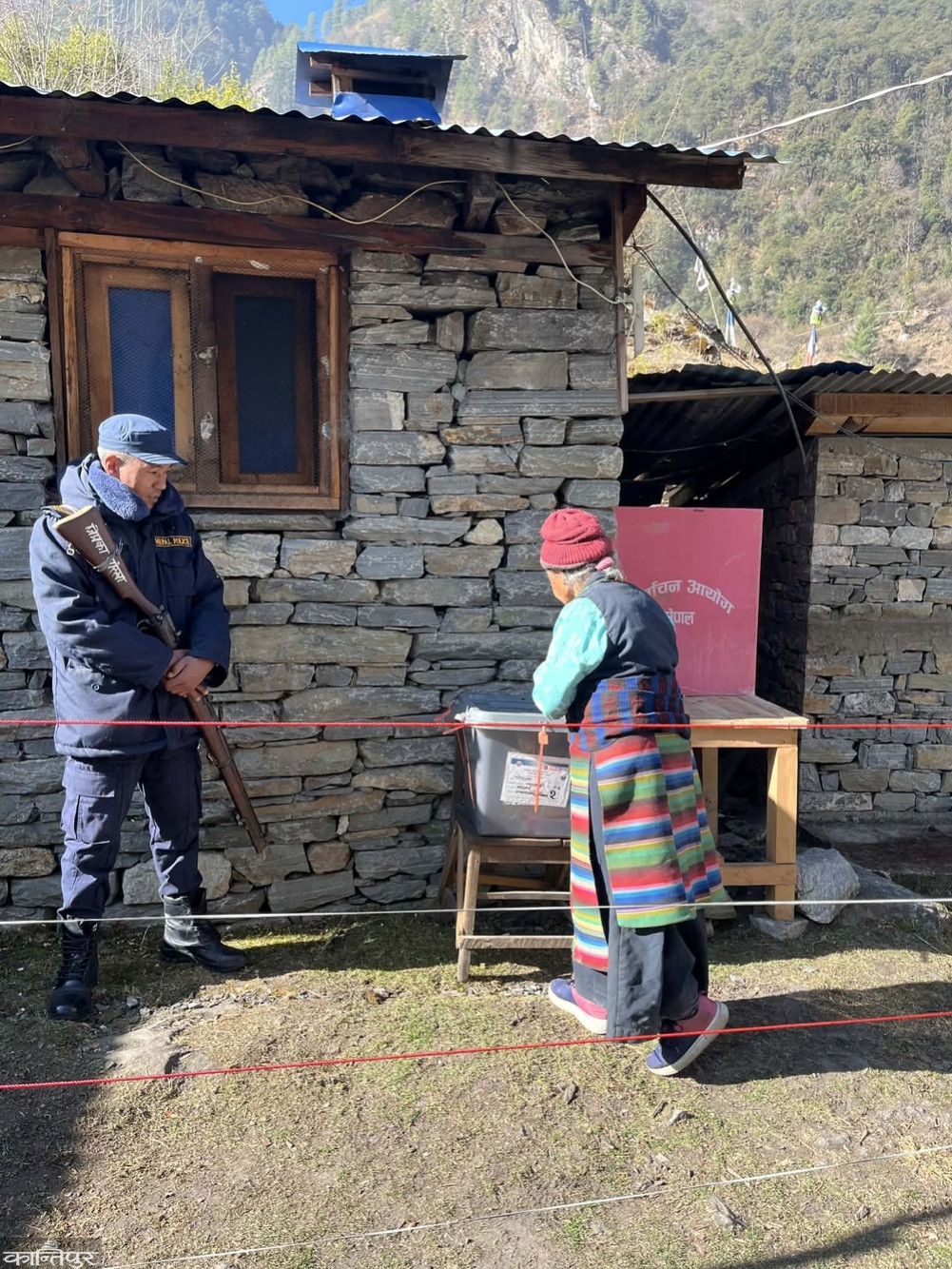
Citizens have expressed their aspirations through relatively peaceful voting, and the concrete form of this will be made public with the counting of votes. However, it can be hoped that this election will take the country to a safe place and the political course after the election will be successful in fulfilling the aspirations of the citizens.
Now, everyone should be honest about the upcoming responsibilities of the state, accepting the trend of the votes expressed by the voters and the balance of political power that it determines. This election should not be understood as just a periodic election, but a commitment should be expressed from all sides to use it as a starting point to realize the dream of development and prosperity. The government to be formed now should be responsible, accountable and transparent towards the citizens. The weaknesses of the past should not be repeated by the parties and individuals at the center of governance.
The Election Commission has stated that 60 percent of the votes were cast in the House of Representatives election held on Thursday. This is slightly lower than the previous elections. In the previous elections for the House of Representatives or the Constituent Assembly, at least 61 percent of the votes were cast. In 2048, 65.15 percent, in 2051, 61.86 percent, in 2056, 65.78 percent, in 2064, 61.7 percent, in 2070, 78.34 percent, in 2074, 68.67 percent, and in 2079, 61 percent of the votes were cast.
After the Gen-G movement, it was expected that participation in the elections would increase dramatically due to the revival of political consciousness. But that did not happen. Therefore, voter education needs to be made more effective in the coming days to include citizens of legal age in the voter list and to connect those named in the voter list to the voting process. In addition, arrangements should be made to allow voters living abroad and voters living in different geographies within the country to vote.
After the Gen-G movement of 23 Bhadra and the protests of 24 Bhadra, former Chief Justice Sushila Karki was ready to take the lead of the government when the country was almost stateless. At a time when established political parties and their top leaders had lost trust, Karki, who came from a non-political background, dissolved the House of Representatives and set the election for 21 Falgun.
At a time when some political parties rejected the existence of the government and various groups of gen-gs exerted pressure, she sometimes sounded confused, but she was equally determined towards her core responsibility. She communicated with everyone. Even when some of the ministers she had supported in the government formed for the purpose of holding elections left, she completed the journey. She successfully overcame the past when it was difficult to lead the government after the upheaval and hold elections on time. Her role will be remembered in history.
The Election Commission also deserves thanks. Even in a situation where two of the five commissioners, including the chief, were vacant, the commission was able to conduct the election with diligence. The diligence was felt from the first day. No changes were made to the agenda set for the election.
The largest party in the dissolved House of Representatives, the Nepali Congress, also gave an immediate decision on the demand for official status due to the controversy that arose in the elections. The maturity of the commission in matters such as intensive dialogue with political parties, streamlining the management, expressing firmness towards the main responsibility of the elections, and making necessary preparations, among others, enabled the elections to be held on time.
After the destruction of 24 Bhadra, the morale of the security forces had become extremely weak. Because, even the police were killed. They were beaten. They were chased. They were displaced. Many police offices were burned. Weapons were looted. Many weapons have not been returned. Therefore, ensuring security became a matter of uncertainty. It was a difficult task to raise the morale of the security personnel and assure the citizens that they could vote safely. But the elections were held in a relatively safe environment.
By actively voting, citizens have fulfilled their main responsibility. However, if democracy is to be revived, the role of citizens must be continuously played. Because for democracy to become strong and mature, it is not enough for citizens to participate in periodic elections alone, regular vigilance is also necessary. That is, continuous monitoring is required to make the current political process people-oriented.
They should express their opinions. They should express interest and vigilance towards the decisions made by any organ and body of the state. They should be made accountable. The decision-making process should be made as transparent as possible. Pressure should be exerted to build a state structure that fulfills the aspirations of the people. The world's experience shows that the working style of the state rarely matches the wishes of the citizens. There are many examples of elected governments in our country failing to meet the expectations of the citizens. The Gen-G movement itself was a result of the role of the Nepali state not being citizen-friendly.
With the results of the election, the parties will reach the parliament with their respective statuses. But at this time, they have a special responsibility. Because this election is the result of the Gen-G movement, it is the responsibility of every party to realize the essence of that movement. Comprehensive reform is inevitable within all parties, new or old. Therefore, they must pay attention to some aspects and become sensitive. First, it is natural for a new government to be formed after the election.
But it should not show unnatural power struggles and lust for power. Second, citizens want an end to corruption and an increase in good governance. They want an end to the situation where political and administrative leaders are involved in numerous cases of irregularities but do not face action. Third, they want efficiency in service delivery. They want an end to the slowness, lack of accountability, and opacity of government bodies.
Fourth, there are various aspects such as employment opportunities, business environment and investment security, accessible and quality education and health. One should not expect that a single government can solve all the problems of the state in a few months. But the government should instill confidence in the citizens every day that reforms are beginning.