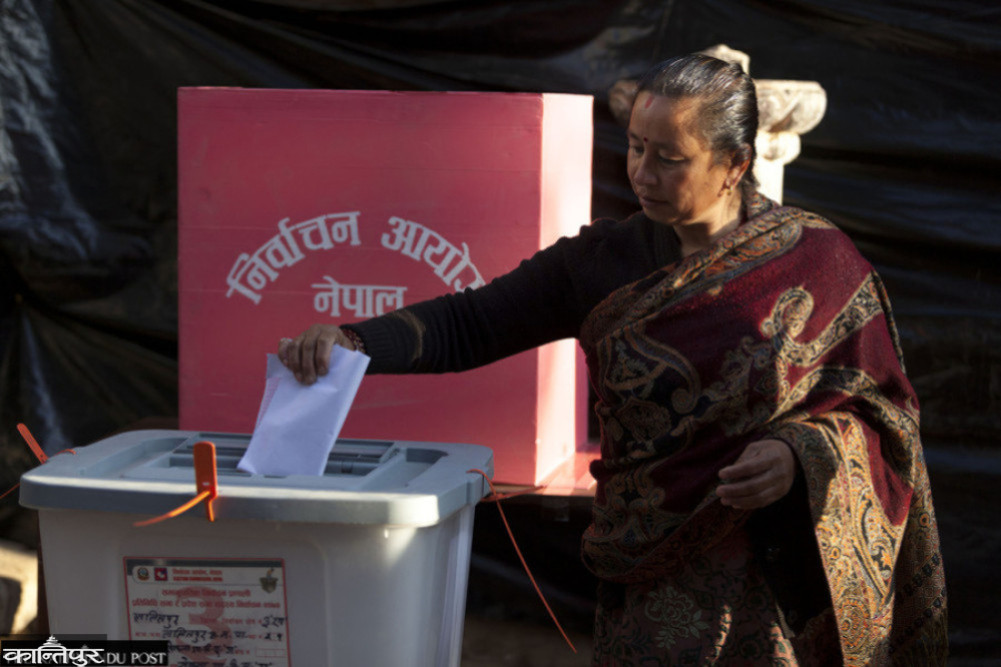
Another reason why elections are called university education is that it helps develop the country's situation, leadership, and organizational capacity. It also works to identify the needs of the people.
We use Google Cloud Translation Services. Google requires we provide the following disclaimer relating to use of this service:
This service may contain translations powered by Google. Google disclaims all warranties related to the translations, expressed or implied, including any warranties of accuracy, reliability, and any implied warranties of merchantability, fitness for a particular purpose, and noninfringement.
There is an atmosphere of elections everywhere. Elections are generally considered as a political process of selecting representatives. But from a sociological perspective, elections themselves are an important university.
It provides people with practical knowledge beyond books, social experience, leadership skills, geographical knowledge, and information about the resources available at the local level. That is why elections are considered an open university that provides practical education in life. In this, adult citizens vote and select their candidates, while those who have not reached the age of majority get the opportunity to understand this atmosphere.
Political institutions are part of a larger institution of society. Man is a social animal as well as a political animal. In the course of living, people are involved in politics at every step. For example, even in the family, young children get angry with their parents if their demands are not met and do not eat or speak. It is the nature of people to try to get what they want by any means. Just like in young children, the same nature is seen in adults. People learn politics from their families. Young children learn various things from the behavior of family members.
Politics is also an institution that directly affects a person's life. This includes aspects such as the state, constitution, laws and elections. Elections provide citizens with knowledge about the political situation of the country, and they provide citizens with practical knowledge of democracy. Through activities such as the voting process, candidacy registration, campaigning, debates, gatherings and decisions, citizens get the opportunity to learn from practice how a democratic system operates. Such knowledge is not limited to a classroom but is gained through direct participation, which makes learning more effective.
Sociologically, elections carry an important responsibility for political socialization of individuals. In this process, individuals begin to understand their rights, duties, social responsibilities and the importance of the group as well as the interests of the country as a whole. Through family, friends, society, neighbors, and social media, a person's political thinking and social awareness level begin to have a positive impact. That is why many Nepali citizens living abroad return to cast their votes in elections. They say that despite suffering, they return because they believe that development paths should be created for their children in the country. They want the development of the right political leadership and the creation of employment in the country.
Another reason why elections are called university education is that it develops the country's situation, leadership, and organizational capacity. It also works to identify the needs of the people. Activities such as taking candidates to the doorsteps of the people, increasing public relations, planning, problem-solving, dialogue, and coordination are intensified. The people also get a chance to see their representatives up close and listen to them. Such skills are very important socially and administratively. In this sense, elections are also a training ground for teaching useful life skills.
But in Nepal, leaders come to ask for votes during elections and forget about them after winning. Voters complain that leaders who go to the fields during elections and dig fields, carry heavy loads, cook jerry, and dance in dohori do not even look back after winning the election. In addition, elections also provide an opportunity to closely observe the diversity of society, geographical remoteness, social structure, and natural beauty. Foreigners come and visit every corner of Nepal, but there are many of us who do not touch the mountains or snow while staying in Nepal. This is not a new thing. The election process also clearly shows how different castes, classes, genders, languages, regions, and economic conditions affect people's thinking, thinking ability, and behavior. Sociologically, this is also a direct study of social reality.
Recently, during the election season, a leader wrote a song in a two-line status he wrote while going to the Far West. Many made TikToks and reels. This also encouraged the language style of the Far West. Therefore, elections provide an opportunity to teach and learn many things to ordinary people. Some candidates have even gone to people's doorsteps to ask for votes in traditional attire. Elections develop a culture and tradition of collective decision-making and cooperation that transcends the individual.
Indeed, today's need is for an honest and development-loving leader who can lead the country. There is no alternative to voting for someone better than us in the upcoming elections. It will play an important role in the overall development of the country. During the election, we must be aware, vigilant and honest. We must use our votes correctly. Therefore, elections are not only a political process but also a means of understanding and feeling society in depth. If its essence is understood correctly, Nepal will also change the course of development in the future.