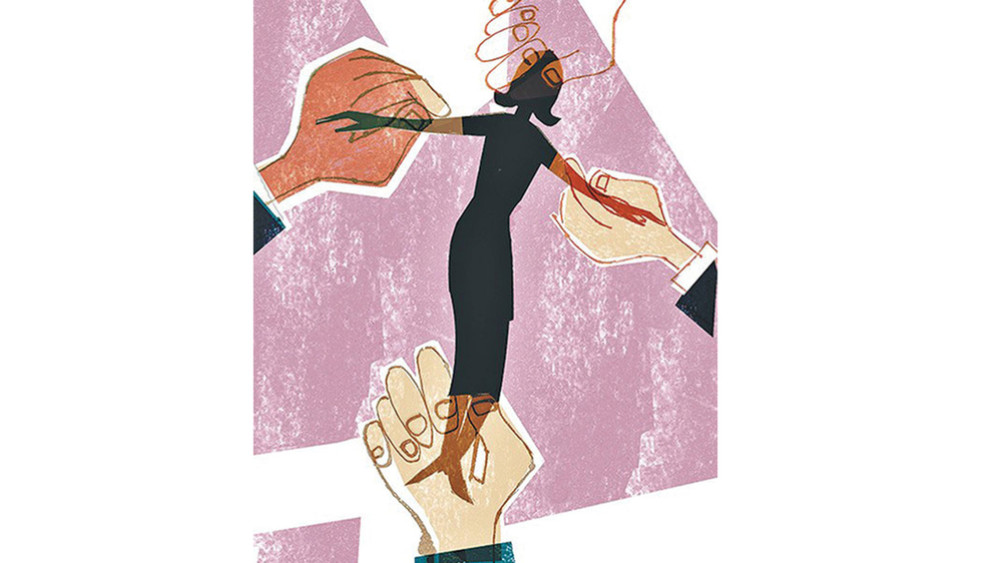
Geeta KC Darnal writes - Even though women are the majority voter, why are they deprived when political parties give them tickets? When 49 percent of voters are women, can it be justified to directly nominate only 11 percent of them across the country?
We use Google Cloud Translation Services. Google requires we provide the following disclaimer relating to use of this service:
This service may contain translations powered by Google. Google disclaims all warranties related to the translations, expressed or implied, including any warranties of accuracy, reliability, and any implied warranties of merchantability, fitness for a particular purpose, and noninfringement.
Women in Nepali society have been facing various challenges arising from the deeply rooted patriarchal narrow thinking and thinking style for centuries. This often results in gender inequality in the social, economic and political spheres. Coming to the present situation, there are many examples of women who have proven their leadership and capabilities in various fields such as social, economic, educational, political, etc.
However, it is ironic that even today, the patriarchal old thinking and society cannot easily accept this truth. Trying to limit and keep women's participation and existence to running the house is a product of male thinking and thinking. Such thinking can never create the prosperity, egalitarian society and self-respecting country that we are trying to change and build.
Various systems have changed in the country over time, but ironically, there has been no significant change or has not been allowed to occur in the situation of women who occupy half the sky. The situation has changed today compared to the past, but the male mindset towards women is the same old and hypocritical. Even in the present day, today's society is still stuck in the same patriarchal thinking and mentality that has been in place for years. Even today, society is not at all ready to accept the existence and leadership of women. Today's women have proven themselves to be superior in every field of the state, but politically, women are still being kept as second-class. Even now, men are not ready to accept women's leadership easily.
The result of this is the political dishonesty shown by men on the issue of women's participation in the upcoming House of Representatives elections. According to the Election Commission's data, the total number of voters across the country who had reached the age of 18 as of the day before voting on Falgun 21 is 189,3689. Out of which, 92,40,131 are female voters and 96,63,358 are male voters. Women account for 48.88 percent and men for 51.12 percent. Even though there are so many women in number, why are they deprived of tickets by political parties? When 49 percent of the voters are women, can it be justified to field only 11 percent of the candidates directly across the country?
Out of the total population of 29 million 164 thousand 578, more than half of the population is 14 million 11 thousand 27, or 51.02 percent, women. However, even though more than half of the population is women, the parties have given only 11 percent of the tickets directly to women, while they are trying to increase the number to 33 percent by giving tickets through proportional representation. It is clear that the political leadership and the party have bad intentions towards women. Article 38 (5) of the Constitution states that proportional participation of women will be ensured in all structures of the state, but only inclusion written on paper has been seen, not inclusion in practice. This indicates that the basic foundation of the Constitution of proportional participation, social justice and gender inclusion is weakening.
Even today, women are not deprived of political participation because they are not capable and strong, but because political parties and leadership are not honest and do not believe in women's participation. Therefore, the prosperity of society and the country does not come by taking away women's rights, but by giving them equal participation and equal rights. Now, we must change our thinking and behavior so that women are given 50 percent participation in politics, not 33 percent. And, the constitution should also take the initiative to implement it by making participation a mandatory system. Only this will truly create a well-governed, equitable, and prosperous society and country, as we want and seek.
Article 38 of the Constitution of Nepal is considered historic in terms of women's rights. Article 38(4) establishes special provisions for women in education, health, employment, and social security as a fundamental right. However, these rights are only written on paper today, and are not seen much in practice. Even today, parties do not make the issue of the safety of women's and girls' lives a topic on their agenda.
The current economic maneuvering and expensive election expenses do not seem to be women-friendly in Nepali politics. On the contrary, the expenditure limit of 25-33 lakhs set by the Election Commission does not match the financial reality of most women. It does not seem that anyone has paid attention to how to reduce expenses in elections. On top of that, the illegal spending during the silent period and the tendency to lure voters have further left honest and capable women behind and are being left behind. In this way, men have always made women's participation a ladder to fulfill their own interests, and after their interests are fulfilled, there has been a tendency to remove that ladder and throw it away. Therefore, the tendency to worry about women's rights only in empty speeches and on paper must end. More than half of the population, that is, 51 percent, is women. Therefore, political parties must now become accountable to the constitution and their manifestos by accepting this truth. Inclusive democracy should not only be seen on paper, but also in practice. Therefore, to end such a trend, all political parties and leadership, old and new, must show honesty and morality. Only with a broad mindset of equal respect for each other, acceptance of existence and leadership can we reach the right destination.