Around 27 billion rupees are being spent on the management and security of the election of members of the House of Representatives. This amount increases the possibility of increasing trade and business in the sector related to election management and materials. It also creates new jobs.
We use Google Cloud Translation Services. Google requires we provide the following disclaimer relating to use of this service:
This service may contain translations powered by Google. Google disclaims all warranties related to the translations, expressed or implied, including any warranties of accuracy, reliability, and any implied warranties of merchantability, fitness for a particular purpose, and noninfringement.
Elections are fundamentally political occasions. In this process, people get the opportunity to express everything from their aspirations to their dissatisfaction. In this process, the popularity of parties and candidates is tested based on the votes given by the people. Elections clarify the power relations of the legislature. They also approve the future leadership of the executive. From the new governing leadership created by the elections, the people will get newness in the policy and law making and implementation process.
In theory, that newness will be the choice of the people. As much as the political meaning and context of the election is, its economic aspect is also the same. Because, during the election, a large amount of money is mobilized formally and informally. Since money is mobilized from various parties such as the government, parties, candidates, supporting organizations, observers, multiple parties from the state machinery to local businesses benefit simultaneously. Therefore, periodic elections in a democracy should be examined not only from its political importance but also from the economic side. It will expose society to a new scenario.
The basic service facilities of the police personnel will be provided with the same salary, uniform, ration, lunch and transportation expenses. Therefore, at the rate of Rs 869.40 per person per day, one person for the election police will receive a lump sum of Rs 34,776 for 40 days. They also receive uniform and daily ration allowance. Overall, the income of an election policeman will be Rs 46,822. About 27 billion rupees are being spent on the management and security of the election of members of the House of Representatives. The process of disbursement and spending continues. This amount increases the possibility of increasing trade and business in the field related to election management and materials. In addition, new jobs are created. A direct example of this is the election police. 149,090 election police have been recruited for the election to be held on 21 Falgun. They will be added to the service period of 40 days.
The basic service facilities of the police personnel will be provided with the same salary, uniform, ration, lunch and transportation expenses. Therefore, at the rate of Rs 869.40 per person per day, one person for the election police will receive a lump sum of Rs 34,776 for 40 days. They also receive uniform and daily ration allowance. Overall, the income of an election policeman will be Rs 46,822. Overall, seven billion rupees will be mobilized for the election police alone.
A large portion of the election police are young men and women from poor and middle-class families. For such a class, 46 thousand is a large amount, which will directly fall into their hands. From it, they can spend on children's education, parents' healthcare, and debt repayment. For those with regular income and strong financial status, the amount may be normal, but for the lower classes of society and disadvantaged families, it is like an unexpected benefit. The gender statistics of the election police are also remarkable.
40,191 women and 18,899 men have been recruited into the election police. When 46 thousand reaches the hands of each of 40,000 women, it will contribute greatly to increasing their self-confidence. The amount that reaches the hands of women is sure to be put to even greater use. Financial income is also a basic condition for women's freedom and self-confidence. Through this, the concerned family can become more united and creative. 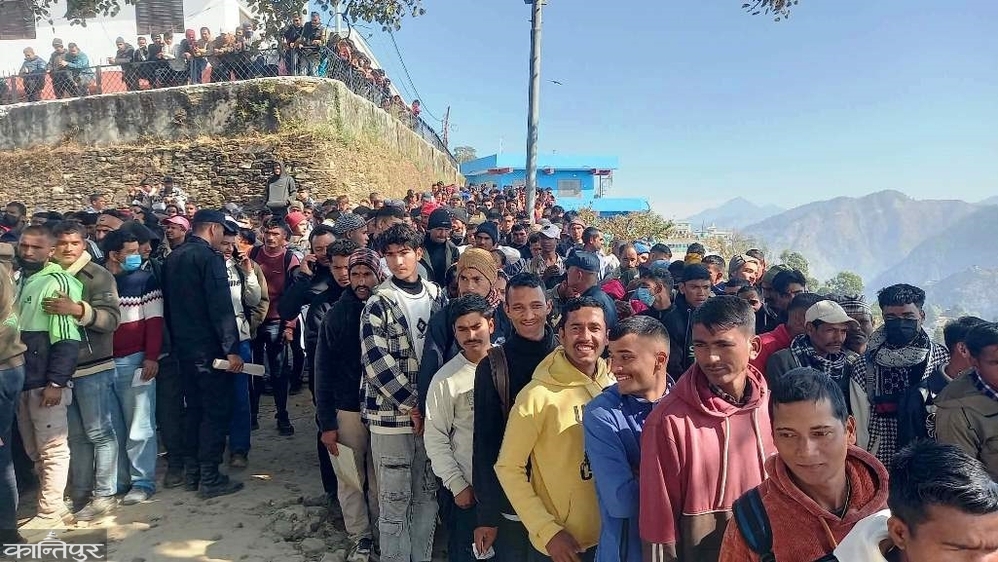
Becoming an election police officer is not just a process of returning home after working for 40 days. Along with this, he joins the service of the state. It is also an opportunity to update the economic and political relations between the state and the citizens. We are faced with the harsh reality that some citizens are equal to the state and others are completely outside the state. An opportunity like becoming an election policeman connects more citizens to the state, that too from the lower classes of society, who have very few means of connecting with the state. Similarly, becoming an election policeman also means joining employment for a short time. In this process, the training he receives, the discipline he experiences,
the sense of responsibility towards his role and the confidence he develops add maturity to him to some extent. Even after leaving the role of an election policeman, it will motivate the concerned person to join a different job or start his own business/business. The reason why some of those who are enrolled in the election police dream of joining the police or the army is the increased confidence in him.
The election policemen who have been trained will practice discipline as policemen for 40 days. They will learn dedication to responsibility. They will learn useful life skills. The discipline and dedication to responsibility learned by the person who returns in this way can be spread or spread in the society. In the coming days, they can be useful for social security and discipline.
The concerned individuals can use them for the prevention and control of social crimes through their own motivation or by mobilizing them from the local government to the village level. The state can also adopt a policy of using them creatively in various other areas as needed. The individuals themselves can also benefit from the experience gained while working in the election police, and from the certificate of working in the government-run election police to go for foreign employment or join the security forces of Nepal.

