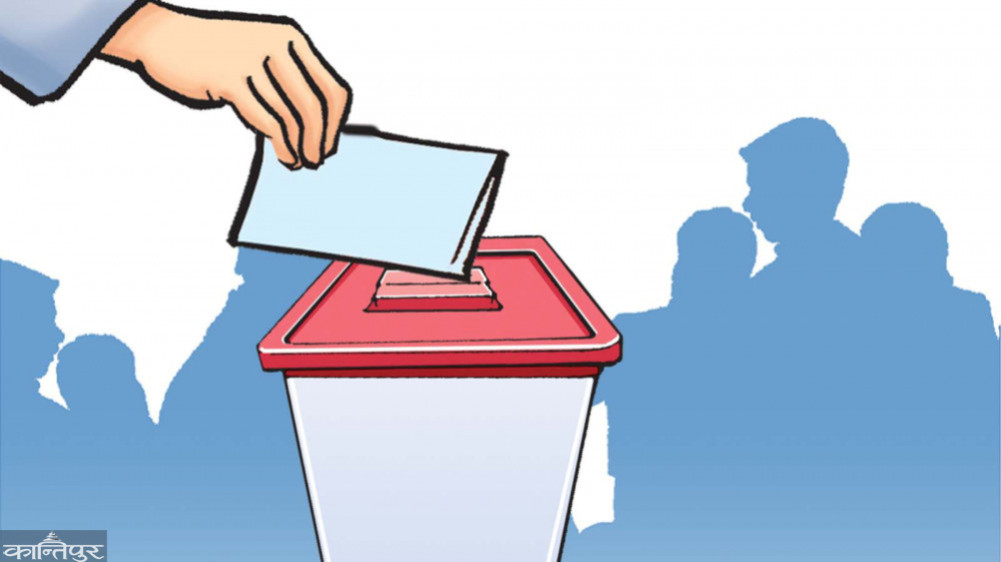
Parties used to show their desire for power by abandoning their manifestos. This time, clear and implementable agendas are needed. But commitment to such a manifesto is also needed. The declaration should be made public as soon as possible.
We use Google Cloud Translation Services. Google requires we provide the following disclaimer relating to use of this service:
This service may contain translations powered by Google. Google disclaims all warranties related to the translations, expressed or implied, including any warranties of accuracy, reliability, and any implied warranties of merchantability, fitness for a particular purpose, and noninfringement.
Candidatures were registered across the country on Tuesday for the February 21 election. The closed list for the proportional representation was submitted on February 13 and 14, and the candidature for the direct election was also registered, further strengthening the certainty of the election. The active participation of the parties and the anticipation of the citizens have made the journey towards the election faster without any obstacles.
There are 43 days left until the voting day. Candidates will use this period to reach out to the public and make their case.
The Election Commission will also make physical and technical preparations for the vote. Citizens will also mentally prepare to listen to the candidates' agenda and vote for the candidate of their choice. Therefore, all parties will now have to play their role responsibly by fully adhering to the election code of conduct prepared by the commission. This will make the election meaningful and strengthen democracy.
After the Gen-G movement on 23 and 24 Bhadra, there was a situation of governmentlessness for a few days. At that time, doubts were raised about the continuity of the constitution and the system. After former Chief Justice Sushila Karki was appointed Prime Minister on 27 Bhadra, the constitution remained safe despite some interference. At that time, the House of Representatives was dissolved and elections were announced for 21 Falgun. But that time was extremely unfavorable. The UML, which was removed from power, had accused the Gen-G movement itself. It also did not agree with the government formation process. He has reached the Supreme Court for the restoration of the House of Representatives. Later, the Congress also went to court. At that time, when a non-political government was formed and there was no easy communication between Prime Minister Karki and top leaders, it was unclear whether the election could be held on the scheduled date or not. For a long time, the government was unable to create an atmosphere for the election.
The atmosphere for the election was gradually created through the positive efforts of the President, government, Election Commission, parties, and civil society. The President, Prime Minister, and Election Commission held continuous discussions with party representatives. On December 24, Prime Minister Karki, UML Chairman Oli, Congress President Sher Bahadur Deuba, and NCP Coordinator Pushpa Kamal Dahal held discussions at Sheetal Niwas under the coordination of President Ram Chandra Poudel.
At that time, the leaders had said that they were all ready to go to the election. The parties' concern was that the election environment had not been created for a long time and the government had not been able to provide a sense of peace and security. Later, the Prime Minister also met with party leaders collectively and individually.
For example, on December 24, Prime Minister Karki and UML Chairman KP Sharma Oli had a three-hour discussion. Prime Minister Karki also communicated with the leaders through the minister. Such meetings and discussions helped to dispel the apprehensions of the parties and make them proactive towards the elections. Overall, the government's role in creating an environment for the elections was seen as mature.
The role of the Commission for the elections is also commendable. At present, two out of the five commissioners of the Commission are vacant. The post could not be filled. The post of Chief Election Commissioner is also vacant and the leadership is being carried out by an acting one. Even in the incomplete situation, the Commission did not reduce its efforts. The determination to hold the elections did not waver. It seems that it worked at a fast pace from the first day.
Therefore, the election schedule was not disrupted. It remained steadfast in its core responsibility despite the undue pressure from the parties. After the special general convention of the Nepali Congress, two parties had approached the Commission with claims of officialdom. At that time, questions were raised about the certainty of the elections. But the Commission took a smart and practical decision. Its work in the work of election management is also at the expected pace.
Due to these reasons, the certainty of the elections has increased. In a short time, amidst confusing circumstances, the non-partisan government was able to lead the country towards elections. It has sent a message that if one is clear about its objectives, works hard for it, and coordinates with all parties, even the country's difficult problems can be easily solved.
After the registration of candidacies is over, parties and candidates should make their manifestos public. Such manifestos should not be filled with airy commitments that cannot be fulfilled. They should clearly state how much work can be done, how to do it, and what policies to adopt. In previous manifestos, a lot of commitments were made, but there was no honesty in implementation.
Parties used to show their attachment to power by abandoning manifestos. This time, clear and implementable agendas are needed. But commitment to such manifestos is also needed. The declaration should be made public as soon as possible. In that case, the people can conduct a comparative study. Then they can decide who to vote for and why.