Are the candidates who come door to door to solicit votes capable of understanding the ills of our society? Are they capable of measuring the pace of time? Or are they only suited to the flashy world of social media?
We use Google Cloud Translation Services. Google requires we provide the following disclaimer relating to use of this service:
This service may contain translations powered by Google. Google disclaims all warranties related to the translations, expressed or implied, including any warranties of accuracy, reliability, and any implied warranties of merchantability, fitness for a particular purpose, and noninfringement.
The parties are in a very busy and hectic schedule. Even so, we have not been able to abandon the 'Nepali style' of working in a hurry as time has begun to run out. No matter how much the methods and systems change!
It is true that the Gen-G rebellion, which exploded after being sickened by all the chaos created by the parties, has brought the elections earlier than scheduled. But, the harsher truth is that the parties are good at delaying. It seems that doing everything slowly and in a dull manner is another of their identities. At the last moment, the parties are in a hurry to choose candidates.
But, what kind of candidates are they choosing? Are there candidates in the election field who are capable of overcoming this time of crisis? Are the candidates who come to us to ask for votes capable of understanding the illness of our society? Are they capable of measuring the speed of time? Or are they only suitable for the flashy world of social media? This question is not only for the parties, but also for the voters.
The existing parties are in their own predicament. Forming factions, forming sub-groups and not asking any questions of themselves. They also make money until they get it. Whether new or old, these things apply to all parties. New parties are trying to take advantage of the inclusive electoral system. They are trying to find loopholes in the system that was designed to represent the out-of-reach, marginalized and backward areas and classes of citizens.
The parties have already finalized their proportional candidates. No one seems to be in the mood to discuss much about how many Nepo babies, how many close associates, and how many relatives are involved. Those who have earned a lot of fame on social media, but who are afraid to speak out on complex issues of society and who have kept silent for fear of getting into controversy, have also jumped into the fray of politics by taking the proportional system.
Whether proportional or direct, candidates from all walks of life of the party will now come among us. They will not only be seen on the public stage, in the media, and on social media, they will also come to our fields. They will go to the fields, to the barns, and to the barns.
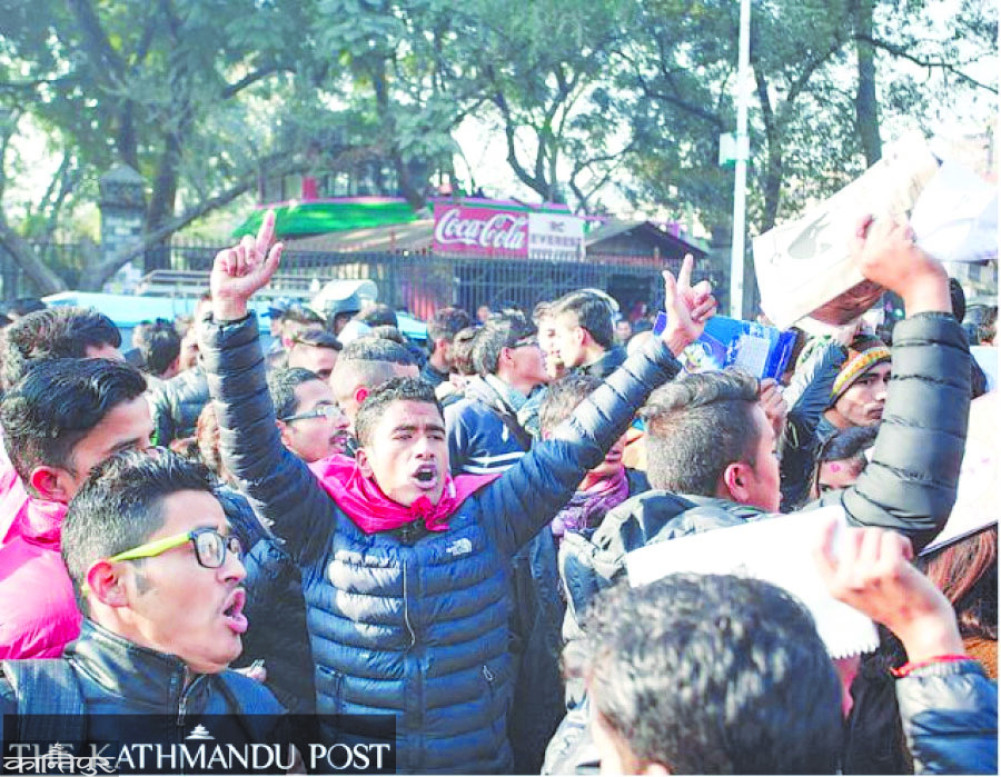
And will we listen to them silently like in previous elections? If we do not change in the changed times, what is the value of the blood shed in the Gen-G rebellion? What is the point of the sons/grandsons coming to the streets and attacking the unrest and corruption that are growing within the parties?
The parties are trying to rectify themselves by falling into the trap of the Gen-G rebellion. However, they have not yet freed themselves from the old gibberish. Therefore, citizen monitoring of the candidates they field is necessary. Do our candidates know about the complexities of Nepali society? Do they have the ability to make good speeches, respond promptly, have a sweet speaking habit, and have a good sense of manners? How knowledgeable are they about the small intricacies of society?
What is their understanding of the citizens at the grassroots level? What is their view on the caste system prevailing in society? What is their view on patriarchy? What is their understanding of the Chhau system, which is rooted in the Far West and exists as a cultural tool to oppress women across the country? Do they know that the noose of meter badges is tightened around the throats of millions of citizens of this country?
Are they aware of the incident where Ruby Khans walked from Nepalgunj to the federal capital for justice for Nankunni Dhobi and Nirmala Kurmi, their legs were cracked while walking, and they endured mistreatment by the state on the cold streets of Kathmandu? How many Nepalis arrive at Tribhuvan International Airport in coffins every day and what is their understanding of its political meaning?
There is little doubt that the few names that come out of the pockets of the leadership and the few names selected by the members of the ticket distribution committee are our candidates. However, what is important to know is that have the parties examined the 'digital footprint' of the candidates? From time to time, the 'digital footprint' of some people seems to be scattered on social media 'X'.
In it, one can see the opposite opinions made public by people at different times about the same event, which shows how those people change their own thoughts and understandings according to time and interests. Some 'digital footprints' show how those people kept silent when society was going through difficult times. It also shows how unstable they are and how they drift with the flow of interests.
And they hesitate to make their side of social events public due to their extreme awareness of whether they are right for everyone or whether they will be in controversy. And the price of their silence is paid by the downtrodden and helpless citizens by not getting justice or losing their integrity.
How responsible are the candidates for their past? How forgiving are they? Are they afraid of even the simplest questions from citizens or are they the kind of people who carry ready-made answers of hatred and hatred in their bags? Are they the type of people who hang around on social media and prefer to stay away from the presence of citizens? If we don't ask at least this much, we will have another 5 years of boredom. There will be chaos. And there will be self-loathing. At that time, no one will come to bring down this society. If it comes, a storm like the Gen-G rebellion will come and blow away many things. What else will we have left at that time except regret?
How aware are the candidates about the plight of the citizens at the grassroots level? Do they have even a general idea of how severe poverty is and how it is drinking the tears and blood of the citizens? Every day, the daily column 'Gharkharch' of 'Ikantipur' publishes stories of small sorrows and troubles of the citizens, about which many people engaged in thought and discussion are unaware. Those who say they are into politics are unwise. Their words do not fit into our discussions, they are not included in policies.
Are our candidates aware of the joys and sorrows and struggles of the common people? If so, how much have they measured its depth? How much have they understood its spread? And how much is our social structure responsible for this situation? Which loophole in our system is the problem? How broad is their understanding of this?
The health insurance launched by the government is itself sick. The public health system is in ruins. Public education is in a state like a patient taking his last breath. Public service delivery is hanging from the windows of government offices. For years, the political system has weakened our system so much that the majority of citizens are forced to cry in silence or plead for help in front of someone every day. Do our candidates know the common sense that such citizens are our voters?
The decreasing working age population and the increasing dependent population are our reality. Every day, around 2,000 working people go to Gulf countries for cheap labor. Parents who are eager to send their children illegally to Europe and America and their psychology are our harsh reality. Thousands of citizens who have fallen into the trap of human trafficking and suffered injustice are also our voters. People who have lost important days of their lives while running to offices and courts are also products of our time. But, are our candidates aware of such tough questions? Can they make such issues a topic of debate during the election?
A large contingent of candidates is entering the villages and countryside in the next few days. They are coming to our neighborhoods. They will be trying to break our chains by wearing a mask of activists and sending social media teams ahead of the candidates. But, now, should we ask them what we give or what we bring, as before, or what is your opinion on the complex issues of society? Should we ask them what has been seen in your 'digital footprint'? Have you come to trade hatred or to communicate hope? Have you come to recite the same old list of things that could not happen or to explain to us the honest efforts that you can make?
If we can change with the changing times, the elections that have come to our doorsteps ahead of schedule will change the shape and style of this country, otherwise, the false promises of those who have come with new slogans and words will continue to distort our democracy!