When high-ranking state officials meet with foreign diplomats, they must obtain prior approval from the Ministry of Foreign Affairs, have a representative present at the meeting, and the discussions during the meeting must be kept in the government's official records.
We use Google Cloud Translation Services. Google requires we provide the following disclaimer relating to use of this service:
This service may contain translations powered by Google. Google disclaims all warranties related to the translations, expressed or implied, including any warranties of accuracy, reliability, and any implied warranties of merchantability, fitness for a particular purpose, and noninfringement.
The air distance between Kathmandu and Delhi is a little over 800 kilometers. However, the political distance between these two capitals is much smaller. Because there is a strong belief among the people that Delhi is somehow connected to political activities and decisive moments here.
Such a belief is strengthened not only by diplomats, spies and occasional public statements from Delhi, but also by the unusual rush from Nepal to Delhi before important political events.
Important meetings also occur during foreign visits to participate in various programs or for medical treatment. The fact that the actual details are not made public has created confusion and anger among the public. Therefore, it is necessary to make the characters and details of the conversations during such visits transparent.
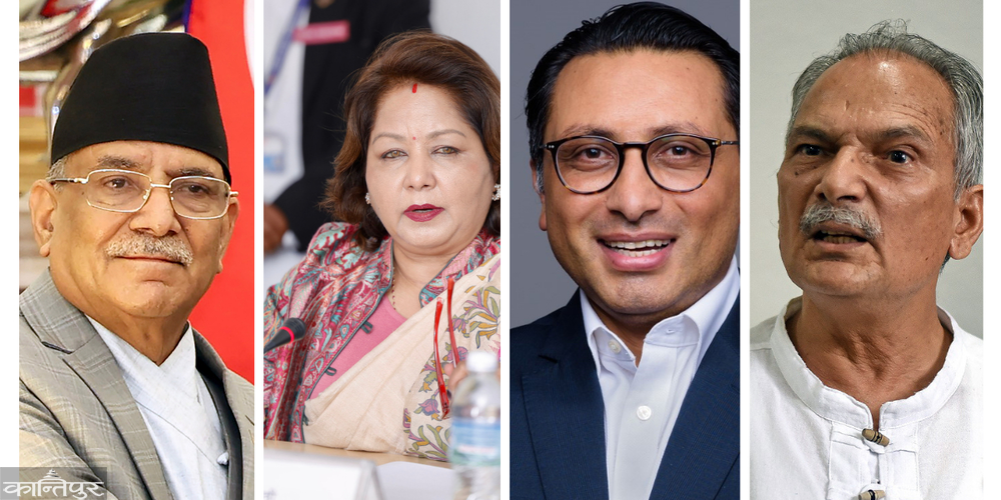
As the elections in the country approach and the parties are focusing on adopting future strategies including alliances, the departure of leaders to Delhi has intensified. Former Prime Ministers Pushpa Kamal Dahal and Baburam Bhattarai have already reached Delhi and returned.
Dahal had gone to Delhi on Sunday to participate in a program of the expatriate organization. Bhattarai also went on a two-day visit to India on 20 Poush. He had given a guest speech at the 'Techfest' organized by IIT in Mumbai and had participated in a discussion program organized by former Indian ambassadors in Delhi.
Congress leader Arju, who is also a former foreign minister, reached Delhi on Monday afternoon. Her visit to Delhi has been described as a routine health treatment. Rashtriya Swayamsevak Sangh (RSS) vice-president Swarnim Wagle is also preparing to go to Delhi on Thursday. He is going to Delhi to participate in a seminar jointly organized by two ‘think tanks’ close to the Indian establishment, Vivekananda International Foundation and NetSTRAT (Center for Research on Strategic and Security Issues).
Participation of leaders in programs organized by the Nepali community abroad has become normal, it is also positive to be invited to programs organized by foreign organizations and to express opinions. It will be beneficial for us too if our leaders get the opportunity to share the stage with eminent people in programs at home and abroad on various issues.
Let's say, how much pride would it have been for us if our leaders were to give speeches at prestigious universities in the world? How much would this have contributed to the ‘exposure’ of Nepali leaders and the reputation of the country? How useful would it be for diplomatic relations, economic investment and tourism attraction? Therefore, no one should have a narrow and inferior mentality that our leaders cannot or should not express their views in international forums. But, are our leaders currently going for programs that will make us feel proud? No. That is why the question has arisen.
When high-ranking officials of the state meet foreign diplomats, they should obtain prior approval through the Ministry of Foreign Affairs and have a mandatory representative in the meeting, and the conversations during the meeting should be kept in the official records of the government.
However, current and former officials of Nepal have been keeping their meetings with foreign diplomats and politicians secret by circumventing the state machinery. They neither inform the government about secret meetings, nor do they honestly express them publicly. The country and the people have to pay the price for this. On the other hand, they arrange such meetings themselves and use them for their own interests.
Leaders have been using their participation in programs in various countries as a cover. Their main goal is to meet with political/diplomatic and intelligence figures. In the process, even the usual undertaking of informing the Nepali embassy is not completed. For example, this time, former Prime Minister Dahal went to Delhi to participate in a program of the party's expatriate organization.
But the Nepali embassy did not receive the news of his arrival in Delhi through official 'channels'. While in Delhi, he had talked to Indian Prime Minister Narendra Modi's National Security Advisor Ajit Doval. There may have been other meetings, which he did not consider necessary to disclose. The details of the discussions and informal understandings in this process are also not transparent. Due to this, the leaders are losing their weight, and the country's reputation has also been tarnished.
India has a direct and indirect role in the political developments here. There are also references to Nepali leaders reaching Delhi and settling disputes. For example, the then Prime Minister Mohan Shumsher and Home Minister BP Koirala, Prime Minister Matrika Prasad Koirala and BP Koirala. There are also references to Delhi's special envoys coming to Kathmandu to mediate, such as Karan Singh who came in 2006 when the people's movement was going on, and S. Jaishankar who came in 2015 before the constitution was promulgated.
There are also references to Nepal's Prime Minister asking or trying to ask Delhi before taking an important decision. Pushpa Kamal Dahal had given an interview to an Indian newspaper saying that he had 'tried to talk to Delhi' before removing the then Army Chief Rukmangad Katwal. The commitments made by leaders who reached Delhi before issuing a document of internal importance like the constitution have also been made public. Even if the invisible and secret discussions and understandings reached there are not made public, the public can assess them.
Such a trend has established geopolitical influence in the political daily life here. And, the role of the Nepali political leadership is also responsible for this. Unfortunately, the leaders themselves do not hesitate to tell stories of nationalism and foreign intervention. However, they do not have the moral strength to do so.
Opaque visits and opaque dialogues should be replaced with transparent visits and transparent dialogues. Because, the country and the people cannot remain responsible for the informal conversations that a certain leader has with a certain person. The government and political parties should set clear and practical standards in the context of such visits and meetings.
The leaders themselves should also introspect, the country should pay the price for the secret conversations they have for their own interests, and the people should feel inferior. The speeches made by such leaders on the subject of the self-respect and sovereignty of the country and the people have been heard as vulgar. This situation must end. For that, instead of shaming other countries, we should question our own leaders. They should be held accountable. Moral pressure should be created. This is the responsibility of the workers of the concerned party to the common citizen.