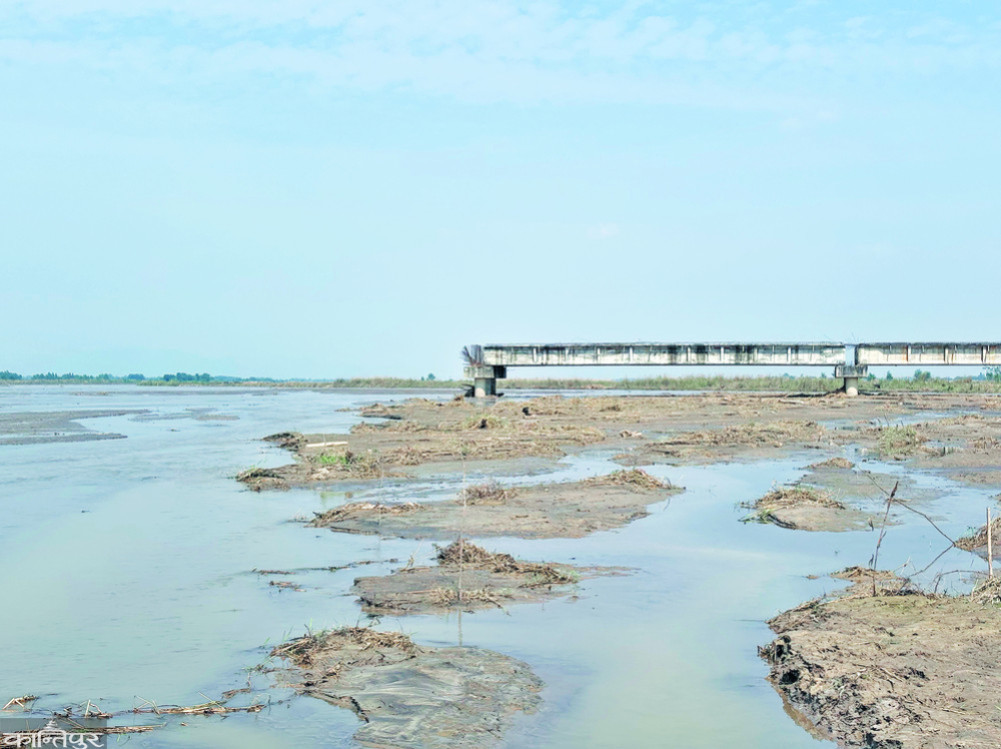
Contracts are in the hands of those who lack capital, skills, manpower, equipment, or even minimal professional knowledge. 99 percent of business owners do not have engineering units or permanent technical manpower. More than 95 percent of firms and company offices are run with just a stamp and letter pad in their pockets.
We use Google Cloud Translation Services. Google requires we provide the following disclaimer relating to use of this service:
This service may contain translations powered by Google. Google disclaims all warranties related to the translations, expressed or implied, including any warranties of accuracy, reliability, and any implied warranties of merchantability, fitness for a particular purpose, and noninfringement.
A report by the Department of Roads has grouped as sick contracts those that were not completed within the required time frame, have not progressed despite extensions, and have not yet reached their due date.
If the work is not completed on time, public services are disrupted and economic activity is sluggish. When development and construction do not pick up speed and work is not completed on time, resentment towards the state itself can arise. In project management, the set time, cost and quality are interrelated.
The achievement of the project's goals is implemented through a contract or contract agreement. Generally, there are employers, consultants and contractors in engineering contract administration. If the contracting party does not comply with the terms, the contract is considered to be broken and compensation may have to be paid. If the project is not completed on time, the responsibility may lie not only with one party but with various parties. The disruption may also be due to a third party. If contract administration is conducted strictly in accordance with management principles, most contracts may not be unhealthy.
Risk of breaking the contract
In principle, both parties can terminate the contract agreement, but that practice is very rare. The Procurement Act has made a provision that a public body can always break it in the circumstances specified, but no contractor can break the contract without informing the public body.
If the contract is not terminated in some way, the contracts automatically become invalid. Breaking and re-contracting increases the update cost. Although it is customary to obtain the consent of the Ministry of Finance, there are legal uncertainties and procedural complications. If the contract is not renewed, there is pressure and criticism from the public. And, the service delivery is affected.
There is a law that allows public bodies to terminate contracts for the public interest, but it is not used much by decision-makers. Entrepreneurs are being harmed by contracts not being completed and the security deposit is not released. When about a thousand contracts that have reached the end of their terms are terminated, the security deposit worth billions is forfeited, increasing the bad debt of the bank. It is also said that managing payments at once will be complicated. Due to the strict provisions in the law for recovering the amount required to do the remaining work, confiscating the security deposit, and blacklisting, it is very difficult to re-contract even if just one contract is terminated.
The supply chain is disrupted due to contract termination and separate blacklisting for non-payment of loans, and other construction material industries and employment are also affected. However, contract termination is not wrong. If the contract was terminated as per the regular process, the problem could not have been so serious.
When re-contracting structures in buildings and bridges, it is not applicable, and even if it is, many complications arise in construction and completion. Since it is not practical to enter into a new contract from scratch, there is a risk that the previous work will be left behind.
If the contract is not completed on time, the contract will have to be completed by paying damages. However, the rules were amended on the basis of accessibility and the provision of extension of time was introduced repeatedly. This was not a solution. Responsibility has also been evaded by the illusion that by ‘finalizing’ the contract, responsibility for the old work should be taken and those who left it running will bear it. Despite the circumstances beyond our control, the contracts have not been concluded on the basis of convenience. The pain of those trapped in the insurance maze is even greater. The main reason for the contract's illness can be said to be impunity and weak contract administration practices.
Investment in preparation
Less than 0.1 percent of the total project cost is invested in preparation. The design as projected in a hurry and based on a weak study may not match the site. If it takes time and expense to correct, a quick decision must be made. There is no budget for land acquisition and rehabilitation at the beginning. In the absence of a separate budget, subcontracts such as cutting trees and moving poles have to be issued after the contract. Compensation is not given in projects that are not foreign-funded, such as the Mid-Hill Highway. There are obstacles and lawsuits after losing one's home or property. The court orders work only after paying compensation or compensation. A lot of time is consumed in the court process.
There is another state - electricity, drinking water and forests. Even if the legally mandatory environmental and social study report is approved, one has to go to the Council of Ministers to get the right of possession. When studying, the plants in the bushes grow large and the number of cuttings varies. The project is delayed when all the processes are completed.
Compensation and compensation determination is complicated because the records and laws are not timely and clear. The government valuation has today's value, but the displacement and damage are linked to the future. Most administrators avoid determining compensation because it is not realistic when evaluated at the government rate, there is no legal basis when giving the market price, and it gets into trouble. Although a policy on compensation and resettlement was prepared in 2071, no law has been made.
Weak regulation
It is said that the site mobilization amount was invested in non-contractual works such as houses and vehicles. However, the more it decreases, the more the law requiring collateral has forced to add land. Payslips have been given, there should be a separate account for the payslips, if the work does not progress and the contract is not broken in case of misuse, it is not found to be used. There is no practice of regulating based on the work schedule. Even issuing a small variation order requires dozens of people to sign and takes months.
After recruiting administration or security personnel, training is provided for 3 to 12 months, but there is no opportunity for technicians. Many employees are trapped in ignorance. The general principle that the intention must be wrong for corruption to occur does not apply to the construction and procurement sectors. The state makes zero investment in sectors like contracts that require high professional and technical knowledge. In such a situation, how can we expect the project to be completed quickly? In order not to hinder the progress of the project, the concept of alternative dispute resolution such as adjudicator and arbitration has come up. However, the case is not likely to be resolved even after reaching the Supreme Court for years.
The role of banks
Since the guarantee is issued at a very low commission without studying the nature of the work, the agreed amount, and the natural and social risks, it seems that the banks are also the catalysts for making the contract unhealthy – as if they have forgotten that providing a guarantee is a sharing of risk.
If only a small portion of the project had been technically and financially analyzed compared to the hydropower project, perhaps so many guarantees would not have been at risk at once. And, the practice of taking new contracts only after completing the old contracts could have been followed. Then, wouldn't we have won contracts beyond our capacity? Seeking the security of a guarantee alone will only make the contract unhealthy. The cost increases due to the high commission of banks and insurance companies for repeated extensions.
Corporate culture
Although it is necessary on paper to register a firm or company, no qualifications are required in reality. Reason: Contracts are in the hands of people who do not have capital, skills, manpower, equipment or minimum professional knowledge. 99 percent of entrepreneurs do not have engineering units and permanent technical manpower.
More than 95 percent of firms and companies are running their offices with stamps and letter pads in their pockets. There are hundreds of companies with experience certificates worth one billion, but not even a dozen of them have real functionality. There are no technicians who can understand the design map and find weaknesses. The level of temporary structures including machinery, management, quality, and firm of a three-billion-rupee site should definitely be different. However, it looks like a 30 million-rupee contract.
Even the so-called big companies do not have corporate culture, contract companies are like wholesale centers. Since the owners are mercenaries, there is zero delegation of authority and resources. They sell work like metered bills, and it is said that they only manage the accounts. When selling in stages, there is no formal relationship and control between the person/company that makes the contract agreement and the unit working on the site. Even if there is a small problem, the work schedule is affected.
The flaw in the selection method
Anyone with a paper contract of up to two million rupees can take it, so there is a risk of getting sick. Many accused of collusion between the office and the contract recipient are found. Therefore, the tendency to not want to take risks has increased and the practice of passing everyone who participates in the contract has increased. Professional errors, incompetence, lack of ability, negligence, etc., are also included in the definition of corruption.
There is a situation where contracts are awarded based on credit lines that do not require investment from the bank, certificates distributed by others after working, and annual turnover. Whereas contracts are completed on time only with cash flow, skilled manpower, and equipment. In the name of not limiting competition, the ability to work has been ignored and qualifications have been determined even without manpower and equipment.
Even in ‘turnover’, only the amount paid by the employer for the contract should be included, and the natural development of companies has not been achieved by blindly calculating the annual turnover based on the VAT bill. Only 5 contracts can be taken. How is it possible for the ‘turnover’ to skyrocket without a contract agreement? However, it has not been looked into. The tax office is happy to receive 1.5 percent TDS, but it is not known that much revenue has been lost.
Business environment
Even payments made as per the terms of the model bid are written off. There is a practice of writing to businessmen immediately to recover and not releasing the deposit for years until it is paid. There is also a legal provision that says, 'If revenue is outstanding, payment should be deducted from any project and sent.' Doing so risks stopping cash flow and making ongoing contracts invalid. There is a risk that crores of rupees will be received as deposits, but there is no policy, intention, law or precedent to facilitate the payment of revenue arrears.
There is a rule that hundreds of local level contracts for construction materials have to be issued and excavation cannot be carried out for any period. It is said that the material sites are under undeclared occupation. Tax on transportation and transfer has been fixed for time and transportation, but the increased cost has not been analyzed and included anywhere. It has been seen that there has been a movement that there has been undeclared cartelization and artificial price increase in cement and rods.
For example, since the Kaligandaki River is sacred, the court ordered that construction materials cannot be extracted so as not to destroy the Shaligram. However, there is a possibility that the contracts that have been signed may become invalid. There is a social psychology that everyone should steal something or the other after the contractor reaches the site. In reality, it is very difficult to get the job done. From giving machines for free to donating, donating, and covering additional expenses step by step, the same contract has to bear the expenses. And is it surprising that he is sick?
Budget mismanagement
Contracts have been signed for political and personal gain without any assessment of the adequacy of resources, means, and economic returns. When the budget is reduced, cash flow is blocked due to non-payment. Even if the work of contracts like bridges is delayed by just a month, it is pushed to the next season. This year too, only a few lakhs can be seen in contracts worth twenty crores. We have to struggle for money transfers and additional budget. We have heard complaints that only those who have access will get adequate budget on time. After the contract is signed, the search for compensation and forests begins. Getting the budget is like chewing an iron jaw.
Good governance in planning
Generally, lack of preparation, lack of budget allocation skills, lack of regulation and professional capacity, weak infrastructure, unhealthy competition, etc. are the reasons for contract sickness.
With every change of government, the first target is the project chiefs. They are forced to spend more time on pleasing and protecting their positions than on contract administration. There is a risk from higher-ups who prefer to meet separately in the morning and evening rather than in the afternoon. When the means of reaching political leadership is businessmen, there is bound to be a conflict of interest. Employee changes create a situation of transition, instability also plays a role in contract sickness. Good governance of the project needs to be seen through the eyes of the 'right man in the right place'. There is a practice of asking for immediate action in meetings, giving verbal orders but not giving them in writing. There are also cases of contractors being transferred for taking action.
When selecting key and challenging responsibilities, experience, efficiency and decision-making ability are not considered. It is difficult to refute the accusation that distribution is based on inclination, relationship, factions, and profit-loss considerations. Projects that fall into the hands of incompetent people lack good governance, and the plan is not completed within the specified time and cost. They do not have the time to fulfill their desires, and what happens if the project is not healthy?