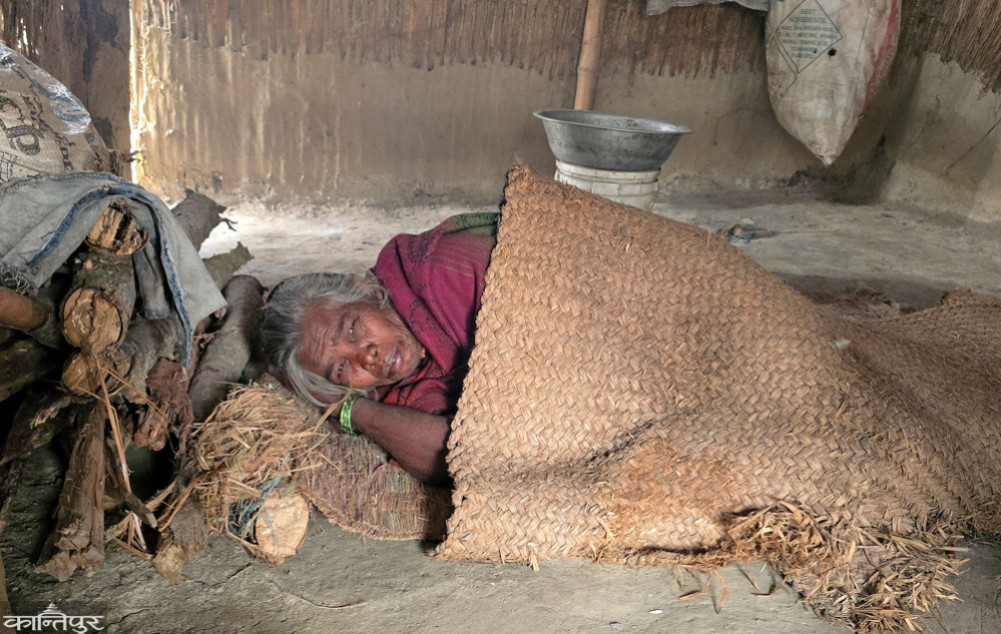
The elderly, street children, displaced families, the homeless, and street workers are most affected by the cold wave.
We use Google Cloud Translation Services. Google requires we provide the following disclaimer relating to use of this service:
This service may contain translations powered by Google. Google disclaims all warranties related to the translations, expressed or implied, including any warranties of accuracy, reliability, and any implied warranties of merchantability, fitness for a particular purpose, and noninfringement.
With the onset of Poush, snowfall is taking place in the mountains and mist and fog are rising in the Terai. Heating a house according to the size of the family is a traditional custom of the Terai-Madhesh. However, one should not remain silent by saying that the 'cold wave is a temporary seasonal condition'. It has damaged agriculture and business, and livestock and people have started dying.
The cold wave has affected the lifestyle of the Terai-Madhesh districts. Programs ranging from free firewood to tea and blanket-clothing distribution have been launched to protect the people there from the cold. If their children and elderly people were sent to the Terai to escape the winter in the valley, the cold wave has forced many to call them back. It is said that Pus is a cold month and Magh is a tiger in terms of cold.
Risk group
The most vulnerable people who suffer and die from hypothermia due to cold wave and extreme cold are the physically weak elderly and newborns, who do not move in one place and live alone. They cannot feel or complain about the cold or take any measures to avoid the cold.
This problem is also generally seen in laborers working in outdoor environments, long-distance swimmers, and trekkers in the mountains and hills. Due to the cold wave, the lives of the poor, helpless, children and the elderly are difficult. Young and old people who drink too much alcohol as an 'inner coat' to warm their bodies in the winter season can lose consciousness or become unconscious in the cold for a long time, or die prematurely due to heat loss due to swelling of the blood vessels in the body.
Cold/Hypothermia
Generally, people cannot adapt to the heat as much as they can to the cold. When there is thick fog, cold weather, and a cold wave, the body temperature drops and hypothermia occurs. Hypothermia is a problem that occurs when the body's core temperature drops below 350 Celsius. This is a medical emergency that requires immediate treatment.
The body works optimally until the body temperature reaches 320 Celsius, but if it falls below that, instead of shivering, the body stiffens, sleeps, constricts blood vessels, and blood pressure, heart rate, and breathing decrease. When the rectal temperature drops below 250 Celsius or 770 Fahrenheit, a person dies.
Various causes of low body temperature include cold weather, extremely cold weather, and the environment. The process of maintaining normal body temperature is disrupted, pneumonia, hypothyroidism, and low blood sugar and low physical activity cause the body's chemical processes to decrease, resulting in the lack of necessary heat production, skin problems leading to heat loss, inability to feel cold due to age and mental illness, prolonged exposure to cold during the winter, and certain mental illness medications that cause the body's temperature to drop, resulting in hypothermia.
Symptoms
The body's temperature must remain normal for the body to function properly and keep various chemical processes in the body running. Low temperature mainly affects sensitive organs such as the heart, brain, or intestines.
Hypothermia causes the patient to feel tired, and functions such as the patient's will and behavior are disrupted. The patient feels cold, looks pale, white, muscles are stiff, immobile, blood pressure, pulse rate and respiratory rate are low. Muscles deteriorate, the pancreas swells. When the body temperature is below 60 degrees Celsius, the patient becomes unconscious, swollen, the pupils of the eyes do not move, and the tendon reflex in the joints is lost.
Treatment
A person affected by cold shock or hypothermia should not be warmed all at once or quickly during treatment because this causes the blood vessels in the body to dilate suddenly and heat is lost, and the affected person may become unconscious and even die. Keep the person in a warm room, give them warm liquids and food to drink, put on warm clothes, cover them with thick clothes and warm them slowly.
When warming the body, the temperature should be increased at a rate of 0.5 to 10 degrees Celsius per hour. However, do not let a heater or fire heat them. You can warm them by placing a plastic bag or space blanket up to the neck. Attention should be paid to heart, lung blood pressure, blood volume, hypothyroidism and drug overdose.
In addition to hypothermia, extreme cold and cold wave affect the elderly with physical weakness, street children, displaced families, homeless families, and street workers more. People with heart, respiratory and asthmatic diseases, and malnourished children are more affected by cold. Cold wave increases the risk of heart attacks, increases cholesterol, causes paralysis, and also brings measles and chickenpox to children.
Whether due to cold or any other condition, one should go to a health institution for treatment after falling ill. However, to minimize the problems of diseases that may arise due to cold and prevent them, avoid smoke and dust, eat a nutritious balanced diet, wear warm clothes, eat fruits with sufficient amounts of vitamin C such as oranges, lemons, amla, fresh fruits and vegetables according to the season in sufficient quantities, pay attention to hygiene, and drink plenty of fluids. You can avoid cold by wearing a mask to protect yourself from dust, smoke, cold, and infection.