Until economic justice is ensured, there will always be an environment for political instability in our society, because members of society who are subjected to injustice will at some point take the path of rebellion.
We use Google Cloud Translation Services. Google requires we provide the following disclaimer relating to use of this service:
This service may contain translations powered by Google. Google disclaims all warranties related to the translations, expressed or implied, including any warranties of accuracy, reliability, and any implied warranties of merchantability, fitness for a particular purpose, and noninfringement.
The country is poor. If someone says that Nepal is a poor country, we readily accept it. But for us, the sovereignty of Nepal and the self-respect of the Nepalis are always great. If someone questions the sovereignty of this country and the self-respect of the Nepalis or behaves in a derogatory manner, we react.
But economic status is necessary to crown the sovereignty of a country and the self-respect of its citizens. Basically, poor countries and their citizens do not have much place on the world stage. That is why everyone tries their best to become economically prosperous.
For a country to become economically prosperous, it must move forward slowly on the path of sustainable development. For the common citizens to accept that gradual reform and development, their participation in economic development is also necessary. For participation and ownership, economic justice must be available within the country.
But we have not created a structure to establish economic justice in society. The ‘Nepokids’ that emerged on social media along with the Gen-G rebellion reflects the economic inequality prevalent in society and the anger towards it. In this article, I will discuss why economic justice is necessary for balance and gradual reform in society. The main factor behind the Gen-G rebellion (which was carried out by the generation after me) is that those who economically exploit the country continue to satisfy their interests in the sweat and dreams of the poor, lower and middle class youth.
When we understand economic justice in a general way, it means seeking equality in the economic management of the country. This means appropriate benefits, access to employment, equality in the distribution and redistribution of wealth, respectful appreciation of contributions, and sharing of resources.
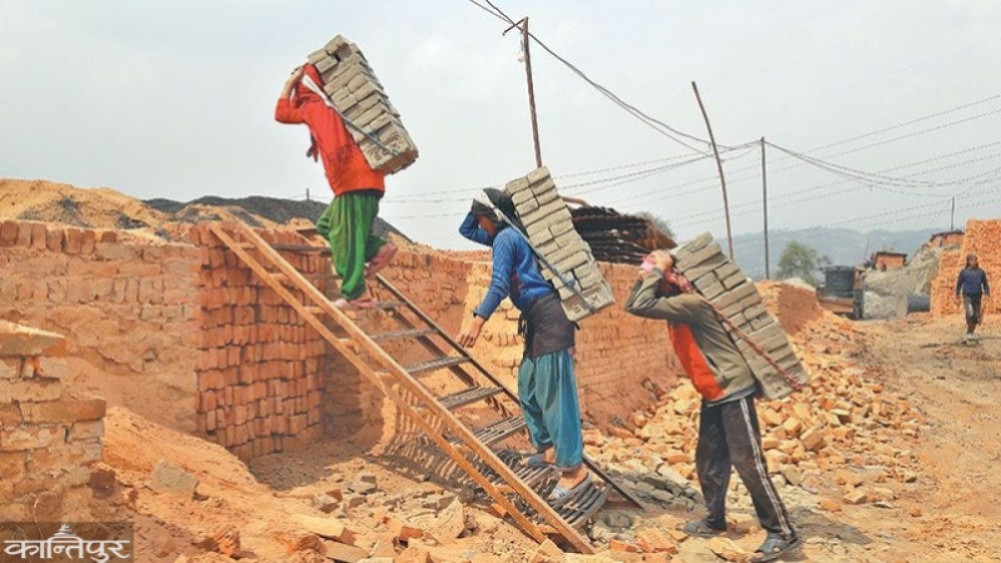
Agriculture and farmers constitute a large part of the structure of Nepali society. But farmers and their families have been carrying the same burden for generations. Due to which the new generation has tried to shed this hereditary burden somewhere. But seeing no opportunity and place for this within the country, many Nepalis were forced to emigrate in the last three decades. Their earnings (remittances) have entered the country and supported our economy. But the situation where their children are forced to emigrate again was created by those at the center of politics. Economic justice has been overshadowed by political achievements and social justice. Due to which the Gen-G generation has shaken the old-fashioned thinking and structure of Nepali society to its core.
Economic justice is not just about the distribution of wealth. Ensuring access to basic services like opportunity, education, health, and employment is the main thing. There is a tradition of addressing the economic inequality prevalent in Nepali society through political means. But no matter how much Nepali society has made strides politically, its reflection has not been seen anywhere else.
Have all Nepalis been able to get equal opportunities? When we talk about economic justice, we only talk about policies and programs. But a change in the strange thinking and poor behavior of Nepali society is necessary. Only if everyone in society gets equal opportunities, is the country's sustainable economic development possible. In other words, only then can the gradual reforms and development taking place in society be appreciated with patience.
The concept of economic justice is not new. Its importance has been accepted by many thinkers throughout history. This idea is based on the experience, logic, and philosophy of various historical thinkers. Aristotle (384–322 BCE) spoke of distributive justice. He said that resources should be distributed according to contribution or merit. He argued for proportional equality, so that everyone would receive according to their contribution.
Is respect and opportunity distributed in our society according to contribution? Have we valued everyone according to their labor and contribution? For example, what have we done to address the plight of farmers and their children? The upper echelons of Nepali society have shattered the trust placed in them by the people to build the country’s economic progress on the basis of the new constitution of 2072. The Gen Z rebellion is against that betrayal.
Adam Smith (1723–1790) spoke of the free market by linking ethics and economics. He said, ‘The free market alone cannot create a just society unless legal and moral rules protect the weak.’ He said that the prosperity of a nation depends on the living standards of its poorest citizens. Have we paid enough attention to improving the condition of the poor in our society? Have we been able to provide access to economic opportunities for people from all walks of life? We have even made urban poverty more severe.
John Locke (1632–1704) said that everyone should have a right to the fruits of their labor. He said, ‘Every man should own the property he has earned from his labor.’ Today, when we talk about minimum wage, labor rights, Locke’s ideas are still relevant. Have we given all workers a fair price for their labor? Have we respected the rights of workers? We have not even been able to make arrangements for how to pursue economic justice in Nepali society.
John Rawls (1921–2002) coined the concept of the ‘veil of ignorance’. He said, ‘If we make the rules of society without considering our social status and interests, we will make rules and laws that are fair for everyone and for the benefit of the larger society.’ Have we taken into account the interests of everyone while making policies? The latest example is the Civil Service Bill. It is clear from the behavior of the employees in the service that in our society, we are supporting the creation of rules and laws only by keeping ourselves and our interests in mind. Therefore, the question is whether the policies, rules and laws we have made are fair for everyone or not.
The message given to us by the perspective of these thinkers is that economic justice is not just a matter of policy making, it is a matter of our thinking, behavior and responsibility towards society. We should all make honest efforts from our respective places to establish economic justice in a country as diverse as Nepal. We should not consider economic justice to be the responsibility of only the federal government and Singha Durbar. Every member of society, local government, people's representatives, provinces and their governments and other bodies, and civil society should all contribute from their places. Until economic justice is ensured, there will always be an environment for political instability in our society. This is because members of society who are wronged will at some point take the path of rebellion.
Karl Marx (1818–1883) criticized the class struggle and exploitation of workers in capitalism. He argued that the root of economic inequality lies in the exploitation of labor. In Marx's view, there are two main classes in society—one, who controls the means of production! The other, who does the labor. The class that controls the means of production exploits the workers by paying them less than the value of their labor. In Marx's view, true economic justice is not possible until the means of production are collectively owned. Labor needs to be properly valued. It is necessary to create an environment in Nepali society where workers, especially farmers, can and should live with dignity.
Henry George (1839–1897) put forward the concept of 'land value tax', in which he argued that since no one created the land, its value should belong to society. In George's view, land is a natural asset, the value of which increases with the development of society and population growth. Therefore, the benefits of land ownership should be distributed equally in society. He proposed a land value tax, which argued that inequality based on land ownership could be reduced. According to George, we should not limit the benefits of land to a certain class. We should ensure access to land and other natural resources for all. We need to discuss whether land ownership has increased inequality in our society.
Contemporary thinkers like Amartya Sen say that economic justice should focus not only on wealth but also on the 'capability' of people. In Sen's view, economic justice means giving people the freedom to live and grow according to their potential. According to him, attention should be paid to people's real freedom and choices. In Sen's view, measurements based solely on income or wealth do not reflect the real situation of people. Instead, attention should be paid to how much freedom and opportunity people have in areas such as education, health, employment, and social participation. Has everyone in our society been given the freedom to live and grow according to their potential? Have we given everyone equal opportunities in education, health, and employment?
The main question that has arisen after the Gen-G rebellion is whether we have understood the importance of economic justice. Have we been able to create a situation in society that provides equal opportunities, respect and access to everyone? Have we been able to create a just system for everyone in our policies, programs and practices? We cannot find the answers to these questions by looking for them on paper. The existing unrest, apathy in the society and the muffled voices of the youth who are forced to choose the path of migration abroad on a daily basis are telling us that there is no justice in this country. Only one section of the society has exploited everything. The common man has been neglected in want and poverty or has ruled the path of foreign countries on the basis of debt. The image seen in the mirror of such an ugly society is strife, conflict and violence.
The journey of economic justice is not easy. It takes time to remove the deep-rooted inequalities, discrimination and prejudices in the society. However, if we can assimilate the perspectives of historical and contemporary thinkers and put them into practice, then true equality and inclusion can be brought to our society. The search for economic justice requires a joint effort from all of us. Even more so, it is necessary to deeply understand this in the political circles of our country.
The rapid development of technology and its impact seem to make a difference in the face of economic justice in the coming days. The book ‘Power and Progress: Our Thousand-Year Struggle over Technology and Prosperity’ (2023) written by Daron Acemoglu and Simon Johnson analyzes the issue of economic justice in the light of technology. These two economists argue that technological progress in itself does not guarantee economic justice. According to them, the distribution of wealth and prosperity does not automatically follow the development of technology, but rather is the result of specific economic, political, and social decisions.
Workers only benefit from technology when technology also increases their marginal productivity. If the benefits of technology are limited to owners or investors, there will be little improvement in the living standards of workers. In such a situation, the presence and role of the state becomes important in ensuring economic justice. Acemoglu and Johnson say that the ‘path of progress’ is not predetermined by science, but rather determined by the vision and decisions of the powerful classes in society. The direction in which technology develops depends on the priorities, policies, and balance of power of the leaders of society.
Finally, in the pursuit of economic justice, we must embrace historical, philosophical, and practical perspectives. We must ensure equal opportunity, respect, and access for all in society. True economic justice is not possible unless we all make honest efforts from our own places. The pursuit of economic justice requires the joint efforts of all of us. Only through this joint effort can true equality, inclusion, and justice be established in our society. So that even the lowest groups in society benefit and can be confident that the country is moving forward. Otherwise, each new generation is forced to take the path of rebellion.