In Bangladesh, the youth movement against political inertia, corruption, and oppression by the ruling party gained widespread public support, but the movement by Gen-G youth and the delay in holding elections have gradually created both hope and crisis.
We use Google Cloud Translation Services. Google requires we provide the following disclaimer relating to use of this service:
This service may contain translations powered by Google. Google disclaims all warranties related to the translations, expressed or implied, including any warranties of accuracy, reliability, and any implied warranties of merchantability, fitness for a particular purpose, and noninfringement.
On 23 and 24 Bhadra, Gen-G youths protested for good governance, a political system that is responsible and accountable to the people, full democracy, non-discriminatory and just governance, and control of corruption. During the protests, unimaginable losses of human life and property occurred.
The then Prime Minister had to resign at the height of the movement. The House of Representatives was dissolved with the formation of a civilian government led by former Chief Justice Sushila Karki. And, the election of the House of Representatives was scheduled for 21 Falgun. In this process, the basic tenets of the constitution were preserved.
The civilian government has accelerated preparations for the elections, along with ensuring good governance in line with the spirit of the Gen-G movement. The President, Prime Minister and government representatives are holding in-depth discussions with political parties, Gen-G representatives and stakeholders. The Election Commission and security mechanisms have intensified their strategies targeting the elections.
The agreement signed by the government with the Gen-G agitators on 24 Mangsir 2081 not only accepted the Gen-G movement as a political movement but also attempted to establish the role of Gen-G in charting a roadmap for progressive political reforms and good governance that should be carried out in the immediate and long term.
However, Gen-G leaders, political parties and all stakeholders are yet to come together and build a consensus on constitutional and structural reforms through comprehensive discussions. Starting a debate on such issues without wasting time will make the upcoming elections useful as the first step towards reforms in line with the spirit of the Gen-G movement.
But the remnants of violence and conflict are still on the streets. Some old forces, taking advantage of the current complexity of the sensitive situations of the complex transition period, who do not allow elections to be held, do not want a peaceful outcome to the country's political conflict, and even though they were overthrown by the violence of the movement, are trying to spread the illusion among the public that elections cannot be held and that this 'illegal government' will not be allowed to hold elections in order to return to power or escape responsibility for the murders and violence they have committed.
Amid such complications, it is necessary to instill public confidence in the upcoming elections as not just a formality of the political process, but also a gateway to a new era based on the moral reconstruction of the state, the redefinition of governance responsibility and public opinion.
Public confidence in the election as a political solution or a path to long-term reform is weak, as the scars of party polarization, internal power struggles, and abuse of the electoral system seen over the past decade are still fresh. If this election fails, the country could fall back into instability, but if it succeeds, the path of change shown by the Gen-G movement could become more solid and credible. Therefore, ensuring the credibility, transparency, and fairness of the election is the main challenge at present, and this is where the foundation of conflict management is built.
The nature of the existing conflict is not limited to street-level confrontations, its roots are deep in the state mechanisms, economic networks, information systems, and political bargaining. Mediation and intervention are necessary at three levels for the successful transformation of the conflict. First, at the intellectual level of creating a roadmap acceptable to all parties to restructure the constitution and governance to guarantee the equality, justice, and comprehensive democracy desired by the people.
Second, at the political level of building a culture of dialogue and a common aspiration to find a way out of the conflict through mutual trust and goodwill. Third, to seek public approval at the societal level through widespread citizen participation. It is desirable to create a document of progressive reforms including public awareness raising for the management of the existing conflict, a strong security mechanism, party accountability, and a transitional justice concept suitable for Gen-G protesters, and seek all-party consensus on it before the general election.
Scenario that makes it difficult to hold elections: Various rumors are being spread that may not be formally visible but could disrupt the elections.
Although the Gen-G movement has destroyed the immediate power ladder of the old political parties, the people who were there have a wide influence on the economic, administrative, media, and other state structures. There are also attempts to prolong the existing chaos by creating obstacles in the election process.
There are attempts to incite violence, launch pre-election character assassination campaigns, involve in administrative delays, or create psychological damage among voters such as ‘elections are not possible, there is no election atmosphere, this government is illegitimate, the elections it will hold are not acceptable’. Such attempts to obstruct the peaceful resolution of the conflict will push a country like Bangladesh towards violent conflict without providing a quick constitutional solution through elections.
Scenario of conflict resolution not occurring even after elections: If the parties fail to transform internally, if the old equation of money, nepotism, and factionalism is repeated in candidate selection, and if the full expression of civic consciousness does not reach the ballot box, then this election will only be postponed to 2082 instead of 2084, and it will not provide a solution to the existing conflict and chaos or misrule.
The most important thing for conflict resolution is trust - people's trust in governance, people's trust in the political honesty and accountability of the parties, trust in the impartiality and neutrality of the security apparatus, and trust in the future parliament's ability to provide a sustainable solution. If these foundations remain weak, there is a risk that the elections will lead to deeper polarization than stability, and that the remnants of a slow and long-term conflict will persist.
The possibility of peaceful elections and the doors they will open: If the elections can be held in a fair, secure and people-oriented manner, it will not only be a political transformation, but also the beginning of a new social contract between the state and the people. Peaceful elections open three big doors. One, the door to governance reform - the basis for breaking impunity, increasing transparency, and making administration people-oriented. Two, the door to direct democracy for the people - the door to draw the future that the young generation wants and constitutional and legal reforms through the ballot box. Three, the door to inclusive economic transformation - the basis for restructuring a competitive, just economy by weakening corruption and monopolistic structures.
Example of the Gen-G/youth movements in Bangladesh and Sri Lanka: The movement launched by the youth against political inertia, corruption, and oppression by the ruling party received widespread public support in Bangladesh, but the movement by the Gen-G youth and the delay in holding the elections have gradually created both hope and crisis.
The failure to hold elections on time has led to a decline in the popularity of the interim administration, and the lack of dialogue with the old powers has led to the Gen-G movement there not being able to produce results, violence has increased, and the society there is not yet convinced that the general elections with a referendum scheduled for February 2026, which have been delayed by almost two years, will provide a solution.
The youth were drawn into the power-political game, the movement was divided, and the old state machinery took advantage of that weakness. This story is a warning for Nepal – delaying elections not only means delaying change, but also causing a crisis. Similarly, in Sri Lanka, elections were held immediately after the Gen-G youth movement and a change of political power took place, but there were no practical reforms in the state structure as desired by the youth and the general public, and the constitutional/political system remained the same.
As a result, public discontent returned. Therefore, we must draw a roadmap for reform and seek as much acceptance as possible in order to achieve the desire for far-reaching changes in the overall democratic practice before the elections.
Nepal's current debate and possible scenario: Various questions are currently being raised at the citizen level in Nepal - Will there really be an election on 21 Falgun? Is the government focused on the main agenda of the election or is it entangled in the management of power? Why are ministers with political ambitions to contest the election still in office? Why is the game of power-balance going on rather than creating an electoral environment? Are the old political parties an obstacle or a facilitator of change?
Internal crisis, leadership inertia, and corrupt mentality still seem to be dominant within some parties. That is why they seem willing to postpone the election. They fear that change will challenge their very existence. Such a trend is not only anti-democratic, but also an insult to the aspirations of the people.
Nepal's Gen-G leadership is energetic but appears fragmented. There is distrust, fear, and a lack of clear communication towards the government and parties. The lack of clear unity in the belief that holding elections on time is the strongest means of change is not a good sign. Nepal's civil society and media do not appear to be completely impartial. Somewhere close to power, somewhere party bias – this is weakening the reform agenda.
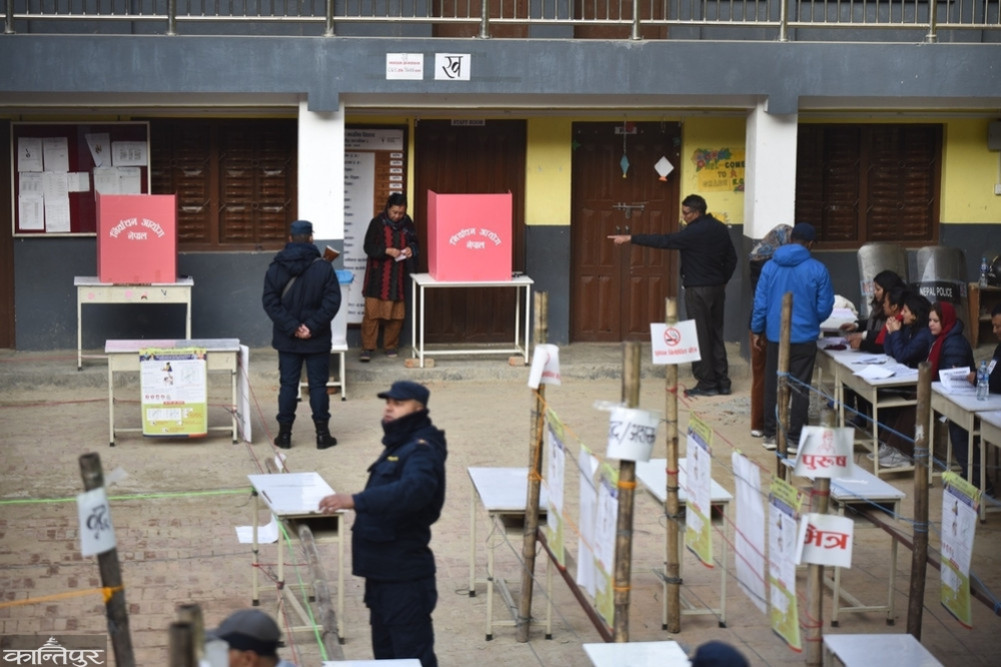
However, recently, intensive dialogue has begun between all parties and the government, which has increased the certainty of the election. If the government shows impartiality, the parties show reform, Gen-G shows unity and concentration towards the direction of reform, civil society shows impartiality and the people show active participation, then 21 Falgun can become a celebration day of free, fair and fearless elections. Democracy is a political system that survives not only by institutions, but also by collective will and courage. Now is not the time for delay, but for decision.
Some suggestions for holding elections on time: The security apparatus should show its presence in the constituencies and all provinces and districts with morale and determination to ensure a fearless environment, and all crimes and incidents of violence, big and small, should be carefully controlled without any bargaining. The administrative apparatus of the government should efficiently manage the manpower and equipment required for the election process on time.
Since the responsibility of fair, free and fearless elections also lies on the shoulders of political parties, they should take the responsibility of instilling trust and enthusiasm for the elections among the general public by adhering to the promises and deeds of the election code of conduct. Similarly, the media should take the lead in controlling rumors and informing the public by instilling enthusiasm for the elections.
It is necessary for the Gen-G agitating youth to guard the entire election process at the citizen level. In addition, these youth need to call on the general public and all political parties, new and old, to participate in the elections and play the necessary role in convincing everyone that there will be a fearless, free and fair election.
It is necessary for the old political parties to remember their decades-long history of struggle and use the upcoming elections to continue their vibrant existence. The parties are now in labor pains - it is time to break the old structure and create new political ethics. For this, internal factionalism and the cycle of 'money-relationship-influence' in the parties must be broken. Ethics, competence and public trust should be made the main criteria in the selection of candidates. If we do not think about change and ignore Gen-G consciousness, we risk being forgotten in Nepal's contemporary political history.
Finally, what the government and the Election Commission need to understand is that the 2084 elections were not postponed to 2082 under the leadership of Gen-G. This election is being held as a result of a short-term but rapid movement to make a rapid leap towards change and progress.
Therefore, it is necessary to implement immediately applicable reforms such as Not Giving Vote to Anyone (NOTA), inter-constituency voting, etc. for the upcoming elections. These things are possible with the use of high technology. Also, the government and the Election Commission should be able to free this election from the flow of money, muscle power and nepotism. Thus, if the elections are held on time, fearlessly and fairly, Nepal will not only emerge from the political transition, but will also be reborn into a new, responsible and people-centered republic envisioned by Gen-G consciousness.