Its acceptance and spread are also increasing. In Nepal too, festivals celebrated by one religion and community are being celebrated by other religions and communities. This is a great social capital for a rainbow society like Nepal. It plays a role in maintaining equality towards different communities and building national unity.
We use Google Cloud Translation Services. Google requires we provide the following disclaimer relating to use of this service:
This service may contain translations powered by Google. Google disclaims all warranties related to the translations, expressed or implied, including any warranties of accuracy, reliability, and any implied warranties of merchantability, fitness for a particular purpose, and noninfringement.
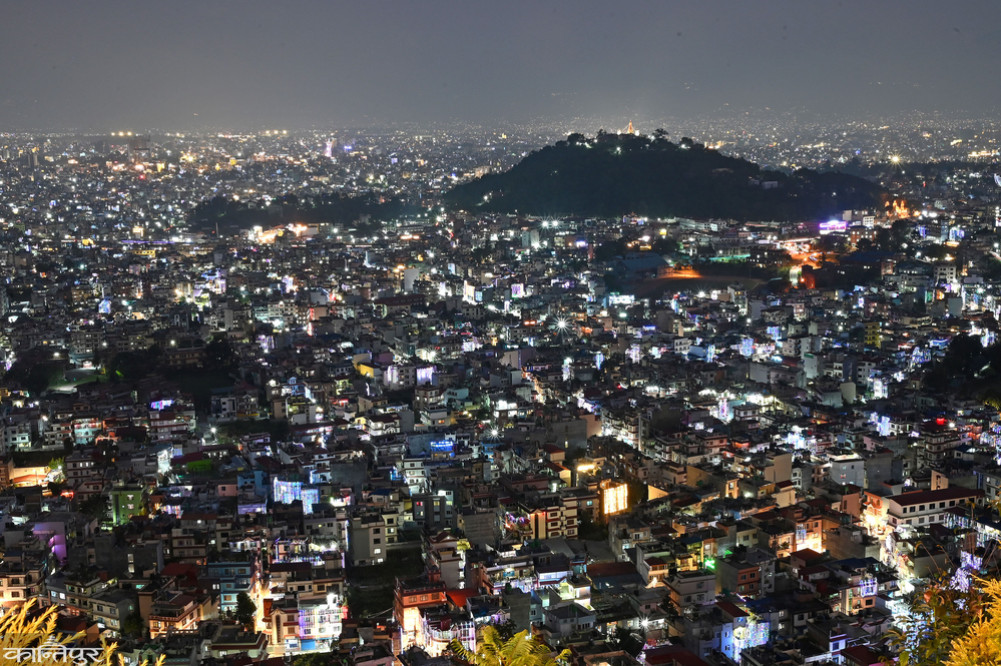
The weather is getting colder. Houses are decorated with twinkling lights. Rangoli is being made. Sweets ranging from sala to anarasa are starting to ripen. The blooming centipedes and velvet are starting to be woven into beautiful garlands. The market is bustling with shoppers. Fairs are underway.
Festivals are not only descriptions of myths, regular events of dates and calendar information, but also a combined form of changes in nature and human experiences. The atmosphere at this time is also full of Tihar. People are getting engrossed in the second biggest festival of Hindus.
The myth of Tihar is connected to Yamaraj, the god of death, and his sister Yamuna. Yamaraj had taken a break from his work and went to the house of his sister Yamuna. Yamuna was delighted by the presence of Yamaraj and worshipped him. Since the worship was held for five days, this festival is also called Yamapanchak. But myths are only reference material, festivals have been changing themselves over time.
Its acceptance and spread are also increasing. In Nepal too, it is found that festivals celebrated by followers of one religion and community are being celebrated by followers of other religions and communities. For a rainbow society like Nepal, this is a great social capital. It plays a role in maintaining equality towards different communities and building national unity.
Tihar is celebrated for five days. On the first day, crows are fed sweets as messengers of Yamaraj, hoping for good news. On the second day, dogs are given tika and garlands as gatekeepers of Yamaraj. On the third day, cows and bulls are also given tika and garlands and food is given. On the day of Gai Tihar, the goddess of wealth, Lakshmi, is also worshipped. On the last day, sisters pray for the longevity and prosperity of their brothers and put tika and garlands on them. They give sweets and fruits. Brothers also give gifts.
Although it is explained in myths, Tihar is also a symbol of family unity and harmony from the relationship between humans and nature. For example, by worshipping crows, dogs, cows and bulls, it highlights the coexistence and respect between humans and animals. It gives a message of protection of the environment and nature. Bhai Tika enhances family unity. On the day of Gai Puja, the Newar community also performs ‘Mah Puja’. This festival, which is performed by oneself, plays a role in building self-confidence, being grateful to oneself, and increasing self-awareness. It not only plays a role in strengthening the individual while observing oneself, but also clarifies the intertwining of festivals of each community. This is ultimately the foundation of community unity.
The atmosphere of Tihar is bright. That is why it is called the festival of light. This light is not only in the external environment, but also an opportunity to find the light within the mind. Since family gatherings and different types of sweets are cooked and eaten collectively, Tihar is also an opportunity for collective celebration. It plays a role in strengthening family relationships and harmony. Contexts like Dhanteras to Lakshmi Puja are interpreted as opportunities to move forward for prosperity. It helps to be reflective towards nature. It strengthens community unity. Therefore, Tihar should not be limited to the interpretation of religious myths. Rather, it should be linked to the current context and natural/environmental conservation and importance as much as possible. Public awareness should be increased about this.
As much as the cultural importance of Tihar is, in the present times, it is also becoming distorted. People are found to fall into debt and family discord when they do activities beyond their financial capacity. The mentality of making unnecessary purchases or having to do them has started putting families under financial and social pressure. This has turned the festival into a burden rather than an occasion for happiness. In many homes, men still enjoy the festival and the burden of food and other management is added to women. Therefore, if it can be celebrated with equal participation according to the financial capacity of the family, it becomes an opportunity to achieve equal happiness.
There is also the practice of bursting firecrackers during Tihar. This has seriously affected children and birds. Smoke and noise have been spreading pollution. There is also a risk of limb amputation and death while bursting firecrackers. A large amount of money is taken out of the country through its illegal purchase. Gambling is another bad practice during the festival. Especially men are busy with gambling.
It separates a person from his family even during festivals. Possible defeat pushes the person and the family towards a negative state of mind. It turns the joy of festivals into despair. Deusi-Bhailo is also losing its traditional importance. It seems to be focused on playing loud songs and collecting money. Therefore, it is necessary to preserve the cultural importance of Tihar, interpret it according to the modern context and minimize distortions. Happy Tihar to everyone.