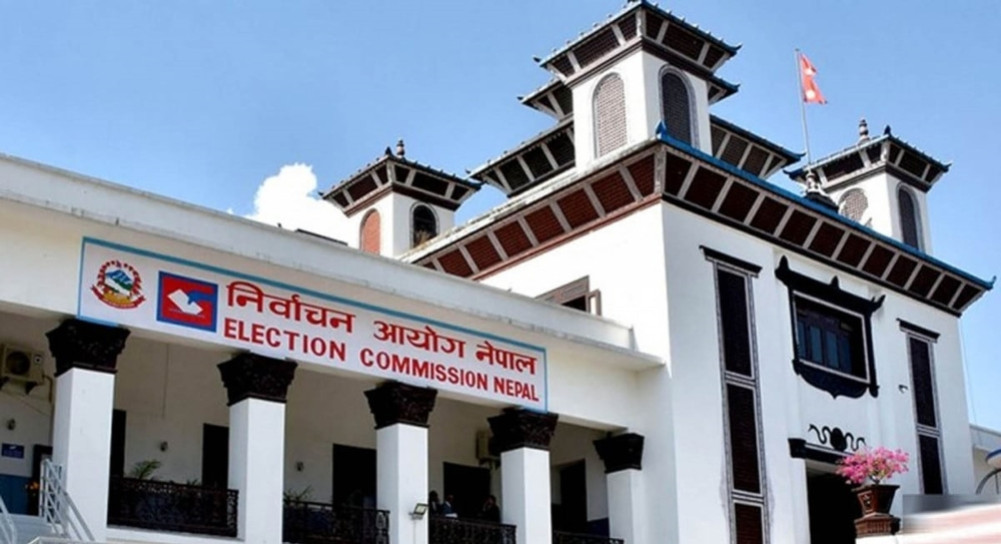
This new experiment, which sounds very popular at first glance, is like chewing on an iron chin to start a debate with less than 150 days to go before the election. The question of voting rights of Nepalis living abroad is definitely an opportunity for Nepal's democracy.
We use Google Cloud Translation Services. Google requires we provide the following disclaimer relating to use of this service:
This service may contain translations powered by Google. Google disclaims all warranties related to the translations, expressed or implied, including any warranties of accuracy, reliability, and any implied warranties of merchantability, fitness for a particular purpose, and noninfringement.
V.No. Article 17 of the Constitution of Nepal, issued in 2072, has guaranteed every citizen to participate equally in the political decision-making process. This right has not been practically implemented in the case of Nepalese students abroad, employees of diplomatic missions, employees of peacekeeping forces, migrant workers, entrepreneurs, and people involved in business.
Every year millions of young people migrate abroad and strengthen the country's economy through remittances, but those who are deprived of their political rights.
The 'right to vote' of Nepali citizens living abroad is a matter of basic human rights. It is also their constitutional right. The Supreme Court has also issued a directive order to the Government of Nepal and the Election Commission to provide the right to vote by providing the necessary legal and other infrastructure in order to represent the real sentiments and wishes of all citizens in the election with equal opportunities for the citizens who are employed abroad to vote in all levels of elections outside the country.
Supreme Court v. no. On 7th March 2074, even though the Election Commission was ordered to prepare the necessary laws within three months to give the opportunity to vote even to Nepalis living abroad, this has not been implemented yet.
After the newly appointed Home Minister Omprakash Aryal announced the plan to give the right to vote to Nepalis living abroad, this question has come into the debate again. Minister Aryal, in a discussion with the officials of the Election Commission, announced a plan to allow Nepalese migrants to participate in the proportional election system, even though the law has been amended through an ordinance, and to include young people who have reached the age but are not on the voter list.
In the past elections, the issue of allowing Nepalis abroad to participate in the proportional election process has been raised many times. V.No. Since the election of the Constituent Assembly in 2074, the demand for voting rights of Nepalis living abroad had been strongly raised.
Non-Resident Nepali Association (NRNA) In 2060, a report titled 'Absentee Voting for Nepali Diaspora' was prepared, in which the possibility of voting from abroad was studied. However, it could not go ahead due to political instability and lack of priorities. But the new interim government seems to have prioritized this issue, which can be considered positive. However, overcoming practical challenges is not as easy as expected.
What is the international practice?
International law recognizes that citizens living abroad should not be disenfranchised. Article 21 (3) of the Universal Declaration of Human Rights (1948) and Article 25 of the Declaration on Civil and Political Rights (1966) guarantee the right to vote to every citizen without discrimination.
Similarly, Article 41 of the United International Convention on Migrant Workers (1990) states that migrant workers and their families have the right to vote in their country's elections, which is the state's responsibility to arrange. These provisions demonstrate that disenfranchising citizens simply because they are abroad is contrary to human rights law.
Many countries around the world have given voting rights to their citizens abroad. The United States has implemented such a system since 1862, Australia since 1902, and India through the 2010 amendment. According to a report in 2007, more than one hundred countries have arranged for their citizens abroad to vote under different names.
In this, South Africa, Afghanistan and other countries have arranged to have polling stations in embassies and consulates. The United States of America, Canada and other countries have arranged to vote by post. Likewise, some countries, including Vanuatu, have arranged voting through proxies or representatives.
On the other hand, some countries, including Estonia, have arranged voting by electronic or online means. Similarly, Australia, India and other countries seem to adopt a mixed process. Similarly, Croatia, Ecuador and France have also designated separate constituencies for citizens living abroad. India has made arrangements for citizens living abroad to vote in the constituencies of their address by showing their passports.
In Nepal, the State Order and Good Governance Committee instructed the Election Commission to study and prepare a report regarding the necessary legal arrangements to grant voting rights to Nepali voters abroad as well as the preparations to be made for election management in 2075. After the directive, the Election Commission formed an investigation team and prepared a report along with on-site visits. V.No. Although the unified election law, which was submitted to the Council of Ministers on June 18, 2080, provided for voting for citizens living abroad, the draft could not move forward.
Can Nepal do it?
Although Nepal's population of about 4 million is abroad and remittances contribute about 26 percent of the GDP, Nepalis living abroad have no role in the political decision-making process. This imbalance raises questions about inclusiveness in democracy and weakens democracy itself over time. If Nepalis living abroad are allowed to participate in voting, the form of representation in current politics may look different. Only when Nepalis living abroad get to participate in the country's elections, the state forces them to pay attention to international issues, labor rights, diplomatic services. Otherwise, they will be limited as a category that only sends remittances to run the country.
There are three main prerequisites for Nepali abroad to participate in the election. The first is a matter of political and legal reform. This requires detailed discussion and political consensus among key stakeholders such as the government, political parties, the Election Commission and civil society. Once political consensus is reached, electoral laws will have to be amended to provide a legal basis for voting rights for those living abroad. It will give the Election Commission the necessary powers to implement the system and manage time for ballot printing and voter education campaigns.
If we look at the provisions of Article 17 of the Constitution of Nepal regarding the right to freedom, it does not appear that the constitution can stop this work. But for this, some laws need to be amended. For this, the voter registration act, 2073, the election act, 2074 and, if necessary, the foreign affairs act, 2076 should be amended and the right to operate polling stations should be given to embassies abroad.
Similarly, financial management is the second prerequisite. For this, the election budget should be increased. Nepal's existing financial capacity is not something that Nepal can handle to cover Nepalis who are in about 130 countries around the world. Similarly, the third is the design and implementation aspect of the appropriate system.
The Election Commission may consider options such as setting up polling stations at embassies, voting by post or adopting an online system. For the successful implementation of this system, in agreement with the liaison ministry of the Election Commission with the Ministry of Home Affairs and in coordination with the Ministry of Foreign Affairs, a separate unit can be established within the Election Commission and entrusted with the necessary planning, budget and operations, and its basis and process can be determined. This work is not a work that will be completed in two/four months.
challenge too
As attractive as it is to hear about giving the right to vote to Nepalis living abroad, its implementation is equally challenging. There is also a shortage of time as the next elections are approaching.
The capacity of the embassy is insufficient to register the names of more than four million Nepalis abroad. The condition of workers in the Gulf countries is very poor. Due to regular duties, they may not even have time to register. Old and big parties may be worried that election results may be affected when Nepalis living abroad vote. Consensus among political parties can be difficult due to risks to the integrity of the voting process and the challenges of holding elections in countries where diplomatic missions are absent or difficult to operate.
Suppose, if we put ballot boxes in a country where Nepalis are, we can only put them in the capital or the main city of that country. But many workers live far away from their constituencies. As there is no provision for voting from inside or outside the constituency, they cannot vote from their current residence. On the day of the election, the people who are employed in polling like poll workers, security personnel and observers are also deprived of the right to vote as they are posted away from their constituencies.
Voting in diplomatic missions can present operational challenges. This requires the production and distribution of sensitive and non-sensitive election materials as well as the deployment and training of the necessary personnel. Voting in different parts of the world poses great challenges and risks in maintaining the security and integrity of the voting process. This can lead to security difficulties at the voter registration, polling and counting stages.
If we use the postal system for voting, there is a risk of delay and loss, if we go to e-voting, we have to make a big leap in technology. Moreover, there is also the problem of cyber security. The economic challenge is also the same. In this process, billions are spent on registration, sending ballots, observing elections and other management.
It is difficult for Nepal to bear that in the current practice. Similarly, another important aspect is how to maintain privacy. This new experiment, which sounds very popular at first glance, is like chewing on an iron chin to start a debate with less than 150 days to go before the election. The question of voting rights of Nepalis living abroad is definitely an opportunity for Nepal's democracy.
This could be a good start for democracy if the interim government studies it thoroughly and implements it gradually through a pilot project in the next election. It would be advisable to implement it in a phased manner so that the integrity, transparency and security of voting are not compromised.