We use Google Cloud Translation Services. Google requires we provide the following disclaimer relating to use of this service:
This service may contain translations powered by Google. Google disclaims all warranties related to the translations, expressed or implied, including any warranties of accuracy, reliability, and any implied warranties of merchantability, fitness for a particular purpose, and noninfringement.
The fact that the top leaders of the ruling party intervened in the jurisdiction of the Parliament to stall the Federal Civil Service Bill which reached the House with the arrangement of keeping a two-year 'cooling off period' and the fact that the Speaker accepted it, shows that good governance in the country is still far away. The proposal to maintain a two-year 'cooling off period' before re-appointment to those who have left the government service is considered a key to good governance, but the distaste of Prime Minister KP Sharma Oli and Congress president Sher Bahadur Deuba has already been revealed.
However, since the State Order and Good Governance Committee has unanimously passed the bill report and it has also been submitted to the House of Representatives, there was an increase in the belief that it will now become a law. However, the executive intervened and the bill was removed from the agenda of the House of Representatives. The approval of the speaker in this attempt to disrupt the work, duties and rights and separation of powers of the legislature is worrying.
The 'cooling off period' added by the State Arrangements Committee to the Federal Civil Bill registered in the House of Representatives on 21 February 2080 is seen as the most important provision of the bill. The bill was unanimously passed by the state system committee with the support of the citizens as well. The bill report has been submitted to the House of Representatives on June 1. On June 3, there was an agenda to discuss the bill in the House of Representatives and submit it for decision.
For that, General Administration Minister Rajkumar Gupta decided to discuss the Federal Civil Service Bill with the report of the committee. The daily agenda was for Minister Gupta to present a proposal for the passage of the bill after the parliamentarians discussed the bill on party lines. If the meeting is adjourned on that day due to the obstruction of the opposition, then it is not kept in the agenda.
The executive proposes a bill to the legislature with as many provisions as it wants. The Legislature makes the law favorable to the long-term interest of the country through serious study, mutual consultation, consultation with experts. Therefore, the responsibility of proposing lies with the government, while the right to make laws belongs to the legislature. If this natural process is not allowed to proceed, it is considered that the basic responsibility of the parliamentary system and process has been violated.
On the other hand, since the state system committee prepared to put a 'cooling off period' in the bill, the staff had made public their disagreement. However, the existing senior officials formed a group and met the Prime Minister and the power center and did 'lobbying'. Because the top leaders were influenced by that pressure, they created obstacles in the bill. If we bow to the pressure of employees or anyone else and compromise on law making, the moral strength of the political leadership, including the Prime Minister, will be weakened more and more.
On the other hand, Prime Minister Oli said in the House of Representatives meeting on January 18 that it would take half a decade to make a law, and now any bill should be finalized within 60 days. However, the Prime Minister himself is obstructing the bill which is currently in the process of being passed. At least to maintain the dignity of his own opinion, the Prime Minister should support the progress of the Federal Civil Bill. If the government takes steps to withdraw the bill itself, it will be another irony for good governance and parliamentary practice.
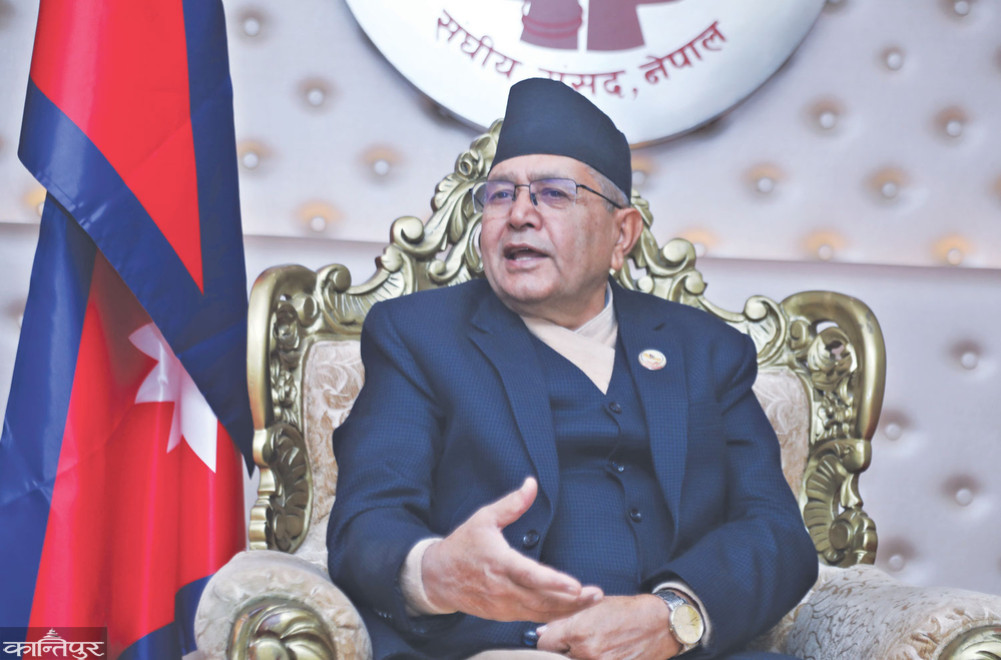
It is the Speaker's responsibility to free the legislature from the pressure and interference of the executive. But the role of Speaker Devraj Ghimire is seen as that of an assistant to the executive. On June 1 and 2, he conducted the House between the 'well' gherao of the RSVP, but on June 3, he adjourned it dramatically. Even on June 5, he conducted a meeting between the 'well' gherao, but the Civil Bill has been removed from the agenda.
The Federal Civil Bill has also disappeared from the possible agenda of the House of Representatives until June 15, which the Speaker has made public. If the executive continues to wear a mustache and the legislature obeys, the parliament will become a shadow of the government and a 'rubber stamp'. If the bill containing provisions to contribute to good governance is really stopped, serious questions will be raised not only about Speaker Ghimire, but also about the credibility of our Parliament. Therefore, the role of parliamentarians who speak in the House is also expected here. They can establish the sovereignty of the legislature by suppressing the interference of the executive.