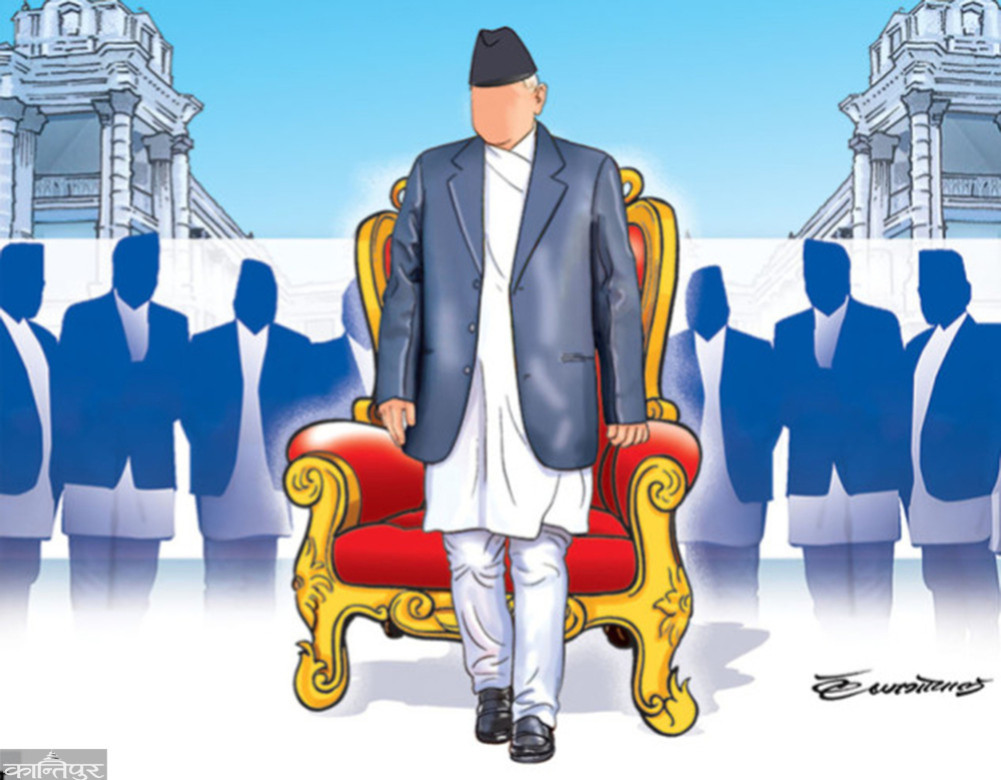
The discrimination made by political parties on the issue of giving leadership to women has also violated the constitution. Although the representation of women at the local level is 41 percent, the participation of women in any federal government has not reached 33 percent.
We use Google Cloud Translation Services. Google requires we provide the following disclaimer relating to use of this service:
This service may contain translations powered by Google. Google disclaims all warranties related to the translations, expressed or implied, including any warranties of accuracy, reliability, and any implied warranties of merchantability, fitness for a particular purpose, and noninfringement.
Although there have been many political changes in the country regarding the issue of women's representation, women's participation in the decision-making levels of the state is disappointing. In proportion to the contribution and ability of female leaders in politics, women have received very few rights and responsibilities. There is a difference not only in the participation of women as men in the various levels, regions and major organs of the country, but also in the distribution of responsibilities.
Men have been dominating the policy-making and decision-making process. Only if women have a strong participation in politics, other means of establishing women's rights will open up. In our country, the situation of women is weakest at the highest level of politics. To break the story, the country has got women in high positions like President, Chief Justice, Speaker, Chief Secretary. But women have not been able to get the good fortune of becoming the prime minister who holds the main reins, responsibilities and responsibilities of the government. Although the President is above the Prime Minister in terms of rank and dignity, the Prime Minister is powerful in terms of duties and responsibilities. There is a constitutional provision that the executive power of the Council of Ministers rests with the Prime Minister and the Prime Minister himself forms the Council of Ministers. Currently, there are only 2 women ministers in the 25-member Council of Ministers led by KP Sharma Oli.
Political parties make attractive manifestos to increase women's participation, but are equally reluctant to give women responsibility. The presence of women in the central positions of the Council of Ministers, Parliament and political parties is very low. The achievements in the constitutional system are remarkable in the history of Nepal's gender equality movement. After a continuous struggle for a century, the Constitution of Nepal has provided for "women's rights" in Article 38 under the fundamental rights. Emphasizing gender equality, the constitution stipulates that 33 percent of women's representation should be ensured at the federal and provincial level and 40 percent at the local level.
The discrimination made by the political parties regarding giving leadership to women has also violated the constitution. Although the representation of women at the local level is 41 percent, the participation of women in any federal government has not reached 33 percent.
After the establishment of the republic in the country, only four women had the privilege of becoming ministers in the 24-member cabinet formed under the leadership of Prime Minister Pushpa Kamal Dahal. Even the government that was formed without the implementation of federalism did not trust women that much. Before the implementation of the Constitution of Nepal, there was no binding provision of 33 percent in the government, and the practical practice would have been very different. Among the Prime Ministers at that time, 11.63 percent of women were made ministers during the time of Madhav Kumar Nepal, 20 percent during the time of Jhalnath Khanal and 24.5 percent during the government led by Baburam Bhattarai.
Women's participation in the government formed after the implementation of the constitution remained disappointing. The 20-member council of ministers formed by Prime Minister Dahal in 2073, which was formed after the constitution, had one woman and three of the 14 state ministers. A year later, the Sher Bahadur Deuba-led government included nine women in the 44-member cabinet. There were 4 women ministers in the Left Alliance cabinet formed after the 2074 election. There were two women ministers in the Oli-led government formed after the dissolution of parliament in May 2078, while there were six women ministers in the cabinet of the coalition government formed under the leadership of Sher Bahadur Deuba in 2078. After the election of the Constituent Assembly, the representation of women in the legislative parliament reached 32.8 percent. After 2007, the highest 15 percent of women have become ministers, while the lowest is 4 percent.
In Nepal in 2004, Nepal Mahila Sangh was established and protested for the right of women to vote. As a result, in the local elections held in 2009, a female member, Sadhana Pradhan, was elected as the chief representative. Dwarikadevi Thakurani, one of the 109 members, became a representative of the Parliament to directly participate in the parliamentary elections held in 2015. Dwarikadevi Thakurani became the first woman minister in BP Koirala's cabinet.
In politics, there is a trend of allocating representation to women on the basis of reservation quota. Shailaja Acharya, Sahana Pradhan, Mangaladevi Singh, influential leaders who worked for the establishment of democracy, were also given tickets from 5 percent reservation in the 2048 general elections. Complaints are heard that instead of operating on the basis of laws, rules, and policies, the activities of the political sector are conducted on the basis of the wishes or aspirations of the authorized officials. Politics is not reliable, effective and result-oriented because it runs on the orders, orders and comments of the top level leaders. Not operating on the basis of system is also the main weakness of politics. Politicians have a tendency to make policy rules themselves and break them themselves. Women are not only made ministers or parliamentarians, but also given party leadership and decision-making responsibilities.
Women's rise to the top is not necessarily a sudden achievement. But what kind of person has reached that level and what is his authority and what remarkable work he has done is of great importance. What was the achievement of those who got the opportunity and reached the decisive level? There should also be a debate about the effect on the upliftment of women.
Some women leaders say that the agenda they raise is always overshadowed. They get away with the argument that every decision made by the party is made because it is suffering from male-dominated thinking. While trying to lay the foundation of women's rights on the strength of patriarchy, the rights of the class that should have special rights have also been thwarted. Criticisms that question each other's existence in the name of rights and competition do not yield good results. Due to the political tendency and behavior of escaping by blaming each other when there is a problem, the society is becoming more discriminatory rather than egalitarian.
The government and political parties must be responsible for equal development of men and women, establishing social justice and ending discrimination against women. Until there is not only quantitative but also qualitative change of women in politics, only those with access can gain power, the weaker section will always be left behind. A position without responsibility and authority does not allow for remarkable work. Women have been struggling for decades to gain equal status with their male counterparts and to exercise equal rights and power. But they have not had the opportunity to do so. Women need to develop strong leadership style to achieve high position in politics and establish exemplary role.
New public management, democracy, inclusiveness and pluralism have started to be practiced in our country, but the efforts made by women for executive positions and meaningful roles have not reached yet. If a few women are visible in numbers and reach high levels, the welfare, empowerment, social change and development of common women will not happen. It is important not only to increase the numerical participation of women, but also to give important responsibilities to those who have reached that place and to increase the corresponding capacity.
Women's qualitative development will not occur until the trend of giving rights and responsibilities to women but not evaluating their capabilities is improved. Before looking for solutions, it is necessary to find out where the specific weaknesses are. Why has women's leadership been neglected in practice despite being politically empowered? It is necessary to find its root first. The gap between theory and practice should be identified and the underlying cause should be addressed. Women's rights can be established in politics and other fields only if weaknesses are identified and addressed with proper analysis.