In addition to the existential threat posed by climate change, geopolitical developments are making the world more uncertain and divided, so it is important to work together to find solutions to the challenges.
We use Google Cloud Translation Services. Google requires we provide the following disclaimer relating to use of this service:
This service may contain translations powered by Google. Google disclaims all warranties related to the translations, expressed or implied, including any warranties of accuracy, reliability, and any implied warranties of merchantability, fitness for a particular purpose, and noninfringement.
75 years ago on May 9, 1950, 6 countries France, Germany, Belgium, Italy, Luxembourg and the Netherlands signed the Economic Cooperation Declaration. It was the first step towards the establishment of the European Union (EU). There are currently 27 countries in the EU.
450 million citizens are united under the principles of solidarity and aid. These principles are even more relevant now that multilateralism is posing an unprecedented challenge to international standards.
Russia's illegal and unprovoked war against Ukraine continues even after three years have passed. This poses a significant risk to Europe and the world. Dozens of Nepalis have lost their lives fighting on the side of Russia after being cheated by false promises of good earnings and citizenship.
EU condemns Russian aggression against Ukraine. We have been a strong and reliable partner for Ukraine. We remain committed to supporting Ukraine in its opposition to Russia's imperialist war against a sovereign member of the international community. We believe that all countries, large and small, have an equal right to sovereignty and territorial integrity.
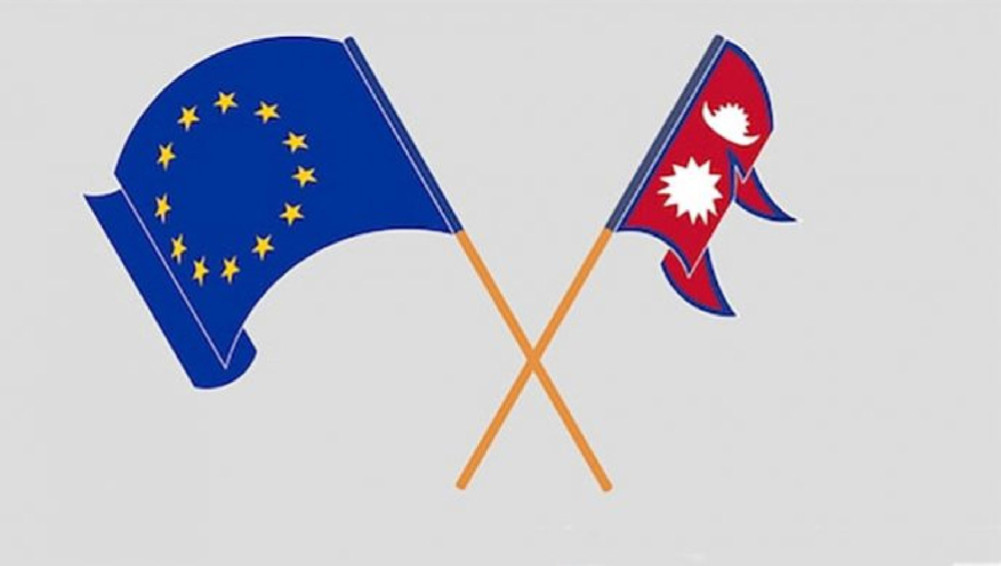
Likewise, the EU is a reliable partner even for many countries far from the European continent. In 2024, we celebrated 50 years of EU-Nepal diplomatic relations. In this half century, the EU as a European group (Team Europe) with its member states has stood together in Nepal's aspirations for sustainable and inclusive development.
Under the 'Global Gateway Initiative' recently announced by the EU, we will help Nepal in some important areas including education and green energy. The 'Global Gateway' mobilizes resources from the EU, member states and financial institutions such as the European Investment Bank and the European Bank for Reconstruction and Development to boost entrepreneurship and achieve sustainable development in developing countries like Nepal.
The EU has been a long-term partner with the Government of Nepal in the field of education. Under 'Global Gateway' 'Quality Education for All' is operational. Through this program, Europe Group provides assistance in education policy implementation and teacher training through governments at all levels to make Nepal's education sector more inclusive of adolescents, girls and marginalized communities.
Our grant aid of nearly 50 million euros has three main pillars – equitable and inclusive access to education, training teachers to adopt modern and effective educational methods, and enhancing governance in the education system through coordination and partnership between all levels of government.
We have also partnered with Nepal in the energy sector. Through our 'Global Gateway' 'South Asia Energy Connectivity' project, we have helped Nepal for clean energy and inclusive green growth. Both of these are highly regarded areas in Europe.
We have committed €50 million in support to the promotion and development of renewable energy and energy-efficient solutions, with the participation of both the public and private sectors. We want to ensure that the energy produced under this reaches all Nepalis regardless of caste or geography through an effective transmission and distribution system.
For example, the recently completed Chilime-Trishuli transmission line supplies electricity to hundreds of households in Nuwakot and Rasuwa districts. Therefore, we are committed to helping the Nepalese government achieve its ambitious goal of ensuring access to electricity for all by 2030 and reducing carbon emissions to zero by 2045.
Nepal's next priority is addressing the consequences of climate change. Despite its negligible contribution to emissions, Nepal is among the countries most vulnerable to climate change. Climate resilience is an important area of the Global Gateway Initiative.
The EU will help Nepal develop innovative ways to deal with the effects of climate change. The European Union is helping the farmers of Far West and Karnali provinces to face the effects of climate change in the agricultural sector through the green sustainable agricultural protection system program.
Nepal and the world are facing unprecedented challenges. In addition to the existential threat posed by climate change, geopolitical developments have placed the world in a more uncertain place. The once globally connected world is now fragmenting into groups.
The EU stood to prevent this kind of division and to ensure a new world standard based on community, solidarity and interdependence. Therefore, building lasting relationships and working together to find solutions to the challenges ahead are more important than ever.
Nepal and the EU must stand together on our shared values of democracy, human rights and equality. These values have built the foundation of our friendship over the past 50 years. We are always stronger together.
– Lorenzo is the ambassador of the European Union for Nepal.