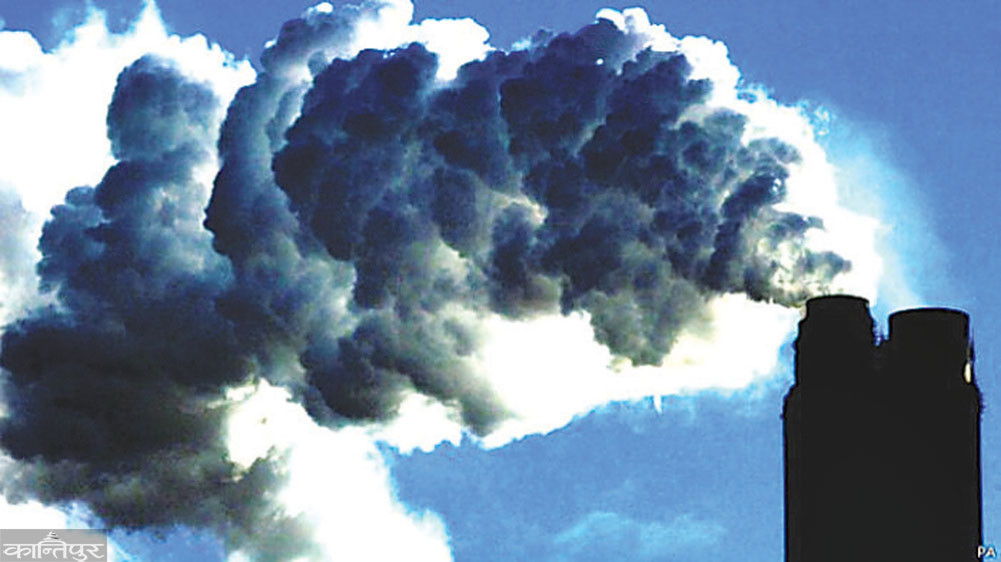
As early as March 2025, the daily average concentration of carbon dioxide in the atmosphere was observed to exceed 430 ppm, possibly for the first time in Earth's three million years.
We use Google Cloud Translation Services. Google requires we provide the following disclaimer relating to use of this service:
This service may contain translations powered by Google. Google disclaims all warranties related to the translations, expressed or implied, including any warranties of accuracy, reliability, and any implied warranties of merchantability, fitness for a particular purpose, and noninfringement.
Decades have passed since the debate on slowing global warming began. Meanwhile, centers were established to measure global warming and its effects on climate and atmospheric pollution. Many efforts have been and are being made around the world to curb the impact.
Despite such efforts, it has been found that the amount of carbon dioxide (CO-2) in the atmosphere has increased more after the use of fossil energy than before the industrial revolution, i.e. before the excessive use of 'fossil fuels'.
Currently, the emission of carbon dioxide from human activities is the highest in human history. According to recently received scientific data, if the year 1850 is considered as the base year, then the amount of carbon dioxide in the atmosphere has increased by 182 percent. Growth continues. A detailed study and analysis of it has been done by the World Research Institute, a world resource organization based in the UK.
Despite various international laws, it is almost impossible to reduce the density of carbon dioxide in the atmosphere unless countries like the United States, China, India, European Union, Russia, Japan, Brazil, Indonesia, Iran and Canada take drastic measures.
The scientific measurement of carbon dioxide density in the Earth's atmosphere was started in 1956 with the establishment of the Mauna Lavo measurement center in Hawaii. According to the recent measurements of the center, it has been found that the daily concentration of carbon dioxide in the atmosphere has increased to more than 430 ppm in the month of March 2025. This is a measuring station, which has recorded the longest period of atmospheric carbon dioxide density measurement on Earth.
The International Cryosphere Climate Initiative (ICCI), an organization working on the international cryosphere, is another organization that is committed to protecting the earth's ice-covered land. According to a study by this organization, the concentration of carbon dioxide in our atmosphere has recently exceeded the main threshold of 430 parts per million (ppm).
This will be the first time in the Earth's three million years that average daily atmospheric carbon dioxide levels exceed 430 ppm. Which has pushed us down a path of even greater danger, raising a red flag on the dangers of climate change due to emissions from fossil fuels. This is also mentioned in the ICCI report.
According to the World Atmosphere's 'Global Air Report 2024', 8.1 million people died in the world in 2021 due to air pollution. About 2.1 million people died in India alone. In other South Asian countries, the number of deaths due to air pollution is also high. Apart from air pollution, other problems have emerged due to the increase in temperature.
Due to the increase in the amount of carbon dioxide in the atmosphere, the marine animals in the polar and temperate ocean regions of the Earth are experiencing changes in the chemistry of the sea water, and very harmful effects are beginning to be seen. Studies have shown that about 25 percent of the emitted carbon dioxide dissolves in the sea itself, forming "carbonic acid" in the sea, which has a negative effect on the food chain of marine animals and the process of their bones and scales.
The snows and mountains in the Himalayas and the Tibetan Plateau play a very important role in keeping the world's climate system in order. There are huge mountain ranges in and around which glaciers, snow and permafrost sit. Many tributaries originate from their network. Such an interdependent and highly risky 'cryosphere' has collapsed today.
According to a study by ISIMOD and UNDP, the mass of glaciers has decreased by about 65 percent from 2009 to 2019. Similarly, about 47 glaciers which are the source of inland rivers of Nepal are likely to burst in the future. In this way, when mountains and glaciers melt, there is a possibility that diseases and diseases that are not limited to the lack of clean water, energy production and irrigation will come.
Similarly, in the Himalayas and polar regions, millions of micro-organisms are inactive in the permanently frozen environments (glaciation and permafrost), including countless glaciers and snow. In addition to the melting of mountains and glaciers, they have come out of their frozen prisons in millions and there is an increased risk of diseases that have never been seen in other ecosystems and human settlements.
Beneficial micro-organisms that are constantly working to protect humans and other biodiversity, studies have also shown the possibility of other threats if they cannot survive in the melting snow. Dormant pathogenic micro-organisms have been present for thousands and millions of years in frozen places. As the snow and glaciers melt, they come out.
According to studies by health workers, epidemics so far have mostly been caused by two major reasons. Due to the encroachment of human races and settled in new places, new diseases came. Epidemics were also caused by conflicts with wild animals that were displaced from their habitats and moved into human settlements.
A third reason has recently been raised, namely the increase in potential interactions between dormant pathogenic microbes and humans. This is particularly true of natural boundaries, which for centuries have separated man-made and natural ecosystems. Used to work as an environmental printer. We spoiled it and destroyed it.
The condition of that neighborhood was the polar regions of the earth, mountains, glaciers. which is rapidly melting with the increase in global temperature. Due to the expansion of micro-organisms that have been lying dormant for millions of years in water and terrestrial environments, the possibility of new epidemics in the future has increased.
The factor that causes all these conditions is the increase of greenhouse gases. Therefore, there seems to be no alternative but to reduce greenhouse gas emissions. A lot of work has been started especially in the field of green and clean energy. For example, the development of clean energy production technology developed at war level, development of electric vehicles, low altitude technology, development of drone technology, storage and transport of hydrogen, use of green energy in industry, etc. shows that nations are committed to reducing the impact of current climate change and going completely carbon neutral.
For example, China has invested heavily in renewable energy, nuclear power, power transmission, power storage, electric transportation and railways to promote and develop clean energy. In order to reduce the carbon footprint in industrial and transportation sectors, innovative technology development has taken a leap. In clean energy development
was heavily invested in 2023 alone. 1.6 trillion dollars was earned from that investment. Similarly, the Indian government is also emphasizing on clean energy. By the year 2030, 50 percent of all energy consumption has been determined to be obtained from clean energy rather than fossil fuels and to gradually move to completely clean energy. With the rapid innovation in clean energy technology and the reduction in production costs of such energy, studies have shown that it will not take long to make the leap from fossil energy to clean energy.
There is a need for all carbon emitting countries to act quickly so that the tragic event of gradual melting of glaciers and mountains and changes in marine chemistry and the extinction of marine animals do not occur. For this, China, India, Russia, Europe, Brazil and other countries have started to strive.
If the major industrial countries take the lead in promoting green and clean energy, great research will be done on alternative clean energy to replace fossil energy, and the earth will be protected and human-made global civilization will last forever. If we don't, it will be a dream that we will ever see our mountain glaciers again, because it took millions of years for the Earth to form the mountain glaciers and the cryosphere, and it is very difficult to rebuild once it is destroyed.
- Oli, who is also an environmentalist, is the Nepalese ambassador to China.