The state does not even want to make it a subject of debate. Parliament is the main forum for debate. There is no other issue in the parliament than saving and overthrowing power. The main achievement of the local government till date is none other than the recruitment of party workers as temporary employees in the name of jobs.
We use Google Cloud Translation Services. Google requires we provide the following disclaimer relating to use of this service:
This service may contain translations powered by Google. Google disclaims all warranties related to the translations, expressed or implied, including any warranties of accuracy, reliability, and any implied warranties of merchantability, fitness for a particular purpose, and noninfringement.
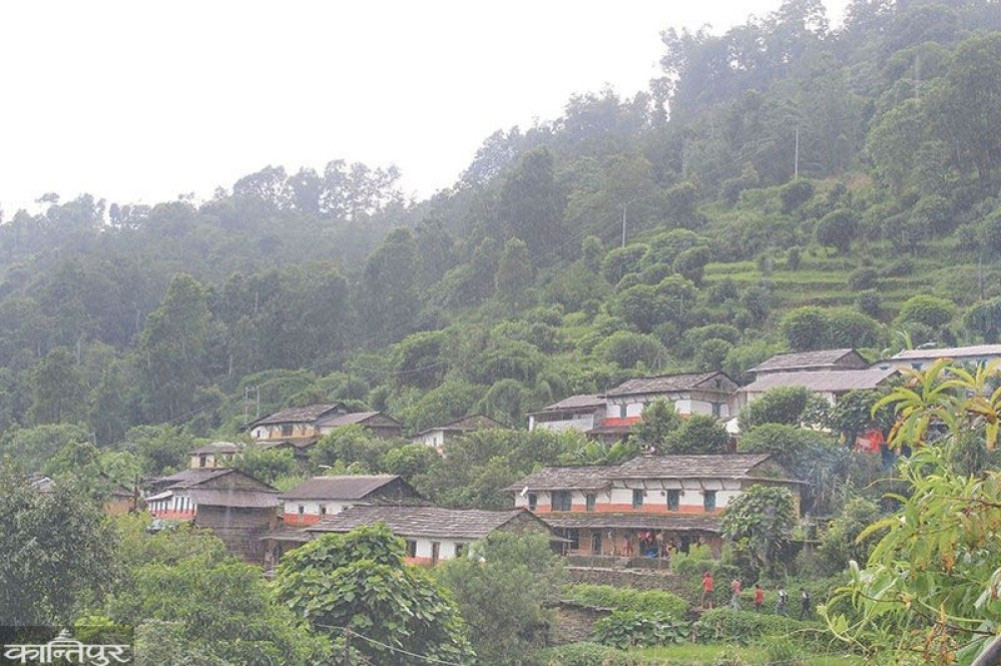
Returning to the village is more difficult than entering the city. There are political, social, economic and awareness reasons behind it. In recent times, the topic of village abandonment has become a topic not only of social media, but also of politics.
Even the city is not the choice of the youth, it has become a 'transit' place before emigration. Infrastructure such as manpower, labor office, visa center is concentrated in the city.
An empty village, a political agenda for today's parties, a topic of writing for writers, a topic of debate for intellectuals, a topic of discussion for social media, a place of imagination in the future for those who have left, has no other identity than the village.
The state does not have a dynamic policy to return the village. Those who try to return to the village on their own also face problems. Especially the number of young people leaving the country is high. The leader is equally busy talking about making the country a Swiss and Singapore model.
...
Swiss were/are recruited into the Vatican and Gurkhas into the British Army. As the era of reform began in Switzerland, foreign conscription was curtailed for moral reasons and young men did not flee abroad. Mountain valleys became depopulated.
Between 1870 and 1900, the number of people who emigrated from Switzerland reached 260,000. Twelve percent of the total population at that time left the country. Almost the same amount of people emigrated from Nepal in the 1980s. After taking the policy of decentralization, Switzerland empowered the local government.
From the beginning of the 20th century to the 1990s, tourism in the Alps flourished. After that, there was an awareness that there should be a limit to the growth of tourism. There was no shortage of people returning to the empty mountain valleys. (Tony Hagan- Decentralization and Development p. 122-129)
The trend of Nepalis joining the Gurkha army after 1816 continues even today. There is no debate in the state agencies on the issue of Gurkha recruitment. Only when the Leftists were out of power did the issue of Gurkha recruitment gain ground. The Ministry of Foreign Affairs does not even have a record of Gurkha recruitment. Apart from recruiting Gurkhas, the state is busy looking for employment countries one after the other. The number of people going to work abroad is alarming. Even federalism has not been able to stop the migration of villages.
Decentralization has been practiced in Nepal since Kirat period. In Kirat period, thum and village administration, in Lichchavi period, through Dhaware and Gosthis, in Malla period through Guthi, in Panchayat period, five development zones, 14 zones and 75 districts were also in the form of decentralization. In the context of Nepal, the trend of centralization has been there since the beginning. The current local government has also been given the right to make laws. But it has been enshrined in the constitution to make laws so as not to conflict with the central laws.
In this way, the Center has given authority to the local level as if the cat was playing with the mouse. It is necessary to give independent authority to the local government in matters other than anti-national and anti-national issues. If this is done, the local government will act in its originality and it can produce results. Nepal's decentralization is weak because of centralization.
...
After the changes in the population, the implementation of the neoliberal economy, the agricultural sector was also made a market item and left in the market, after the support, relief and facilities provided by the state were cut, the agricultural production gradually became unable to bear the cost.
As the public awareness that they should give proper education to their children and not rely on health care is expanding, the state left these two areas to the market. In other words, investment in both these areas did not increase and both of these essential services became more expensive. The awareness that children should be educated reduced the size of families. In this way, the number of people working in agriculture also decreased and subsistence agriculture generally declined. (Hari Roka – Alternative Economy, p. 14)
Agriculture has become the most sought-after profession these days. There is no proper market for local produce till date. Indian vegetables are cheaper than those produced in Chitwan and Dhading. Agriculture has become known as the most neglected occupation. Some of today's problems will be solved only if the government pays attention to how to support those who live in the villages instead of planning to return them from the cities to the villages. The biggest responsibility of this should be taken by the local government. For that, investment in agriculture and education should be increased.
On the other hand, when returning to the village, the issue of socialization is very serious. The eyes of society are the most dangerous. For example, I have planted a few litchi plants (less than a hundred) in Bhumlichok in my home district of Gorkha. There are some questions in the society about this. First, made for government subsidies. Second, mother-child farming is painted on social media.
Thirdly, isn't it easy to earn a living in Kathmandu after coming to the village many times? Fourth, all the people have gone abroad, why do they want to return to this village? These questions are now common to our society. The question should be answered by the state, but the state does not have the authority to answer. But I have only one mission - to return to the village and do agricultural work, to build a library by renovating the old house.
Debating with local teachers, leaders of political parties, intellectuals from time to time, covering topics according to the environment. Refreshing the writers, experts, researchers who are tired in the city for a day or two. Promoting sustainable and organic food etc. The
problem is not only that, but also in (local) political consciousness. The fear that Devaraj's love for the village will add competition to those with political views, and the fear that those with opposing views will strengthen the organization.
Mukha tells the young man that he should return to the village. Hearts behave differently. The specific reason for all this is, in the language of the leftists, regression in progressive consciousness, in the language of democrats, rusting of democratic ideas, and in my language, famine in consciousness. From 2007 to today, the most important aspect that Nepal's political parties have built at the grassroots level is prohibition and negative awareness.
...
Our current model of development continues to empty the village. We have not changed the development model from Rana period to today. The arrangement has changed. Development agents have changed. But there was no change in the philosophy, belief and strategy of development. Farming means discourages large-scale imports. Today, village kitchens are filled with Indian produce.
Stopping that is the primary task. Communists were once opposed to imperialism. But understanding, analyzing and determining the course of such political imperialism was never within the purview of communists. Foreigners started making agricultural policies since 2051. During the reign of King Birendra, our agricultural advisers were foreigners. From the time of the Manmohan government formed in 2051, the agricultural policy began to be formed due to the direct presence of foreigners. (Somat Ghimire – Community Socialism)
Local government leaders do not seem to have much awareness that the youth should be brought back. On the other hand, we think that we will return to the city as soon as our term ends. His signature position and prestige are connected with the village. The feeling is with the city itself. Local government chief Dhulamya is eager to hit the road in a Scorpio. It is more important to open toilets than to see and encourage agricultural work done by the youth. There is no focus on creating jobs at the local level.
Many organizations are active in the name of rescuing those who have gone to work abroad. But those organizations have no interest in providing employment in the country. Not only that, if the countries that are currently in a dynamic state of employment return 50,000 youths to Nepal, the government does not have the impact and preparation for it. A policy solution should be found in this matter, but the state does not want to make it a subject of debate. Parliament is the main venue for
debates. There is no other issue in the parliament than saving and overthrowing power. The main achievement of the local government till date is none other than the recruitment of party workers as temporary employees in the name of jobs. It is considered employment.
Today, a false comment has developed that only the incompetent and the unsuccessful should return to the village. Returning to the village is backward or forward? The state should create a comment that returning to the village is the first step. For that, the state needs to pay attention to infrastructure based on originality. There are many examples of educated people in the world who have contributed to the place where they were born.
In the context of Nepal, the late Dr. Chandra Gurung's role in creating the Annapurna Conservation Area project is still exemplary today. During the Panchayat period, Dr. The concept of the Annapurna Conservation Area project put forward by Gurung has not only created a positive feeling in the citizens of that area, but has also raised the economic and living standards.