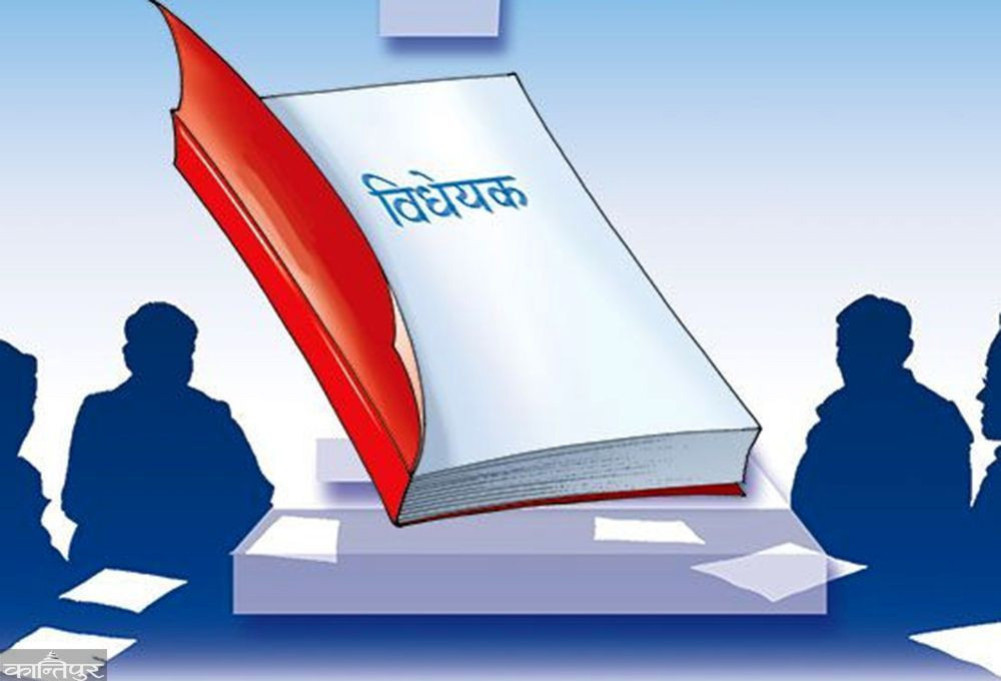
There is no possibility of any improvement in the bureaucracy with the proposed bill, which is prepared and amended in the brainstorming of two/four people in the existing Civil Service Act.
We use Google Cloud Translation Services. Google requires we provide the following disclaimer relating to use of this service:
This service may contain translations powered by Google. Google disclaims all warranties related to the translations, expressed or implied, including any warranties of accuracy, reliability, and any implied warranties of merchantability, fitness for a particular purpose, and noninfringement.
Prime Minister KP Sharma Oli gathered the secretaries at the Staff College last December and expressed his dissatisfaction with the work of the staff. Ministers of various ministries also express such dissatisfaction from time to time. It is not the only time that the political leadership expressed dissatisfaction with the work of the employees.
Past Prime Minister Madhav Kumar Nepal, Jhalnath Khanal, Baburam Bhattarai all have a history of directly or indirectly blaming the staff for their failures. Former Prime Minister Pushpa Kamal Dahal had even warned that there could be a rebellion due to bureaucracy and that federalism itself would fail.
Although ten years have passed since the promulgation of the Constitution, the three major political parties and the Parliament can be considered as the main responsible for the non-promulgation of the Federal Civil Service Act, the main basis for implementing administrative federalism. Another point of view is to find out what are the things that could not be done or were damaged due to the absence of the Federal Civil Service Act.
appointments, transfers, promotions, postings, foreign visits are going on regularly. All Governments and Ministers are getting to search, promote, transfer Esman Secretary/Joint Secretary as per their convenience. The Ministry of Federal Affairs continues to function as a transition ministry.
is the problem in the service delivery at the local level due to lack of law. But the federal government is oblivious to it. Administration experts created 4 posts including deputy secretary in the education branch of the municipality with 15 schools and 2 posts in the rural municipality with 85 schools. The staff adjustment was a great achievement for the government but the problems it created remain the same. Senior employees are employed under junior subordinates against the principles of natural justice. The mechanical work of adjusting the
is done, but the problems created by it are increasing. Currently, more than 300 municipalities across the country are running on nimitta and it has become a chronic disease. There is a situation where the federal administration mechanism has failed to even manage the administrative head in the municipality.
It is said that the staff did not work, were not motivated, were not customer friendly, were convenience oriented, and there was a delay in the service flow. What are the reasons for this? Why are employees not motivated? Who is not motivated (customer or co-secretary)? Why is the secretary not motivated? What is meaning and home? Without going abroad? Is it because the buyer doesn't work and doesn't have a daily salary facility? Not having a working environment? Or is it without functionality? Without an effective working mechanism? There are many and countless unanswered questions. How is the creation of a
bureaucracy? How is it socialized? What are its values? How are they built? What works and what doesn't? Or saying that the employee did not work on the surface without entering into the root problem of why it works and why it does not make much sense.
To maintain good governance, for prosperity and development of the country, hardly anyone gives the Public Service Commission exam. To a large extent, while searching for employment after a certain level of study, some opportunities are found, while trying everything, people who pass the Public Service Commission exam become employees. In this way, after becoming an employee, the institutional orientation and socialization from a higher position has a deep impact on him.
Most of the employees are pressured by uncertain career development and transfer promotion provisions of Ganesha tendency to memorize the principles of Public Service Commission and reach higher positions. Why does anyone want to become a joint secretary or secretary? It should be researched on the question of why department heads and bosses reach the door of leaders.
Only last week, the news was published that the federal government will make proper arrangements to utilize the expertise of ex-employees. In addition to this, last October the Lumbini state government also decided to use the knowledge, skills and experience of retired national servants in the fields of administration, development and good governance. Ironically, politicians disaffected with the work of in-service personnel are eager to tap into the knowledge, skills and expertise of retirees. The expertise, knowledge, skills and performance level of most retirees can be understood from the work of various commissions that seem to have been created for retirees.
In the currently discussed civil service bill, who and who will appoint the administrative head in the municipality, who will appoint the secretary of the province, what percentage will be kept in open competition, increasing the reservation quota, increasing the retirement age, and whether or not to have a trade union are the main topics of debate.
Will these topics improve public service delivery? Will the complaints of politicians be addressed? What kind of bureaucracy do politicians who are dissatisfied with the work of employees want? What kind of service delivery is required? What kind of governance and development is needed? A leader or a companion of development, good governance and prosperity? Public service delivery cannot be improved without finding answers to these questions.
The Civil Service Bill, which was drafted by adding and adding to the existing sections of the Civil Service Act in the brainstorming of two/four people in a closed room, will only become a new law issued after federalism. If the Public Service Commission selects the most qualified employees from the competition based on merit system, but the service delivery from those employees is slow, morals and virtues are not there, then what is the reason to keep that merit system? How fair is it to say that an employee who has been working in the same position for 20 years is not motivated and does not work? This aspect is worth considering. When it comes to how the resources of the state can be exploited more, the politicians are in collusion with the employees.
but complains to employees if vertical orders and instructions do not work. How can the minister be innocent when the staff under his leadership is guilty? Shouldn't ethics and morality only be in employees? Politicians are the ones who run the bureaucracy. So blaming your employees for your failures and inefficiencies is just trying to tread water.
If there is a real need for improvement in service delivery, good governance and development-friendly bureaucracy, there should be a serious debate and discussion on some basic issues. The bill is not to be issued in haste, it needs to be rewritten.