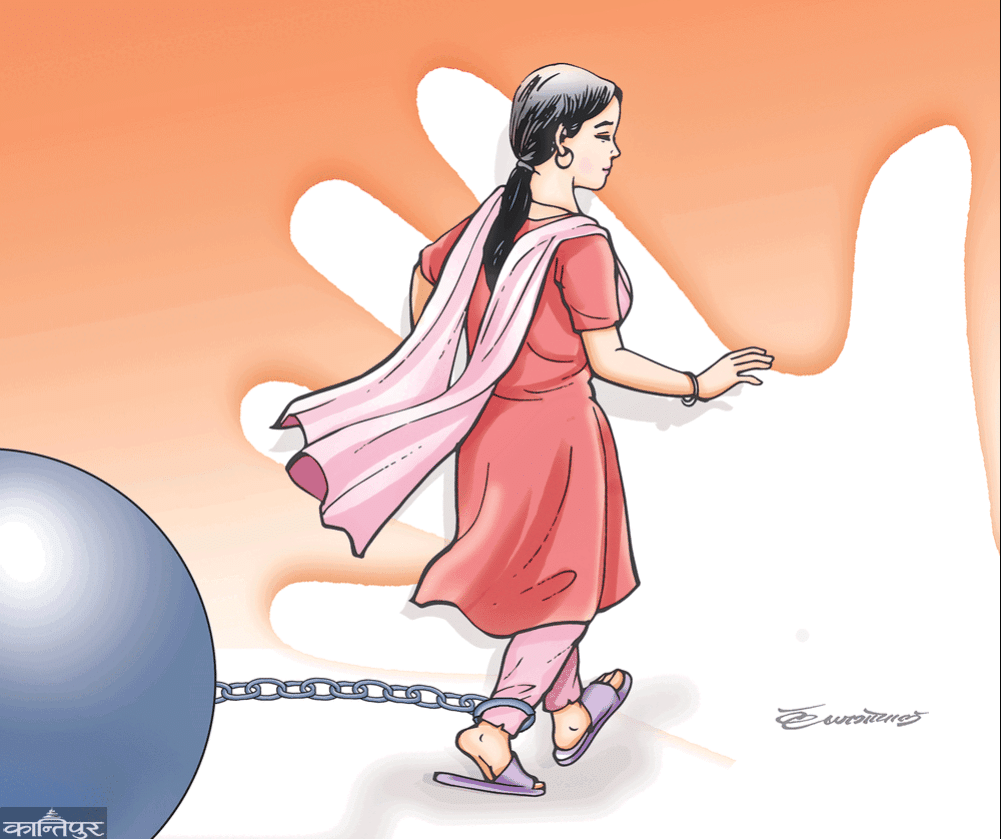
The view of women in Nepali society is still narrow. Women's contributions are undervalued and unequal power structures inhibit their potential for development.
We use Google Cloud Translation Services. Google requires we provide the following disclaimer relating to use of this service:
This service may contain translations powered by Google. Google disclaims all warranties related to the translations, expressed or implied, including any warranties of accuracy, reliability, and any implied warranties of merchantability, fitness for a particular purpose, and noninfringement.
The role and place of women in the society, culture and structure of Nepal has been discussed for a long time. The concept of women's empowerment has not yet been fully embraced due to the various aspects of women's problems and inequalities. Issues ranging from discrimination in the workplace to gender inequality in society and the compulsion to migrate abroad have strengthened the suppression of women's voices.
Some such organizations in Nepal conduct programs with the objective of women's empowerment as a priority. However, the reality is different. Most of the organizations have prioritized the issue of gender equality only during the 16-day campaign. Organizing limited seminars and programs, only formalities are done in the name of women empowerment without addressing the real problems of the community.
Nepal has established many policies, programs and funds on gender equality. Although federal, state and local governments have made various efforts to prevent gender-based violence, these efforts are still focused on limited seminars and formal programs. The complex problems of the community have not been solved.
Women face many difficulties in their daily life due to gender inequality. Although local bodies seem to show interest in listening to women's voices and addressing them, their efforts are insufficient in practice. The tendency to solve the problems of women and children by bringing them to a one-time seminar has weakened the possibility of a permanent solution.
Incidents of violence against women are increasing in Nepal. These incidents of violence are often the result of unequal power structures. Local bodies need to pay close attention to women's empowerment and solutions to incidents of violence. One should try to find long-term solutions by understanding the real problems of the community. Policy reforms, counseling services for women affected by violence and effective implementation of public awareness programs for prevention of violence are necessary.
The main reason why women cannot speak openly about incidents of violence and discrimination is the mentality rooted in the social structure. The idea of limiting women to traditional roles in the society is still strong. The tradition of restricting daughters to household work, not giving priority to education and considering marriage as the main goal of life has not allowed women's potential to be revealed. Especially in the rural areas, women have not been able to experience their rights and freedom due to child marriage, dowry system and abuses related to menstruation.
Behavior at the school level also has a profound impact on the future of girls. Girls stay away from education due to lack of schooling during menstruation, lack of basic hygiene and public awareness. Although there are legal reforms to make education equal for girls and boys, practical implementation is weak. Discrimination and unequal treatment of women in the workplace is still a serious problem. Due to this inequality, women's abilities are underestimated, their access to leadership opportunities is blocked and they are economically weakened.
The view of women in Nepali society is still narrow. Marginalization, devaluing of their contributions, and unequal power structures inhibit their potential for development. The idea of confining women within the four walls of the house has stifled their voices.
The low participation of women in politics is a serious challenge. The various political parties of Nepal have limited women only to 'role within the quota'. This has weakened women's access to the decision-making process.
Local bodies conduct programs and campaigns against gender violence, but those programs are not reaching the people effectively. Women are finding it difficult to find information about where to go, what to do and who to talk to in order to find solutions to their problems. This situation is mainly due to lack of information, weak institutional structure and lack of effective awareness programs at the community level.
Women are forced to migrate abroad due to the lack of employment opportunities in the country, lack of security and widespread discrimination in the society. Especially the stories of abuse and exploitation of women going abroad as domestic workers are more painful.
Suppressing the voice of women means stopping the progress of society. Empowerment of women and their equal participation in every field is necessary for the prosperity of Nepal. Bringing out suppressed voices is everyone's responsibility. These voices will initiate change and inspire a society that respects women's rights.