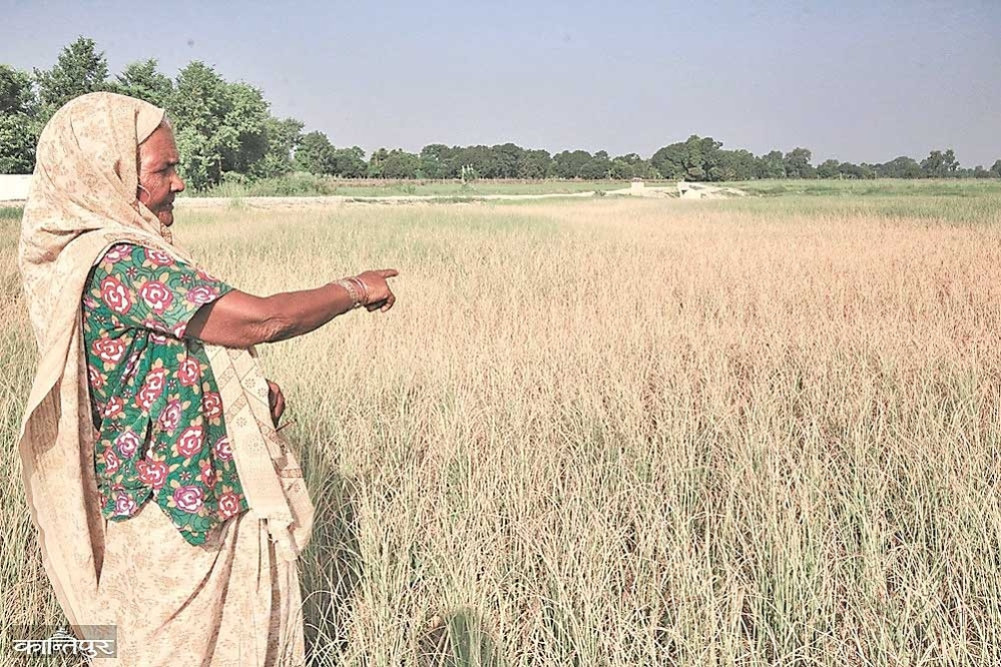
Poor and marginalized communities are the most affected by floods, landslides, droughts, fires, and they are forced to bear the brunt of disasters as they have few alternative livelihood opportunities.
We use Google Cloud Translation Services. Google requires we provide the following disclaimer relating to use of this service:
This service may contain translations powered by Google. Google disclaims all warranties related to the translations, expressed or implied, including any warranties of accuracy, reliability, and any implied warranties of merchantability, fitness for a particular purpose, and noninfringement.
Climate change and its effects are common problems in the world today. Due to climate change, the average temperature of the earth has increased. Drought, heavy rainfall, sea level rise and various animals and plants are threatened with extinction. As a result, marginalized communities are stuck in the vicious circle of poverty, food insecurity has increased in the society.
Due to floods, landslides, droughts, fires, etc., many families are forced to be displaced from their homes. According to a report published by the European Climate Service Center, 2024 has been seen as the warmest year on Earth in the past 174 years. Scientists
has said that 41 days of 2024 will be extreme summer days. The average temperature of the earth's surface has been calculated since 1850. According to the report, the average temperature of the earth's surface in 2024 will be the hottest year since then with an average temperature of 15.1 degrees. According to the World Meteorological Organization, the year 2024 has been declared as the hottest year on the basis of a study based on 6 international data sets.
Due to the increase in temperature, extraordinary changes in the climate have occurred. "World Weather Attribution" and "Climate Central" noted that 26 out of 29 weather-related events modeled in 2024 were due to climate change. According to the report, 3,700 people lost their lives and millions of people were displaced in those incidents.
The study was done by taking some examples of floods in eastern Spain, heavy rains in Nepal, hurricanes in America, droughts in the Amazon forest in South America, and floods in West and Central Africa. Although the scientific study has not been completed yet, preliminary estimates have been made that climate change and increased dryness may be due to the recent fire in Los Angeles, USA. By the time this article was prepared, 27 people had died due to the fire, more than 12,000 houses had been destroyed and millions had been displaced.
Nepal is also among the countries that are at high risk of climate change. According to World Bank's 'Climate Change Knowledge Portal', the average temperature of Nepal in 1901 was 13.66 degrees Celsius, but the temperature fluctuated between years and reached 14.07 degrees Celsius in 2023. Disaster preparedness has become more complicated due to the geographical situation of Nepal being climate sensitive and existing poverty. As a result of climate change, there have been changes in the annual rainfall cycle, droughts and heavy rains in Nepal in recent years.
According to the report of the National Disaster Risk and Management Authority, 224 people died, 158 were injured and 24 were missing due to the heavy rains and subsequent floods in October this year. According to the report, more than 700 private houses, 43 schools, 41 health centers were completely destroyed by the flood, and agricultural crops worth billions of rupees were lost and commodity prices were killed. Such disasters happen every year and it seems to be repeated in the last decade.
The poor and marginalized communities are the most affected by climate change and events like floods, landslides, droughts, and fires. Moreover, various studies have shown that women, children, senior citizens and people with disabilities are affected in those communities. According to the United Nations, 70 percent of the 230,000 people who died in the Indian Ocean tsunami in 2004 were women. The United Nations report states that women and children suffer 14 times more than men during disasters.
Although the effects of climate change are felt everywhere, the effects of this impact are uneven depending on the adaptive capacity and vulnerability of households and communities. Studies have shown that its impact is more on economically, socially and educationally backward communities and especially on women, Dalits, tribals, minorities and marginalized communities and geographically disadvantaged areas.
The livelihood of these groups basically depends on natural resources and as climate change has a negative impact on natural resources, they also have less alternative livelihood opportunities, so they are forced to bear the brunt of disasters. Due to existing gender inequality in Nepal and countries with social and cultural conditions like Nepal, women's ability to adapt has been negatively affected. They are facing a disproportionate impact of climate change.
With the increase in dryness, there is a high possibility of fire incidents in the forests of Nepal. Last year too, there were many incidents of forest fires. According to the National Disaster Risk Reduction and Management Authority, from January 1, 2020 to January 1, 2025, the number of deaths in 16,792 forest fires and fires across the country was 495. In which there are only 285 women. Among the injured, 1 thousand 9 men and 1 thousand 38 people There are women.
The data above also shows that the number of women in deaths and injuries is high. Women from poor and marginalized families are more affected not only by fires but also by other problems caused by climate change. The main reason for this is women's direct involvement with natural resources. There is a data that about 74 percent of women are involved in the agricultural profession in Nepal.
Climate change has a negative impact on agriculture. 45 percent of the land used by the farming families has not yet been provided with irrigation facilities. Some of our farming systems depend on seasonal rainfall. Irrigation systems have also been disrupted due to drought and floods. Blockage of irrigation system and prolonged drought have reduced agricultural production and increased the risk of food insecurity. This has increased poverty and other health problems including malnutrition among marginalized communities. Non-availability of drinking water due to earthquakes, floods and landslides has also increased health problems.
Similarly, firewood is used as the main source of energy for cooking in rural areas. Farmers also depend on forests for animal husbandry. Due to the fire, there is a shortage of grass, firewood and straw in the forest. In most households in Nepal, women are responsible for cooking. That is why women bear the first and direct impact of events like fires.
It seems that women have to face more problems due to the lack of water for household use due to the drying up of water sources due to drought and the burning of water pipes due to fire. Women have to spend a lot of time in fetching water, which affects their other work. Most of these families, who are below the poverty line and do not have their own land, build wooden and thatched houses near forests and rivers. They are at risk from fire and landslides.
In recent times, women have also engaged in the collection, cultivation and processing of non-timber forest produce-based materials such as: dunatpari, woodwork and herbs for aromatic oil through community forestry. Through such activities, women are gradually becoming independent in the economic sector. But climate change and forest fires have affected the income of these women.
The constitution of Nepal has established a sufficient basis for gender equality and social inclusion in addition to ensuring the equal rights of women, vulnerable and citizens of different social groups. The government of Nepal has formulated and implemented various policies to address the growing effects of climate change. The National Climate Change Policy, 2076 has included provisions to facilitate livelihoods by mainstreaming good governance and gender and social inclusion in policy formulation, institutional structure and program implementation.
Agriculture Mechanization Promotion Strategy 2071 aims to identify and promote women and environment friendly agricultural machinery and equipment. The Agricultural Biodiversity Policy 2063 (First Amendment, 2071) mentions the inclusion of women, indigenous tribes and disadvantaged groups for the discovery, promotion and utilization of farmers' traditional knowledge. The Disaster Risk Reduction and Management Act, 2074 and the Disaster Risk Reduction and Management Regulations, 2076 state that special plans should be made and implemented for women, children, senior citizens, Dalits, marginalized groups and communities, disabled and disabled people who are at risk of disasters.
Likewise, in the Disaster Risk Reduction National Strategic Action Plan (2018-2030), emphasis has been placed on ensuring the empowerment, inclusion, easy access and non-discriminatory participation of people with gender, age and social groups who are disproportionately affected by disasters. The Gender and Social Inclusion Strategy and Action Plan on Climate Change (2077-2087) aims to increase women's and vulnerable communities' access to climate change adaptation and mitigation decision-making processes and resources and tools.
Nepal is also a party to the Paris Agreement (2015), which emphasizes the need to build capacity and prepare an institutional base based on local and national needs, while encouraging a gender-responsive, participatory and transparent approach, taking into account vulnerable communities and environmental interests. These policy arrangements show that the government is serious about climate change and the risks it poses. However, the victims have felt that there is a weakness in natural disaster risk reduction, rescue, relief and rehabilitation.
Climate change and the risks it poses are a global problem. Its risk reduction and solutions can also be done through the joint efforts of the world. Lack of financial resources is also said to be the main reason for the ineffectiveness of disaster risk reduction, rescue, relief and rehabilitation in the context of Nepal. Despite the lack of funds, it is necessary for all three levels of government in Nepal to proceed in a planned manner to make disaster risk reduction, rescue, relief and rehabilitation effective.
The availability of resources and tools alone does not make such risk reduction and management easy. Recently, this has been shown by the fire in various areas of Los Angeles in the state of California, USA, and the damage caused by it. This seems to require long-term measures, preparations and precautions.