The Council of Ministers does not have the right to sell land beyond the limit. If the decision is made without basis, it is against the law.
We use Google Cloud Translation Services. Google requires we provide the following disclaimer relating to use of this service:
This service may contain translations powered by Google. Google disclaims all warranties related to the translations, expressed or implied, including any warranties of accuracy, reliability, and any implied warranties of merchantability, fitness for a particular purpose, and noninfringement.
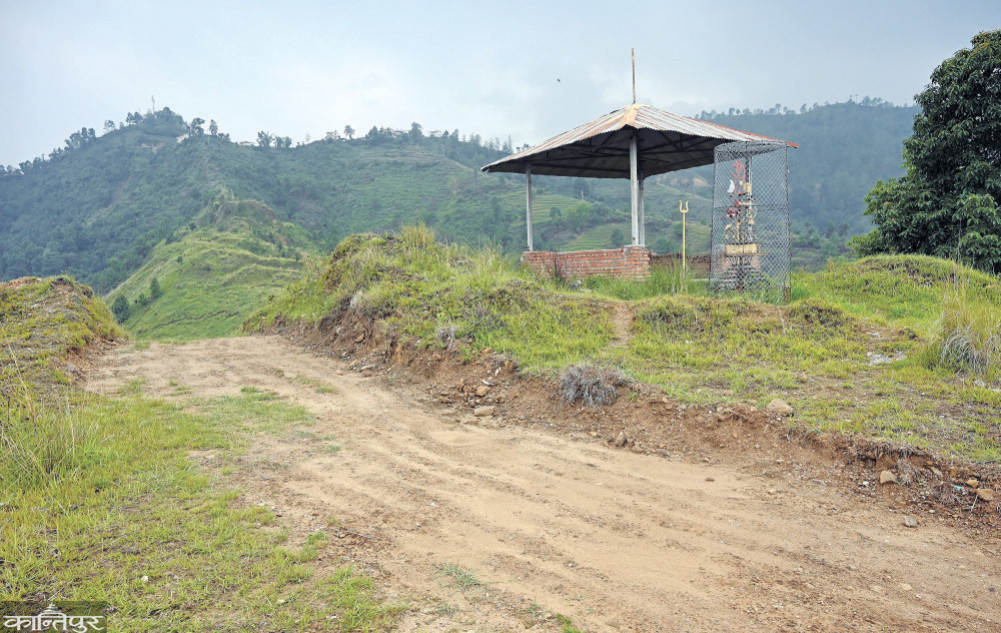
Patanjali Yogpeeth and Ayurveda Company Nepal received permission from the Government of Nepal on 18th January 2066 to buy land exceeding the limit of 815 ropani in Kavre district. He got permission to run an Ayurvedic university, research center, yogashala, Ayurvedic pharmaceutical industry and cow farm and cultivate herbs.
Section 12 of the Land Act, 2021 provides that the land in excess of the limit for carrying out agricultural industry or industrial business can be retained as long as such land is used with the approval of the government. Based on the same legal provisions, he was allowed by the Nepal government to buy 815 ropani land.
Patanjali had previously purchased 593 ropani 5 annas 1 daam 1 paisa land in Nasikasthan (Sanga) and Mahendrajyoti gavis and Chalal Ganeshsthan (currently Banepa municipality) in Kavre district. The company has bought 88 ropani 1 paisa 1 daam in Dhulikhel, Patanjali center is operating only on that land.
The reasons for not being able to purchase more land at that location, and housing companies and other traders obstructing the organization's objectives, have been shown to be the reason why the limited exemption lands purchased by the organization have to be sold, leased, and transferred to purchase land in other locations at the same price and the same ratio. Shaligram Singh, the owner of Patanjali, asked the Minister of Land Reforms in 2066 to allow the sale of land, lease and transfer of land in order to operate according to the original purpose. He applied on February 17.
On the basis of that, 'the land equal to the amount received from the land to be sold shall be used only for the purpose for which it was purchased and subject to the decision of the Bill Committee dated 2066.10.18 to allow Patanjali to sell and lease land in excess of the limit' The decision was taken by the Council of Ministers on 6th Chait, 2066. In the
application, it is not disclosed how much and which land will be sold, speculated and relocated. Even in the decision of the Council of Ministers, it has not been disclosed which land and how much area. The decision of the Council of Ministers to allow the sale of all the 593 ropani land that was purchased was allowed to be sold if permission was sought.
This seems to be proved by the then Chief Secretary Madhav Prasad Ghimire. The purchased land was divided into 593 ropani and almost two-thirds i.e. 352 ropani was sold from Patanjali within two and a half months. But not purchased elsewhere. It seems that the land has been sold for plotting. Section 12 of the Act prohibits the use, exchange or sale of
for purposes other than those for which it has been exempted. But no officials, including the Council of Ministers, looked at the legal restriction. No one can violate the legal restrictions.
However, a decade and a half ago, the Cabinet led by Madhav Kumar Nepal had given permission to sell more land than the limit, based on the request of one owner Shaligram Singh, who wanted to sell land, lease and transfer land. There was no legal system to allow the sale of land in excess of the limit before and it is not there now. In this way, it seems that the Council of Ministers has decided to sell, lease and transfer land beyond the legal provisions.
The Council of Ministers had given permission to sell land, lease and transfer land based on the request of one of Patanjali's directors without taking any details about which land to sell, lease and transfer. After the decision of the Council of Ministers, it was never looked at how much land was sold, leased and transferred.
Patanjali had signed an agreement to sell 400 ropani land to Kastamandap Business Homes. 353 plants have been bought and sold. Although the tax was paid at the rate of 1 lakh rupees on the property, in the mutual document it is written that the sale was made at the rate of 10 lakhs. Revenue has been evaded in business by showing low value.
Keshar Bahadur Baniyan, then Director General of Land Reforms and Management Department, wrote a letter to the Cabinet stating that there was no legal basis for the Cabinet's decision regarding the implementation of the Cabinet's decision to allow the sale of land to Patanjali.
How much amount and how much land is the land equal to the amount received from the land that will be sold? How much is the old land sold for? How to be sure? Also, if it was written in the received letter that the Bill of 18th January 2066 was subject to the decision of the committee, if the decision was known, it would be appropriate to proceed with the work accordingly.
In a letter dated March 17, 2066, Secretary Chhabiraj Pant wrote a letter on March 27, 2066 asking for an explanation to the Director General Baniyan within 24 hours as per the decision of the Council of Ministers, asking why officials like the Director General should not be prosecuted according to the Civil Service Act for refusing to implement the decision of the Council of Ministers.
In addition to the decision to ask for an explanation from Baniyan, the Cabinet also made a decision to direct the department to implement the decision to approve the sale of demarcated land. But even after the second letter, Baniyan sent a reply to the ministry saying that they will not implement the decision against the law. He was removed from the post of director-general after the reply was not satisfactory.
Joint Secretary Jit Bahadur Thapa was made the director general of the department on the choice of the then Chief Secretary Madhav Ghimire and Land Reforms Secretary Pant. On Chait 27, the day after Thapa became the director general, the department wrote to the land office, Kavre, to open the way for the sale of demarcated land to Patanjali.
Coincidentally, three days after the second letter was sent to Patanjali to allow the sale of illegally demarcated land, the cabinet decided to hand over Lalita Niwas in Baluwatar and the government land in question to land mafia.
The decision made by the Council of Ministers on Chait 29, 2066 regarding Lalita Niwas is illegal and the special court has convicted the staff involved in the decision process on February 3, 2080. Coincidentally, Prime Minister Madhav Kumar Nepal chaired the Council of Ministers that decided both of them.
Malpot Kavre also sent a letter to the department on May 17, 2067, saying that it would be difficult to sell restricted land against the terms, contracts and laws related to land. Janardan Guragai, the then chief land officer of Kavre, sent a letter to the department explaining the need to be more clear in the decision, showing that there is no assurance of buying the land equal to the amount received from the limited exemption land and the reason for the amount received from the sale of land is also not certain.
The question he raised has not been answered even for 15 years. Director General Thapa wrote a letter to the Ministry of Land Reforms on June 3 asking for more clarity on the issue of Kavre Malpot. 8 days after that, on June 11, the then secretary Pant gave a specific order through the secretary level decision to pass the documents from the company so that the sale/hypothecation can be done within a period of 5 years.
With the power of India's yoga guru Ramdev Baba, a letter with this practice was sent to the department on the same day. From this decision of Pant, the demarcated land was sold by Patanjali. Even now for 15 years, there has been no speculation. The Ministry of Land Reforms, i.e. the Government of Nepal, has not yet investigated the documents submitted by the company.
In the Patanjali dispute, no law including Section 7 and 12 of the Land Act, 2021 has given the Council of Ministers the right to sell land beyond the limit. No legal body or official, including the Council of Ministers, can make a decision beyond the authority given by law. If a decision is made without basis, that decision becomes against the law.
The Council of Ministers cannot make decisions against the law even in the name of policy decisions. Actions such as immediate rescue and relief in the event of a divine disaster, an epidemic, or an earthquake causing severe damage to people's wealth, for which there is no provision in the law, are included in policy decisions. If Patanjali has bought more land than the limit with the permission of the government, it cannot be decided to go beyond the law and allow the same land to be sold.
This decision of the cabinet is completely against the law. Keshar Bahadur Baniyan, then Director General of Land Reforms Department, transferred an honest officer, accusing him of disobeying the decision of the Council of Ministers for reconsidering the decision.
The Chief Land Officer also raised the issue of speculative entry and stopped the sale, but it was possible to sell the land after the written order of the then Secretary of the Ministry, Chhabiraj Pant, to give documents from the company to allow the speculative lease to be executed within 5 years.
Prime Minister Madhav Kumar Nepal's Council of Ministers did not agree with the wrong decision of the Land Reforms Office in Kathmandu to maintain mohi on government land even in the case of Lalita Niwas. Even in this Patanjali dispute, the same Madhav Kumar, the then Director General of Land Reforms Department, Baniyan informed the government that the decision of the Nepal Cabinet was a wrong decision. But he was punished.
The chief shipping officer of Kavre also approved the decision of the cabinet. The land was sold only after the written order of Chabiraj Pant, secretary of the ministry, to accept the lease within 5 years. This incident showed how honest and loyal the government officials are to the country and the law. But it was seen that the Council of Ministers was going to "pay the penalty" to the honest man.
In the Lalita Niwas case, the Prime Minister was not charged with corruption because he was inclined to take a decision from the Council of Ministers and took the decision out of trust to have the Mohi dispute handled by the Land Revenue Office. In the Patanjali dispute, the decision of the Council of Ministers is not in accordance with the law. An explanation was sought from the Council of Ministers within 24 hours, accusing the Director General of disobeying the decision to be reconsidered.
Director General Baniyan took action against him for notifying him that the decision of the Council of Ministers was against the law, so it cannot be said that the Prime Minister did not know about this decision, and that he bowed to it. Land Reforms Secretary Chhabiraj Pant, Minister Dumbar Shrestha, Prime Minister Madhav Kumar Nepal and the entire Cabinet are guilty of submitting the proposal to get the decision to sell.
It is clear that they misused authority. But there was no inquiry from anywhere, let alone investigation and prosecution. This is a crime of corruption. In some cases, even if there is no direct evidence of bribery, corruption can be confirmed through actions and decisions.
The government has wrongly approved the sale of demarcated land against the law. Patanjali cannot get away with selling because the government has approved it. Since Patanjali did not comply with the condition of letting the company sell the documents so that the lease can be done within 5 years, Patanjali cannot escape.
The Patanjali Yogpeeth Nepal family refuted the allegations by advertising in the newspaper on June 14, saying that after selling the land, they did not buy the land for consideration. Violating the condition of letting the land to be sold with the conditions is the abuse of the demarcated land.
Since Shaligram Singh is the owner of Patanjali who applied for the sale of land and is involved in the sale of land, he should also be brought under investigation. A complaint was filed against him, who is a Hartakarta of Patanjali Nepal.
Rishi Thakur, the proprietor of Lucky Jewelers Naya Sadak, was lodged a complaint in the Improper Transactions (MeterBadge) Investigation Commission for not returning the jewels worth 5 crores as hostages. Later it was finalized with the agreement from District Administration Office Kathmandu.
Swami Ramdev of Patanjali himself did all the distortions. But Patanjali's intention to follow the law was not clear from the fact that he had to fill in the land that was sold. The fact that Swami Ramdev Baba, Acharya Balakrishna and Shaligram Singh, etc., are corrupt among the directors, is open to investigation.
The Accounts Committee of the Parliament has also started an investigation on Patanjali's demarcated land. The Abuse of Authority Investigation Commission is also conducting a detailed investigation. Ramdev In the name of Ramdev Baba, whoever made the decision to allow the sale of restricted land by the Council of Ministers should be brought to the court of law.
– Karki is the former president of the special court.