Is the entire writer-artist being protected only by the establishment and operation of Pragya Pratishthan? Has the state treated everyone equally in a country with so many founders?
We use Google Cloud Translation Services. Google requires we provide the following disclaimer relating to use of this service:
This service may contain translations powered by Google. Google disclaims all warranties related to the translations, expressed or implied, including any warranties of accuracy, reliability, and any implied warranties of merchantability, fitness for a particular purpose, and noninfringement.
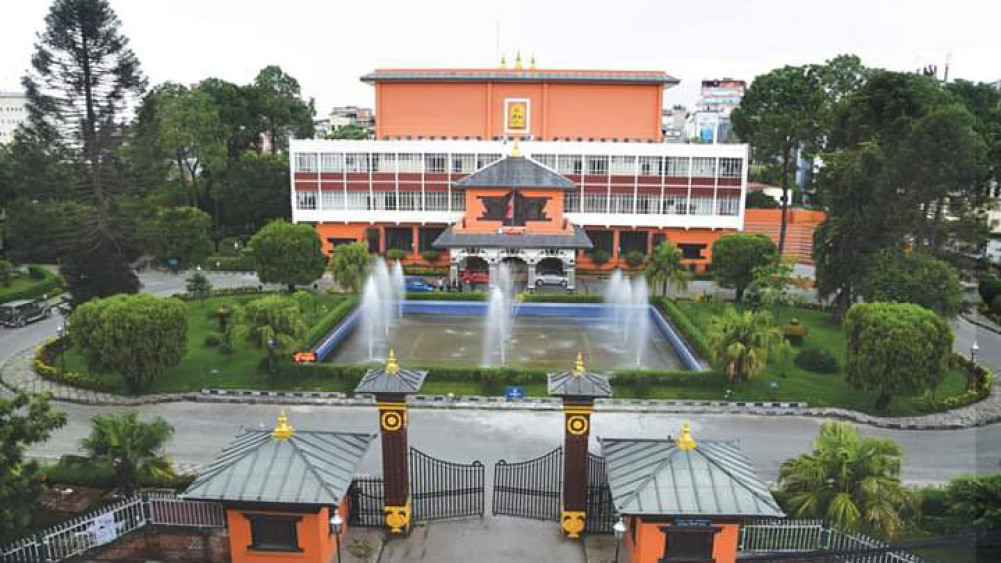
Nepal Pragya Pratishthan is a state body for preservation, development and promotion of language, literature, art, culture, history, philosophy. The state has been investing in it since its inception in 2014. After the change of 2062/63, two other institutes have also come into operation – Nepal Academy of Fine Arts and Nepal Academy of Music and Drama.
Now even the municipalities are establishing their own separate knowledge institutes. The local government Building Pragya Pratishthan by including writers and artists connected to their land, giving space and respect to local language, art, and literature is a beautiful thing in itself.
Is the entire writer-artist being protected only by the establishment and operation of Pragya Pratishthan? What kind of writers-artists have access to Pragya Pratishthan chairs? Where is this investment made by the state through Pragya Pratishthan being spent? In a country with so many writers-artists, has the state treated everyone equally? Have all the writers-artists been able to realize the state/government? Questions like these make you cringe.
Facilitation for those who have access to
Nepal Pragya Pratishtan Act, 2064 section 28 has provisions regarding honorary professorship and lifetime membership of Pragya Pratishtan. Only after the death of a life member, the door will open to become another life member. This in itself is surprising.
The person who has reached the specified criteria should automatically become a lifetime member! That is not happening. The body that determines the basis for granting honorary and life membership is Pragya Parishad, where people appointed by politics and not by the state reach. Even more interesting are the anecdotes of the politics of being in and out of life membership. Subsection (3) of Section 28 of the
Act states that the basis for awarding honorary and lifetime membership shall be as prescribed. Sub-section (4) states that life members may be provided with the prescribed facilities. And most quickly, this has been happening in the name of the facilities that life members are supposed to get.
In rule 26 (1) of Nepal Pragya Pratishthan Regulations, 2067, it is mentioned that the chancellor will get the same salary as the minister of state of the government of Nepal, the vice chancellor will get the same salary as the assistant minister, and the members and secretaries will get the same salary as the chief secretary of the special category. Rule 26 (3) mentions that the members of the Academic Council will receive an allowance equal to two-thirds of the prescribed remuneration.
Rule 28 (3) also provides for Dasain allowance. Section 28 of the Act (4) states that a life member who is receiving any remuneration or benefits from the Government of Nepal shall not receive such benefits. But in rule 26 (3), the academicians are very strict and write that if a life member of the academic institute gets any salaried job in the government of Nepal, he will not get such allowance for the duration of his tenure.
But before this rule comes into effect, if any life member sitting in a government position has received money from both sides, then this rule will not be considered as an obstacle to it. It is said that the age of 65 years should be completed for the life membership criteria.
More than half of those who receive allowances for being life members are retired writers from various agencies of the Nepalese government. It is clear that the Foundation has cheated in the regulations contrary to the spirit of the Act in order to protect the pension benefits of the retired members and also get the allowance received from the Foundation.
is in the deep vein of state politics. When will he wake up from that mood and take the time to overturn the rules and regulations of Pragya Pratishthan? The parliamentarians who are in the form of a legislature have not overturned this law yet or not? How much is the departmental ministry informed about? Chapter 10 of the
regulation has provisions related to financial aid, treatment fund and other support. In rule 35 (2) the financial assistance amount is Rs. 1000 if the secretary, Rs. 2000 by the Vice-Chancellor and Rs. If it is up to 5000, it is mentioned that the chancellor himself can provide a look.
Similarly, under the National Talent Treatment Fund, a maximum of Rs. Financial assistance up to 50,000 will be given to the writer. Authors are the ones who have access to this facility. On behalf of the state and institutions in the treatment fund, Rs. 15 million has been collected. Funds have not been added to the said fund for years.
path to improvement
When the process of opening Pragya Pratishthan has already started even in the municipalities, there is a possibility that their legal provisions may have been imported from Nepal Pragya Pratishthan. It is not an exaggeration to say that there will be a writer-artist who is steeped in local politics. In such a situation, except for a handful of writers-artists who are able to survive on the strength of their creations, the state-protected establishment will always be a fruit of the sky.
can be classified and updated (paid renewal if possible) without bias in relation to knowledge institutes from the center to the municipality. It is advisable to convert the National Talent Treatment Fund into a Sarashta Welfare Fund.
It would be reasonable to stop the allowance being given to life members and deposit the entire amount into the welfare fund every year. The type of assistance to be provided to the creator and the maximum limit of the amount may be fixed. If the author is provided with a certain amount of health insurance, coordinated with government and private hospitals and arranges treatment at concessional rates, and other institutions and municipalities also follow these provisions, the justification of the institution can be confirmed.
Thousands of writers-artists are contributing to enrich the language, art, literature and culture of the country. But a few people reaching the leadership of such institutions and 20 people regularly enjoying the facilities (double) is an insult to other founders.
It is the biggest irony that the writer-artist who is sick, poor, sad and disadvantaged is deprived of even the minimum basic needs. In this way, the unequal treatment of writers-artists should be stopped. The state needs to take immediate steps to provide facilities and services to everyone equally.