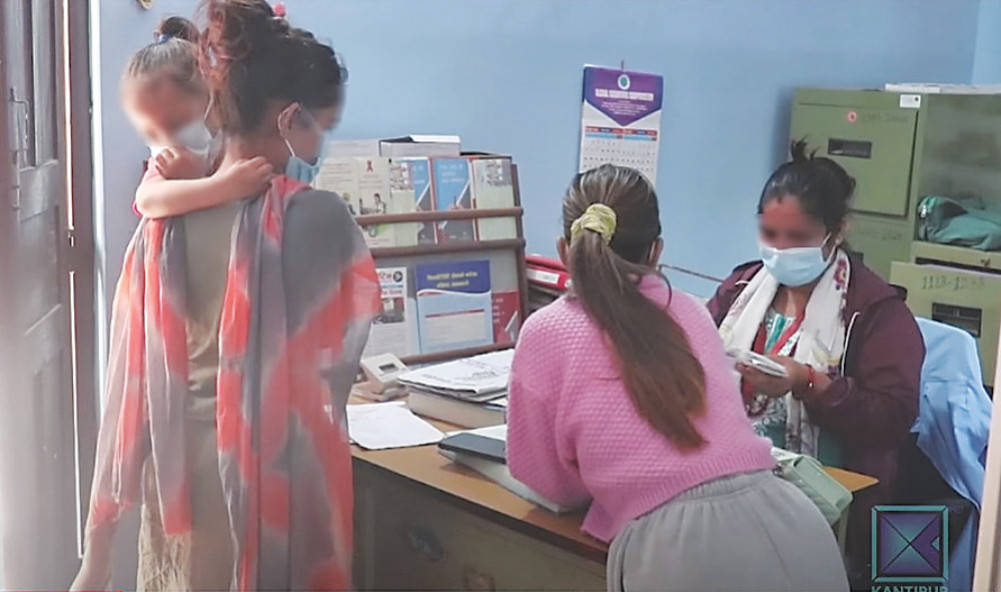
The main responsibility of all three levels of government is to manage the security of citizens' livelihood and health care. Due to difficult geography, remote hilly districts, adverse weather etc., ART centers have not been made accessible to the target group.
We use Google Cloud Translation Services. Google requires we provide the following disclaimer relating to use of this service:
This service may contain translations powered by Google. Google disclaims all warranties related to the translations, expressed or implied, including any warranties of accuracy, reliability, and any implied warranties of merchantability, fitness for a particular purpose, and noninfringement.
The HIV epidemic started in 1980 in the world and was first accepted as a health problem in America. Studies have shown that simian immunodeficiency virus (SIV) was transmitted from infected chimpanzees to humans around 1920. Because SIV is transmitted to humans, it is called HIV.
HIV first appeared in Nepal in 1988. According to the National HIV Project, the National AIDS and Sexually Transmitted Diseases Control Center 2020 has reached 30,300 people infected with HIV by the year 2020.
The number of infected women is more than men. To ensure that no one is left behind, the Sustainable Development Goals aim to eliminate this epidemic from the world by 2030. World AIDS Day is celebrated every December 1.
There are seven types of people infected with HIV – injecting drug users, men who have sex with men, transgender people, male sex workers, female sex workers, male migrant workers and their families. The joint efforts of the government, international bodies, HIV infected people and various non-governmental organizations, especially in Karnali and the Far West, have been successful in preventing and treating the infection.
There is also a positive effect of health insurance for the infected and their families. HIV treatment and counseling services are available from 84 state-run ART centers.
UN AIDS data shows that by 2021, 72 percent of infected people are taking treatment services. Of these, 94 percent are children, 73 percent are women and 39 percent are men. Studies show that 28 percent of infected people are still out of treatment.
Infected people's ignorance of their rights and reluctance to speak up are the main obstacles to solving the problem. In the 15th plan, the number of newly infected persons with HIV has been targeted to be reduced to 17 per lakh by 2080/81, while the number was to be reduced to 30 in the base year 2075/076. The death rate due to AIDS has decreased by 65 percent from 1500 in 2010 to 510 in 2021.
Due to illiteracy, lack of public awareness, difficult geography, climate change and environmental impact, the lives of infected people have become difficult due to the lack of easy availability of food, daily consumables and services. Due to the challenge of access to health services, rural and remote citizens are also vulnerable to HIV infection.
Women, Dalits, people with disabilities, marginalized and minority communities in extreme poverty who have not yet been integrated into the mainstream of the state are at greater risk. In this case, it has been seen from the study that the infected people, especially those of Tarai origin and Muslim community, keep their identity secret. The root cause of that is to study and analyze if there is an HIV infection, there is no alternative to open the identity and intend to take treatment services.
Children in schools, pregnant women, pregnant women and newborns in hospitals, infected people in village communities and workplaces are facing different types of discrimination. The direct effect of which seems to be on children's development and socialization, education, livelihood of the infected, family formation and marriage, income generation, occupation and business operation and employment.
On the one hand, the challenge of stigmatization and discrimination has to be faced when revealing the identity of having an infection, and on the other hand, there is a situation where access to health care is not possible due to the non-disclosure of the identity. Because of this, HIV infected people are in double whammy.
Even if the job is found, as soon as the identity of the infection is revealed, there are many cases of being fired from the job under various pretexts. The infected people complain that they are suffering because they do not have the courage and status to settle a case against this and the judicial body does not want to be sensitive to the plight of the poor.
Hesitating to test whether or not HIV is infected, not being able to openly tell about the situation even if infected, even those who have revealed their identity are forced to struggle day and night to survive. Even now, there has not been much change in the stigmatizing social attitude towards the infected. The infected have to face various types of abuse, social exclusion, stigma and discrimination during their lifetime. which puts their human rights at risk.
It is the main responsibility of all three levels of government to manage the security of citizens' livelihoods and health care. Due to difficult geography, remote hilly districts, adverse weather etc., ART centers have not been made accessible to the target group. Suffering from social stigma and discrimination, this community has to struggle with hunger along with disease due to lack of easy access to employment.
The infected people are worried that the medicines that are said to be available free of charge are only available when the date is about to pass. If the identity of the infected can be revealed, it is important to take precautions to avoid cross-contamination. In order to end the discrimination and insulting behavior towards them, there is a need to improve the law as well.