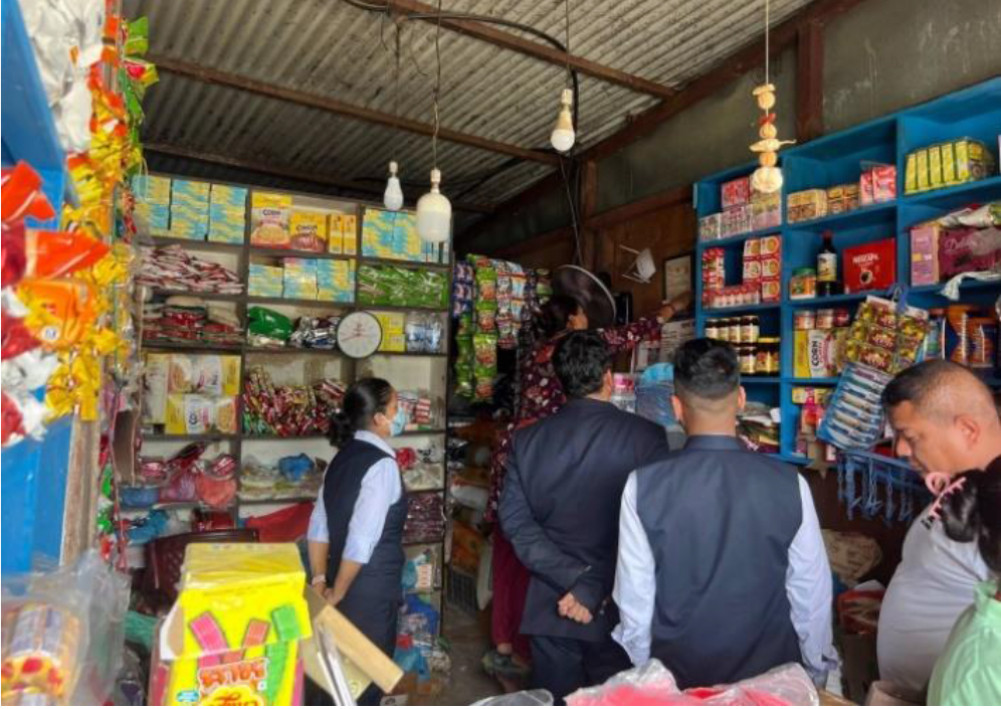
Serious negligence and violations of food hygiene standards have been found in most industries and businesses.
We use Google Cloud Translation Services. Google requires we provide the following disclaimer relating to use of this service:
This service may contain translations powered by Google. Google disclaims all warranties related to the translations, expressed or implied, including any warranties of accuracy, reliability, and any implied warranties of merchantability, fitness for a particular purpose, and noninfringement.
The Department of Food Technology and Quality Control has monitored 47 food industries and businesses across the country in the month of Ashad. During the monitoring, serious negligence and non-compliance with food hygiene standards were found in most of the industries and businesses.
According to the department's spokesperson Dr. Balkumari Sharma, during the monitoring, most of the food industries and businesses did not follow even the basic standards of food hygiene. She said that the cleanliness of the kitchens of most restaurants, canteens and snack houses is very poor.
According to Sharma, who is also a senior food research officer, the floors, walls, ceilings and cooking utensils were dirty and untidy in most places. She said, 'In some places, open dustbins without lids were found in the kitchen, which poses a risk of harmful microorganisms (such as bacteria, viruses), chemicals or allergens easily transferring from one object, person or surface to another. Another problem has been seen in storage.'
She said that cooked and uncooked food was not stored separately, was kept open and the use of refrigerators was found to be unorganized . In most places, food was not stored at the proper temperature and was stored without labeling details . This leads to deterioration in the quality of food and the risk of bacterial infection .
Many problems in the quality of cooking oil
The department has said that there are many problems in the quality of oil . The TPM measurement of the oil used for frying in most restaurants and snack houses has been found to be more than the prescribed limit . The department's food research officer said that the TPM value found when measuring TPM deteriorates the quality of the oil and is harmful to health .
TPM value is an important indicator of the quality and hygiene of oil . Oil with high TPM and low value is harmful to health . During the monitoring, many illegal food colors and expired items were also found, and some restaurants and canteens were found to be using synthetic food colors in an unorganized manner. In addition, it was found that expired food items (chow mein, cheese, spices, etc.) were being stored and used. The department has also reported that there are problems with water quality and jars. The sanitation conditions in water industries are also poor, and the use of crushed and old jars, the unorganized condition of the processing room, and the plant is leaking. Some industries have even been found to be sending water to the market without disclosing the product and label details. Adora Holding fined 250,000, and Amulya Drinking Water Services sealed. The department has taken action and directed the industries and businesses that were found to be in violation during the monitoring. Adora Holding of Lalitpur has been fined Rs 250,000 under the Consumer Protection Act 2075 BS for using expired and unlabeled food items. Lalitpur's Amulya Drinking Water Services has been sealed until the industry's situation improves. In addition, food samples have been collected from many industries and businesses and sent for laboratory testing. 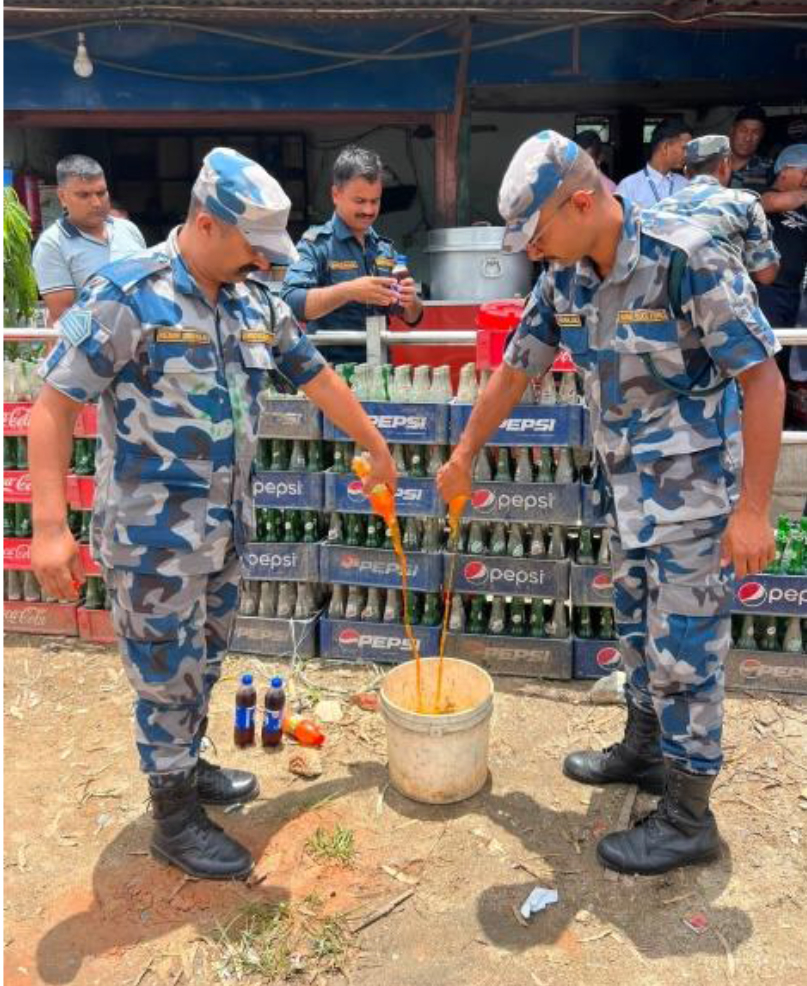
The department has stated that instructions have been given to most industries and businesses to regularly clean, make effective pest control arrangements, use modern dustbins, store cooked food at appropriate temperatures, and use only fully labeled food items. Oil with high TPM measurements, expired food items, and food items containing artificial food colors have been destroyed. The department has called the violation of food hygiene standards seen in the Ashar monitoring a serious challenge.
'It is difficult for the department to solve this problem with its own efforts.' Food hygiene is a long chain from 'Aali to Thali' and 'Goth to Lip',' Senior Food Research Officer Dr. Sharma told Kantipur, 'Therefore, all stakeholders involved in this chain need to understand their responsibilities.' According to her, the recently issued 'Food Hygiene and Quality Act 2081' has also clearly defined the responsibilities of all service providers such as producers, processors, transporters, collectors and hotels and restaurants.
Considering the situation where entrepreneurs and businessmen are not up to date with the laws, rules and standards, the department has been conducting awareness and orientation programs 3-4 times a year through 8 offices and 22 division offices in different districts. In particular, the 'Clean Water Production Guidelines 2075' and the 'Good Manufacturing Practice Guidelines' for milk and milk products have been issued. Despite this, she said that violations of standards show the weakness and lack of ethics of service providers and entrepreneurs.
Food industries and businesses monitored by the department