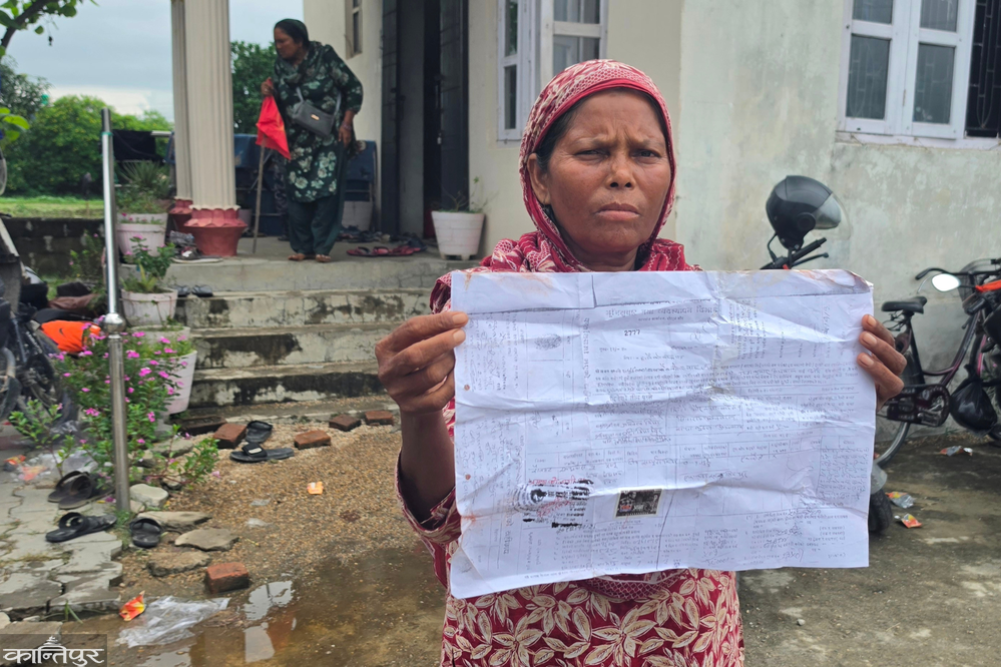
The centers of unfair transactions are Madhesh Province and West Nawalparasi. The highest number of applications was received in Bara district with 3,322 applications.
We use Google Cloud Translation Services. Google requires we provide the following disclaimer relating to use of this service:
This service may contain translations powered by Google. Google disclaims all warranties related to the translations, expressed or implied, including any warranties of accuracy, reliability, and any implied warranties of merchantability, fitness for a particular purpose, and noninfringement.
In the rural settlements of Madhesh, the moneylenders have become a modern weapon to oppress them - unfair transactions, i.e. 'meter interest'. This distortion of extorting money from a few rupees to millions of rupees has been making many working class, Dalit and marginalized families of Madhesh Province slaves to debt for generations. Even though the government has amended the law and declared it a 'crime', its web has not yet been broken at the ground level.
A commission was formed under the coordination of Gauri Bahadur Karki under the leadership of the then Deputy Prime Minister and Home Minister Narayan Kaji Shrestha to provide justice to the victims of meter interest. The commission started collecting applications from the victims from 2080 Baisakh 17 to Jestha 14.
Shivshankar Mahato of Brindavan Municipality-6 accused the district administration and police of colluding with the moneylenders even though the formation of the commission gave hope to the victims of meter interest, but instead, the district administration and police have joined hands with the moneylenders. "An organized business of not returning the interest even after repaying the loan and on the contrary, filing cases in court based on the same interest and imposing arrears has been going on in Madhesh for years," he said. "Instead of implementing the report of the commission formed to provide justice against the moneylenders who imposed arrears on many, the then government did not show interest."
The commission has stated that 24,000 applications have been registered in all 77 district administration offices through free forms and Google Forms. The commission's report mentions that more than 20,245 applications have been received from eight districts of Madhesh and West Nawalparasi alone. According to the report, the center of unfair transactions is Madhesh Province and West Nawalparasi. The highest number of applications has been received in Bara district with 3,322 applications.
Meter-interest lenders are skilled in making legally strong documents (Tamsuk or checks). When the debtor fails to pay or refuses to pay additional interest, the creditors take the same forged or exaggerated Tamsuk and file a transaction case in court. In the one and a half months from Jestha 17, 2080 to mid-Asard, about 2,000 applications were settled through conciliation. Moneylenders across the country had claimed that Rs 1.71 billion 28 million 82 thousand 796 in principal and interest should be recovered. According to the debtors, a Tamsuk of Rs 898 million was made more than the actual transaction. The commission's report states that the case was settled after both parties agreed to a settlement of Rs 567 million 447 thousand 470. After discussion and agreement, the creditors had left Rs 1.14 billion 54 million more than their claim.
'We had submitted the report on time.' The then Home Minister Shrestha said that he should recommend that a case be filed against those complained about in the report,' the then Chairman Gauri Bahadur Karki said, 'We said that it is not possible to file a case in the commission's report. After that, no interest was shown in implementing such reports, saying that there was no work, and it just stopped.' According to
Karki, the commission had suggested that the police investigate the evidence based on the victims' applications and file a case through a government lawyer. According to him, 41 bighas, 8 katthas, 11 dhurs of land have been returned to the victims' debtors from moneylenders in various districts. Sarlahi had settled 398 out of 2,100 applications and Bara had settled 353 applications through amicable settlement. It was recommended that the then Chief District Officer of Sarlahi Indradev Yadav and the then SP (currently SSP) of Bara Homendra Bogati be awarded for their excellent work. Leaders participating in the meter badge foot march have demanded that the Karki Commission's report be made public.
How do victims get caught?
In legal and practical terms, unfair transactions (meter interest) refer to illegal financial transactions carried out with the intention of charging interest in excess of the limit prescribed by the prevailing law (more than 10 percent). According to advocate Bipin Gautam, moneylenders take advantage of the debtor's compulsion and create various schemes, which are clearly defined as an offense under the Criminal Code (Second Amendment) Act, 2080.
‘Tamasuks have been increased by taking advantage of the borrower’s problems, and the amount of the loan has been doubled, tripled or even more,’ he said. ‘Every year or few months, the old interest is added to the principal and a new one is made, and the interest is merged with the principal, which is why borrowers are homeless today.’
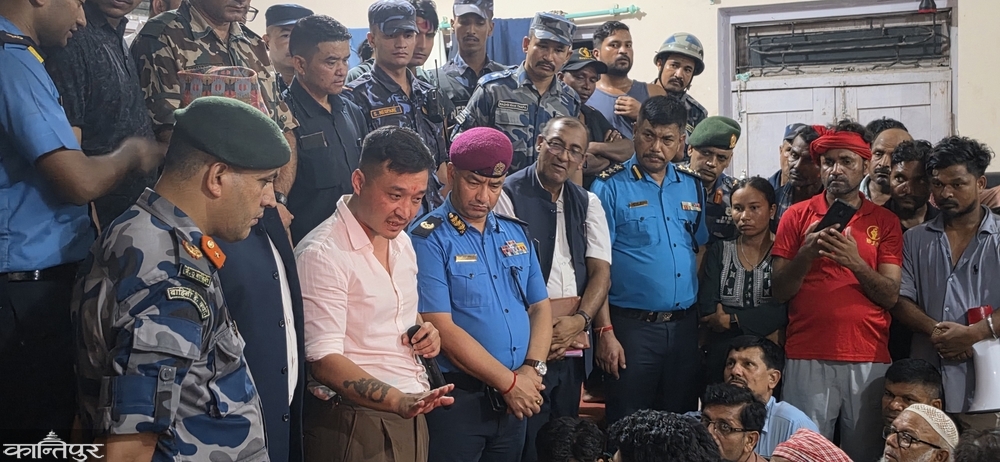 The District Administration Office Gaur has reported that there have been many complaints of borrowers’ property or land being registered in their own or relative’s name at the Land Revenue Office as collateral for the loan and not being returned later. Victims say that in the name of security, they get the borrower to sign a blank check from the bank and later threaten to file a case of ‘check bounce’ by filling in any amount they want.
The network of meter interest is very deep in all eight districts of Madhesh Province. Due to lack of education and awareness, they are trapped when the moneylender asks them to get their fingerprints done. Small farmers who do not have access to government banks and do not have land as collateral to procure fertilizer, seeds or irrigation for farming depend on local moneylenders. To get 100,000 to 200,000 rupees to pay to a manpower company to go to Malaysia or the Gulf countries, young people reach the door of meter-interest and lose a large part of their earnings in interest.
‘I paid 8 lakhs, I did not get the land’
Pula Khatun, a 62-year-old meter-interest victim from Rautahat, said that the moneylender did not return the land even after her son paid 8 lakh rupees earned by living abroad. She joined the foot march for justice after Umesh Agrawal of Gaur-1 did not return the 1 kaththa 3.5 dhur land in Khatun’s name.
Agarwal's relative Bamil Agarwal claims that Pula Khatun herself transferred the land. 'She herself took additional money to transfer the land,' he said. 'Now, someone else has come and tried to defame her by raising it.' He said that he did not complain about giving Khatun a loan, but rather Khatun filed a case against Umesh.' He said that they are ready to return the land if Pula gives the loan and the additional money for the land.
People who need cash urgently for medical expenses in the event of a serious illness in the family, to collect tilak (dowry) for their daughter's wedding, or for Kajkiriya easily fall into this trap. When a loan of 1 lakh rupees is taken from a moneylender, the moneylender makes a Kapali Tamsuk of 3/4 lakhs, saying that the risk is high. In some cases, even after paying the principal and interest, victims complain that the old tamsuk has been torn or lost and they file a case in court again.
‘If they file a petition for justice with the district administration, they immediately bring an injunction from the court and disrupt the process,’ said Laxmi Ghimire, an activist of the meter interest victim’s foot march. ‘The court has also made many victims.’
In rural areas of Madhesh, moneylenders get the land, which is the only support of the borrower, to be transferred in their own name for the loan. There is a verbal agreement to return the land after paying the loan, but when the borrower leaves with the money, the moneylender refuses to return the land, saying that the value of the land has increased or that it is demanding additional interest. In some cases, the moneylender has already sold the land to a third party.
Victims say that moneylenders and their associates go to the victim’s house and abuse and humiliate them, mistreat women, and threaten to defame them in society. A case has also been filed against Shyam Kumari Thakur, 32, of Mangalpur, Dhanushadham-2, on the charge that Mahajan himself killed her husband Bhojendra Thakur for not paying the loan. Shyam Kumari has left her home after the incident, unable to bear the fear, anxiety and mental stress.
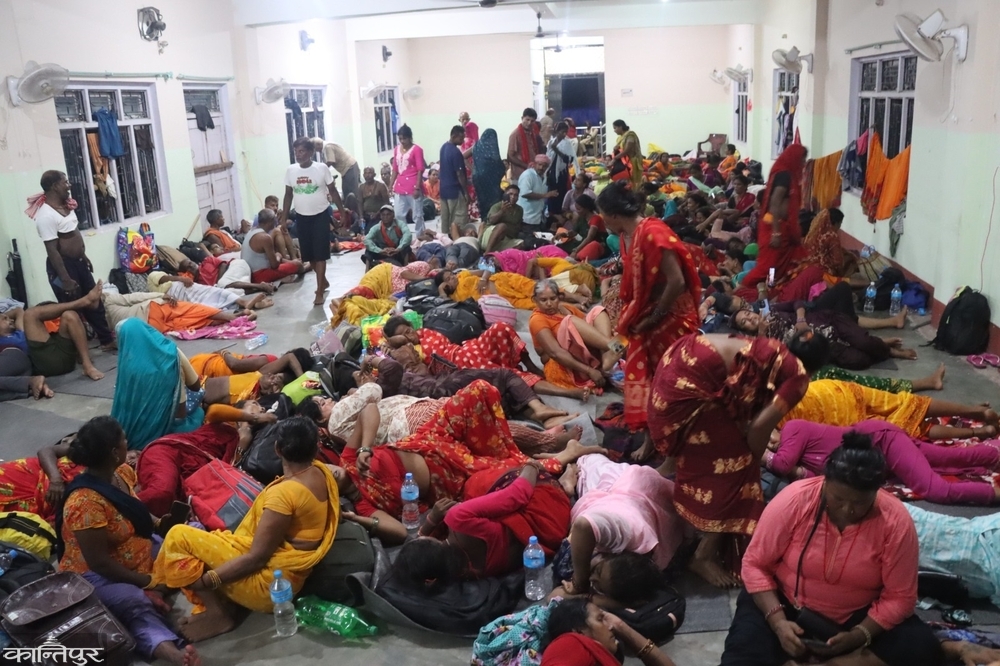 The cycle of court and administration
According to Chief District Officer Dinesh Sagar Bhusal, 20 to 25 complaints are still received every month. 'As soon as we receive a complaint, we discuss it and try to reach an agreement,' he said, 'but before we can call for discussion, they go to court and bring a restraining order and stop our process.'
The district administration has not been able to discuss more than 4,000 petitions in Gaur. There are complaints that the victims have not received justice after the meter-billing company filed a case in court against those petitions. Even though the administration tries to negotiate under pressure, when the verdict is in favor of the meter-badges who go to court with strong documents, the victims cannot pay the amount, because the tamasuk is made three to four times the actual debt.
Meter-badges are skilled in making legally strong documents (tamasuk or checks). When the debtor fails to pay or refuses to pay additional interest, the creditor files a transaction case in court with the same fake or exaggerated tamasuk. Due to ignorance of the law, ordinary marginalized citizens are unable to understand the court's deadline and their houses are auctioned off with a unilateral decision.
Even though the law is made, implementation is weak
After the previous movement of the victims and all-round pressure, the government amended the law to make unfair transactions (meter-badges) a crime. A commission of inquiry on meter-badges was formed and the work of receiving complaints in district administration offices began. But while the government's efforts appear effective on the surface, the victims allege that their implementation on the ground is equally weak.
Many complaints are still pending in the district administration offices. The protesters had complained to the then Home Minister Ramesh Lekhak that the political reach, economic influence, and administrative 'setting' of the moneylenders created a situation where the victims had to accept the moneylenders' conditions in the name of reconciliation. In some cases, the victims are still being legally imprisoned or losing their property due to cases that the moneylenders have already registered in the court.