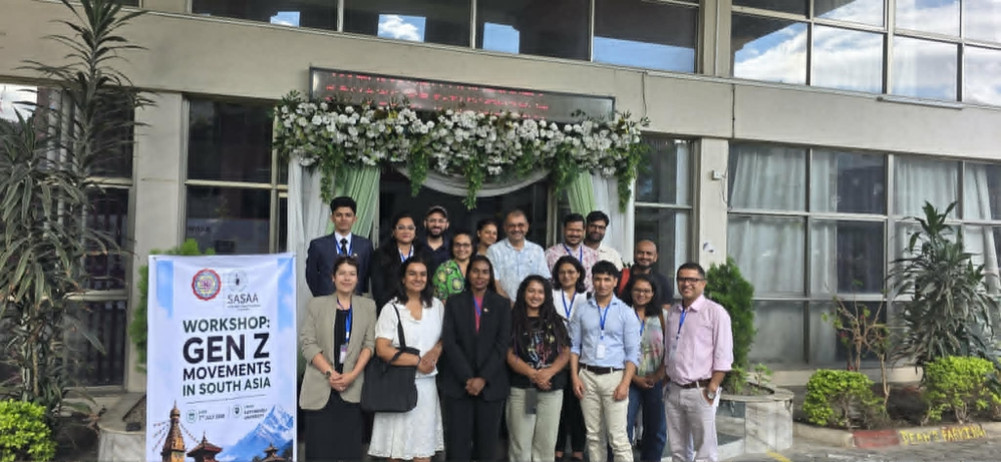
Researchers from Nepal, Sri Lanka, and Bangladesh presented various papers at the workshop organized by the South Asian Studies Association of Australia and Kathmandu University.
We use Google Cloud Translation Services. Google requires we provide the following disclaimer relating to use of this service:
This service may contain translations powered by Google. Google disclaims all warranties related to the translations, expressed or implied, including any warranties of accuracy, reliability, and any implied warranties of merchantability, fitness for a particular purpose, and noninfringement.
An international workshop has been organized in Kathmandu to discuss the causes, trends and subsequent developments of the Gen-G movements in South Asia in recent years. At the workshop held in Kathmandu on Monday, jointly organized by the South Asian Studies Association of Australia and Kathmandu University, researchers from Nepal, Sri Lanka and Bangladesh presented papers. Sri Lankan researcher Lugardini Yogaraja presented a paper on how the Gen-G uprising in Sri Lanka took place, what groups of people participated in it, and what happened after the uprising. Researcher Indra Adhikari presented a paper on the role of the government in the Gen-G movement in Nepal. Keshav Giri, a lecturer at the University of St. Andrews in Scotland, presented a paper on a comparative study of the background to the Gen-G uprisings in South Asia and other neighboring countries in the past few years and how they were carried out. Kathmandu University Professor CP Aryal and Ikantipur.com Editor and Researcher Janakraj Sapkota presented a working paper based on the findings of the background study of the key figures involved in the Gen-G movement on whether the Gen-G uprising in Nepal was a sudden event or a continuous result of the existing disorder and discrimination in society.
Uddhav Pyakurel, Dean of the School of Arts, Kathmandu University, presented a working paper on the Gen-G movement in Nepal, social movements and the commentary on 'international role'. Dhaka University Associate Professor Mostafa Shafi presented a research paper on the role of the elite in the uprising that overthrew the government in Bangladesh. Researchers Nutan Sharma and Suprabha Thapa attempted to look at the Gen-G movement in Nepal from a gender perspective in their working paper. Bangladeshi researcher Anyanya Sharma Proma presented a research paper on last year's uprising in Bangladesh from a gender perspective.
Political scientist Lokraj Baral gave a keynote speech at the workshop. He asked about the background of Nepal's Gen-G uprising and where the achievements from it will go.
According to the organizers, the workshop was organized with the aim of sharing regional experiences on the nature of youth-led movements in South Asia in recent years, their impact on democracy and governance.