The relatively early publication of SEE and Grade 12 results, the progress of the curriculum review process, and the initiation of some policy reforms are seen as achievements of the Minister of Education.
We use Google Cloud Translation Services. Google requires we provide the following disclaimer relating to use of this service:
This service may contain translations powered by Google. Google disclaims all warranties related to the translations, expressed or implied, including any warranties of accuracy, reliability, and any implied warranties of merchantability, fitness for a particular purpose, and noninfringement.
Education Minister Sasmit Pokharel has shown some initial signs of improvement in the first 100 days of the government. This time has become a test of his efficiency. The relatively early publication of SEE and Class 12 results, the progress of the curriculum review process, and the initiation of some policy reforms are seen as some achievements. However, stakeholders complain that the expected pace has not been achieved in the laws related to school and higher education, teacher management, university reform, federal coordination, and the long-term structural agenda in the overall educational system.
Some decisions and statements of Minister Pokharel, who is also the government spokesperson, have been controversial. Questions have been raised about his efficiency. The ministry has been criticized for focusing more on popular decisions to give immediate political messages than on the main agenda of education reform. Leadership capacity, decision-making process, and approach to education reform are being analyzed more as a test than achievements.
Stakeholders have suggested that in the coming days, instead of popular announcements, they should focus on the core issues of effective implementation, transparent decision-making, and long-term reform. It would be premature to say whether his tenure was a failure or a success right now, but his inclination is to focus on quick results rather than deep structural reforms.
Educationists say that decisions should be made in a sensitive area like education based on direction rather than speed. The very first decision of 31-year-old Pokharel, who was appointed as a minister on 13 Chaitra, was dragged into controversy. Stakeholders have criticized him for making one immature and hasty decision after another. In a short time, stakeholders have started expressing their dissatisfaction. During this period, students took to the streets and even demanded his resignation. Some promising programs in the budget, positive plans and systemic reforms, early publication of results, and the announcement of establishing schools for children with autism in every province are considered achievements of his three-month tenure.
Stakeholders have complained that the long-term structural agenda of the school and higher education laws, teacher management, university reform, federal coordination and the entire educational system has not gained the expected momentum. He has started efforts to reform the academic calendar and curriculum. Supporters of Minister Pokharel have been praising his decision to abolish party student organizations and dismiss university and educational body officials. But the public has taken these issues as 'decisions made in a bid to be popular'. This has generally led to instability in the educational administration.
The opposition, student organizations and elected officials of the independent student union have also been opposing these decisions of the government. The issue of implementation of the government's decision is pending in the Supreme Court. His secretariat has stated that work on bringing foreign-affiliated colleges under the legal ambit, regulating educational consultants and amending the education regulations has progressed.
Deputy Secretary of the Secretariat Diwakar Bhujel says that many of the tasks set out in the government's governance reforms have been successful. He said that some good tasks are in the process of being finalized. He says that the early publication of SEE and Class 12 results has made it easier for millions of students. He said that it will also bring improvements in the annual calendar of the university.
‘The calendar proposed by the University Grants Commission is sent to the university. Now admissions, exams and results will come on time. We have also asked the university results to be made within two months,’ he said. He claimed that significant work has been done in the Ministry of Education in the first 100 days of the government and that great success will be achieved when the work still in process is completed. His secretariat has stated that the school to higher education bill has been moved forward, the work of reviewing the curriculum is underway, and the process of appointing vice-chancellors through open competition has been moved forward. An expert committee has been formed under the chairmanship of Professor Balchandra Luitel to review the curriculum of grades 1-12. The government has announced that students up to grade 5 will not be given exams and only internal evaluation will be conducted.
Educationist Tika Bhattarai says that the Education Minister has become controversial by interfering in trivial matters that should not be given priority. He comments that Pokharel should work hard to create an image of an expert politician who has serious interest, concern and knowledge in education rather than covering up the mistakes made during this period. Ministry officials also describe him as an education minister who does not discuss, listen to advice and suggestions. ‘Earlier, there was consultation before a decision was made, now, the decision is made according to the instructions that come first,’ said an official. ‘The education minister seems clear in his intentions, he also shows the will to do something good, but so far, it seems that he has not been able to work properly.’ Educationist Bhattarai is skeptical that even if the education sector officials appointed by the old party are dismissed, he will again be appointed by someone close to the National Independent Party. ‘The government relieved the posts as per the promise of the Rashtriya Swayamsevak Sangh (RSS) to free education from party politics,’ he said. ‘It is beginning to be seen that things like giving priority to RSS supporters in future appointments will be limited to replacing the slaves of the old party rather than party neutrality.’ Educationists had been suggesting that the system of the Prime Minister as Chancellor and the Education Minister as Pro-Chancellor should be removed from the university and freed it from party politics. The government has instead removed the appointed officials and made the Prime Minister powerful with additional powers as Chancellor. 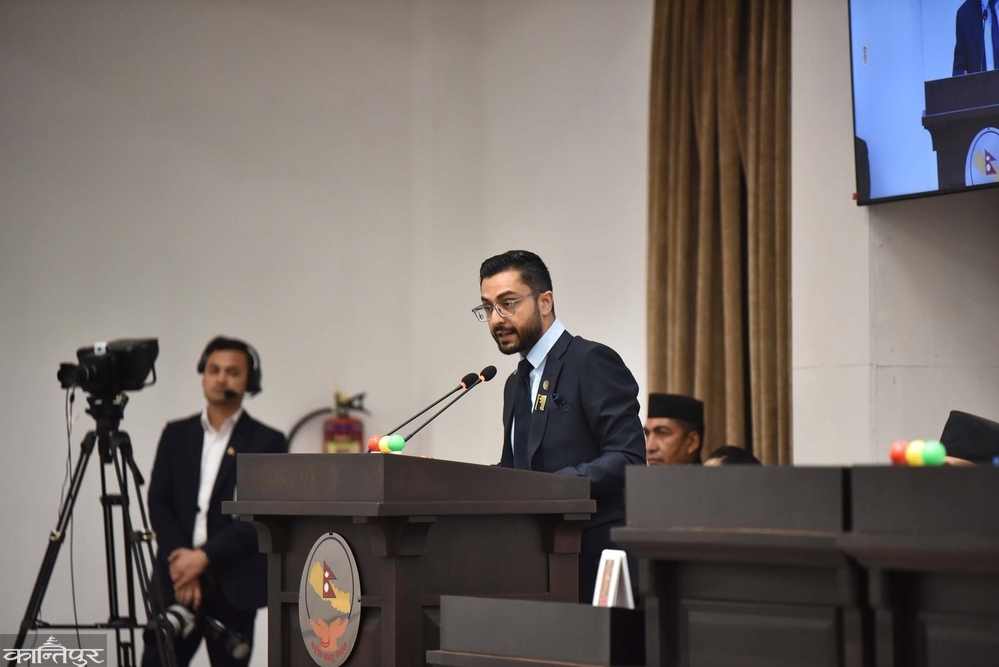
Although the vice-chancellors of most universities and officials of autonomous educational bodies were relieved of their posts on 29 Baisakh, new appointments have not been made for one and a half months. The lack of office bearers has affected the services of educational bodies. Officials, examination controllers, senior professors, and employees who were illegally relieved of their posts have been given the responsibility of public educational bodies. ‘The vice-chancellor who was relieved of his post at Purvanchal University has been appointed. The Controller of Examinations at Kathmandu University has been made the Vice-Chancellor. Senior professors at Sanskrit and Agriculture and Forestry Universities have been given the responsibility of Vice-Chancellor,' said a Deputy Secretary at the Ministry of Education, 'According to the law, no one other than the Dean can be given the responsibility of Acting Vice-Chancellor.' The University Act provides that only the Dean can be given the responsibility of Acting Vice-Chancellor.
The government has not yet been able to appoint the chairman of the National Examination Board, which was vacant since last Mangsir. The Secretariat of the Education Minister has stated that the appointment of Vice-Chancellors in some universities has reached the final stage and the process of appointment to all vacant positions has been initiated.
During this period, Education Minister Pokharel repeatedly increased distrust and conflict rather than taking the local government, which has the sole authority over secondary education, into confidence and working in coordination and cooperation. The Ministry of Education interfered in the jurisdiction of local governments in matters such as the operation of the academic session, student admission, scholarships, fee determination, regulation, and two public holidays a week, including Sundays.
Educationist Bhattarai points out that the decision of the Minister of Education reflects the limitations of Kathmandu and tends to forget schools in remote areas. Although Sunday holidays are appropriate for Kathmandu and other urban areas, they have been criticized for being inappropriate in remote areas where rainy and winter holidays are needed more. Local levels have been expressing dissatisfaction, saying that the decision to have two days off was made hastily and without considering the issue of school opening days and curriculum adjustment. Some local levels have even decided to operate schools on Sundays. The Federation of Rural Municipalities and the Municipality Association protested the government's decision to postpone the academic session starting from the first week of Baisakh by two weeks. Admissions and teaching began even before that. 'Giving orders without coordinating with municipalities has caused unnecessary conflict,' said Bhattarai.
The Education Minister announced that action will be taken against schools that charge high fees. However, he could not resolve the more than 5,000 complaints filed there by setting up a help desk. As pressure from private schools increased, he sent the complaints to the local level, saying that they were a matter for the local level to look into. Parents complain that there is no coordination and facilitation. Educationist Bhattarai says that some positive plans, systemic reforms and optimistic policies for ecosystem development have been put forward through the budget. He suggests that attention should be paid to their implementation.
There are mixed reactions to the 3 percent tax that is said to be imposed on private schools through the budget. The government has been criticized for saying that the program will further increase inequality in education and increase parents' educational expenses. Overall, the Education Minister has not been able to fulfill the expectations as he has been involved in petty cases for 3 months, educationist Bhattarai said. 'There is ample room to question the efficiency of the Education Minister.' He said that if this question is raised even from within his party, it can further increase uncertainty,' he said. He said that the Education Minister has not been able to take forward efforts on effective and far-reaching works such as schools with teacher management, higher education education bill, etc.
Rather than changing the old act of 2028, the Ministry of Education is busy making the tenth amendment to the Education Regulations 2059. Work is underway to seek consent from the Ministries of Finance and Law to amend the regulations. The Secretariat of the Education Minister has stated that work has also been progressing to bind colleges affiliated to foreign universities, which have been operating without a law since 2059, through regulations.
While addressing a public hearing in his own constituency Kathmandu-5, Pokharel had said that he was going to regulate them through regulations as he had received many complaints about foreign colleges. Till now, colleges were run through guidelines. However, educationists are of the opinion that foreign colleges should be included in the Higher Education Act and that colleges should be run through the University Grants Commission, not the ministry. According to the ministry, work is also being done to bring educational consultancy within the legal framework.
Gen-G activist Monica Niraula comments that although Education Minister Pokharel has initiated some notable work, his overall working style is not satisfactory. ‘Whether his ability is weak or his intention is like that, the web is slowly unraveling.’ He seems immature as the government spokesperson and Education Minister. He even seemed to have to cover up and lie to protect the government.’
She said that the Education Minister has not been able to ensure the education of children displaced from squatter settlements. ‘Many children displaced from squatter settlements have not been able to enroll. The Education Minister does not seem to have taken serious interest and steps. The future of children has been pushed into darkness by the government,’ said Gen-G activist Niraula.
She said that the decision to open schools for children with autism in all provinces is commendable. ‘That has also been included in the budget. Now how will it be implemented?’ We should pay attention to that,’ Niraula added, ‘The Education Minister did a very good job by releasing the results of SEE and Class 12 quickly, even though we had to wait for months.’ She suggested that attention should be paid to that as students have questioned the reliability of the results even though they came out quickly.
The results, which took 70 to 90 days to publish, were published within 45 days. Minister Pokharel had directed the National Examination Board to publish the results of SEE before the exam within 30 days of the end of the exam and those of Class 12 within 45 days. The results of SEE were published on 29 days and those of Class 12 on the 40th day. But when applying for re-evaluation, the results of more than 5 percent of students changed. 32,000 students in Class 12 have applied for re-evaluation. विद्यार्थीले नतिजामा चित्त नबुझाएर प्रश्न उठाएपछि शिक्षामन्त्री पोखरेलले मन्त्रालयका उपसचिव र पाठ्यक्रम विकास केन्द्रका उपसचिवसहितको अध्ययन समिति बनाएका छन् ।
विश्वविद्यालयका पदाधिकारीलाई पदमुक्त गरे पनि फेरि नियुक्ति प्रक्रियामा शिक्षामन्त्री नै सामेल भएकामा जेन–जी अगुवा निरौलाले असन्तुष्टि जनाइन् । शिक्षाविद्हरूले पनि पुरानै विधि र प्रक्रियाबाट उपकुलपतिहरू नियुक्त गर्न लागिएको भन्दै प्रश्न उठाएका छन् । उपकुलपति नियुक्तिका लागि गठित अधिकांश छनोट तथा सिफारिस समितिमा शिक्षामन्त्री पोखरेल नै संयोजक छन् ।
‘विश्वविद्यालयका पदाधिकारी नियुक्ति पारदर्शी भएन । हिजो पनि शिक्षामन्त्री संयोजक थिए । हिजोको शिक्षामन्त्रीले नियुक्ति गरेका गलत, अहिले शिक्षामन्त्रीले गरेको नियुक्ति सही हुन सक्दैन । उही प्रक्रियाबाट नियुक्ति गर्न खोजिएको छ । पुराना मान्छे हटाएर नयाँ आफ्ना मान्छे नियुक्ति गर्न खोजिए जस्तो छ । पारदर्शी भएन फेरि पनि सत्तारूढ दलनिकट नै नियुक्त हुँदैन भन्ने के ग्यारेन्टी ?’ उनले प्रश्न गरिन् ।
१६ चैतमा शिक्षामन्त्री पोखरेलले ब्रिजकोर्स र प्रवेश परीक्षा (इन्ट्रान्स) तयारी कक्षा बन्द गर्ने निर्णय सार्वजनिक गरेका थिए । तर उक्त निर्णय विवादमा परेपछि एसईई दिएपछि कक्षा ११ मा भर्ना हुने विद्यार्थीको हकमा मात्रै त्यस्ता कक्षा बन्द गरिएको प्रस्टीकरण दिए । एमबीबीएस, इन्जिनियरिङलगायत उच्च शिक्षाका विद्यार्थीलाई ट्युसन सेन्टर, ब्रिजकोर्स बन्द नहुने घोषणा गरिएको थियो ।
निर्णय विवादमा परेपछि मन्त्रालयको वेबसाइटबाट हटाइएको थियो । समग्रमा सरकारको सय दिनमा शिक्षा सुधारको सम्भावनाको संकेत गरे पनि दीर्घकालीन शिक्षा सुधारको नेतृत्व गर्न आवश्यक नीति, तयारी र कार्यान्वयन क्षमतामा अझै विश्वस्त पार्न नसकेको विश्लेषण सरोकारवालाहरूले गरेका छन् ।

