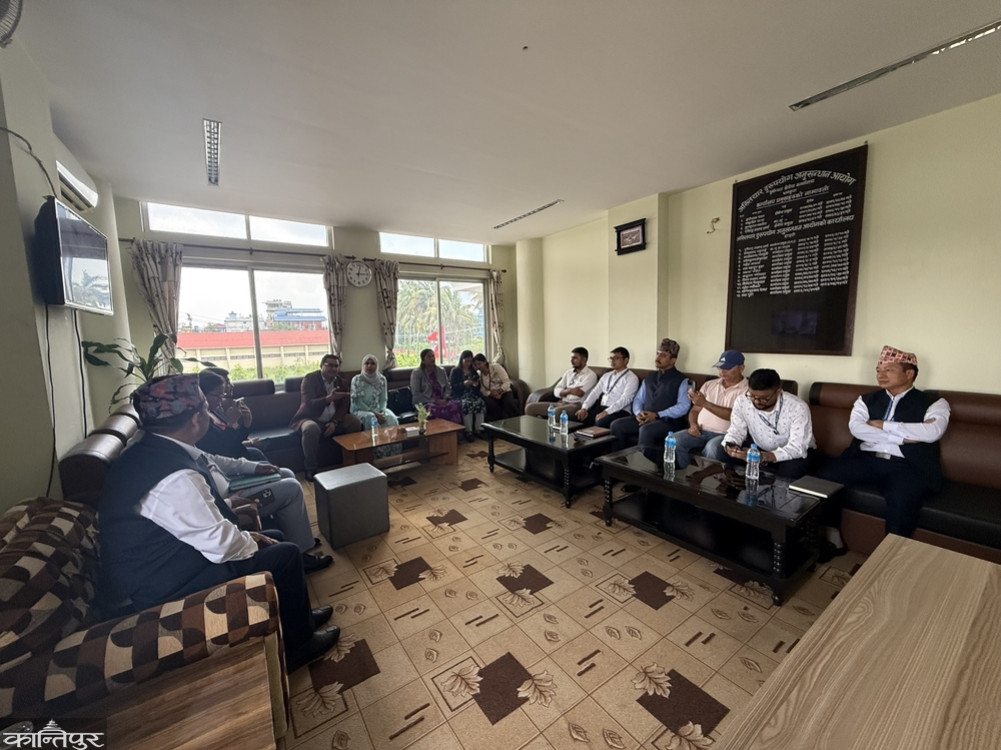
While the committee members insisted that they should be able to see the files under investigation, the head of the CIAA's Itahari office took a stand not to show the files, citing legal confidentiality.
We use Google Cloud Translation Services. Google requires we provide the following disclaimer relating to use of this service:
This service may contain translations powered by Google. Google disclaims all warranties related to the translations, expressed or implied, including any warranties of accuracy, reliability, and any implied warranties of merchantability, fitness for a particular purpose, and noninfringement.
Members of the State Affairs and Good Governance Committee of the House of Representatives have been criticized after they tried to see the details of the files under investigation at the Commission for the Investigation of Abuse of Authority.
A 4-member group of the State Affairs Committee, which went from Kathmandu, had demanded to see the files under investigation at the Itahari office of the Authority on Wednesday. The head of the Itahari office of the Authority refused to show them, saying that the details under investigation are confidential under the law.
The State Affairs Committee's meeting on 28 Jestha had decided to send a team to monitor the Itahari office of the Authority for the Investigation of Abuse of Authority and the prison office in Jhumka. The team was not sure what files to go to the Authority to see and what kind of monitoring to do. According to committee sources, it was said that during the decision-making process, it was decided to consult among the lawmakers to decide what and what issues to monitor. 'The decision has been made to monitor various offices of the Authority and the prison. The lawmakers who were going there were told to consult and decide what and how to do it,' the committee source said.
Yagyamani Neupane and Gazla Shamim Mikrani of the Rashtriya Swayamsevak Sangh (RSS), Bishnumaya BK of the UML, and Yubaraj Dulal of the NCP had reached the office on Wednesday to monitor the CIAA's Itahari office. Neupane, who is also an advocate, had said that they should be able to see the files of the complaints under investigation. He argued that privacy would not be violated if the lawmakers elected by the people looked at the files. 'If confidentiality were really violated, it does not mean that it would not be violated by the employees,' he said in a video circulating on social media. 'If all the employees involved in it, from the office assistants to the bosses of the Commission for the Investigation of Abuse of Authority, are there any guarantees that confidentiality will be maintained? Are the lawmakers elected by the citizens running the country in a state of disarray? When we look at the issues that really need to be raised in corruption, if it is said that confidentiality will be violated, the question is whether it will be accountable to the citizens and the state.' 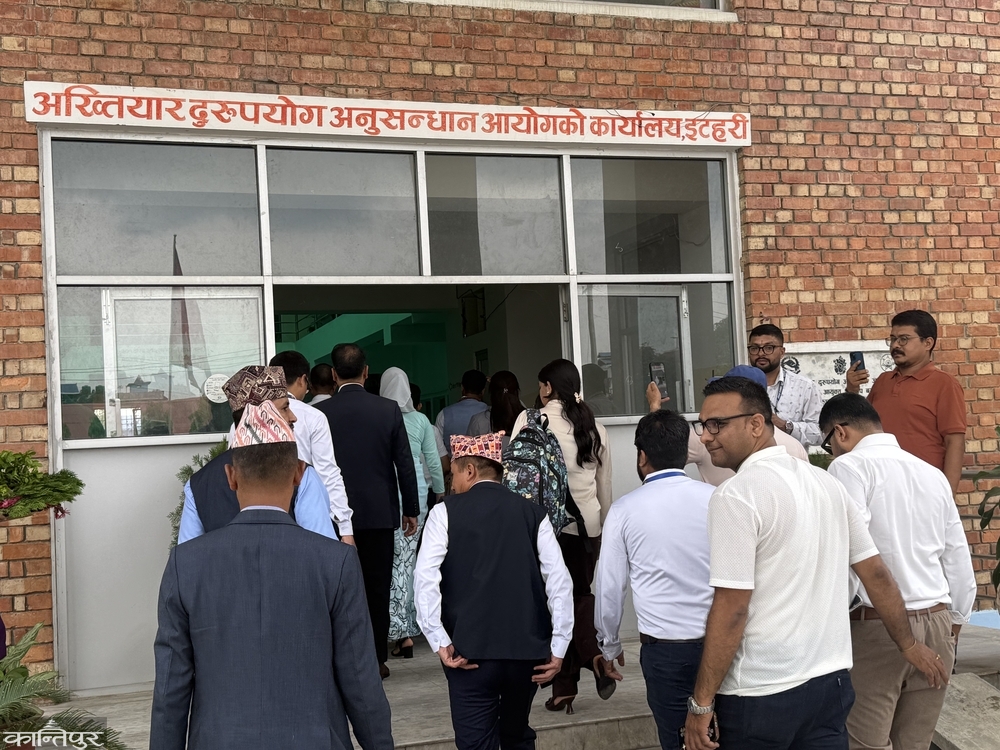
Neupane had said that the lawmakers should be able to see why the files that have been under investigation for years have been stuck. In response, Yagya Puri, head of the CIAA's Itahari office, reminded that the matters under investigation will remain confidential. 'The fact that the investigation is ongoing or the subjects of the investigation remain confidential.' Everything from the names of the informants to the names of the informants remains confidential. The matter of which office has written what answer also remains confidential,' Puri had said, 'We can show you the files, the matters written in our 'Code of Conduct', we may not be able to do that now, sorry.'
Office chief Puri had informed that he was ready to explain the details of the case, what the status of the complaint is and why the investigation is being delayed. ‘We tell you that so many cases or so many complaints have been under investigation for so many years. You can ask questions about it and the concerned investigation officer can explain the reason, but we cannot tell you the content (subject of the investigation) within it, where the complaint is, who the opponent is, why.’
NCP MP and committee member Yubaraj Dulal had said that he was trying to see which files of big people are stuck in the CIAA and how long they have not been moved forward. He had said, ‘How do we know if a complaint has been filed against a big person in this country and it is pending?’ Dulal had asked how to know whether a complaint has been filed against a person with access. He had asked, ‘How do we know if a complaint has been filed against a person with access and the case is pending?’ Do we only know the number or do we also know the nature?'
Neupane claims that the oldest and newest complaint files have been requested to be registered. 'Why has there been a delay in the process till date? We have tried to understand the injustice caused by the delay,' Neupane told Kantipur.
Former Secretary of Parliament Som Bahadur Thapa said that the parliamentary committee should clearly decide in the committee meeting what issues it will look at during the monitoring and write them in a letter. He said that the committee should take the decision and letter to the concerned body. 'The parliamentary committee should have made an official decision. The state affairs or other committees should also decide and go for monitoring,' Thapa said. 'The committee should have decided on the subject of the monitoring investigation. We should talk to the authority in advance. It goes where it goes like the CID. The authority also has its own jurisdiction. The committee letter should mention what it will look into.’
When determining the scope of work of committees under the House of Representatives, the Commission for the Investigation of Abuse of Authority falls under the State Affairs and Good Governance Committee. In addition to making laws on matters within its jurisdiction, the committee can give necessary advice, suggestions and instructions. Former Secretary Thapa said, ‘If the committee is investigating the CIAA, how can it look into an unresolved file? They cannot do anything by looking at the file. They can look at the details. The committee will monitor the work. You can get a report on how many complaints were received, on what subjects, how many complaints were investigated, how many cases were filed. You can discuss the report on what was done in which file.’