National and international experts have emphasized the need to find solutions to the increasing water scarcity, food insecurity, energy crisis, and public health challenges caused by climate change by integrating them into a single system.
We use Google Cloud Translation Services. Google requires we provide the following disclaimer relating to use of this service:
This service may contain translations powered by Google. Google disclaims all warranties related to the translations, expressed or implied, including any warranties of accuracy, reliability, and any implied warranties of merchantability, fitness for a particular purpose, and noninfringement.
National and international experts have emphasized the need to find solutions to the growing water shortage, food insecurity, energy crisis and public health challenges due to climate change within a single system. They have said that the integrated concept of water, food and energy (Food-Energy-Water Nexus) should now be implemented in policy and practice.
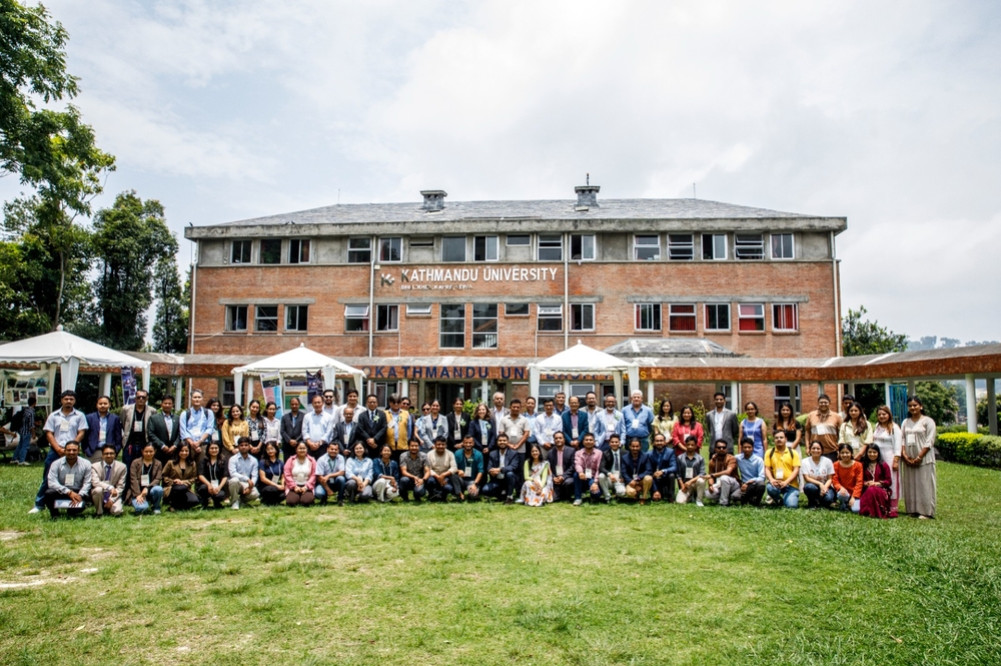
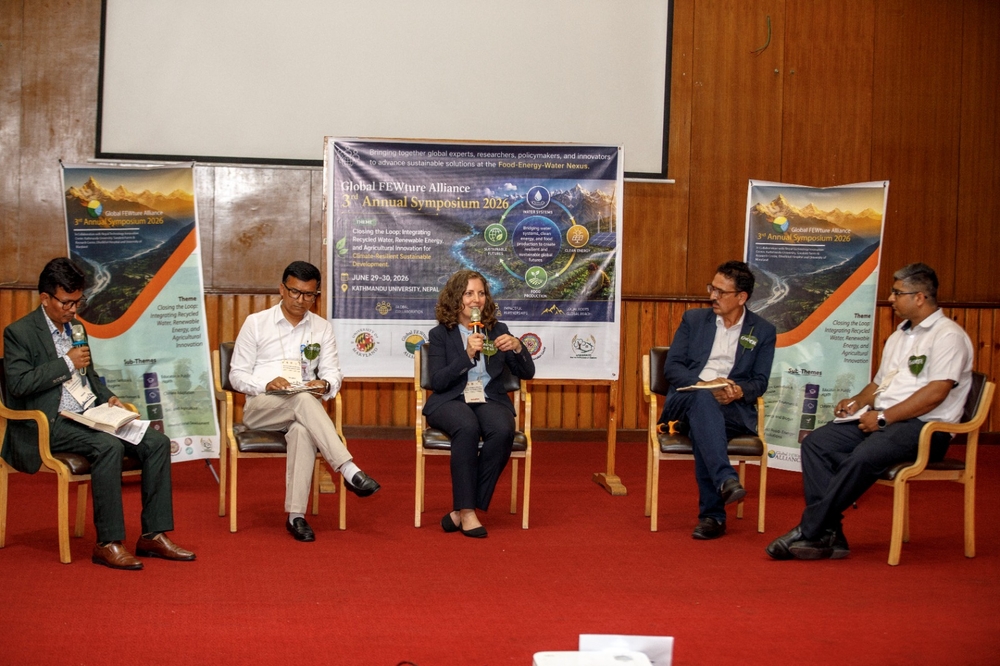
The Third International Scientific Conference of the Global (Food-Energy-Water) Alliance-2026, held at Kathmandu University, concluded that collaboration between science, technology, policy and community is indispensable for climate-resilient development. The conference, which was attended by more than 40 scientists, researchers and policy-makers from Nepal, the US, Israel, Australia and Tanzania, expressed the common view that solving the climate crisis is possible only through multi-sectoral collaboration.
Inaugurating the conference, Director of the Nepal Technology Innovation Center under Kathmandu University, Prof. Dr. Bim Prasad Shrestha said that the Food-Energy-Water Nexus is not just a theoretical concept but a practical solution for societies that are directly affected by climate change. According to him, the goal of sustainable development can be achieved only if water, sanitation, wastewater treatment and reuse, renewable energy, agriculture and public health are integrated into a single system.
Before the conference, he informed that Nepal's first solar-powered wastewater treatment and reuse system based on Israeli Laguna technology has been installed at Shree Janak Secondary School in Ward No. 4 of Namobuddha Municipality, Kavrepalanchok. He said that since the system can process used water and reuse it for irrigation and other purposes, new possibilities have been created in areas with limited water resources.
Dr. Amy R., Director of the Global FEWture Alliance and Professor at the University of Maryland, USA Sapkota described the conference as not just a forum for presenting research but also a common platform for building new partnerships, exchanging implementation experiences and encouraging young researchers. She said that since food, water and energy are basic needs of every citizen, the aim of the alliance is to provide sustainable solutions to communities deprived of these services.
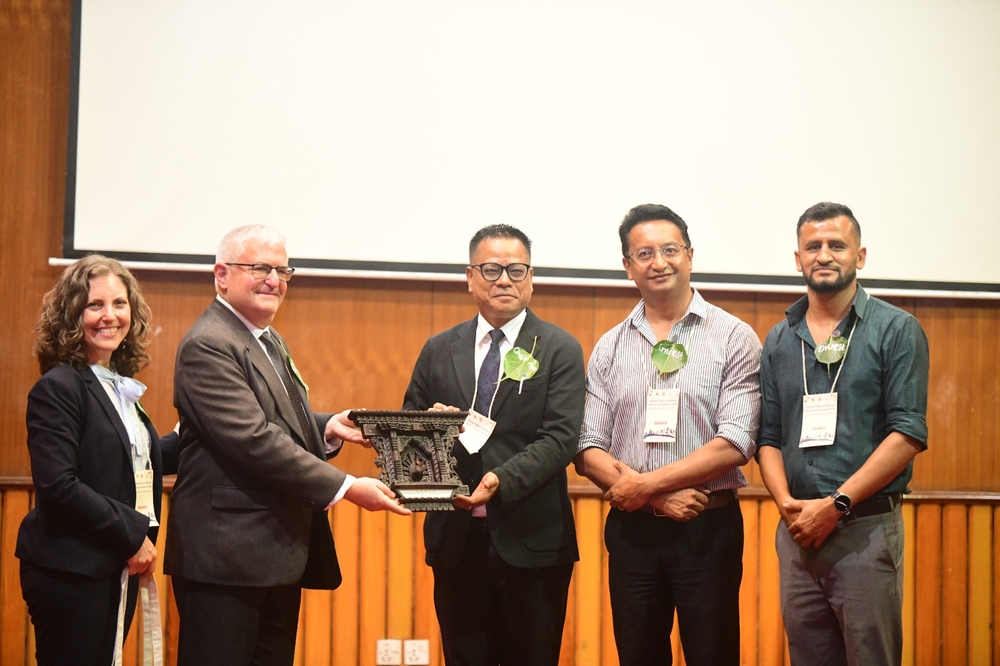
Israeli Ambassador to Nepal Shmulik Ari Bash said that modern irrigation, efficient use of water, wastewater reuse and research-based innovation should be prioritized to tackle the challenges of climate change. Stating that despite limited water resources, Israel has achieved remarkable success in the agricultural sector with the help of technology and research, he expressed confidence that Nepal-Israel cooperation will further strengthen in the coming days.
The keynote speaker of the conference and former deputy director of the Gates Foundation, Dr. Roshan Raj Shrestha, said that there is a need to keep reusable water at the center of climate adaptation strategies. According to him, the time has come to view wastewater as a valuable resource that can be linked to agriculture, energy, water security and green economy, not a problem. He also expressed concern over the trend of development projects being limited to the testing phase.
Dr. Biraj Karmacharya, Chief Administrative Officer of Kathmandu University School of Medical Sciences and Dhulikhel Hospital, said that operation and maintenance is a bigger challenge than equipment in building climate-resilient infrastructure. He said that technology is not sustainable without skilled technical manpower, local capacity development and reliable management. More than three dozen research and technological practices related to grey-water reuse, rainwater harvesting, decentralized wastewater treatment, renewable energy, biochar, sustainable agriculture, artificial intelligence (AI), public health and climate adaptation were presented at the conference held on Ashad 15 and 16.
At the closing ceremony, Engineer Shree Krishna Dhital, Director of Sanskriti Farms and Research Center, said that the university's research should focus on solving the real needs of the community. He said that the success of research lies not in academic publications, but in developing practical solutions that directly benefit the local community.
He urged the government to come up with a policy to encourage research-based startups, innovation, and social entrepreneurship, and stressed the need to create an effective mechanism to bring the technology developed in universities to industry, agriculture, and the community. The conference concluded that water, food, and energy should be developed as an integrated system rather than as separate sectors to address the challenge of climate change. The conference gave a common message that climate-tolerant and sustainable development is possible only through science-based policies, international cooperation, and active participation of the community, giving priority to reusable water, renewable energy, agricultural innovation, and a circular economy based on resource reuse.