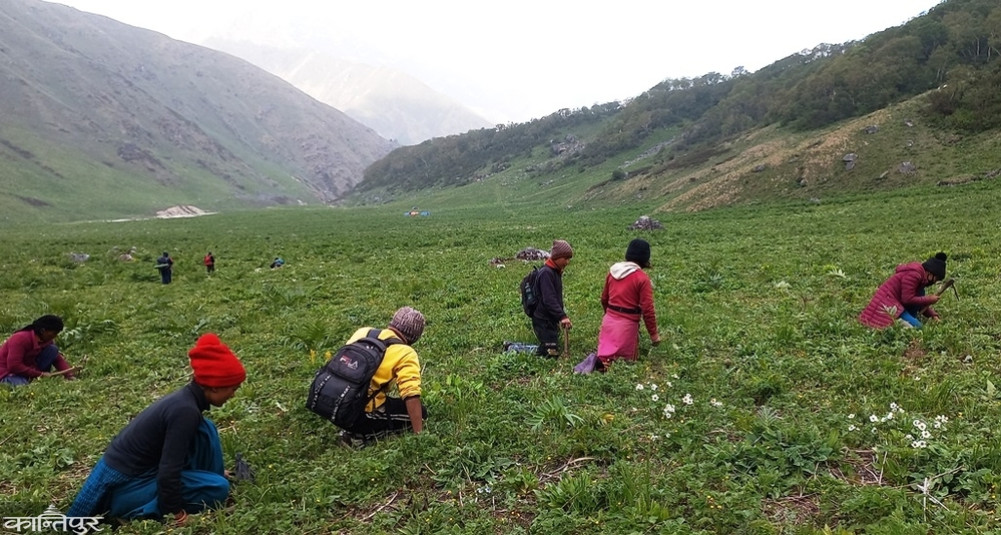
Due to the decline in both production and prices, the daily lives of the people of the Himalayan region of Bajhang, who earn their living from the income from herbs, are in crisis. Some, who have no alternative source of income, have locked themselves in their homes and gone to India with their families to work as laborers.
We use Google Cloud Translation Services. Google requires we provide the following disclaimer relating to use of this service:
This service may contain translations powered by Google. Google disclaims all warranties related to the translations, expressed or implied, including any warranties of accuracy, reliability, and any implied warranties of merchantability, fitness for a particular purpose, and noninfringement.
On the banks of the Bahuligad River, which flows through the district headquarters, Chainpur Bazaar, a line of women and children can be seen every day from the open platform suspension bridge to the wide concrete bridge. They are pounding gravel together for about one and a half kilometers across the river bank. In this crowd is Junkidi Bohara, 62, of Thakunnada, Surma Rural Municipality-4. Her old body, suffering from a
disease, cannot move a shovel. Even though she cannot break large stones, she fills her head with small lohora (stones) washed away by the river. With difficulty raising her head, she pours stones near the newly constructed bus park with the help of a stick. She makes gravel by hitting it with a small hammer. She is forced to do this work, sweating profusely in the hot summer months. ‘I can make up to two tractors a month when I am healthy. If I get sick, it is difficult to fill even one tractor,’ Junkiri said, wiping her sweat, ‘I have to work to survive. I have to break stones in my old age.’
A tractor with ballast is sold for 4,500 rupees in Chainpur. Junkiri, who lives in a house near Bahuligad, has been able to make a living with this money. Until eight years ago, her work was different. She lived at home with her husband, three sons, daughter-in-law and grandchildren. The produce from the field was enough to eat for two or three months. The rest of the month was supported by the income from Yarsagumba and herbs. With her husband, three sons, and two daughters-in-law, they used to collect 10 to 12 lakh yarsa and other herbs annually. The earnings from collecting herbs for three months were enough to feed them for the whole year and also saved them.
While a proposal was being made to annex land in the district headquarters, Chainpur, her husband fell ill. Even though they spent the money they had at home and borrowed to treat the problem in Mirgaula, they could not save it. Her husband died. The debts of her sons increased. ‘If they had been able to get the same roots (yarcha, forest garlic, satuwa and other herbs) before, they would have collected them and paid off the debts.’ That is not the case now,’ she said. ‘Everyone has gone to India as it is difficult to pay off the debts and feed them.’ I am alone here.' She said that she is forced to survive on the single woman's allowance of Rs. 2,000 per month when she is unable to grind gravel due to illness.
Most of the people who grind gravel on the banks of Bahuligad are locals of Surma Rural Municipality. The stories of many of them are not different from Junkidi's. The locals of this municipality, which used to earn the highest annual income in the district due to herbs until a decade ago, are now found working as wage laborers in places such as the district headquarters, Chainpur, after they stopped getting herbs. 'Earlier, herbs were available in abundance, so everyone had money,' says Jharana Bohara of Surma-4, 'Now, herbs are no longer available, there is no crop in the village, no employment, we have to do something to make ends meet.' She said that she is selling gravel to pay for her room and board and her children's education expenses. The main source of income for everyone in his municipality is herbs. Some even set up shop in city markets like Chainpur, Dhangadhi, and Mahendranagar after selling herbs. Most of them also taught their children engineering, science, and nursing, which are expensive subjects, in places like Kathmandu, Pokhara, Butwal, and Dhangadhi.
The lifestyle of the locals of this municipality, where the number of people going to India to work for about 15 years has dropped to zero after the 2060s, has recently started returning to its old state after the availability of herbs has decreased. ‘Now that we can no longer get herbs, some of our children have even left school and returned to their villages from the city,’ said Manisha Bohara, another local from Surma. ‘Herbs are not available like before.’ There is no other income to cover expenses.' He says that except for a limited number of families who initially earned well and built houses in the city market and started businesses, the daily life of many here is becoming difficult.
The situation in all rural municipalities of Bajhang, which make a living from the income from herbs, is no different from Surma. The livelihood of the residents of the northern villages of the Himalayan municipalities of Saipal, Surma, Talkot, Mashta, Chhabis Pathibhera, Bugal and Jayaprithi Municipality, where food crop production has decreased due to the decline in herb production, is in crisis. Some families with no alternative income have locked themselves in their homes and gone to India to work as laborers.
Until 6 years ago, Dharma Singh's house was running smoothly. A family of four, including a husband, wife and two sons, lived in Pimi village of Jayaprithi Municipality-1. The sons studied in the village's boarding school. Dharma's wife Shanti used to take care of the farm and children. Dharma would go to Patan in Saipal and Surma rural municipalities from Baisakh to Asar to pick worms (Yarsagumba) and roots (herbs). After picking Yarsa and herbs, he would return home with three to five hundred thousand rupees every year. Shanti also used to earn 50/60 thousand rupees a year by collecting herbs like Satuwa and Sugandhawal found in the forests near the village. Although the produce from their own land was enough to feed them for only two/three months, the income from the herbs met the needs of the family.
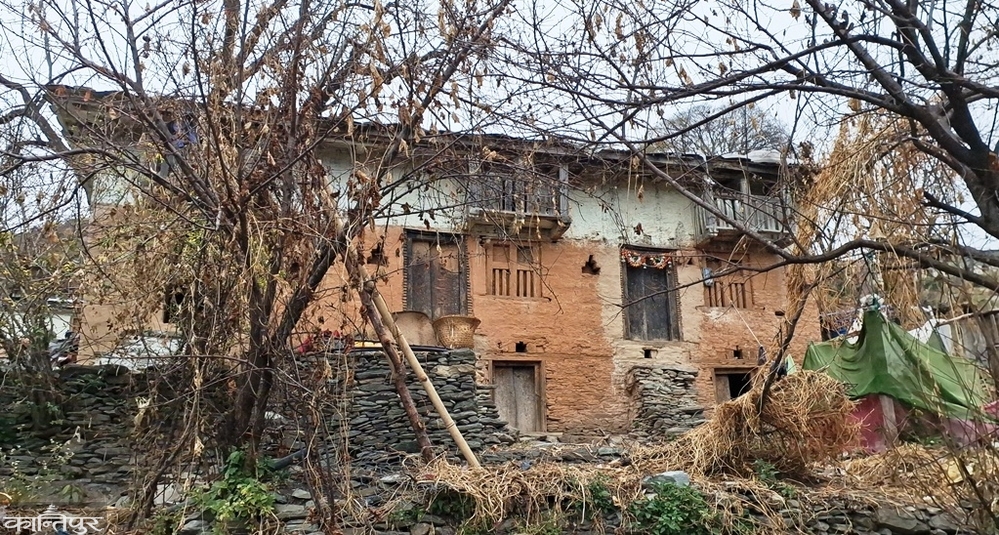
The helpful Dharma couple used to get involved in social work in the village and would also come forward to help those in trouble. Although they lived in a small house, they were one of the happiest families in the village. Dharma's family is no longer in the village. Their small house has been locked for 6 years. The walls of his house, which once looked neat with red mud and lime, have now faded. Weeds have grown in the courtyard.
‘Initially, they used to earn a good income, but later they suffered losses for three or four years,’ said his neighbor, Laldevi, explaining the reason why Dharma’s family had to leave the village. ‘They stopped getting herbs like before, the lake went down every year, they lived for three or four months and they also incurred a lot of debt. They went to India to pay the money, and they haven’t returned for 6 years.’ Dharma is not the only one in this village, which is home to about 400 families, to go to India. Former ward chairman Gagan Bahadur Singh says that more than 70 families who depend on herbs for a living have been displaced by locking their houses like his.
Earnings decreased due to lack of ‘worms’
The main source of income for Govinda Rokaya’s family of Lokanda, Talakot Rural Municipality-4, was the money he earned from selling worms (Yarsa). His family of nine, whose produce from farming was not enough to eat for even 2 months, had been supported by the income from Yarsa since 2060. In addition to food, salt oil, and clothes, he had also spent money on his children’s education and built a new house in the village with the money he saved.
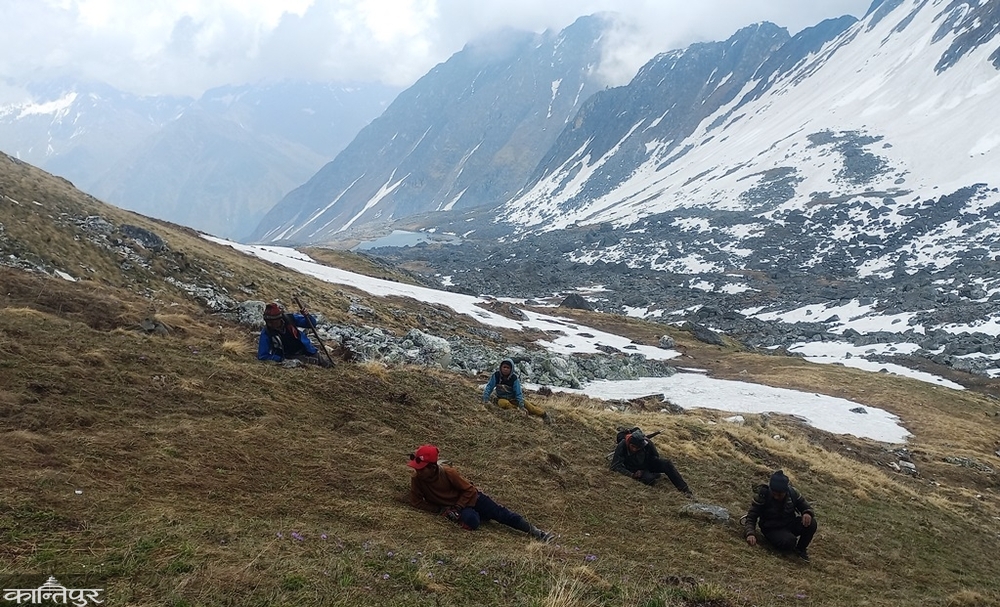
He collected worms for three months. The rest of the time, he worked on farming. He lived happily with his family. Life was going great. His family’s routine, which had been going on in the same rhythm for more than a decade and a half, has been disrupted for the past 5/6 years. Now, sometimes he carries heavy loads of construction materials (cement, rods, zinc sheets, pipes) and walks for three to four days to reach different places in Saipal Rural Municipality. Sometimes he goes to Kalapahad (Nainital, Kharikhan, Kedarnath and other places in India) for labor.
Rokaya, 45, who suffered the hardships of Kalapahad as a teenager before the yarsa trade began, says, "Now the worm has opened, I was happy that the Indian labor (labor) was gone, but the same sorrow has come again." He says that he used to get up to 5-6 hundred yarsa in a single day in 2060-065, but now he hardly gets up to 10-15 on a day when he gets a lot. ‘Earlier, if you found one insect, you would find two to three hundred packs (berna) around it,’ he said, ‘Nowadays, if you find one here, you have to go to the next hill to find another one. Even if you search for it all day long, you will never find a single one.’
From 2064 to 2074, when there was abundant yarsa in Patan and the price was as per the market, the graph of the rural economy of Bajhang suddenly rose. Yarsa, known as Jeevan Butika, had given new life to the villagers who had been suffering from financial hardship for years. But the prosperity of Bajhang that the insect had boosted could not be sustained. Another example of this is Dhanya Bohara of Surma Rural Municipality. 15 years ago, his family of 19 people had a hard time getting food.
Poverty was so extreme that 4 of his 6 sons could not study beyond the 5th grade due to lack of school fees. But when the yarsa business started, a miracle suddenly happened to his financial situation. With the earnings from yarsa, he built a house in the district headquarters Chainpur by adding ghaderi. He demolished the old hut in the village and built a concrete house. ‘At first, there was a worry about how to feed the many people. After the worms opened, the more people, the more money he made,’ he said, explaining the income of yarsa, ‘Since there were many people to pick worms, we earned up to 2.5 million in a year. It was difficult to eat. With the remaining money, we bought land in Chainpur and built a house.’ But for the past 5/6 years, everyone in his family has barely been picking yarsa worth 2/3 million a year. This family, which has a habit of spending freely, is now having trouble even feeding itself with that income. Bohara, who once prided himself on having a large family, says, ‘There are more mouths to feed.’ Yarsa is not available like before. There is no other income.’
Prices have also decreased
Although there is no exact figure on how much money is earned from the sale of herbs in Bajhang, those involved in the herbal business say that the annual turnover was worth two billion rupees as of 2078/079 BS. Basanta Khadka, an herbal businessperson, said that many have left the business after the turnover decreased along with the production of herbs. ‘Many of those who have not made money have left the business,’ he said, ‘Only a few who have made money like me are now hanging around hoping that the money will come back.’ He told herbal collectors, including Yarsa, that a large investment of the traders has been lost as the traders have not been able to collect herbs equal to the amount of money they have already paid. ‘Earlier, those who used to earn Rs 200,000 would collect herbs worth Rs 500,000. Now, they cannot make them worth Rs 500,000. Since they cannot make goods worth Rs 500,000, the collectors have also fallen into trouble. The traders have also sunk,’ he said.
Herbal trader Dan Bahadur Surmeli, who is also the president of the Bajhang Chamber of Commerce and Industry, said that the turnover in the district based on money has decreased by 70 percent compared to 8-10 years ago. ‘I alone used to do a turnover of Rs 250 million a year. There were many who did more business than me,' says Surmeli, 'now my firm barely does a turnover of Rs 10 million.'
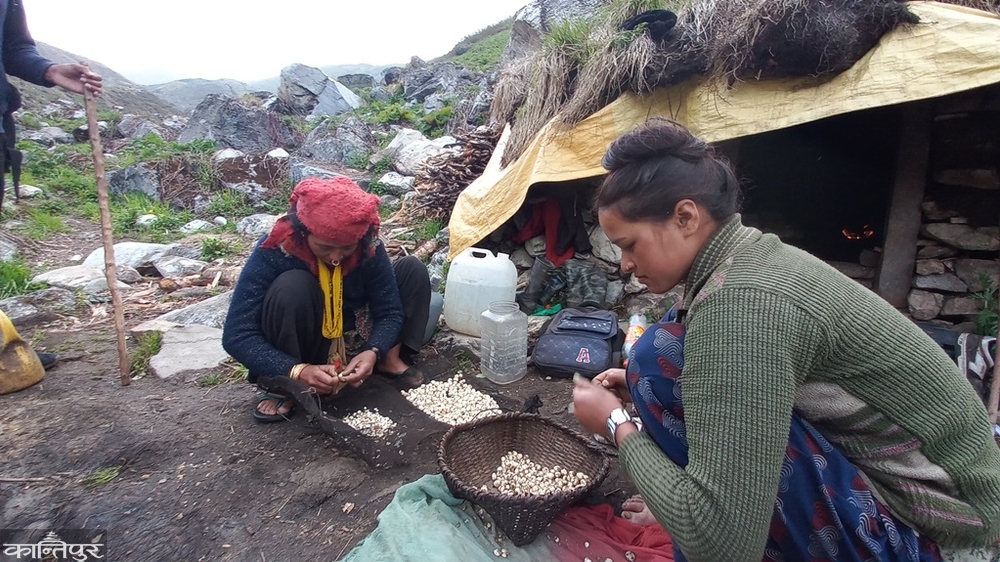
According to the statistics of the Division Forest Office, Bajhang, the production of Yarsa has also decreased sharply in the district. From 2065 to 2070, the production of Yarsa, which was exported annually, has decreased to 136 kg in 2082. Now, not only the production but also the price has decreased, so the collectors are in even more trouble. The price of Yarsa, which was traded at Rs 3 million per kg in Bajhang in 2066-068, is now below Rs 8 million per kg. Last year, collectors here traded at the same rate of Rs 8 million, said herbalist Dan Bahadur Surmeli, who is also the president of the Bajhang Chamber of Commerce and Industry.
Studies on Yarsa gumba have also shown a decrease in production. The International Union for Conservation of Nature (IUCN) has listed Yarsagumba as a vulnerable species, citing a 30 percent decline in its production over the past 15 years. In 2021, Professor Gregory Mueller, Chair of the IUCN SSC Fungal Conservation Committee, while releasing the Red List, said that this was the highest recorded case of Yarsagumba reaching a vulnerable status due to over-collection.
After Yarsagumba, another main source of income for the people of the Himalayan region of Bajhang is wild garlic. This herb, which is sold for up to 40,000 rupees per kilogram in the village, has become very rare in the past few years. ‘Until 4/5 years ago, we used to harvest up to 4/5 kg per person per day.’ "It is getting less and less, now it is difficult to make 1/2 kg even if you search for 4/5 days," says Bimala Bohara of Saipal Rural Municipality, "If this is the case, it is as if you will not even see 1/2 plant in the coming year."
The price of wild garlic, which started being collected for commercial purposes in 2065 at the rate of 2,000 rupees per kg, increased surprisingly to 40,000 per kg in 2077, and the attraction of collectors increased dramatically. This herb has now become rare as it is collected excessively and even in off-seasons in the greed for profit.
According to the records of the Division Forest Office, 4,428 kg of wild garlic was exported in the fiscal year 2078/079, but 1,800 kg was exported last year. Another valuable herb that is on the verge of extinction in Bajhang is Satuwa. The collection of satuwa, which is sold for up to Rs 12,000 per kg, has been started since 2061. In 2071, the District Council banned the collection of satuwa for two years, saying that it was on the verge of extinction due to excessive collection. According to the Forest Office, the collection of satuwa was up to 3,742 kg in some years.
According to the Forest Office's data, only 10 kg of satuwa was exported in 2081. The Forest Office's data also shows that satuwa, which is listed on the Red List as a sensitive native plant by the IUCN, is facing danger in Bajhang. Among the herbs whose production has decreased recently is valuable katuki. Only 4,500 kg of katuki, which was exported annually until the fiscal year 2076/077, was collected in 2081/082.
The data also shows that the production of setakchini, which is the most exported plant in the district, is also decreasing. Setakchini, which was exported annually up to 60,000 kg until 2079, has decreased to 24,000 kg by 2081.
In addition, 40 types of herbs including Padamachal, Vishjara, Bojo, Bhrigiraj, Bhojpatra, Lokta, Launtha Salla, Sugandhawal are collected in large quantities in Bajhang. All these herbs are exported outside the district as raw materials. Export details of recent years show this decrease. From 2065 to 2075, 40 types of herbs were exported, but it has been decreasing year by year and by 2082, only 25 types of herbs were exported.
A study conducted by the Asian Network for Sustainable Agriculture and Bioresources (ANSAB), an organization working on research and sustainable management of Himalayan herbs, has shown that herbs account for 40 percent of the annual income of locals in the Himalayan region, and a decrease in production is causing problems for those who rely on herbs for their livelihood, says Dipesh Pyakurel, an herbalist at ANSAB.
Overexploitation, felling and waste
According to experienced collectors, the decrease in production is due to excessive, unseasonal and arbitrary (unscientific) collection. According to Dil Bahadur Bohara of Surma, a person used to earn 3-4 lakh rupees in a season from forest garlic alone. ‘Now, it is no longer available.’ Those who get more will earn 15-20 thousand. Otherwise, we won't get even that much,' Bohara said, explaining that herbs like wild garlic and satuwa, which should be collected after the seeds ripen and fall in the end of Asar, are disappearing because they have been dug up since the beginning of Baisakh. 'We have kicked ourselves in the stomach. If we had picked them after the fruits ripen and fall, it would have happened the next year too. Here, they start digging them before they can sprout. Who will believe what they say?'
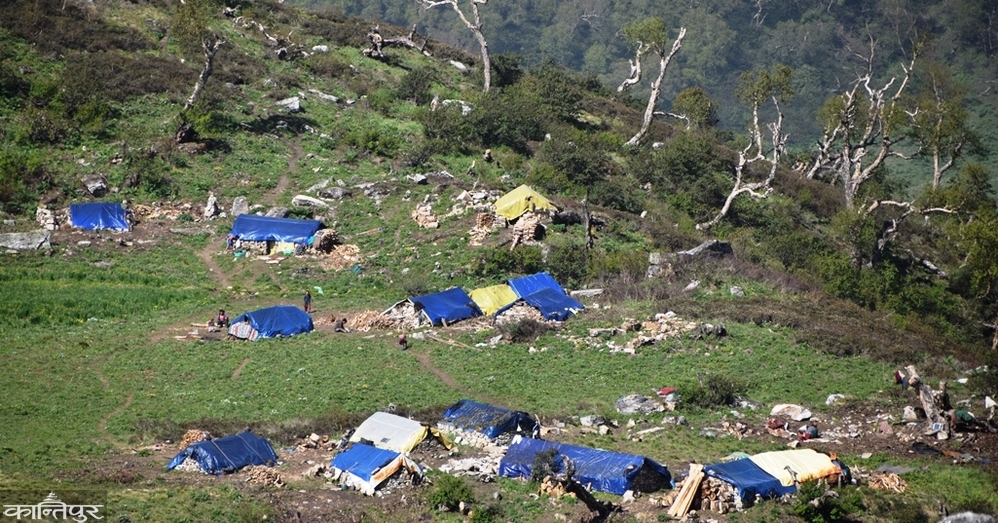
According to collectors, the main reason for the decline in yarsa production is indiscriminate digging. According to this method, colloquially called sweeping, sweeping, while searching for yarsa, collectors remove the grass on the ground using hands, sticks or other tools and even dig up the soil underground. This is why it is no longer available. ‘When you remove all the grass (especially the grasses) covering the ground and dig up the soil, even the living insects that have not yet become Yarsa come out,’ says Jaya Bahadur Rokaya, a collector from Lokanda, Talkot-4. ‘Once the insects (larvae) come out of the soil, the young (tips) cannot grow. If the insects that will later become Yarsa are removed and killed, another one cannot be born.’
According to Uttam Babu Shrestha, an environmental science researcher who has studied Yarsagumba and Himalayan herbs for a long time, ‘Among other reasons, the decreasing and irregular winter rainfall and increasing temperatures in recent years have affected the overall biodiversity of the Himalayan region. This has had an impact on herbs.’
Another reason for the decline in the production of herbs including Yarsa is the widespread destruction of forests. If we look at the herb collection area in the Himalayan region of Bajhang 10 years ago and now, the state of deforestation is shocking. ‘In places where there used to be forests that were unsightly, now there is not even a single thing to look at, it has been completely destroyed,’ said Devendra Dhami of Saipal Rural Municipality. ‘When there was a forest, there were plenty of insects (Yarsa) under the bushes of Dhupi and Chimalo. Satuwa should not be grown in places where there is no forest.’
The forests in the Himalayan region have been destroyed as Yarsa and other herb collectors clear forests for firewood and sheep herders cut down forests to feed their sheep. A study conducted by the International Center for Integrated Mountain Development (ICIMOD) in 2079 BS also showed that the Himalayan forests here are being destroyed on a large scale.
A study conducted by ISIMOD also showed that each tent (6 people on average) consumes an average of 12 kg of firewood per day during yarsa collection. Around 15,000 collectors reach Patan every season. The study has shown that they consume 16 million kg of firewood in one season (Baishakh-Asar). Collectors estimate that as forests are being destroyed one after another every year, herbs like Satuwa, Banalsun, Atis, Setakchini that grow in dense forests are disappearing.
Collectors say that the practice of setting fires in Patan during yarsa and other herb collection has also led to a decline in herb production. Since the larvae of the butterfly that becomes yarsa live under grass (including Buki and Himalayan weeds), even dried Buki is destroyed when set on fire. It also kills the larvae needed to make yarsa, which has led to a decline in production, said Rajendra Dhami, former chairman of Saipal Rural Municipality, who has long experience in collecting yarsa. ‘Some people set fire to the grass if the grass is removed.’ Some people set fire out of anger if they search for it all day and cannot find it. Sometimes, cigarette butts also cause fires,’ Dhami said. ‘After the fire, all the herbs and plants in the field are also destroyed.’ He said that thousands of collectors go to the field and since it is a very large area, it is not known who started the fire and when.
Apart from this, the garbage piling up in the Himalayan fields where herbs are collected also seems to be a factor in the decline in the production of herbs, including yarsa. The Himalayan Patan of Bajhang, where yarsa and herbs grow, is also affected by the waste generated by thousands of people who visit there every year. The Patan area is filled with garbage as collectors throw away plastic, clothes and liquor bottles. Collectors say that herbs do not grow in places with glass, plastic and other garbage, saying, "Leave the glass and plastic alone. Even if the clothes are torn, yarsa does not grow there. There are no other herbs in places with garbage," said Kalpana Bohara of Surma. 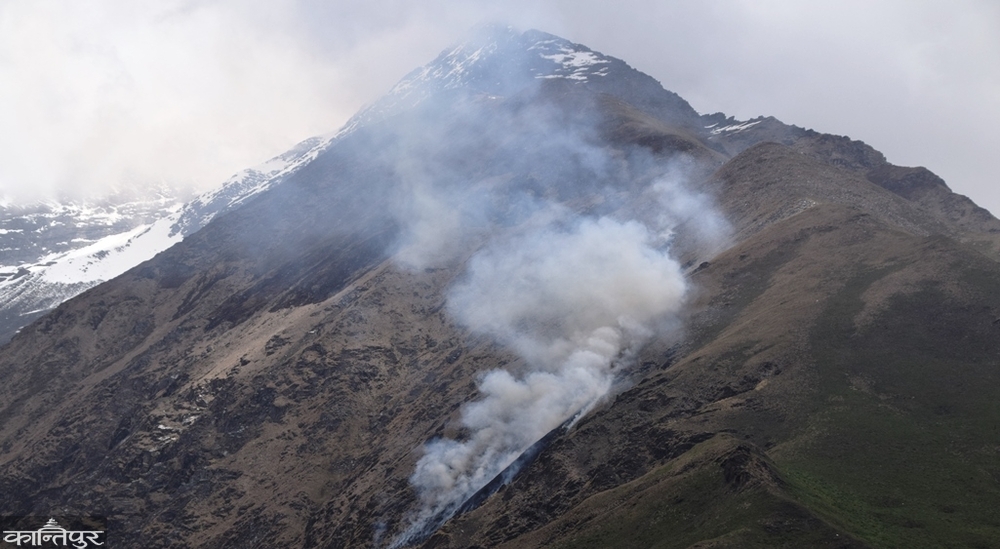 Studies have also shown that the amount of garbage accumulating in the herb collection areas of Bajhang is increasing abnormally. A study conducted by ICIMOD in the Yarsha collection area in Saipal Rural Municipality of Bajhang in 2079 BS showed that more than 40,000 quintals of waste had accumulated in the fields here by that time and the amount added is increasing every year. Dinesh Rokaya of Sahara Nepal, a local organization that collaborated with ICIMOD in the study, says, “If waste continues to be added at the current rate, not only Yarsha but all the herbs found in the Himalayan fields may disappear within a few years.”
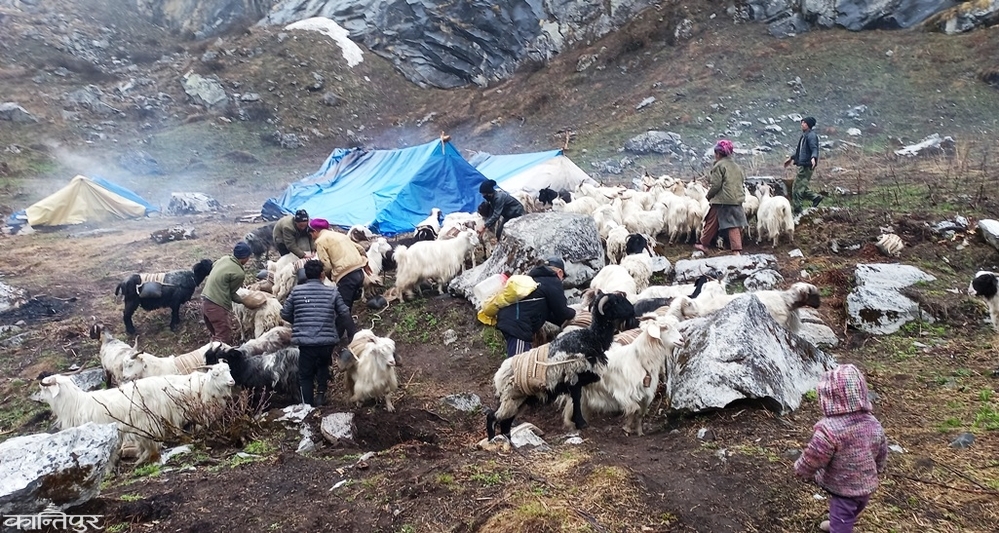
Another reason for the decline in herb production and deforestation here is sheep farming. A large number of sheep are grazed in the Himalayan fields of Bajhang during the rainy season. More than 25,000 sheep from Humla, Bajura, Mugu and Bajhang are kept in the Yarsha collection area from Chaitra to Asoj. Collectors say that keeping temporary sheep sheds in the fields for a long time reduces production. ‘One of the reasons for not allowing the trees to grow is due to keeping sheep,’ says Dhanlal Dhami of Saipal, ‘Does the sheep’s excrement affect the trees? Even in places where sheep stay for just one night, yarsa and other herbs are not found for many years.’
Stating that the declining production of Himalayan herbs has disrupted the livelihood of the locals, plant conservationist Reshu Basyal says, ‘Some collectors do not even know how to protect the plants while collecting them.’ Therefore, blaming all collectors and traders will not solve the problem. Instead, it is necessary to focus on how to reduce illegal collection, what alternatives to provide to increase the income source of the locals, and how to implement sustainable collection methods.’ Shambhu Tiwari, head of the Division Forest Office, Bajhang, says that it is necessary for the municipality, collectors, Division Forest, and the private sector to jointly work on awareness and regulation, taking into account the sustainable management of herbs.