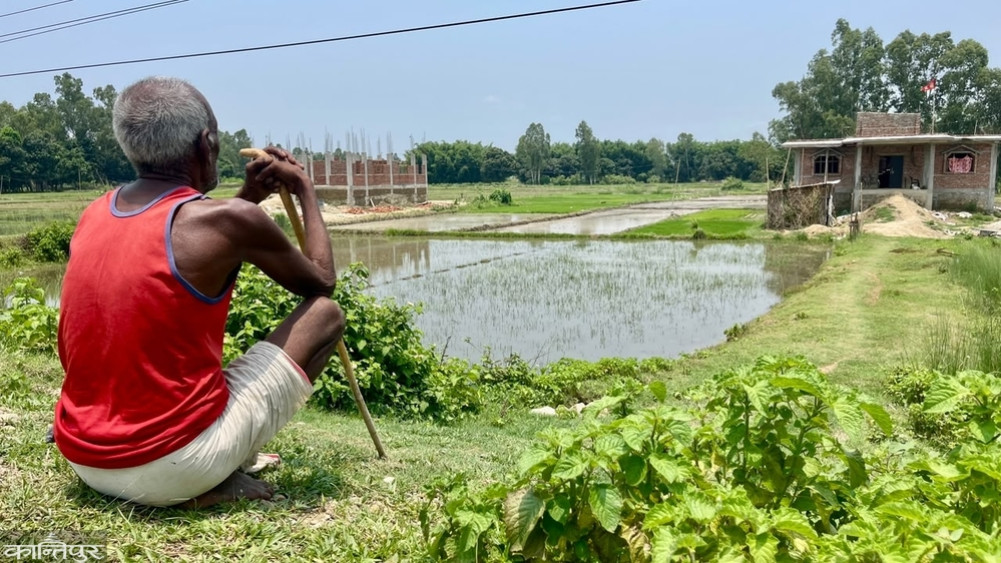
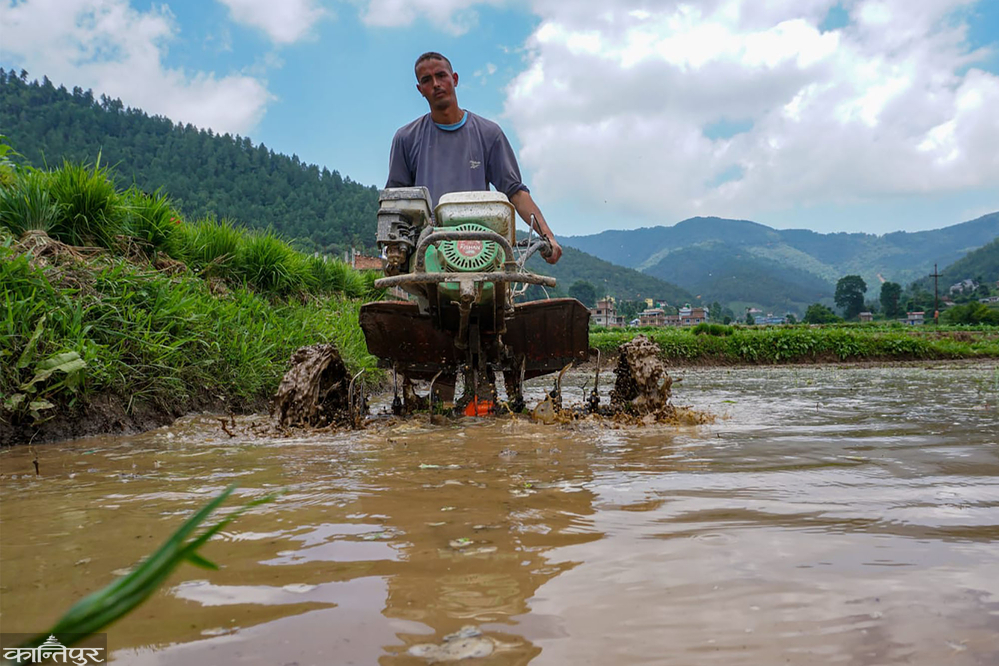
Farmers are facing problems due to lack of timely fertilizers and seeds, irrigation, and labor. Despite increased mechanization in agriculture and rising costs, farmers are not able to reap the expected benefits from production.
We use Google Cloud Translation Services. Google requires we provide the following disclaimer relating to use of this service:
This service may contain translations powered by Google. Google disclaims all warranties related to the translations, expressed or implied, including any warranties of accuracy, reliability, and any implied warranties of merchantability, fitness for a particular purpose, and noninfringement.
Hot winds have been blowing in the central and western Terai for a long time. Even though the monsoon has entered the country, there has been no rain in that area. In some places, water has not even come from boring. Farmers are still in doubt about sowing.
Pramesh Yadav of Gulariya Municipality-7 in Bardiya said that due to lack of rain, the paddy fields are drying up. ‘I have irrigated the paddy fields seven times by using boring, but that was not enough,’ he said. He is also not satisfied with the support price of paddy set by the government. He says, ‘You can buy seeds as much as you want. But, you cannot get fertilizer. Even if you grow grain despite the problems, the state sets a low support price, and how will the farmers’ morale increase?’
The price of fuel has also skyrocketed this year. Yadav said that he had to buy diesel at Rs 223 per liter and use boring. During the rainy season, he cultivates paddy in 60 kathas and maize in 17 kathas. He had bought 20 kg of hybrid rice seeds at the rate of Rs 750 per kg. ‘I have planted 35 kg of Radha-4 rice in a bed of Rs 4,200,’ he said. ‘77 liters of diesel have been used in ploughing the land three times with a tractor. It costs Rs 130,000 to cultivate rice in one season by using seeds, sowing, irrigation, fertilizers and pesticides.’
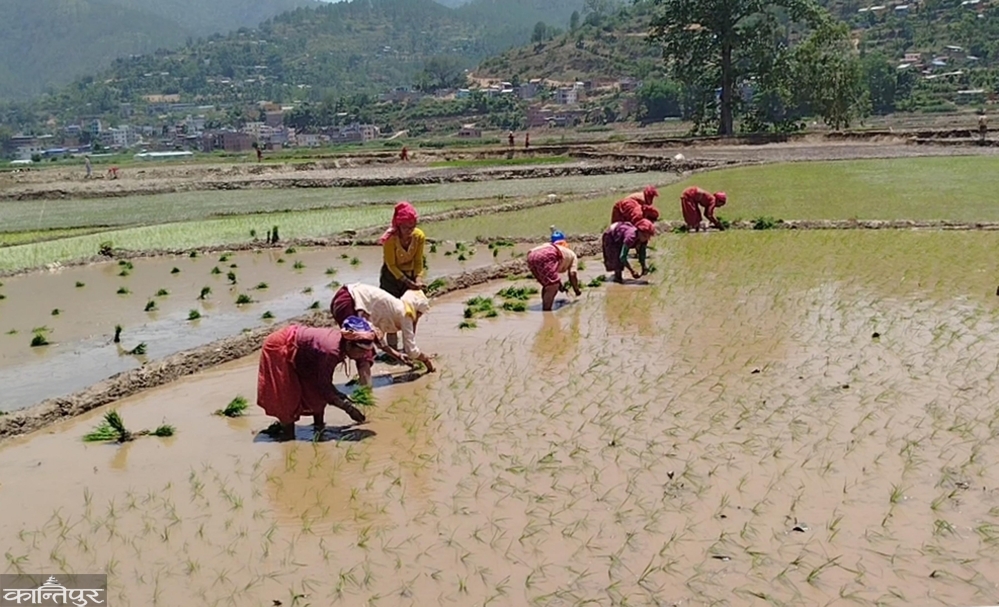
Mangathu Yadav of Beloha, Kapilvastu-6, had planted 40 kg of Samwa Monsuli rice seeds at a cost of Rs 3,200 to sow rice in 30 kattas. He also spent the same amount on cow dung and fertilizer. ‘The seeds should have been ready in 20/22 days, but the paddy has burst in the field due to lack of rain,’ he said. ‘The seeds have burnt. I am preparing to plant the seeds for the second time by spending Rs 8/10,000.’
Ramdas Kewat of Bhavpur, Yashodhara-2, cultivates rice in 80 kattas. Even as mid-Ashar begins, he has not been able to plant seeds. 'There is no irrigation system. I am tired of looking at the sky when there is no rain,' he said. Kapilvastu has 83,000 hectares of cultivable land. Of this, 65,852 hectares are used for rice cultivation.
Prahlad Thapa of Chandrapur, Rautahat says that farming is becoming more complicated due to changing weather cycles, rising costs and weak state presence. According to him, the main problems are the lack of timely fertilizer and seeds, irrigation and labor. With increasing mechanization in agriculture, costs have also increased. Relying on groundwater is costly.
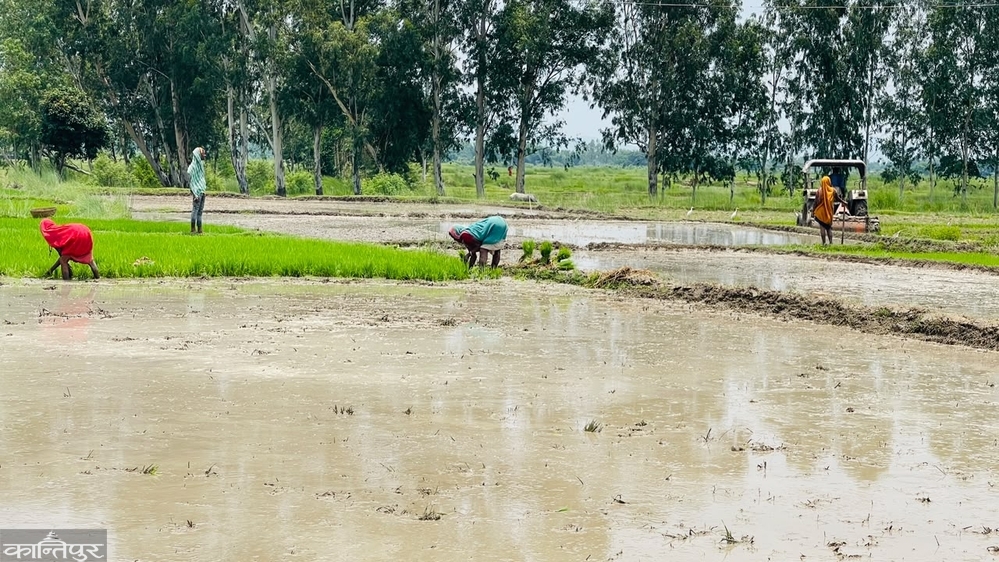
Border farmers are forced to secretly import expensive fertilizers and hybrid seeds from across the border. Thapa said that it is not certain whether the seeds will be good. 'The average investment (per bigha) in cultivating rice for one season costs 40 to 50 thousand,' he said.
Until 2067 BS, Rudal Sah of Gamhariya, Bijaypur-1, Fatuwa, Rautahat, had a 3-bigha field. He used to farm from armaparm. Now, most of the youth have gone abroad for employment and cities. ‘Earlier, farming was done with oxen. Cow dung was used. Native seeds were planted,’ he said. ‘Now, when you try to import paddy or wheat for a season, you have to suffer from the beginning to the end, and you can’t even find workers.’ He said that in recent times, when native seeds are lost and the seasonal cycle is disrupted, new diseases and armyworms destroy the crop. Until a decade ago, he used to grow 4/5 maunds of paddy per plot. Now, he barely produces 3 maunds.
Chhumaru Sardar of Lakhantari, Gramthan-1, Morang cultivates paddy on 7 bighas of his own and contracted land. The use of tractors, threshers and rice harvesting machines has saved time and labor, but the cost is increasing. He said that there are problems such as the uncertainty of the weather, expensive fuel and wages, lack of access to concessional loans, agricultural subsidies not reaching the actual farmers and labor shortage. He also alleges that those who have access to government subsidies and concessions are taking them.
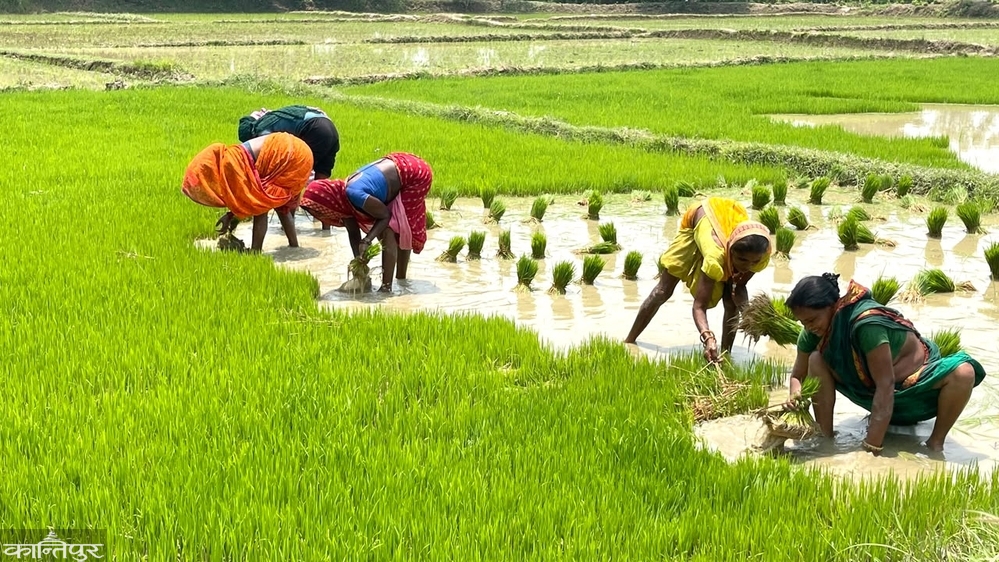
According to Sardar, one has to seek loans to cultivate. But getting loans from banks is a hassle. ‘It is very difficult to go to the bank and arrange the papers,’ he said, ‘The concessional loans provided by the state do not reach the farmers.’ He uses about 30 laborers per bigha. It costs 70 thousand to cultivate two and a half bighas. Accordingly, cultivating 7 bighas costs about 2 lakh. The income per bigha is around 1 lakh.
Kalauddin Ansari of Ramgram-13, West Nawalparasi, is the source of income. He produces vegetables, rice, wheat and mustard according to the season. "If you add the cost of farming and your hard work, you will be in a position to lose money," he said. According to the Agricultural Knowledge Center Parasi, the district requires 18,000 metric tons of urea, 12,000 metric tons of DAP and 5,000 metric tons of potash. However, Tara Prasad Khanal, the branch manager of the agricultural materials company, said that only 500 metric tons of urea and 200 metric tons of DAP have been distributed to farmers. Paddy is cultivated on 20,480 hectares in the district.
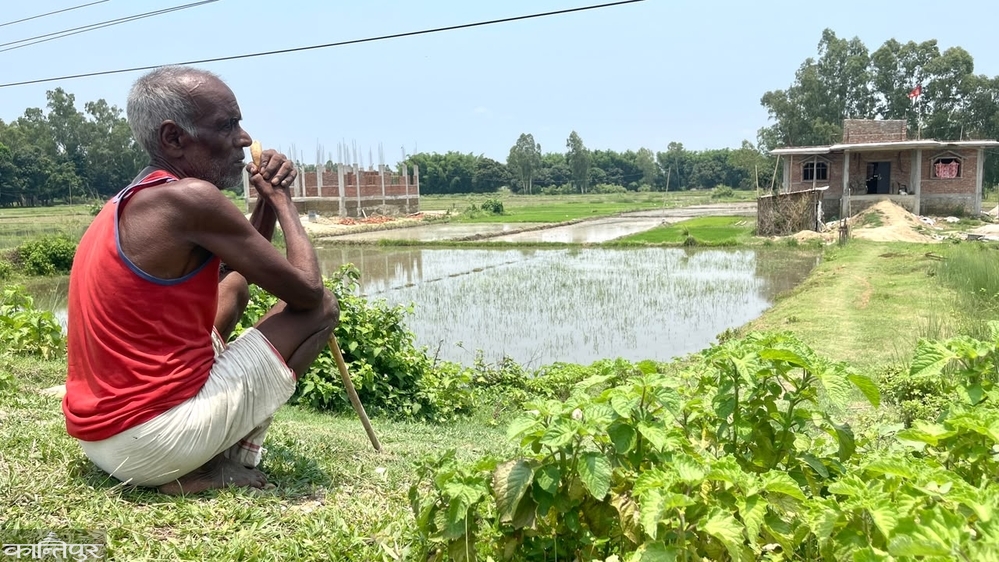
Ramkrishna Chaudhary, 50, of Rapti Sonari-3, Banke, has been cultivating on 4 bighas. The entire family of 10 depends on agriculture. 60 to 70 quintals of paddy are produced annually. He has cultivated maize on some land. "Although the use of technology in farming has increased compared to before, fertilizer is not available on time," he said. "It does not rain when needed. Electricity lines are cut repeatedly when irrigation is done through boring." He said that even though it is called an agricultural country, farmers do not get the value of their labor. ‘We should understand the problems of farmers and provide fertilizers on time,’ he said. ‘Although agriculture is the mainstay of the economy, farmers still have the problem of not getting fertilizers, irrigation and the price of their produce.’
40 percent of the fields in Palpa’s Madi Valley have been sown. He says that more than 6,000 ropanis of paddy are yet to be sown in the fields, so they can be sown by Ashar 20. Farmers who sow in these fields face the problem of irrigation and chemical fertilizers every year. Buddharaj Basyal of Upper Gothuwa, Tansen Municipality-9 said, ‘We farmers are like this no matter which government comes.’
72-year-old Basyal has experience of importing about 100 bushels of paddy until 10 years ago. He said that now, although it varies, they import 40 bushels of paddy. 70 percent of the farmers in Madi Valley cannot cultivate unless there is rain. There are no irrigation canals for most of the fields. Even those that do exist are dilapidated. In Palpa, annual rice is cultivated on 8,210 hectares of land. Farmers here grow improved and hybrid varieties of rice, such as Mansuli, Radha, Khumal, Basmati, US 312, and Savitri.
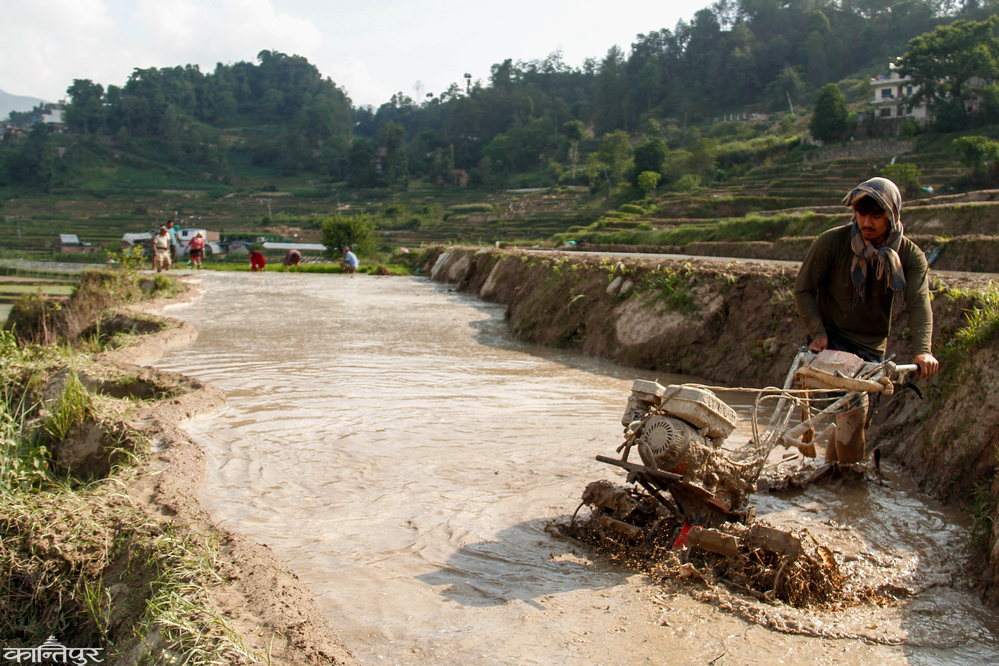
Suffering for waste seeds
Hiralal Kushwaha of Prasauni, Birgunj-23, Parsa was sweating in the Tantlapur sun on Thursday. But his focus was on how to procure DAP fertilizer. DAP should be spread before sowing. ‘I have saved a sack of urea that I brought to sow wheat last year,’ he said, ‘But, DAP has not been found.’
He buys seeds from the Indian market in Raxaul. Before sowing, the cycle of plowing the field, finding laborers, irrigation, sourcing chemical fertilizers, caring for the crop, and bringing it in can make him tired. They have dug boreholes in the fields for irrigation. The pumping set consumes 15 liters of diesel in 15 hours. When the motor is driven by electricity, 1 unit of electricity is consumed in 1 hour. ‘Earlier, not much chemical fertilizer was needed, but the production was low,’ he said, ‘Now, without chemical fertilizer, there is no crop production, and the production has increased by 5 times.’
Saini Mandal of Arnah, Shambhunath-12, Saptari was sitting on the roadside on Wednesday afternoon, looking at the field. While sowing is taking place elsewhere, he has not been able to start due to lack of fertilizer. ‘I cultivate 10 kattas in Bataiya (Adhiyan),’ he said, ‘Even when the field is full of rainwater, sowing has not been possible due to lack of fertilizer.’ He has already invested 6,000 when he plowed the field once with a tractor. ‘The landowner should be given half the paddy. He has not received fertilizer yet. It is difficult to raise the investment that he will sow without fertilizer.’
Local Suraj Mandal cultivates paddy on two and a half bighas. He has started sowing but there is no fertilizer. ‘I have installed an agricultural meter, but the motor does not run due to lack of voltage,’ he said, ‘I need fertilizer within 5/7 days. I am worried about how to get it.’
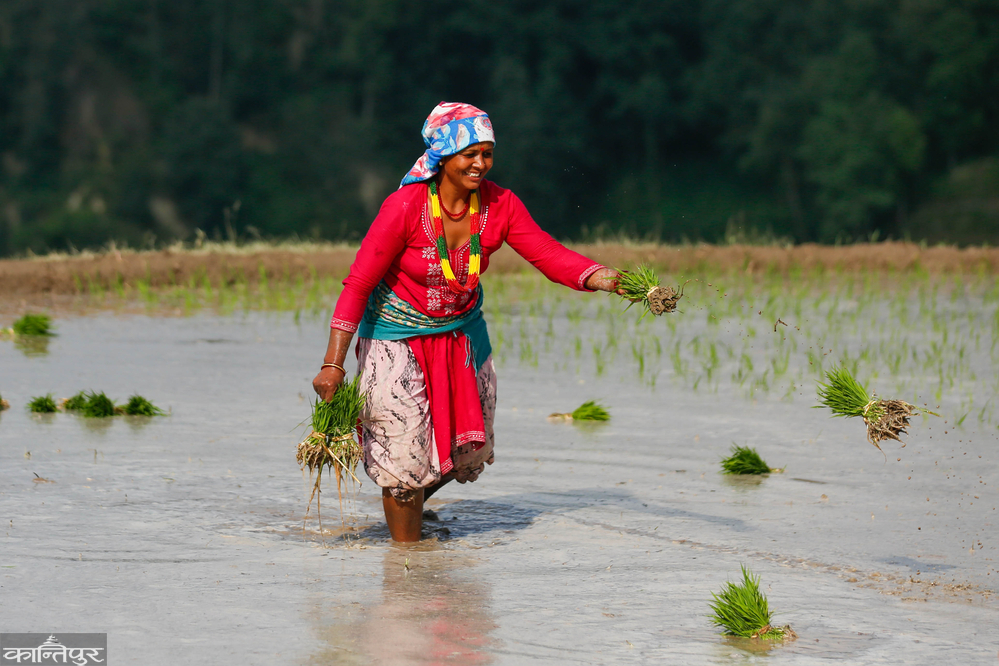
Last year, he had kept the field fallow due to lack of rain. He hopes that at least the government would have managed the fertilizer on time. Earlier, he used to plow the field with a tractor for Rs 250 per katha, but this year he had to pay up to Rs 600 as the price of oil has increased. Paddy is being cultivated on 78,000 hectares in Saptari.
Rajendra Joshi of Bhimdatta-10 Jimuwa in Kanchanpur has 10 kathas of land. He concludes that investment increases every year, but as production decreases, losses have started to occur. ‘Champagne and straw are beneficial for raising cattle and buffaloes, otherwise there is only a loss in paddy and wheat,’ he said, ‘The problem is starting to arise because it is difficult to get seeds, fertilizers and workers.’
According to Joshi, at least 6/7 workers should be employed for sowing. That too costs 5/6 thousand. One sack of DAP and one sack of urea costs 4 thousand. Even that is not available on time. Up to 5 thousand workers are spent during harvesting and 3/4 thousand are spent on threshing. He said that it costs around 30 thousand to cultivate half a bigha for a season. Even if 10 quintals of paddy are produced in it, the income is 30 thousand. According to the Agricultural Knowledge Center, Kanchanpur, paddy is cultivated on about 50 thousand hectares in the district.
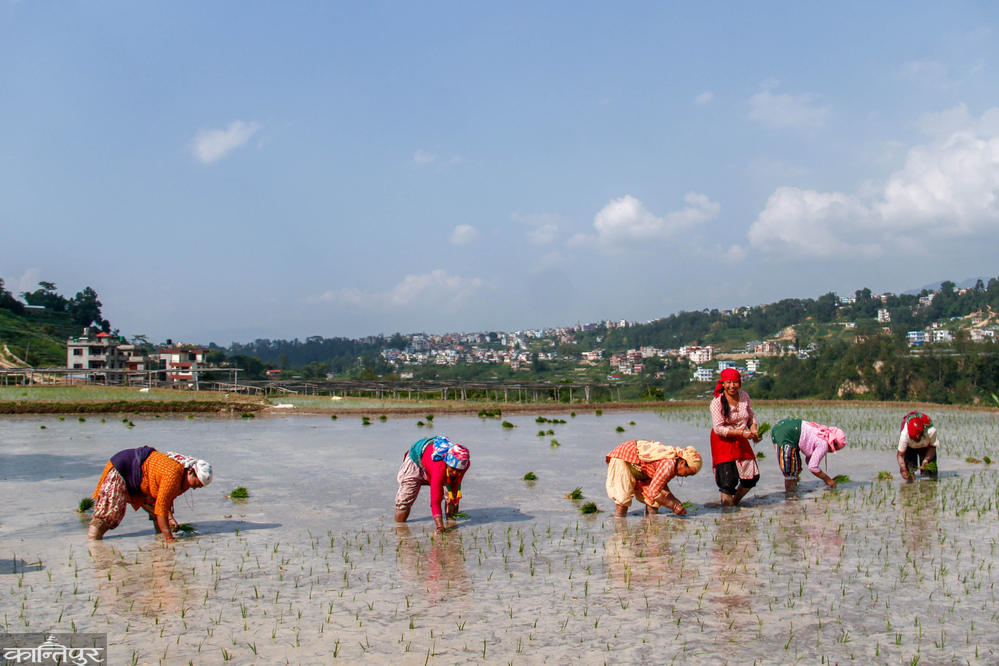
Drought concerns
Farmers are also more worried as the monsoon, which entered Nepal almost a week late on 5 Ashar, reached Lumbini and became inactive. The monsoon, which entered from the Koshi, has entered all parts of Madhesh and Bagmati. It has reached half of the Gandaki region and a small area of Lumbini and has become inactive.
‘The temperature is around 40 degrees Celsius in many places in the central and western Terai. There has been no rain in many areas there,’ said Sanjeev Adhikari, a meteorologist at the Department of Hydrology and Meteorology. ‘The department estimates that there will be less rain and more heat this monsoon. Since the monsoon will become active from Monday and will gradually expand to the far west, it will provide some relief to farmers.’ He said that there will be more rain from the middle to the end of next week. ‘We estimate that there will be a risk of floods, landslides and an impact on road transport at that time,’ he said.
The department has already projected that most parts of the country will receive less than average rainfall this monsoon. The maximum and minimum temperatures are likely to be above average across the country. There is a high possibility of less than average rainfall in the Madhesh province, which is considered a grain storehouse. There is a 55 to 65 percent chance of below-average rainfall in the eastern part of Madhesh Province, the southern part of Koshi, the southern part of Karnali, most of Lumbini Province, and most of the Sudurpaschim Province.
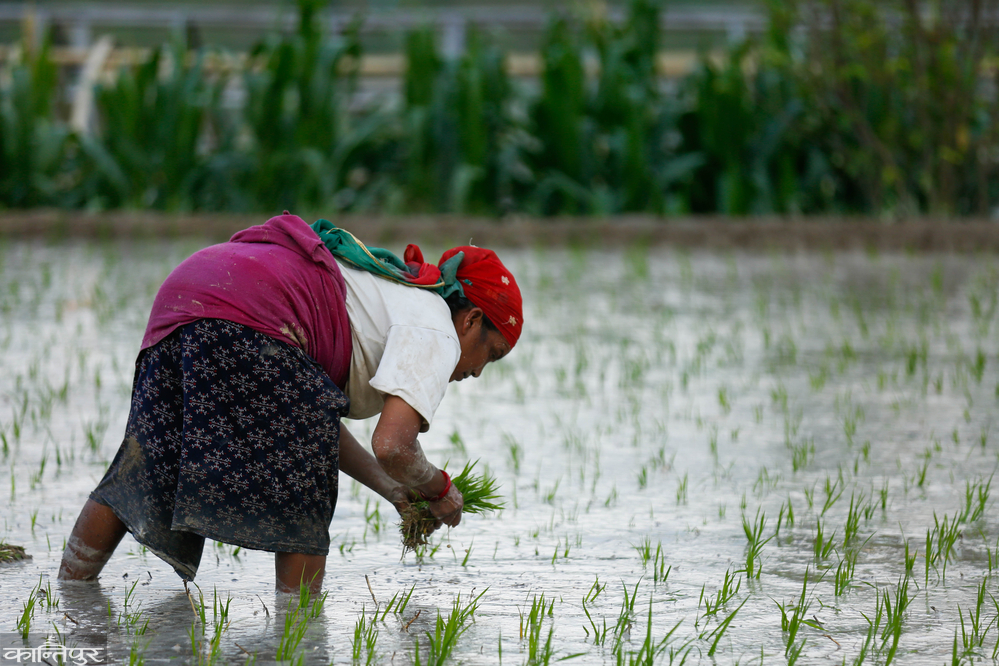
Experts are analyzing whether ‘El Niño’ has started in the Pacific Ocean, which will directly affect farmers’ production. El Niño is a natural weather cycle. When the water in the Pacific Ocean becomes unusually warm, it causes major changes in the weather around the world. The hot vapor rising from here also weakens the South Asian monsoon system.
The influence of the southwest monsoon is prominent in most parts of South Asia from June to September. During this period, about 75 to 90 percent of the annual rainfall falls, except for Sri Lanka and southeast India. It is considered important for water resource recharge, irrigation, and drinking water supply. However, there is a possibility that below-average monsoon rainfall will have a major impact on agricultural crop production, especially increasing the risk of famine.
Experts from the Food and Agriculture Organization of the United Nations (FAO) have said that the risk of drought is high in Asia this year as well. FAO has suggested that if farmers can identify the risk at the local level, they can take timely decisions such as delaying planting, selecting drought-tolerant crops, storing hay for animals and providing additional water.
However, farmers say that there is increasing hassle and suffering at every step, from collecting seeds to selling them. Although the governments of all three levels claim to be working with the agriculture sector as a priority in their annual budgets, the relief has not reached the farmers. Farmers complain that costs in agriculture are increasing and production is decreasing.
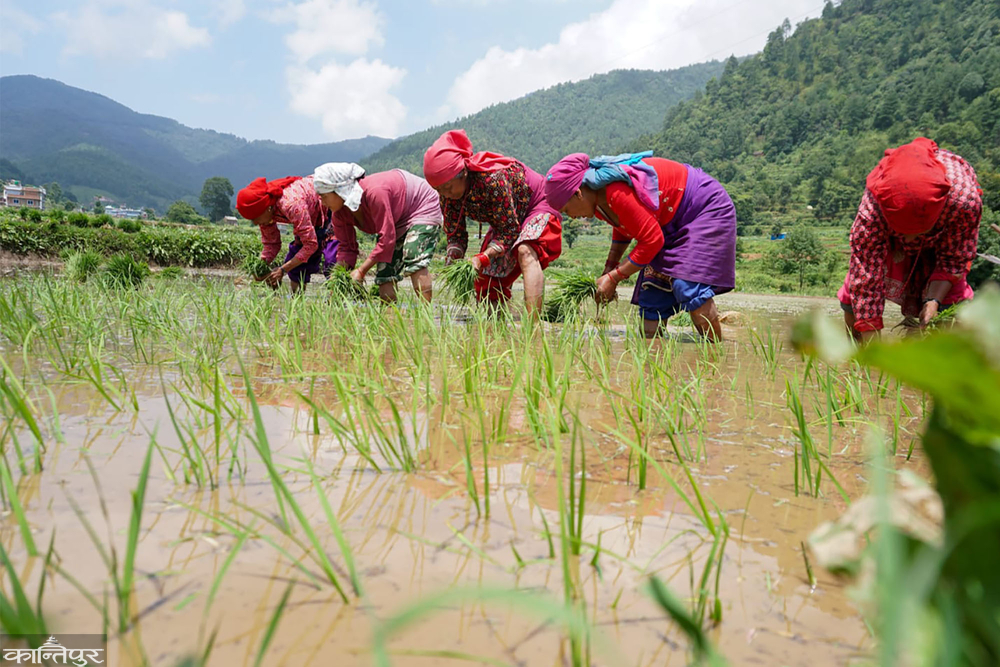
3.5 percent planting in Bagmati
Due to insufficient rain, more than 3.5 percent of the area in Bagmati Province has not been planted as of Friday. According to Sujan Kandel, spokesperson for the Bagmati Province Ministry of Agriculture and Livestock Development, planting was carried out in more than 16 percent of the area during this period last year.
According to the ministry, this year, the highest sowing has been done in Kathmandu, at 40 percent. Due to lack of rain, not even one percent of the fields in Makawanpur have been sown. Only 1.3 percent has been sown in Chitwan, known as the grain storehouse of Bagmati Province. Annual paddy cultivation is carried out on 28,680 hectares in Chitwan. According to the ministry, 3 percent sowing has been completed in Nuwakot, 2 in Ramechhap, and 5 percent in Sindhupalchowk. 16 percent sowing has been completed in Kavre, 8 in Rasuwa, 10 in Lalitpur, and 11 percent sowing has been completed in Bhaktapur. 0.41 percent has been planted in Dhading, 4 in Dolakha, and 4.2 percent in Sindhuli.
Nepal's total requirement of rice is about 7 million metric tons, so it is still seen that there will be a shortage of 1 million metric tons annually. The Department of Agriculture has analyzed that imports are also increasing due to the increasing interest of consumers in fine and fragrant rice in recent times. According to the National Agricultural Census 2078, out of 4.131 million farmer households in Nepal, 2.765 million (about 67 percent) are engaged in rice cultivation. Rice cultivation is practiced on 54 percent of the total cultivable land.
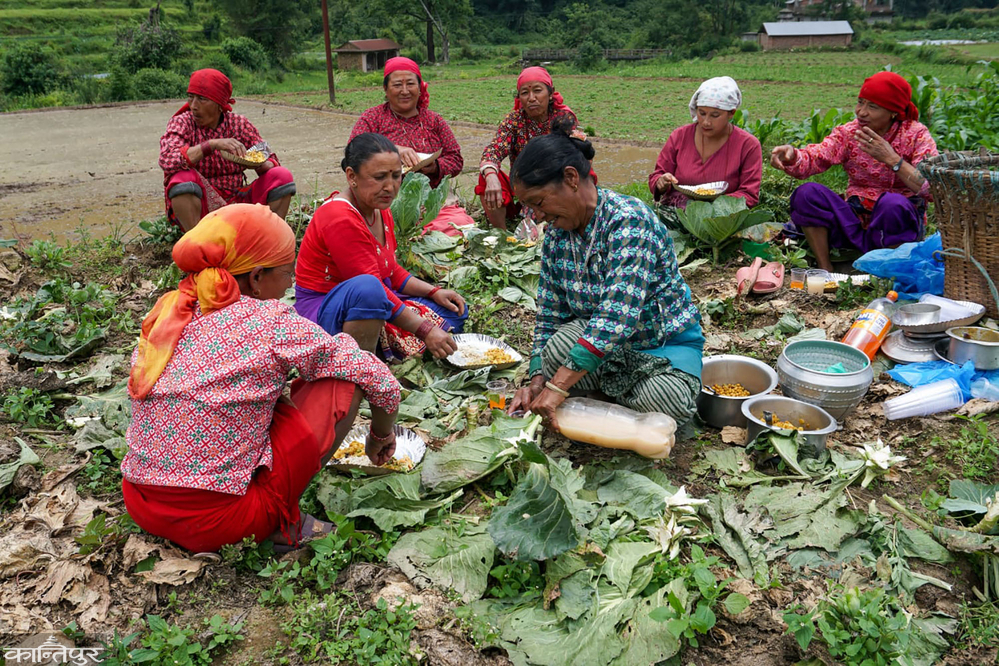
Productivity increased from 3.80 metric tons per hectare in 2076/77 to 4.19 metric tons in 2081/82. Last year, 5.955 million metric tons of rice were produced from an area of 1.420 million hectares.
Rice accounts for 13 percent of the agricultural domestic product and 50 percent of the total food grain production. Rice alone contributes about 200 billion rupees annually to the country's economy.
Farmers' pump sets seized
Lumbini Cultural Municipality has seized 14 electric motors and small Honda pump sets. Although the government's budget mentions installing deep boring at the community level to solve the long-term shortage of drinking water and irrigation in the dry season in the Terai-Madhesh region, there are comments that the municipality is being lenient towards farmers. The municipality, on the other hand, has argued that it had to take such a decision after the problem of drinking water in the morning and evening for consumption began.
Acting Mayor Kalpana Harijan informed that some farmers who used boring against the notice started coming with limp hands and feet to collect the confiscated motors and pump sets, and some of them were returned after being given documents. Although it seemed a bit inconsistent to make such a decision when the municipality was distributing pump sets and borings under subsidy earlier, she said that she was forced to take this step due to the drinking water crisis. "The pump set installed for the fields was confiscated after there was no drinking water. First, we had to drink water. Later, we will do farming," she said.
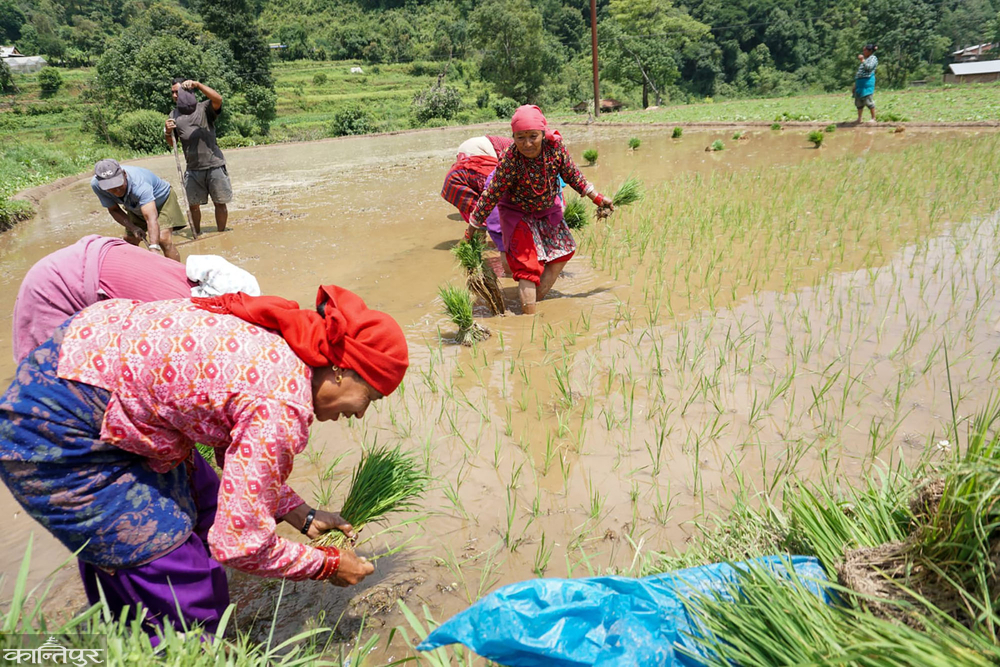
The municipality had issued a notice on 11 Ashar, urging farmers not to draw water from the borehole for paddy planting and not to use the drinking water source unnecessarily until there is sufficient rainfall. Acting Chief Harijan said that this decision was taken to protect the groundwater resources and prevent a shortage of drinking water. According to her, the level of the groundwater resources has decreased due to excessive drawing of water from the borehole in the area around Lumbini. ‘Due to this, there has been a problem with drinking water after the water supply in the borehole and hand pump stopped flowing for a few days,’ she said. ‘We have been forced to ask not to use the borehole for paddy planting to protect the drinking water source.’
The municipal executive has also decided to confiscate the electric motor and other materials of those who violate the decision until further notice and pay a fine of Rs 10,000. According to the municipality, in urgent cases for seed and nursery protection, water can be used only from 9 pm to 4 am, with minimal impact on the drinking water supply. The municipality's Chief Administrative Officer Tara Gyawali said that since drinking water is a basic need of the citizens, such a step had to be taken to not draw water from the borehole for planting until there is sufficient rainfall and to first meet the daily drinking water needs of the citizens.
According to the Municipal Police Chief Nitesh Kumar Tiwari, 14 electric motors and small Honda pump sets belonging to 14 farmers from Ward No. 2, 7, 9, 10 and 11 who were working against the information have been confiscated. Due to the lack of sufficient rainfall in the summer season in the Terai-Madhesh, farmers are forced to use electric motors and pump sets to draw water from the borehole and nearby rivers, lakes, streams and ponds to plant rice.
— Fanindra Sangam (Kathmandu), Ram Prasad Chauhan (Bardia), Rupa Gahatraj (Nepalganj), Manoj Paudel (Kapilvastu), Shiv Puri (Rautahat), Shankar Acharya (Parsa), Vidyananda Ram (Rajviraj), Parvat Portel (Viratnagar), Naveen Paudel (Parasi), Bhavani Bhatt (Kanchanpur), Madhav Aryal (Palpa) and Pratap Bishta (Hetaunda)