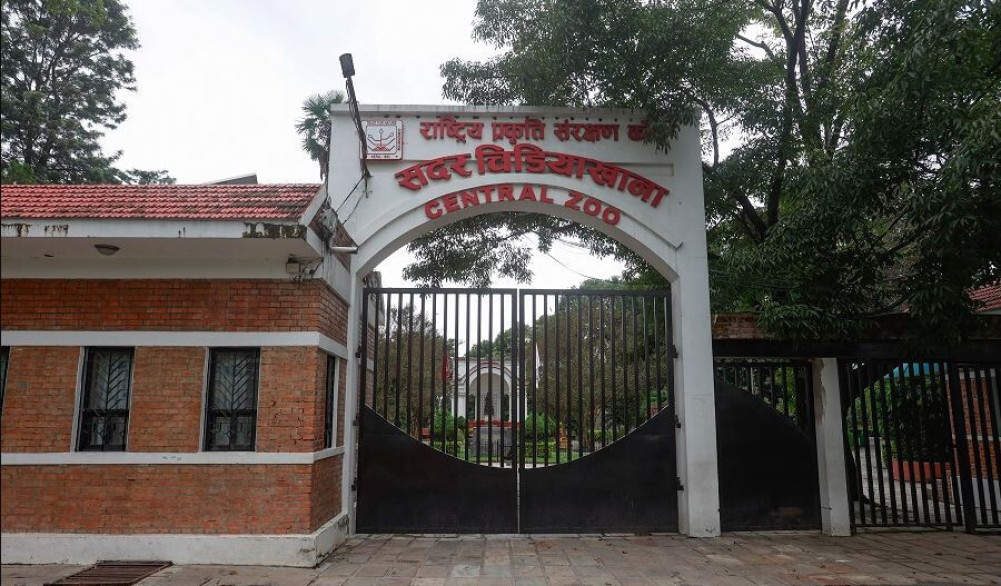
The fund removed Sah from his position, saying that the zoo administration did not take the matter seriously even after bird flu spread within the zoo and birds started dying rapidly since June 29.
We use Google Cloud Translation Services. Google requires we provide the following disclaimer relating to use of this service:
This service may contain translations powered by Google. Google disclaims all warranties related to the translations, expressed or implied, including any warranties of accuracy, reliability, and any implied warranties of merchantability, fitness for a particular purpose, and noninfringement.
The National Trust for Nature Conservation has removed zoo chief Satyanarayan Sah from his post and started an investigation for not providing timely information on sensitive issues like bird flu infection. The trust has removed Sah from his post, saying that the zoo administration did not take it seriously even after bird flu spread in the zoo since Jestha 29 and birds started dying in droves.
The zoo had closed the zoo only on Ashar 5. So far, 37 animals, both large and small, have died in the zoo and 24 have been confirmed to be infected with bird flu.
The situation here has now become dangerous after bird flu was detected in the animals inside the zoo. Due to which the zoo has been completely sealed. Once confirmed, the highly contagious bird flu that affects birds spreads easily. It has also seriously affected other rare birds and animals in the zoo. What is even more frightening is the fear that this virus can also be transmitted to humans.
According to the Animal Services Department, the zoo's birds had started dying since 29 Jestha. After the birds continued to die, three birds were taken for postmortem to the Central Animal Disease Research Laboratory, Tripureshwor, under the department, on 1 Ashar. All of their samples were tested and confirmed to be 'Highly Pathogenic Avian Influenza', i.e. H5N1 bird flu. Animal Services Department spokesperson Dr. Mukul Upadhyay says, "On 1 Ashar, various birds were brought from the zoo to our Central Animal Disease Research Laboratory, Tripureshwor for postmortem. We tested them immediately, also did a rapid test and PCR, which is a confirmatory test called molecular diagnosis, and we found H5N1." The next day, our team went to the zoo. According to all the information received there, we had received information that the birds had been dying for some time and that they themselves had conducted rapid tests on some of them.
Dozens of birds, including the endangered Latokosero, Bakulla, rare vulture, swan, stork, etc., have died due to the infection. Small mammals have also died in the zoo. According to Babulal Tiruwa, acting head of the National Trust for Nature Conservation Headquarters Zoo, this infection has also been confirmed in wild cats, water cats, tigers, deer, monkeys and other animals inside the zoo.
According to Babulal Tiruwa, acting head of the Headquarters Zoo, among the birds, Latokosero, Nepali Kalij, and a bird called Sawari have died. Apart from birds, some small mammals have also died. Wild cats and tigers have also died.
A leopard has also died in the zoo. According to sources, the lab test of the leopard also showed bird flu. However, acting chief Tiruwa said that the report from the laboratory is yet to come. So far, the government body has not officially spoken about how many birds and animals have died, and whether the death rate has stopped or not. According to sources, a total of 37 animals and birds have died so far. Of which, bird flu has been confirmed in 24 and tests for others are ongoing.
According to officials, this is the first time that such a large-scale bird flu infection has spread in the Central Zoo. It is estimated that the infection spread from crows and other wild birds entering the zoo.
An investigation committee formed on the orders of Agriculture, Forestry and Environment Minister Geeta Chaudhary to investigate the death of birds and animals inside the Central Zoo in Jawalakhel is investigating. However, the official data on how many birds and animals died there has not been made public. A three-member investigation committee coordinated by the spokesperson of the fund and head of the species department, Rachana Shah, is investigating the incident. The ministry says that the details will be made public only after the committee's report is received.
Maheshwar Dhakal, spokesperson for the Ministry of Agriculture, Forest and Environment, says that a team there, including veterinarians from the National Nature Conservation Fund, is conducting discussions and studies. Everything will be made public after the study report by that team is submitted.
The zoo, which receives an average of 5,000 visitors on holidays, has been closed indefinitely since Asad 20 after the spread of bird flu. Currently, 20 employees are working on disinfection at the zoo.