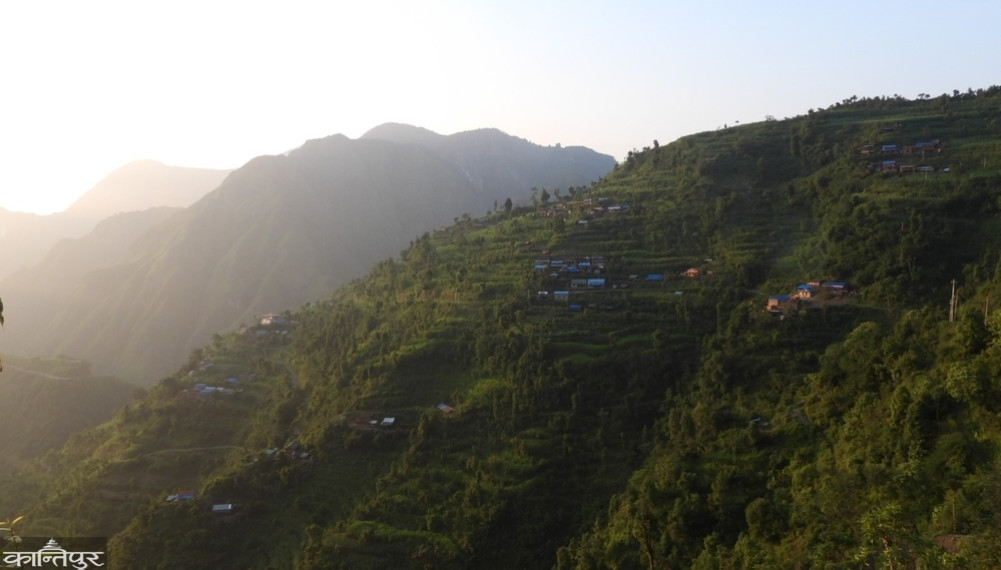
Although the political struggle waged by the Chepang community in Jugedi, Chitwan, 50 years ago, while struggling with hunger, injustice, and backwardness, has left a deep mark on their lives, expectations for development and change remain unfulfilled.
We use Google Cloud Translation Services. Google requires we provide the following disclaimer relating to use of this service:
This service may contain translations powered by Google. Google disclaims all warranties related to the translations, expressed or implied, including any warranties of accuracy, reliability, and any implied warranties of merchantability, fitness for a particular purpose, and noninfringement.
The struggle that took place in Chitwan Jugedi 49 years ago on Asar 6, 2034, is somehow connected to the communist history of Nepal. Although it was planned and led by the leftists, the indigenous Chepang community was in the majority in that incident.
Two members of the Chepang community who were killed in the government's crackdown during the Panchayat-independent regime were declared martyrs after the republic came. After that incident, the local Sundar Chepang emerged as a communist leader. This incident has been linked to political awakening among the Chepang community, who live in Bhirpakha and struggle to earn two meals.
Dil Bahadur Praja Chepang, one of the participants in the 'Jugedi struggle', says that similar incidents have brought about political changes in the country and have brought development, albeit minimal, to Chepang village. Dil Bahadur recounts that the struggle for food was waged to alleviate the suffering of the poor. Born in 2002 BS, Dil Bahadur had seven brothers. One of his uncles, Dasharath Chepang, was shot and killed in the struggle for food. Along with Dil Bahadur, Dasharath's son Kishta Bahadur was also involved in the incident. The two of them were fortunately saved.
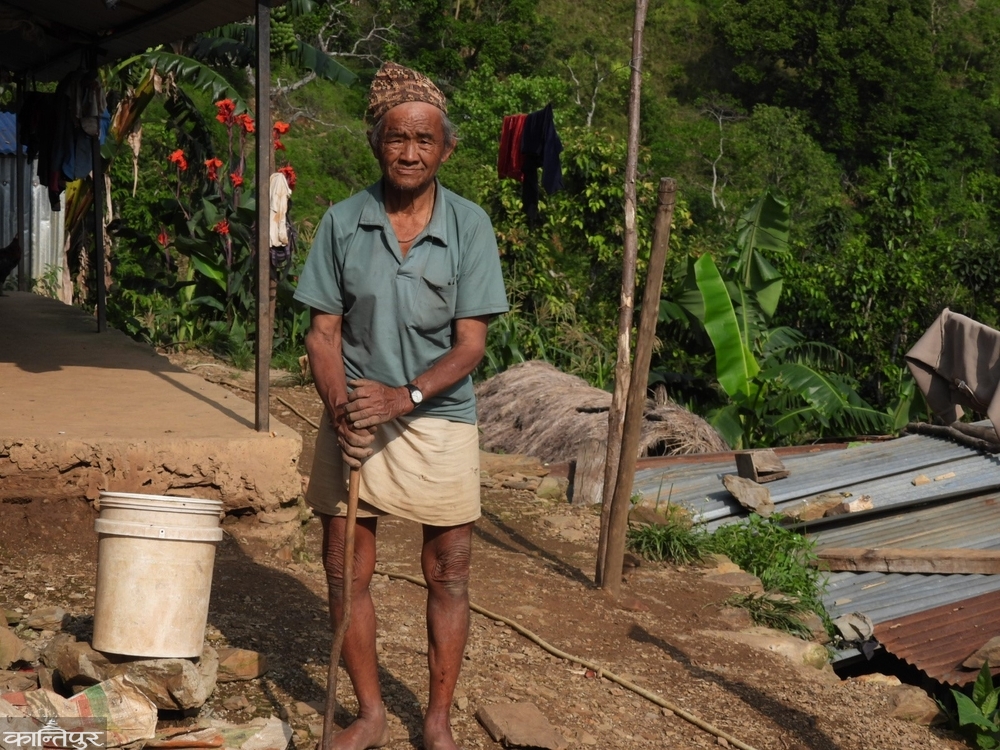
'No matter what maize or millet they planted, it was a great sorrow to eat it after Falgun/Chait. The maize planted in Falgun had to be harvested after four or five months, towards the end of Shrawan. It was a great disaster until the maize was harvested,' Dil Bahadur recounted.
Their ancestors had cleared the forest and started farming in Hapni, Kaule, a hilly area in the northern part of Chitwan. But life had become easier.
Even though the roads have electricity now, it is still not easy to get to and from the city market. At that time, it was even darker. From Kurintar, Fisling or Mauwakhola near Muglin on the banks of the Trishuli River, one had to walk steeply for three to four hours to reach the village. From Bharatpur Ratnanagar, one could only reach this area by walking on foot for a whole day on the hilly road through Jutpani, Shaktikhor, and Upardanggadhi.
Naresh Sharma Neupane of Shukranagar, West Chitwan, reached the hilly corners of Mayatar, Hapani, and Guchhibang in the north in 2031 Falgun. He was a young member of the Communist Party. He was known as Kalidas in the party. He kept changing his name to avoid the eyes of the then Panchayat rulers. The people of the hilly region still know him as Madan, not Naresh or Kalidas. Dil Bahadur said that Madan used to come to talk about politics. At that time, the communists of Nepal were divided into many factions and factions. Ruplal Bishwakarma Shrestha of Chitwan, who was with the party's founding general secretary Pushpalal Shrestha, separated from him and started focusing on district-level organizations and struggles. He formed the 'Kisan Sangharsh Group' and took forward his activities. He launched the 'Kisan Patrika' to propagate his ideas.
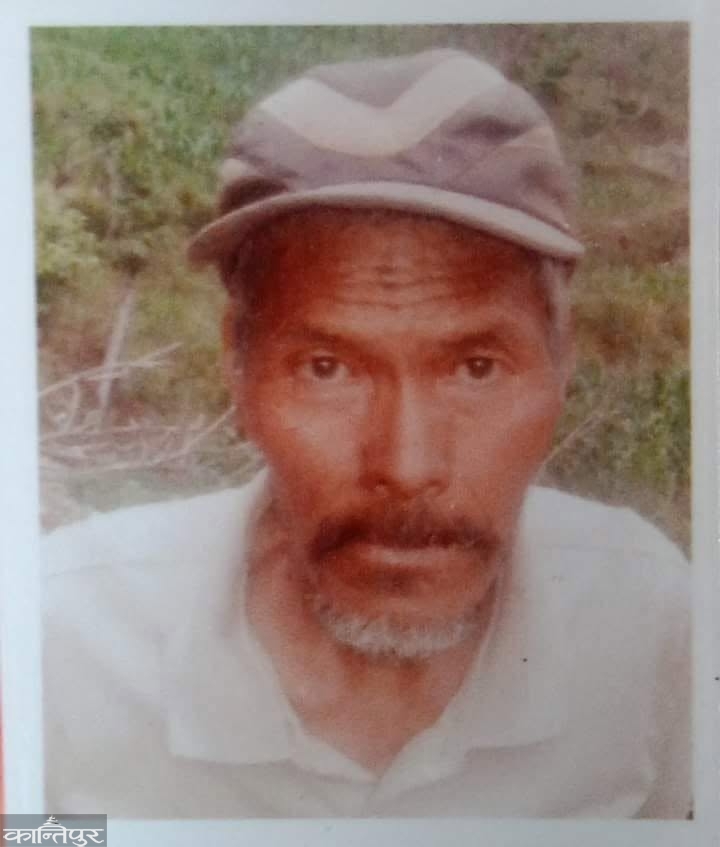
Madan was responsible for spreading the organization, also known as the Kisan Patrika Group, to the remote hilly regions of the district. He expanded his activities in the hilly regions of Chandibhanjyang and Kaule. Organizing the local community and running political classes and at other times becoming their assistants in the village and becoming hay and firewood gatherers, farmers, and herders of the fields was his daily routine. There was no state presence in this place.
Naresh, known to the locals as Madan, had a reliable local ally, Sundar Praja Chepang of Mayatar. Sundar understood Nepali. There were many people in the village who did not understand Nepali. Naresh taught Sundar, Sundar taught the villagers. After understanding the matter, the locals formed a committee. The committee discussed the problems of the village. ‘I used to express political views. They used to form an organization. They would discuss and decide on local issues and problems,’ Naresh said. The area committee formed by the organization started looking for a way to identify the issues of that area and solve the problems. Neupane says that the Jugedi conflict arose in this process.
Jugedi is 12 kilometers northwest of Narayagadh Bazaar. Jugedi, located on the banks of the Trishuli River, developed into a market after the construction of the Narayangadh-Muglin road in 2036. But at that time there were ordinary shops. Among them, Dharmalal Mulmi's grocery shop was a bit bigger. Jugedi was the shopping place for the residents of the western part of Kaule as well as Chandibhanjyang and Dahakhani hills. 'The shopkeepers are unjust, they take money at a high price even if they lend it.' Later, I heard the villagers saying that they were cutting our goats, chickens, and grains at cheap prices and giving loans if they did not get enough. I used to tell Sundar that this injustice is tyranny, Sundar told the villagers,' Neupane said.
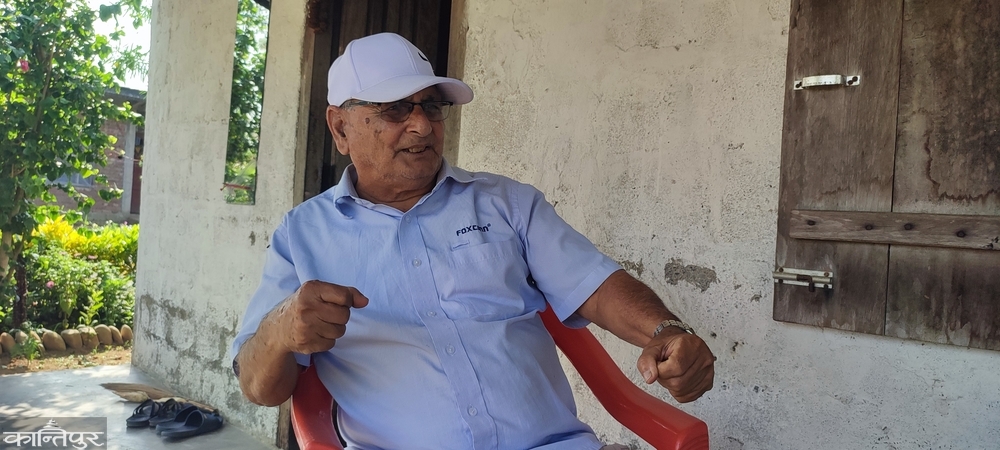
There were not only Chepangs in the hills, there were also Gurungs and some Vishwakarma communities. Neupane said that after everyone was organized, a plan was made to fight against injustice. Passionate songs and slogans started resounding in the hills. Dil Bahadur has not forgotten some of those slogans. Even after reaching 80 years of age, Dil Bahadur returns to his youth when he remembers those days.
Dil Bahadur said that during the famine, he used to teach that the system itself had to be changed to end the practice of paying back the food brought on loan with interest. But Madan and Sundar insisted on starting a struggle for this. Naresh Neupane, known to the villagers as Madan, said that the area committee itself decided on what issues and how to struggle.
The area committee formed under the chairmanship of Bhim Bahadur Gurung had two Chepang members, Sundar and Bhakta Bahadur. Naresh says that the committee decided to take action against Dharamlal Mulmi, a moneylender from Jugedi. ‘A year ago, we were going to attack Muglin.’ But what happened later, we were advised to go to Jugedi again. The area committee was autonomous in making decisions on the plan,' Naresh said.
The approval was given by the higher level through the district level. At that time, there were restrictions on opening political activities and organizations in the country. The government had adopted a policy of filing cases and imprisonment against those who did so. That is why the upper-level leaders used to live in Darbhanga, Bihar, India, and after getting approval from there, the Juggedi struggle was implemented, Naresh said.
There were 20/22 houses in Dil Bahadur's Hapni village. They would often go to Juggedi. Dil Bahadur says that not everyone was even informed about the incident politically. If they go to Juggedi, the organization would provide goods on credit. It would not cost much and interest would not be charged, and the villagers would be assured that they would be able to sell their products and pay for them safely by Magh, Falgun, and Chaitra.
Kishta Bahadur, son of Dil Bahadur's brother Dashrath Chepang, also understood this. Even if they left in the morning, it was not possible to reach Jugedi that day. The struggle involving hundreds of locals was not as easy as going to the market and returning. So the plan was to leave early, stay overnight, and take action early the next day. 'The corn had just turned milky. We roasted the corn and put it in a bag to eat. We left when the cows were being slaughtered. Was it 9/10 in the morning?' Dil Bahadur said.
A wave of four hundred people from Hattibang in the east, Guchhibang in the south, and Dumkim, Mayatar, Chandibhanjyang, and Dahkhani in the front moved forward. Dil Bahadur says that the majority of the people in that wave were Chepangs, though there were some Gurungs and Bishwakarma people. Kist Bahadur Chepang says that after dusk, they settled in Dahakhani village near Jugedi. 'But it started raining heavily. The next day, it was raining heavily. The leaders came and said, "Get up, get up." The villagers started saying, "It's raining, what should we do?" No, it would be better if it rained, the leader encouraged them, "We should go," Kist Bahadur said. 'After we started walking, some villagers started hiding in the bushes. The leaders lit a light and searched for everyone and lined them up.'
According to Naresh, leaders including Ruplal had gone to Dahakhani from Bharatpur at night. Various plans were discussed to make the incident result-oriented. Accordingly, a team had gone before dawn to understand the facts of Jugedi market. Naresh told that everyone was taken down by the team after the team said yes.
According to the book ‘Ruplal Bishwakarma in Nepali Politics’ by Rajendra Prasad Regmi, a professor of history and a doctorate in history, it is mentioned that about four hundred people gathered at the Jugedi Bazaar at 5 am on Asad 2034. They were not only carrying sticks in their hands, but also carrying khukuri and khurpa. This created an atmosphere of panic in the market. Neupane, who was the field commander, said that after blowing the first whistle, they would collect the goods, after blowing the second whistle, they would tie the samana and after the third whistle, they would leave. The villagers who came out of the market waving sticks started taking away the goods from the shop after the first whistle. Coincidentally, the shopkeeper was not Dharmalal Mulmi. The villagers started filling the food grains from his godown in sacks and putting them on their heads.
Sanulal Joshi had a clothing shop under the guise of a shop. The party had no plan or decision on what to do with the other shops except Dharma Sahu. But the villagers also took clothes from that shop. Field Command Neupane blew the second and third whistle. Everything happened according to the rhythm of the whistle. After the third whistle, the villagers climbed the hill carrying their belongings. After the villagers entered the shop, Sanulal Joshi ran to Narayangadh.
The villagers carried as much belongings as they could and left them on the Simalchaur hill, two hours away. Field Commander Neupane's plan was to reach Dahakhani Chuli, a little further away, from there and distribute the belongings. If they had gone there, it would have been difficult for outsiders to reach. But everyone stayed in Simalchaur. They unloaded their belongings and started dividing them equally. The police had already received information about the incident from Sanulal Joshi. 'They started collecting and distributing the goods. Two or four people were responsible for looking out for the road. We were collecting the goods when they started saying, "The police are coming," Kist Bahadur said. 'Without deciding what to do, the police came in front of us. The police who came near first pointed their guns at the sky. After the shots were fired, all the villagers started running away, leaving their belongings behind.'
While running, some fell from the cliff, some hit rocks. Kist Bahadur said that they saved their lives by running. His father Dasharath did not run away but climbed a tree. He died on the spot after the police opened fire. In that incident, two Chepangs, including Dasharath, Kist's father Dil Bahadur's uncle, were killed.
The government published a notice in the Nepal Gazette on Falgun 29, 2079 BS and listed the names of Sant Bahadur Chepang and Dasharath Chepang in the Chitwan section at number 84 and 85, respectively. The then government had decided to declare the two people killed in the Jugedi incident as martyrs on Poush 9, 2065 BS. Four years later, their names were published in the gazette.
As mentioned in Regmi's book, seven people were arrested in the incident. But many others, including local Chepang leader Sundar Chepang, escaped. Sundar passed away four years ago. Ruplal Bishwakarma, while carrying out local struggles through the Kisan Sangharsh Group, united with other organizations. After that, parties like Nepal Mazdoor Kisan Sanghatan, Nepal Sarvaharabadi Shramik Sanghatan were formed. The farmer struggles like Jugedi and Jutpani and the incident of the capture of Purtighat Bank to raise financial resources for 'preparing an army to carry out a people's revolution' introduced Ruplal to the political field. Sundar Chepang also became a central member of the Nepal Workers' Peasants' Organization and the Proletarian Workers' Organization. But after his second marriage, he was prosecuted. Before that, he was disappointed during the Jutpani struggle.
Surya Magar, who worked with him in the party, said that Sundar became disappointed after the second Jutpani struggle and then became inactive because the party took action when he got married for the second time. He had four sons and eight daughters from his two wives. Sundar's 37-year-old younger son Ashman Chepang is still in the village. Ashman said that everyone calls his father a leader, but he does not know much about it.
As mentioned in the book by author Regmi, after the Jugedi incident, the news of an encounter with the police when more than 250 dacoits looted two shops and took three kosh to Simal Bhanjyang for distribution was published in Gorkhapatra on 11 Asad 2034. The news mentioned that the police opened fire in self-defense and one person died and the robbers dispersed.
Then on July 11, Regmi wrote in the book that the news was published in Gorkhapatra that the incident was a result of misguidance by undesirable elements. At the end of the news, Regmi included in the book that the government sent 200 quintals of rice to solve the food problem of the Chepang community there. Regmi is of the opinion that the government has accepted the fact that the Jugedi incident occurred as a result of the food problem, although it is indirect.
In 2048 BS, the NCP (Unity Center), which was formed by integrating with Ruplal's communist component, started celebrating Farmers' Day to commemorate the day of the Jugedi incident. Even though it was separated from the Unity Center, the then Maoists led by Pushpa Kamal Dahal also used to celebrate the day of the incident as Farmers' Day.
At that time, the Nepal Workers' and Peasants' Organization claimed that the action was taken in the spirit of proletarian thought by changing the traditional thinking and actions of the backward castes, but how did this incident affect the Chepang community? Some lost their lives in the incident, some were arrested and imprisoned. Those who tried to escape were forced to go into hiding. Kist Bahadur Chepang lost his father.
Naresh Neupane, who left the party immediately after the Jugedi incident, says that it would have been better if the villagers had been trained politically rather than engaging in such a struggle. 'Along with political training, it was necessary to link the struggle with production. The fruits, vegetables, goats and chickens that were grown there could have been brought here and sold,' Neupane said. Although not elsewhere, commercial vegetable farming is now flourishing in the village of Hapani. But this change is not because of the party but because of the organizations, says Dil Bahadur Praja Chepang. 'Now roads and electricity facilities have been added.' But not much has changed in Chepang village in 50 years,' he says.