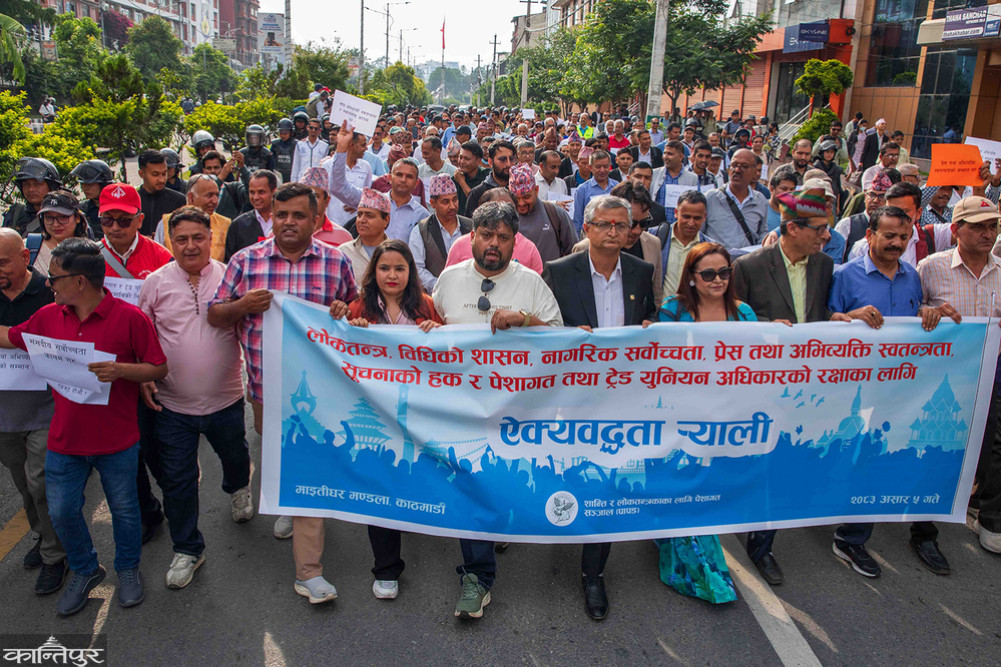
Various professionals and civil society representatives participating in the rally held on Friday accused the government of focusing its recent steps against democracy, the rule of law, press freedom, and citizen supremacy.
We use Google Cloud Translation Services. Google requires we provide the following disclaimer relating to use of this service:
This service may contain translations powered by Google. Google disclaims all warranties related to the translations, expressed or implied, including any warranties of accuracy, reliability, and any implied warranties of merchantability, fitness for a particular purpose, and noninfringement.
Professional associations, considered the backbone of democracy and the rule of law in the country, have once again taken to the streets after almost two decades. The return to the streets of the Professional Network for Peace and Democracy (PAPAD), which played a decisive and leading role against the monarchy in the 2062/63 People's Movement, has indicated that questions have begun to be raised about the current style of state governance.
Various professionals and civil society representatives participating in the 'Unity Rally' taken out from Maitighar Mandala to the Road Department on Friday accused the government of focusing on democracy, the rule of law, press freedom and citizen supremacy.
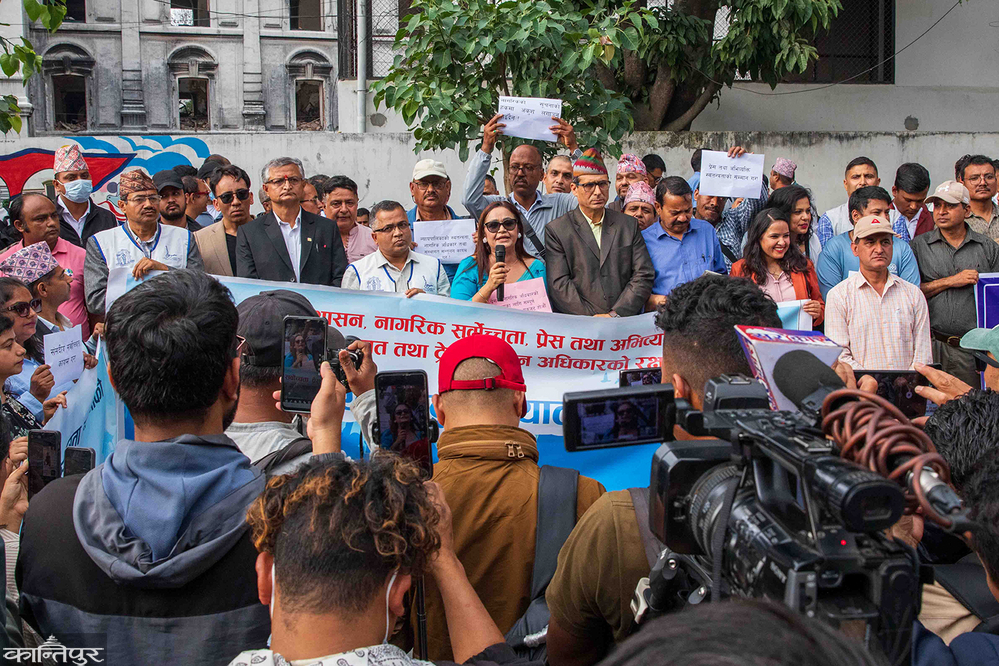
Representatives of the Nepal Bar Association, Nepal Medical Association, Nepal Professors' Association, Nepal Teachers' Federation and Nepal Engineers Association, as well as intellectuals, were present at the protest led by the Federation of Nepali Journalists. Addressing a corner meeting after the rally, Federation of Nepali Journalists (FNJ) President Nirmala Sharma said that the government has imposed an 'economic blockade' to strangle the freedom of the press and expression. She said that the controversial circular issued by the Office of the Prime Minister and Council of Ministers on Chaitra 18 has created a crisis in the very existence of the private sector media. The circular has made a policy provision to allow government information and advertisements to be published and broadcast only in government-owned media, which the Federation of Nepali Journalists has considered as a ploy to silence independent media and financially collapse.
'This is not just an issue of journalists or media, it is a fundamental issue of the general public being well-informed and protecting freedom of expression,' said President Sharma. 'The state has tried to control access to information by imposing undeclared restrictions on private media. This is a shameful issue for a democratic system.'
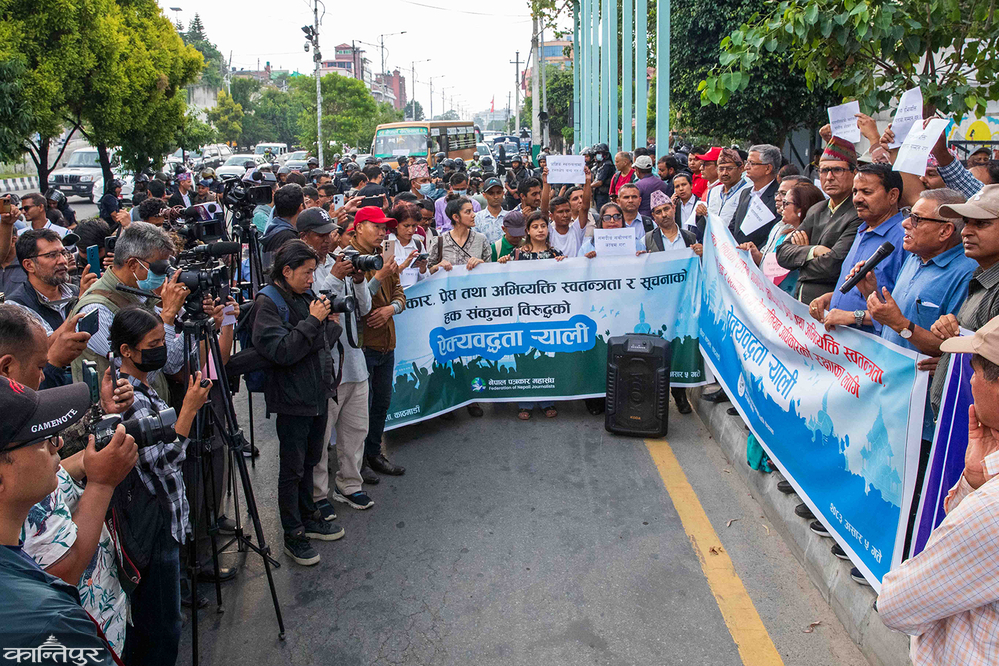
Chairperson Sharma complained that journalists have been denied easy access to parliamentary committees and various government offices in recent times. Due to which, she alleged, the people's constitutional right to information is being violated. 'What is the character of the state now? Instead of sending journalists to the established mechanism, the Press Council, to inquire about the content and source of news, they are directly taken to the Cyber Bureau of the police and treated like criminals,' Sharma expressed her anger. 'Such steps of fear and panic have created a terrible situation of 'self-censorship' among journalists, which has led to a situation where working journalists have to flee their profession.'
Senior human rights activist Sushil Pyakurel commented that the government's discriminatory policy in the distribution of advertisements and public welfare funds is against democratic values and norms. 'If the media is not independent and strong, democracy itself weakens. Prejudice and discriminatory treatment of the press are signs of tyranny,' Pyakurel said, 'It may be natural for the government to strengthen or use its own media to express its views, but it can never be acceptable to discriminate between private and government in public advertisements and aid distribution from the common treasury of the state.'
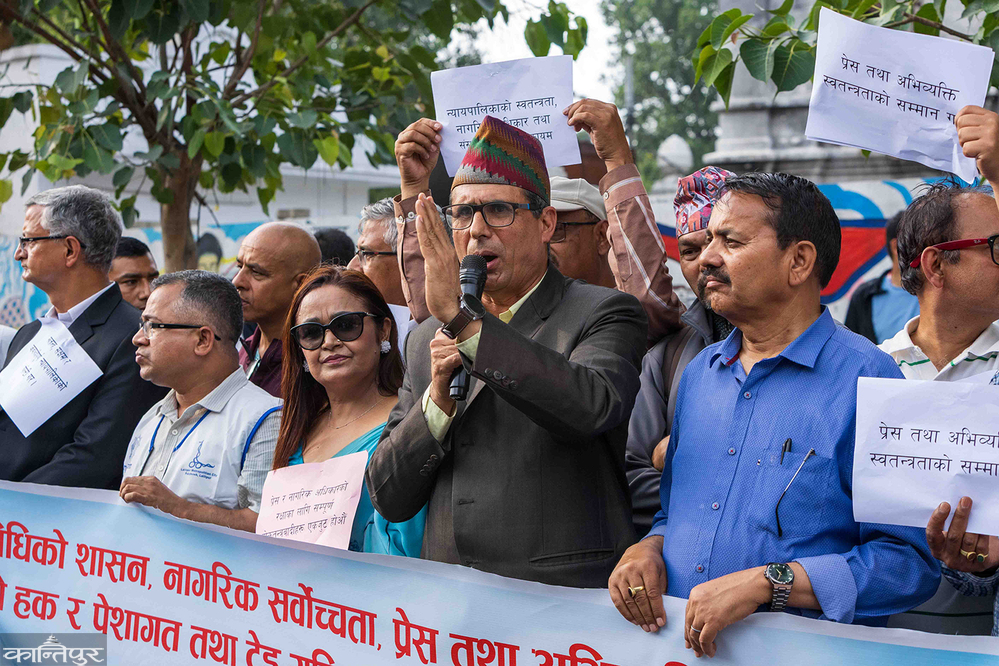
Pyakurel also strongly objected to the ongoing all-out interference in the rights of trade unions. 'There may be some shortcomings or inconsistencies within the trade unions, which can be improved from within the system. But taking away established and constitutional rights by making an excuse for weaknesses is counterproductive,' he added, 'Currently, a kind of atmosphere of fear and panic has been observed among journalists, teachers, professors and technical organizations. Many sectors are confused about their existence and future.'
He warned the government not to limit democracy to periodic elections only. 'Democracy is not just a ladder to win elections and rise to power. Citizens should be able to speak freely, voice their disagreements and feel safe within the country. After the people gave their trust and votes, the government's behavior should be more decent, responsible and tolerant, but now it is showing the exact opposite and ungenerous character,' Pyakurel analyzed.
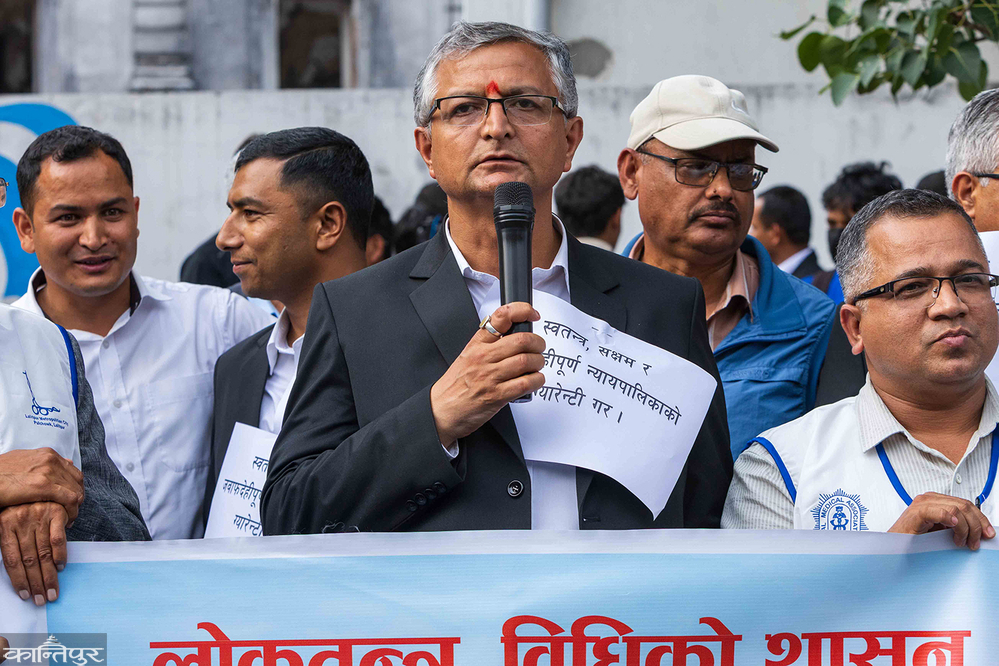
Representatives of the Nepal Teachers' Federation, who came to express solidarity with the protest, claimed that the government has attacked the established trade union rights of various professionals. Shankar Adhikari, president of a constituent organization of the teachers' organization, expressed concern that the state has gradually attacked the trade union rights of civil servants and health workers and now it is the turn of teachers.
'In the federal democratic republic that we have brought after years of imprisonment and bloodshed, there is an attempt to curtail the rights of citizens and professionals,' the official said, 'The intellectual educators and professionals of the country have not taken to the streets out of desire, this is a warning to stop the state's journey towards autocracy in time.'
Similarly, Nepal Teachers' Federation President Laxmi Kishor Subedi commented that the current government has become intolerant and intolerant towards civil rights and constitutional supremacy. Warning the government, Subedi said, 'The presence we have on the streets of Maitighar now is just a symbolic beginning.' If the government does not correct its decisions, if necessary, millions of teachers across the country will take to the streets and the Teachers' Federation will lead the storm.' He urged the state to immediately become 'human-friendly' and 'citizen-friendly' and respect the constitutional rights of citizens.
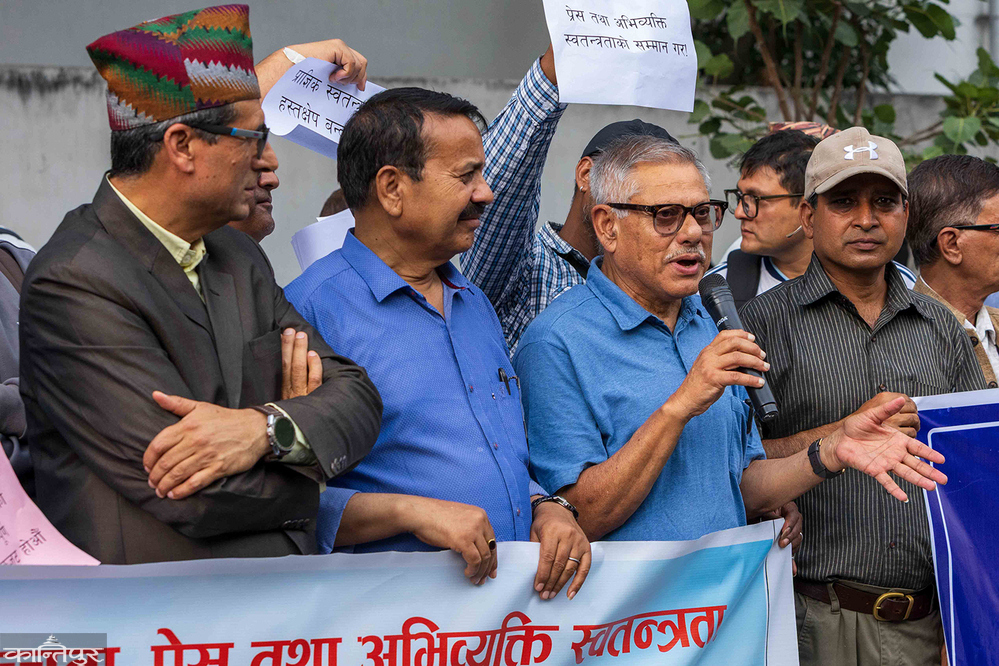
The protesting joint trade unionists have also expressed strong objections to the process of constitutional amendment that the government is said to have taken forward in a non-transparent manner. In particular, they have questioned the legitimacy of the 'Constitution Amendment Task Force' formed by deceiving the sovereign parliament and including people from the pockets of political parties that are not even recognized by the parliament.
Sharma, President of the Federation of Nepali Journalists, made it clear that they will not recognize the task force outside the parliament. 'A very sensitive and far-reaching issue like constitutional amendment should be done by forming a high-level task force from within the parliament and on the basis of broad political and national consensus,' she said. 'We do not accept any amendment and scheme made behind the scenes with the aim of curtailing or narrowing the constitutional, democratic and fundamental rights of citizens that have already been acquired and will strongly oppose it.'
The history of papad is inextricably linked to the people's movement of 2062/63. At that time, when political parties were in decline against the direct and autocratic rule of Gyanendra Shah, 'Papad' was born to bring doctors, engineers, journalists, lawyers, professors and teachers together on a common platform and take the forefront of the movement.
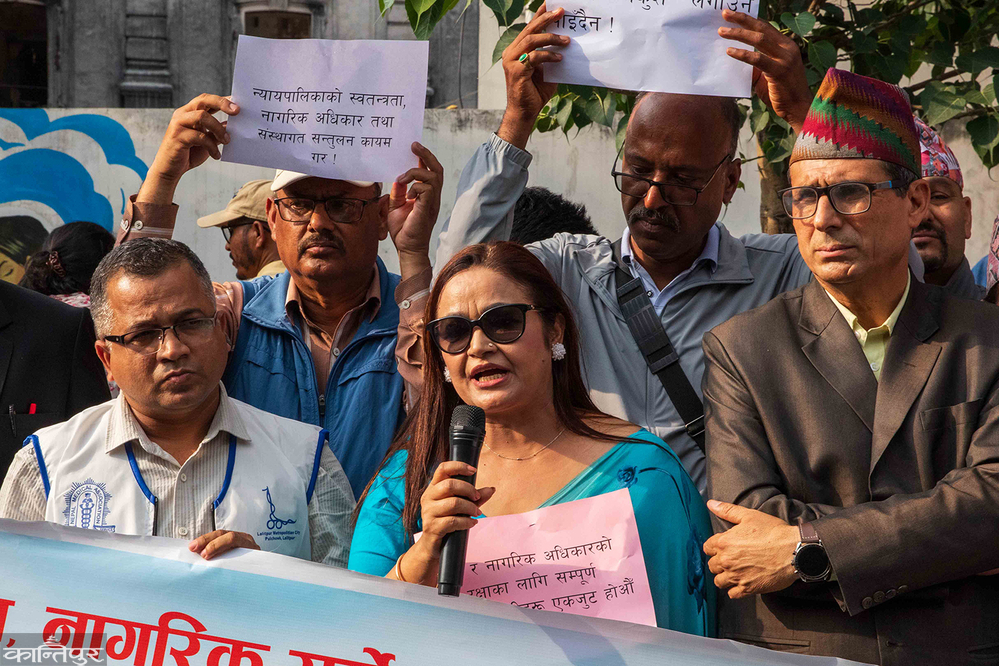
Almost two decades after the establishment of the republic, political analysts and civil rights activists have interpreted the fact that the same professional organizations are forced to revive the old mechanism as a 'sign of danger' to the country's democracy. Top officials and members of the Nepal Medical Association, Federation of Nepali Journalists, Nepal Bar Association, Nepal Professors' Association, Nepal Teachers' Federation and Nepal Engineers Association participated in Friday's rally.